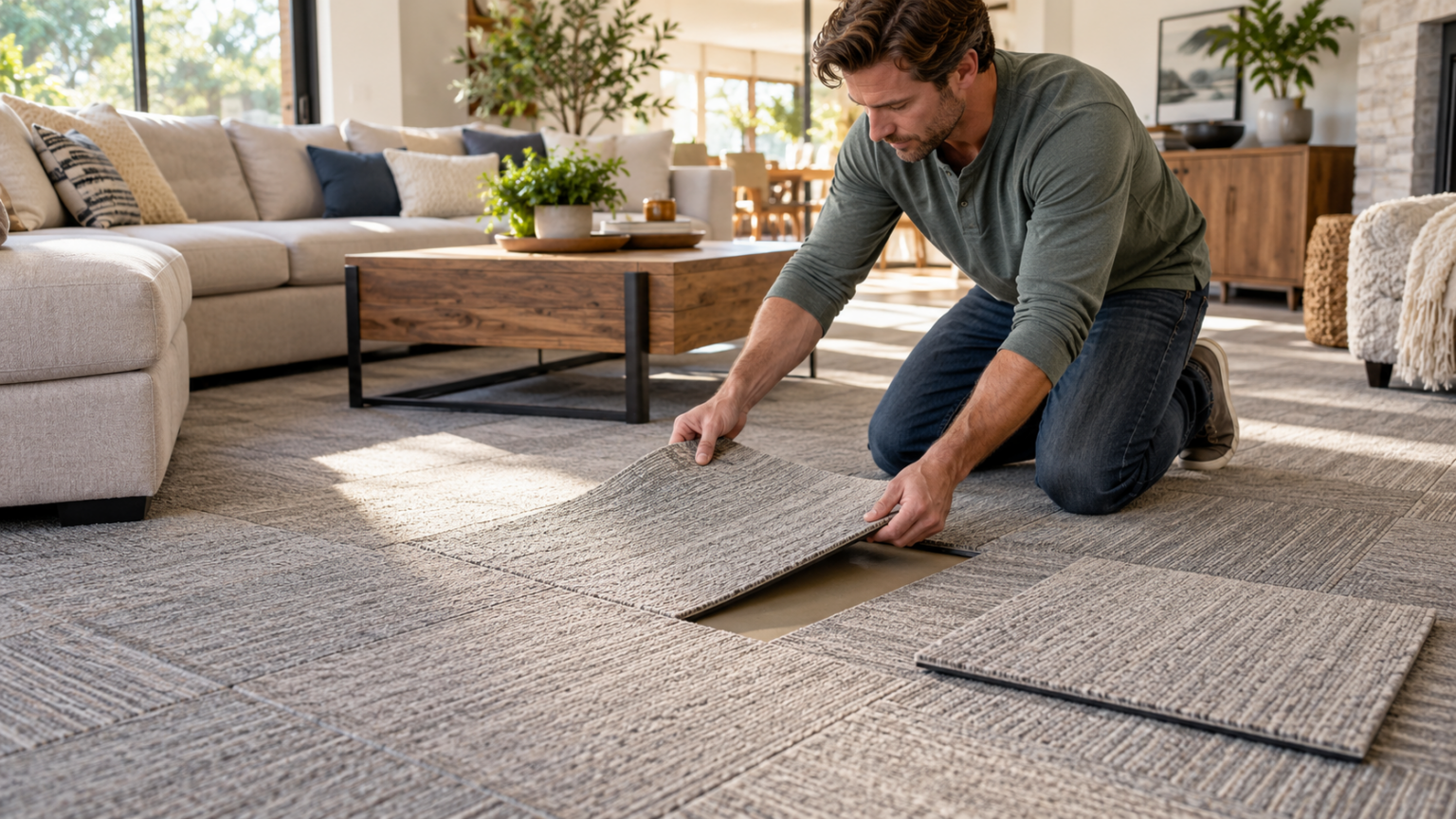
Removable Carpet Tiles: Best Styles, Benefits, Installation & Buying Guide
Updating your home’s flooring does not always require an expensive renovation, professional installation, or permanent changes. Sometimes, a simple flooring […]
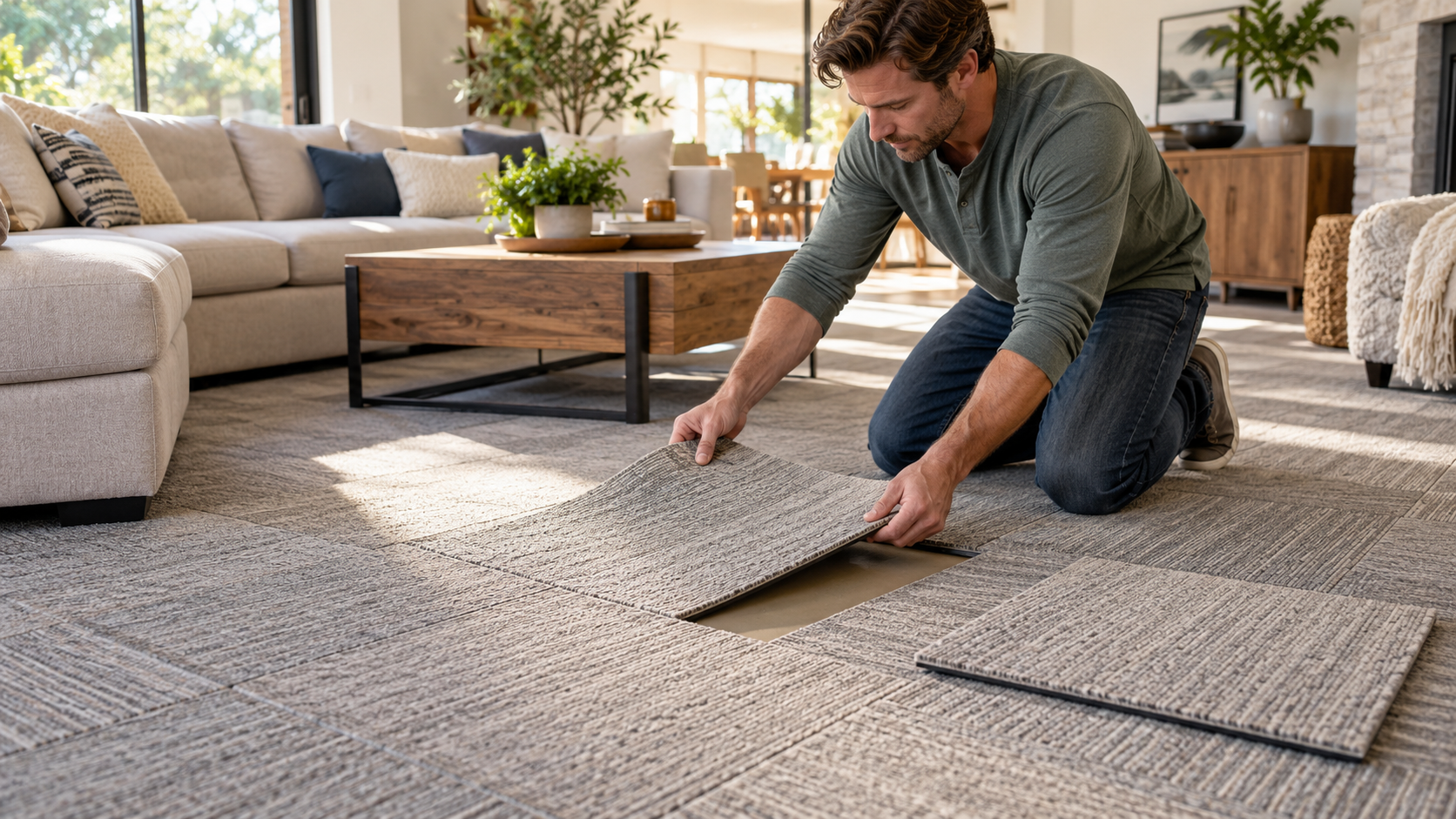
Updating your home’s flooring does not always require an expensive renovation, professional installation, or permanent changes. Sometimes, a simple flooring solution can make a room feel warmer, more comfortable, and visually appealing.
Removable carpet tiles offer a flexible alternative to traditional wall-to-wall carpeting. These individual squares or planks can be arranged to create custom floor coverings, making them attractive for homeowners, renters, and people who enjoy changing their interior design.
Unlike conventional carpet rolls, modular tiles let you cover a specific area without necessarily carpeting an entire room. Depending on the product, they may also be lifted, rearranged, cleaned, or replaced individually.
They are available in different textures, patterns, colors, and materials, making them suitable for bedrooms, living rooms, home offices, and selected other indoor spaces.
However, not all removable carpet products use the same installation method. Some rely on adhesive backing, while others use specialized non-adhesive materials designed to grip compatible floors.
This guide explains how removable carpet tiles work, their main benefits, popular styles, suitable rooms, installation methods, cleaning requirements, and practical buying considerations for American homes.
What Are Removable Carpet Tiles?
Removable carpet tiles are modular flooring pieces designed to cover sections of a floor without requiring traditional wall-to-wall carpet installation.
They are typically manufactured as squares or rectangular planks.
Homeowners can arrange the pieces together to create larger carpeted areas or smaller rug-like sections.
Unlike a traditional carpet roll, individual tiles can often be removed without disturbing the surrounding flooring.
The installation and removal process depends on the specific product.
How Do They Stay in Place?
Different removable carpet tiles use different attachment systems.
Some feature pressure-sensitive adhesive backing, while others use non-adhesive gripping materials.
Certain systems also use specialized connectors between neighboring tiles.
For example, Matace describes a polymer backing designed to grip compatible floors through friction without glue or tape.
SIREN Series — mataceinc.com
It is important to follow the manufacturer’s instructions because products marketed as removable are not necessarily interchangeable.
6 Benefits of Using Removable Carpet Tiles
Modular carpeting offers several advantages for people who want flexible flooring.
1. Simple Flooring Updates
Many carpet tile systems are designed for relatively straightforward installation.
Homeowners may be able to install suitable products themselves without hiring a professional.
2. Flexible Interior Design
Carpet squares can be arranged in different colors and patterns.
This flexibility makes it easier to create customized flooring suited to the surrounding furniture.
3. Individual Tile Replacement
If a tile becomes stained or damaged, some systems allow it to be replaced without removing the entire carpeted area.
4. Comfortable Walking Surface
Carpet adds softness underfoot and can make certain rooms feel more comfortable.
The level of cushioning depends on pile height, construction, and backing material.
5. Easier Access to Underlying Floors
Certain non-adhesive products can be lifted to access the flooring beneath them.
However, removability depends on the product, floor finish, and installation conditions.
6. Potentially Less Installation Waste
Modular pieces may allow homeowners to replace damaged sections without discarding an entire carpet.
Actual environmental benefits depend on materials, product lifespan, manufacturing, and disposal.
5 Popular Types of Removable Carpet Tiles
Selecting the right material and texture affects appearance, cleaning, durability, and comfort.

1. Plush Carpet Tiles
Plush tiles feature a soft, comfortable surface. They can create a cozy feeling in bedrooms and relaxation areas, although higher piles may require more careful cleaning.

Berber-style tiles have a distinctive textured appearance, commonly involving looped fibers. They suit homeowners who prefer a more structured flooring texture.

3. Peel-and-Stick Carpet Tiles
These tiles use a pre-applied adhesive layer. They can be convenient to install, but removal may leave residue or affect certain floor finishes.

4. Non-Adhesive Carpet Tiles
Non-adhesive products use specialized backings or connection systems. They may be suitable for temporary layouts when approved for the existing flooring.

5. Carpet Planks
Rectangular carpet planks create different visual effects from square tiles. They can be arranged in staggered or linear patterns for a contemporary appearance.
The best option depends on the room, expected foot traffic, surface compatibility, and the level of maintenance you are comfortable with.
Best Rooms for Removable Carpet Tiles
Modular carpet can work in several parts of the home, provided the product is suitable for the floor surface and room conditions.

Living Room
Arrange neutral-colored tiles beneath a sofa and coffee table to define the seating area. This creates a rug-like effect without covering the entire floor.

Bedroom
Soft carpet squares can make the space around a bed more comfortable. Choose a texture that balances cushioning with easy cleaning.

Home Office
Low-pile tiles may provide a practical work surface where compatible with office chairs. Check manufacturer guidance for rolling furniture.

Family Room
Replaceable sections can be convenient in frequently used spaces. Prioritize secure installation, easy maintenance, and suitable materials for your household.
Avoid installing carpet in persistently damp locations. The American Lung Association recommends keeping bathrooms, kitchens, and entryways carpet-free because moisture can encourage mold growth.
American Lung Association
How to Install Removable Carpet Tiles
Installation depends on the tile system, but careful preparation matters for nearly every product.
Step 1: Measure the Floor
Measure the length and width of the area and calculate the total square footage.
Divide that figure by the area covered per tile or package.
The Home Depot recommends purchasing approximately 10% extra material for cutting mistakes and future repairs.
The Home Depot
Step 2: Prepare the Surface
Clean the floor thoroughly and let it dry.
Check for uneven sections, loose flooring, moisture problems, and surface damage.
Confirm that the manufacturer approves installation over your particular flooring material.
Step 3: Plan the Layout
Arrange a few tiles before final installation.
Choose whether you prefer straight rows, alternating directions, or a decorative pattern.
Step 4: Install the Tiles

DIY Carpet Tile Installation
Align tiles carefully and follow the specified installation method. Non-adhesive systems should not be installed with unapproved glue or tape.
Step 5: Trim and Inspect
Use appropriate tools to cut tiles around corners where the manufacturer allows cutting.
Check edges, seams, and movement underfoot before placing furniture.
For detailed general installation guidance, consult The Home Depot’s carpet tile installation guide.
Removable Carpet Tiles vs. Traditional Carpeting
| Feature | Removable carpet tiles | Wall-to-wall carpeting |
|---|---|---|
| Installation | Often modular and DIY-friendly | Commonly professionally installed |
| Design flexibility | Individual colors and patterns | Typically continuous coverage |
| Damaged section | Individual replacement may be possible | Repair may be more involved |
| Removal | Depends on backing | Usually more extensive |
| Appearance | Visible or subtle tile seams | Continuous carpet appearance |
| Floor coverage | Selected areas or full rooms | Usually full rooms |
Traditional carpeting may suit homeowners who prefer seamless coverage. Removable tiles are appealing when flexibility and individual replacement are priorities.
Exploring Matace Removable Carpet Tiles
Homeowners researching removable carpet tiles from Matace can explore its collection of modular flooring.
Matace lists Berber carpet squares, plush carpet planks, cut-pile tiles, and nylon carpet squares in different colors and configurations.
Its product information describes non-adhesive backing, individually replaceable tiles, and washing options for selected products.
mataceinc.com
+1
One product page describes a friction-based backing intended to hold tiles in place without adhesive residue. The company also provides instructions for trimming tiles and describes a limited manufacturing-defect warranty.
These are manufacturer claims; individual product specifications and warranty conditions should be checked before purchasing.
At the time of review, the linked collection displayed five products marked out of stock. Availability may change, so check current listings before planning a project.
How Much Do Removable Carpet Tiles Cost?
Prices depend on material, thickness, construction, package quantity, and manufacturer.
Matace’s collection displays advertised sale prices ranging from approximately $99.99 to $269.99 across its listed products and package options.
mataceinc.com
These are observed product listings, not general U.S. market averages, and the displayed items were out of stock.
Compare packages by square-foot coverage rather than box price alone.
Also account for shipping, cutting waste, and replacement tiles.
How to Clean and Maintain Carpet Tiles
Regular maintenance helps protect carpet appearance and indoor cleanliness.
Vacuum using the method recommended for the carpet’s pile and backing.
Treat spills promptly with manufacturer-approved cleaning products.

Easy Carpet Tile Maintenance
Regular vacuuming, prompt spill treatment, and replacing damaged sections can keep modular flooring looking presentable.
Some removable carpet squares are advertised as washable, but washing instructions vary. Confirm whether machine washing is approved for the exact product.
Never reinstall a tile while it remains damp.
The American Lung Association notes that carpets may accumulate dust and allergens, making regular cleaning and moisture control important.
American Lung Association
Indoor Air Quality and Flooring Safety
Flooring materials deserve careful consideration, especially in homes with children or people sensitive to indoor pollutants.
Some carpet products, cushions, and adhesives can release volatile organic compounds.
The U.S. Department of Energy recommends choosing third-party-certified, low-emission carpeting to help manage indoor air quality.
Building Science Education
Ask manufacturers about available emissions testing and material certifications rather than assuming that every non-adhesive tile is automatically low-VOC.
Also check for slip resistance, edge stability, and compatibility with existing floors.
Common Mistakes to Avoid
One frequent mistake is assuming that any removable carpet tile can be installed over any surface.
Another is skipping floor preparation, leading to movement or uneven seams.
Buyers may also overlook pile height, furniture clearance, or the difference between adhesive and non-adhesive systems.
Avoid choosing colors from online photographs alone when exact matching is important.
If samples are available, examine them under your home’s lighting before purchasing a large quantity.
Frequently Asked Questions About Removable Carpet Tiles
Are removable carpet tiles easy to install?
Many are designed for DIY installation. However, preparation, cutting, and attachment requirements vary by product.
Can removable carpet tiles damage hardwood floors?
Some non-adhesive products are designed to minimize residue, but damage-free removal cannot be guaranteed on every floor finish. Check compatibility and test a small area first.
Can I wash removable carpet squares?
Certain products are washable, including selected Matace tiles. Always check the manufacturer’s care instructions before machine washing.
Are removable carpet tiles suitable for renters?
They may be a practical option when permanent flooring modifications are restricted. Confirm lease conditions and product compatibility before installation.
How long do removable carpet tiles last?
Lifespan varies with materials, foot traffic, maintenance, and installation conditions. Manufacturer warranties do not necessarily indicate expected service life.
Can I install carpet tiles over existing carpet?
Generally, this is not recommended unless the manufacturer explicitly permits it. Soft or unstable surfaces may prevent the tiles from lying securely.
Are removable carpet tiles good for homes with pets?
They can be convenient because selected sections may be cleaned or replaced. Look for appropriate durability, cleaning instructions, and secure backing.
Are removable carpet tiles better than traditional rugs?
Neither option is universally better. Carpet tiles allow modular arrangements, while conventional rugs offer convenient one-piece coverage. Your choice depends on appearance, cleaning, installation, and budget.
Conclusion
Removable carpet tiles provide a flexible way to improve flooring without necessarily committing to permanent wall-to-wall carpeting.
Their modular construction allows homeowners to create customized patterns, cover selected areas, and replace individual sections when the product supports removal.
From plush bedroom flooring to textured home-office squares, the available designs can complement many American interiors.
Before buying, compare backing systems, materials, floor compatibility, cleaning requirements, and total coverage costs.
Collections such as Matace’s demonstrate the range of non-adhesive carpet tiles available, although product stock and specific features should be verified.
With careful planning, proper installation, and regular maintenance, removable carpet tiles can offer a practical combination of comfort, design flexibility, and everyday convenience.

Written by Twastia Editorial Team
Twastia Editorial Team shares practical insights about website design, SEO services, Google Ads, content marketing, social media, conversion rate optimization, and digital marketing strategy.
Last updated: Oct 25, 2026
Related posts from Twastia
Explore more useful articles from twastia.com about digital marketing, SEO, websites, ads, content, and growth strategy.