Slide-In Tanks: A Guide to Vacuum Tank Systems
For portable sanitation operators, septic service businesses, construction crews, and other field-service teams, choosing vacuum equipment is a balance between […]
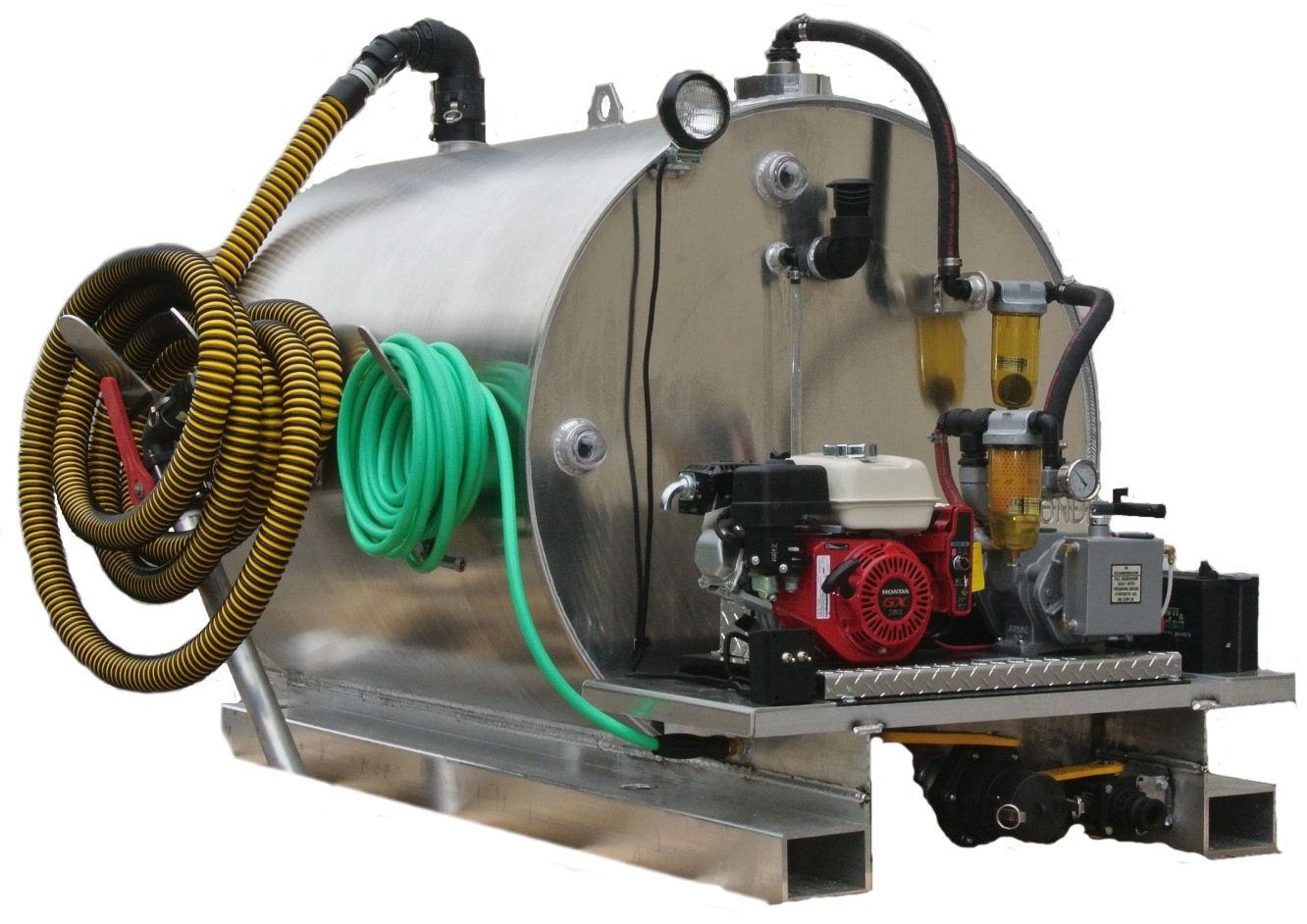
For portable sanitation operators, septic service businesses, construction crews, and other field-service teams, choosing vacuum equipment is a balance between capacity, mobility, vehicle compatibility, and operating needs. Slide-in tanks provide a way to add vacuum and tank capability without automatically buying a complete dedicated vacuum truck.
Satellite Industries currently lists slide-in units from 300 to 900 gallons, with models positioned for different route sizes and applications. Its current slide-in page describes them as an alternative for operators who are not ready to invest in a full truck, while individual models are positioned for uses ranging from first-response and construction work to medium and larger routes.
What Are Slide-In Tanks?
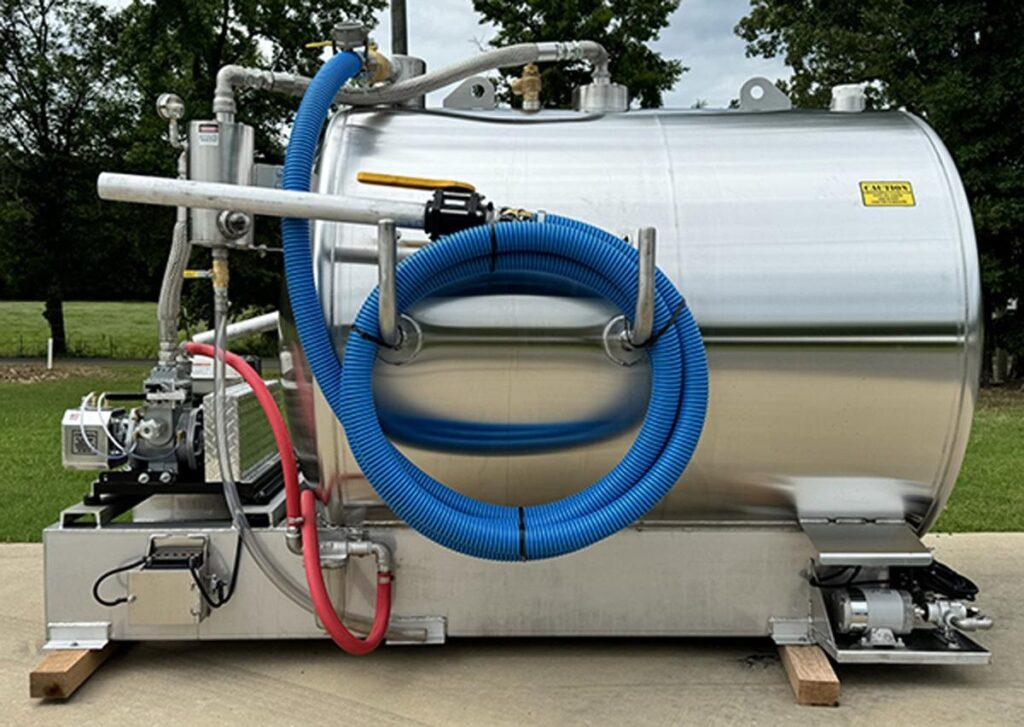
Slide-in tanks are self-contained vacuum units designed to be mounted into the bed of a compatible truck or, depending on configuration, another suitable platform. Instead of purchasing a complete truck built around a vacuum tank, an operator can use an existing chassis and add a slide-in module.
That flexibility can be valuable for smaller operators and growing fleets. Satellite describes its slide-in units as a flexible alternative to a full vacuum truck, with current models from 300 to 900 gallons.
For operators comparing slide-in tanks, the most important questions are not simply how many gallons a tank holds. You also need to consider the truck’s payload, physical dimensions, pump system, material, route requirements, and installation.
Why Choose a Slide-In Vacuum Tank?
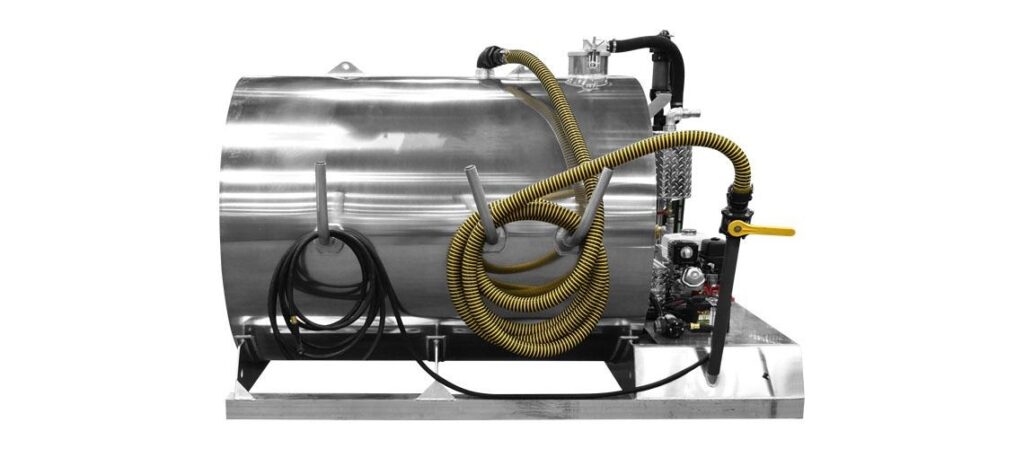
A slide-in system can make sense when an operation needs more capability but does not require a dedicated full-size vacuum truck for every route.
Lower Equipment Commitment
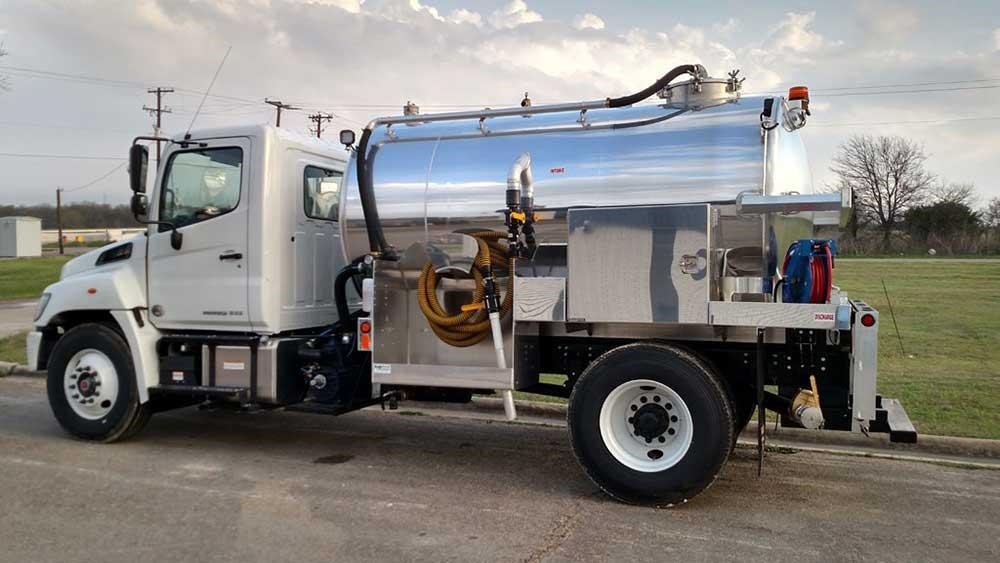
Buying a complete service truck involves the chassis, tank, vacuum system, and other equipment. A slide-in lets an operator use an existing compatible vehicle, potentially reducing the scope of the initial equipment purchase.
Total cost still depends on the tank, truck, installation, pump system, accessories, and operating requirements. The advantage comes from matching equipment to the work instead of automatically purchasing a larger vehicle.
Greater Mobility
Smaller units can be useful where maneuverability matters. Satellite specifically describes its 300- and 450-gallon models as suited to locations where mobility is important, including construction sites. The company notes that the internal tank arrangement acts as a baffle to reduce sloshing, which can make stopping and cornering easier.
Expandable Fleet Capacity
A slide-in can also provide supplemental capacity. Instead of immediately purchasing another dedicated vacuum truck, an operator may be able to add a compatible slide-in to another vehicle and use it for selected routes, seasonal demand, or smaller service jobs.
Satellite’s Slide-In Tank Sizes
Capacity is one of the most important differences between models. More capacity can reduce the frequency of service interruptions, but it also increases the load that the supporting vehicle must safely carry.
| Model | Waste Capacity | Fresh Capacity | Listed Height |
|---|---|---|---|
| 300 Slide-in | 200 gal | 100 gal | 57.5 in. |
| 450 Slide-in | 300 gal | 150 gal | 57.5 in. |
| 550 Slide-in | 370 gal | 180 gal | 64.375 in. |
| 650 Slide-in | 430 gal | 220 gal | 64.375 in. |
| 900 Slide-in | 600 gal | 300 gal | 74.42 in. |
These capacities and heights come from Satellite’s current product pages.
300-Gallon Slide-In
The 300 is positioned around mobility. Satellite says it is suitable for first responders and construction sites where mobility is a priority. Its 200-gallon waste compartment and 100-gallon fresh compartment provide a compact configuration for operators who do not need a larger tank.
The product page also lists sight glasses and a 30-foot hose, along with a turnkey design intended to be ready for installation when it arrives.
450-Gallon Slide-In
The 450 increases waste capacity to 300 gallons and fresh capacity to 150 gallons while retaining the 57.5-inch listed height. Satellite positions it for odd locations and construction sites where mobility remains important.
The 450 can be useful for an operator who needs more capacity than the 300 while maintaining a relatively compact configuration.
550-Gallon Slide-In
The 550 is designed for small-to-medium-sized routes that need additional capacity. It has a 370-gallon waste compartment and 180-gallon fresh compartment, with a listed height of 64.375 inches.
Satellite also highlights its adaptability, stating that the unit can be mounted on trucks, trailers, and more. The current page lists aluminum and stainless-steel configurations.
650-Gallon Slide-In
The 650 moves into the medium-route category. It provides 430 gallons of waste capacity and 220 gallons of fresh capacity, with a listed height of 64.375 inches.
Its larger capacity can suit operators who need more route capability without moving to the 900. Satellite describes the 650 as adaptable to trucks, trailers, and other applications.
900-Gallon Slide-In
The 900 is the largest current slide-in listed on Satellite’s main slide-in page. Its 600-gallon waste compartment and 300-gallon fresh compartment give it substantially more capacity than the smaller units.
Satellite describes the MAL 900 as suited to medium-to-large routes and says it can be mounted on trucks, trailers, and more. The product page identifies it as aluminum and lists sight glasses, a 30-foot hose, and turnkey installation readiness.
Materials and Pump Options
Material choice can influence weight, durability, corrosion resistance, and the overall fit for an operator’s priorities.
Current product pages identify aluminum and stainless-steel configurations on several models. Satellite’s official product literature also documents carbon-steel configurations and lists Conde 6SS, Conde 6SDS, and Masport HXL3V vacuum-pump options. Confirm the exact current combination when quoting a unit.
Aluminum
Aluminum can be attractive when vehicle weight and payload are important considerations. The current 900-gallon MAL 900, for example, is specifically identified as an aluminum unit.
Stainless Steel
Stainless steel is another current material option on several models and may appeal to operators prioritizing material characteristics suited to their service environment. The current 300, 450, 550, and 650 product pages identify MAL/SS configurations.
Carbon Steel
Satellite’s official product sheet documents carbon-steel options on several slide-in capacities. Since current web pages do not display every configuration in the same way, verify availability before specifying carbon steel.
Features That Matter in Daily Operation
Capacity is only one part of a slide-in’s usefulness. Operators should also consider how easily they can monitor, connect, operate, and maintain the equipment.
Sight Glasses
Satellite includes sight glasses so operators can quickly view remaining volume in the waste-water tank. This gives the operator a simple visual way to monitor tank contents during field work.
30-Foot Service Hose
The company states that each slide-in includes a 30-foot hose, allowing the operator to reach units in the field without moving the truck as frequently.
Turnkey Configuration
Satellite describes its slide-ins as turnkey units that arrive ready to be installed rather than requiring a lengthy assembly process. Installation itself still needs to be completed correctly for the specific vehicle.
Operator Ergonomics
Satellite emphasizes operator-focused design and reduced driver fatigue. In sanitation work, hose handling, controls, and access can affect practicality during a long route.
How to Select the Right Slide-In Tank
The best model is not necessarily the largest one. Start with the work your truck actually needs to perform.
1. Estimate Your Typical Route
Look at the amount of waste and fresh water normally handled. If jobs are relatively short and spread across difficult-access locations, a smaller unit may be more practical than maximum capacity.
2. Check Truck Payload
This is one of the most important steps. A tank’s gallon rating is not the same as the vehicle’s safe payload.
Satellite’s operator manual warns that advertised payload numbers may not account for options, passengers, tools, or other variable loads. It recommends determining the vehicle’s actual base weight and comparing available payload with the weight of the slide-in and its contents.
3. Verify Physical Dimensions
The tank must fit the truck bed or mounting location. Compare the manufacturer’s dimensions with the actual vehicle, mounting hardware, clearances, and accessories.
Official documentation provides model dimensions, including length, skid width, and height. The exact vehicle installation still needs to be evaluated rather than assuming that a listed tank dimension guarantees compatibility.
4. Choose the Material
Compare aluminum and stainless-steel configurations according to your operational priorities. If a particular material appears in older product literature but not on the latest product page, confirm current availability directly.
5. Consider Pump Configuration
Satellite’s product literature identifies multiple vacuum-pump choices, including Conde and Masport models. Pump selection should match the work and complete system rather than being chosen in isolation.
Installation and Safety Considerations
A slide-in tank is heavy equipment, so installation should be treated as a safety-critical task.
Satellite’s operator manual warns that improper lifting or installation can cause serious injury or death. It calls for a hoist with at least a one-ton capacity for lifting the slide-in into the truck bed and emphasizes that the unit must be securely fastened to prevent movement.
The manual also explains that truck payload capacity must account for the slide-in and liquid inside it. It recommends using a certified scale to establish actual base weight when needed and states that professional installation is highly recommended.
These instructions become especially important with larger units, whose liquid loads can be substantial.
Slide-In Tanks vs. a Complete Vacuum Truck
A slide-in is most attractive when you already have a suitable truck and want flexible vacuum capability. A dedicated vacuum truck may make more sense when a vehicle will be used continuously for demanding routes and the chassis, tank, and other systems need to be engineered as one package.
Satellite’s broader vacuum-truck lineup includes cabover, septic, restroom-service, and pickup-and-delivery configurations. The company positions slide-ins as a flexible alternative for operators who are not ready to invest in a complete truck.
Base the decision on route requirements, chassis, payload, capacity, service needs, and future fleet plans—not simply purchase price.
Common Mistakes to Avoid
Choosing Capacity Without Checking Payload
A larger tank is useful only if the supporting vehicle can safely carry the loaded equipment.
Ignoring Truck Dimensions
Measure the actual truck and compare it with the manufacturer’s tank dimensions and mounting requirements.
Assuming Every Listed Configuration Is Current
Official brochures and product literature can contain configurations that are not displayed on the latest product pages. Confirm the current build, material, pump, and accessories before ordering.
For example, Satellite’s current web lineup displays five models from 300 to 900 gallons, while an official product sheet also documents a 400-gallon configuration and carbon-steel options. That difference makes direct confirmation especially important when specifying equipment.
Treating Installation as an Afterthought
Correct mounting is essential. The manufacturer’s manual specifically warns about the consequences of improperly secured slide-ins.
Buying More Tank Than the Route Requires
Maximum capacity can add unnecessary size and weight. Match the tank to the typical route rather than the largest possible job.
Frequently Asked Questions
What Are Slide-In Tanks Used For?
Slide-in vacuum tanks add vacuum and tank capability to a compatible truck or other suitable platform. Depending on configuration, they can support portable sanitation, construction, first-response, and other field-service applications.
What Sizes Does Satellite Industries Offer?
Satellite’s current slide-in lineup includes 300-, 450-, 550-, 650-, and 900-gallon models.
Which Slide-In Is Best for a Small Route?
The 300 or 450 may be appropriate when mobility and compact size are priorities. Satellite positions the 300 for first responders and construction sites and the 450 for locations where mobility matters.
Which Model Is Designed for Medium Routes?
Satellite describes the 650 as suited to medium-sized routes. The 550 is positioned for small-to-medium routes, while the 900 is aimed at medium-to-large routes.
Are Satellite Slide-In Tanks Available in Different Materials?
Yes. Current product pages identify aluminum and stainless-steel configurations on several models, while official product literature documents carbon-steel configurations for several capacities. Confirm current options for the exact model.
Can a Slide-In Be Mounted on a Trailer?
Satellite states that several models can be mounted on trucks, trailers, and more, but the exact mounting arrangement must be evaluated for the application.
What Should I Check Before Installing a Slide-In?
Check actual vehicle payload, tank dimensions, mounting requirements, clearances, and the weight of the tank plus its contents. Follow the manufacturer’s lifting and securing instructions and use qualified professional installation when appropriate.
Does a Slide-In Replace a Dedicated Vacuum Truck?
Not always. A slide-in can be effective when an operator already owns a compatible chassis or needs supplemental capacity. A dedicated vacuum truck may be more suitable for intensive service where the entire vehicle is designed around the vacuum system.
Conclusion
Slide-in tanks give field-service operators a flexible way to add vacuum capacity without automatically purchasing a complete dedicated vacuum truck. Satellite Industries’ current range spans 300 to 900 gallons, allowing businesses to choose between compact, mobility-focused units and larger configurations for more demanding routes.
The smartest selection starts with the truck and the work, not the tank number. Evaluate route volume, payload, dimensions, material, pump configuration, installation requirements, and future fleet needs before making a decision.
For smaller construction or first-response applications, a 300- or 450-gallon unit may provide the mobility needed. For growing routes, the 550 or 650 can provide additional capacity, while the 900 is designed for operators who need substantially more waste and fresh-water capacity.
Most importantly, treat payload and installation as safety-critical decisions. A properly matched and securely installed slide-in can become a valuable part of a sanitation or field-service fleet, while an oversized or incorrectly installed unit can create unnecessary operational and safety problems.

Written by Twastia Editorial Team
Twastia Editorial Team shares practical insights about website design, SEO services, Google Ads, content marketing, social media, conversion rate optimization, and digital marketing strategy.
Last updated: Oct 16, 2026
Related posts from Twastia
Explore more useful articles from twastia.com about digital marketing, SEO, websites, ads, content, and growth strategy.