How to Find the Best Solar Providers Near Me in the USA
Searching for solar can feel simple at first. You type “solar companies” into Google, request a few quotes, and choose […]

Searching for solar can feel simple at first. You type “solar companies” into Google, request a few quotes, and choose the one that looks affordable.
In practice, the decision is more complicated.
Residential solar is a long-term home investment. The system installed on your roof may remain there for decades, which means installer quality, equipment, financing, warranties, permitting experience, and post-installation support can matter just as much as the initial price.
If you are searching for solar providers near me, the goal should not be to find the company with the most aggressive sales pitch. The better objective is to identify a reliable provider that can design the right system for your home, explain the economics clearly, complete the installation correctly, and support you after the panels are operating.
This guide explains how American homeowners can evaluate local solar providers intelligently and avoid the most common mistakes.
Why Local Solar Providers Matter
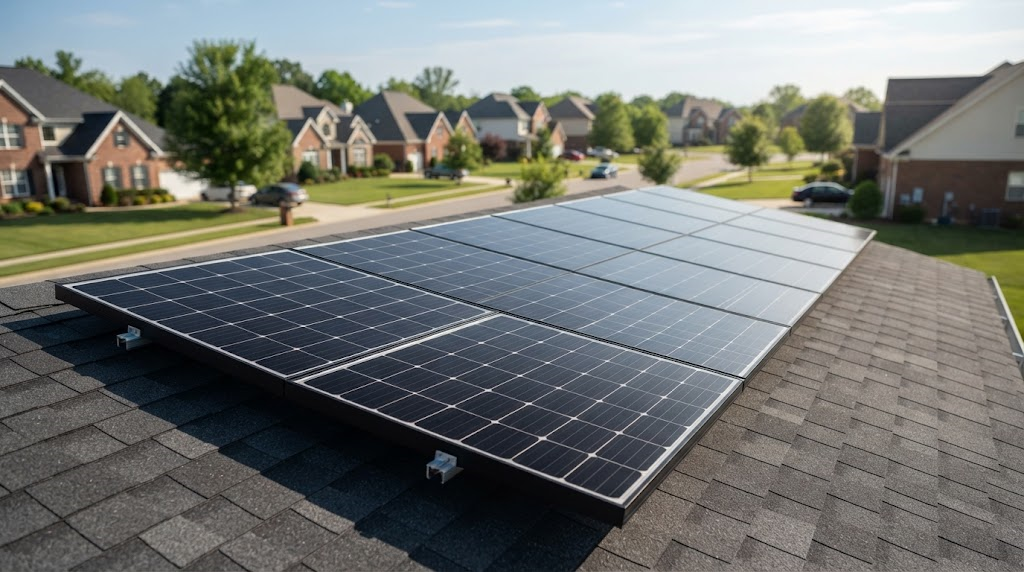
Solar power is heavily affected by location.
Two homes in different states can have completely different economics because of variations in:
- Electricity rates
- Sun exposure
- Utility policies
- Net metering rules
- Local permits
- State incentives
- Roof design
- Weather conditions
- Financing options
A solar provider familiar with your local market may understand these factors better than a company using a standardized national sales process.
Local knowledge can be especially useful during permitting and utility interconnection.
The installer must often coordinate with municipal authorities, electrical inspectors, homeowners associations, and utility companies before the system can begin operating.
What Does a Solar Provider Actually Do?
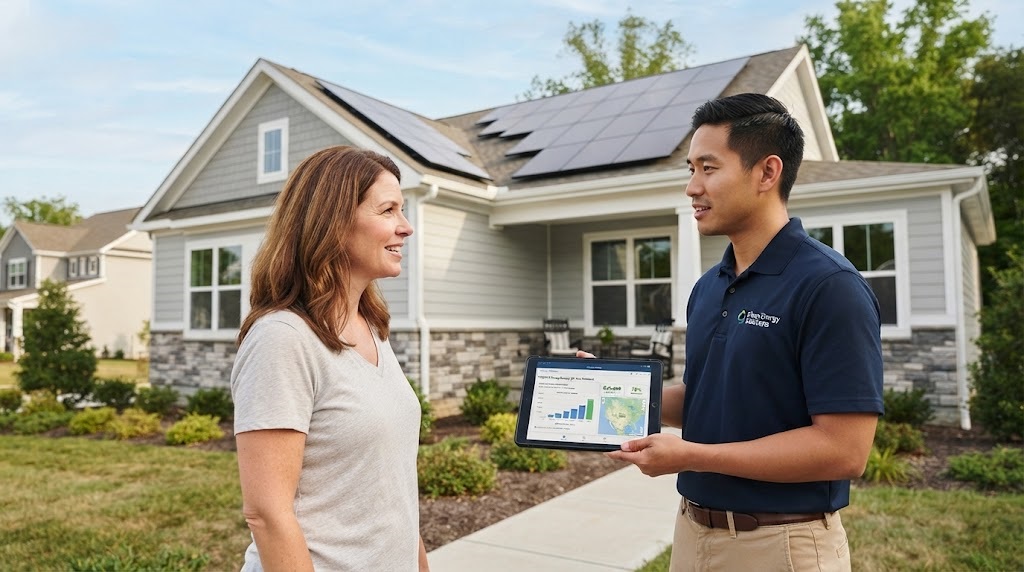
A residential solar provider may handle all or some of the following:
- Initial consultation
- Energy usage analysis
- Roof assessment
- Solar system design
- Equipment selection
- Financing
- Permitting
- Installation
- Electrical work
- Inspection coordination
- Utility interconnection
- Monitoring setup
- Warranty service
Some companies perform the installation themselves.
Others focus mainly on sales and subcontract the actual work.
Neither structure is automatically bad, but homeowners should know who is responsible for each stage of the project.
Start With Your Electricity Usage
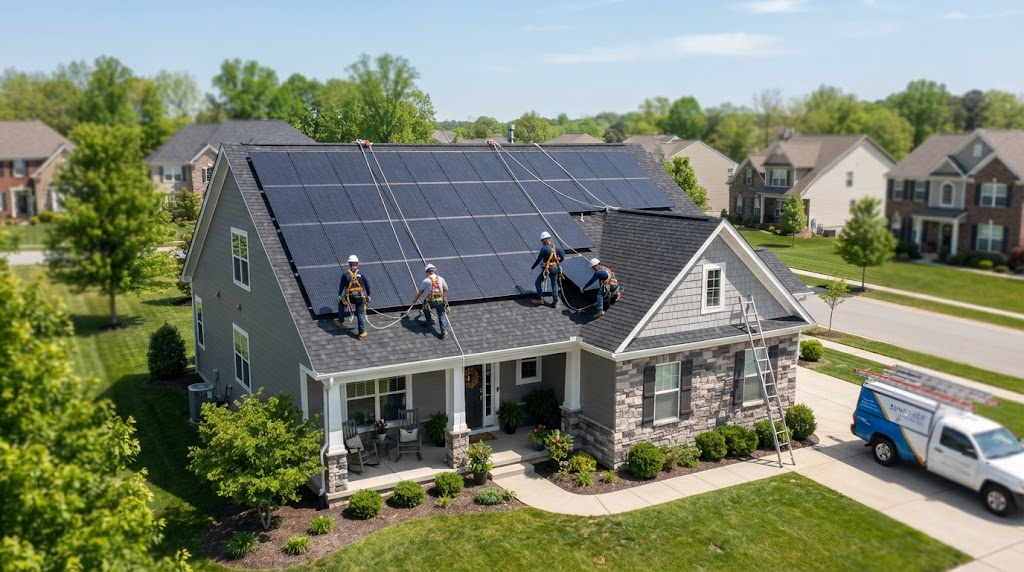
Before comparing solar companies, understand your own electricity consumption.
Look at your utility bills for the previous 12 months.
Your usage is usually measured in kilowatt-hours, commonly written as kWh.
A professional installer uses this information to estimate the size of the solar system required.
Your energy consumption may fluctuate seasonally.
For example, summer electricity use may increase because of air conditioning, while electric heating can increase winter consumption in other regions.
Using a full year of data gives a more accurate picture than looking at a single bill.
Understand Your Roof Before Getting Quotes
Solar panels can work on many roof types, but not every roof is equally suitable.
Important factors include:
- Roof age
- Roof condition
- Orientation
- Pitch
- Shade
- Available surface area
- Structural condition
Roof Age
If your roof will need replacement soon, consider addressing that before installing solar.
Removing and reinstalling solar panels later can add cost.
Shade
Trees, nearby buildings, chimneys, and other structures can reduce solar production.
Modern system design tools can estimate the effect of shading throughout the year.
Roof Direction
South-facing roofs often receive strong solar exposure in many parts of the United States, but east- and west-facing installations can also perform well depending on your location and electricity usage pattern.
Compare Multiple Solar Quotes
Do not accept the first proposal you receive.
Solar quotes can differ significantly.
Try to compare at least a few reputable providers.
However, compare equivalent information rather than just looking at the total price.
Each quote should ideally show:
- System size
- Number of panels
- Panel brand and model
- Inverter type
- Estimated annual production
- Cash price
- Financing terms
- Warranty information
- Estimated savings
- Installation timeline
This helps you make an apples-to-apples comparison.
Understand System Size
Residential solar systems are usually measured in kilowatts, or kW.
For example, one provider may recommend an 8 kW system while another proposes 10 kW.
A larger system generally produces more electricity, but it also costs more.
The biggest system is not automatically the best system.
Your ideal size depends on:
- Electricity consumption
- Available roof space
- Utility rules
- Budget
- Future energy needs
If you expect to purchase an electric vehicle, install a heat pump, add a pool, or expand your home, future electricity demand may matter.
Compare Price Per Watt
One useful way to compare solar quotes is price per watt.
For example, if a system costs $24,000 and has a capacity of 8,000 watts, the gross price is $3.00 per watt.
This metric can help compare systems of different sizes.
However, price per watt should not be used in isolation.
A quote may cost more because it includes:
- Premium panels
- Better inverters
- Electrical upgrades
- Roof work
- Battery storage
- Stronger warranties
Understanding what is included is more important than chasing the lowest number.
Solar Panel Quality Matters
Solar panels vary in efficiency, degradation rates, warranties, appearance, and price.
Higher-efficiency panels generate more electricity from a smaller roof area.
This can be valuable when roof space is limited.
However, homeowners with large roofs may not need the most expensive high-efficiency panels.
Ask providers to explain why they recommend a particular panel model.
A good consultant should be able to explain the trade-off between price, performance, efficiency, and warranty.
Understand Solar Inverters
Solar panels generate direct current electricity.
Homes typically use alternating current electricity.
The inverter converts electricity produced by the panels into electricity your home can use.
Common inverter configurations include:
String Inverters
Multiple panels connect to a central inverter.
This can be cost-effective and relatively simple.
Microinverters
Each panel has its own small inverter.
Microinverters can be useful where roof sections experience different shading or orientations.
Power Optimizers
These devices work at the panel level while using a central inverter.
Each approach has advantages and disadvantages.
Your installer should explain why a particular design is appropriate for your roof.
Check Installer Credentials
Installation quality matters enormously.
Poor electrical work or roof penetrations can create serious problems.
Before hiring a provider, verify basic credentials where applicable.
Look for:
- Appropriate state licensing
- Electrical contractor credentials
- Insurance
- Relevant certifications
- Local permit experience
- Established installation history
You can also ask whether installation crews are employees or subcontractors.
If subcontractors are used, ask who is responsible for workmanship warranties and service issues.
Read Reviews Carefully
Online reviews can be useful, but they should not be treated as perfect evidence.
Almost every large company will have both positive and negative reviews.
Instead of focusing only on the average star rating, look for patterns.
Repeated complaints about the same issue deserve attention.
For example:
- Long installation delays
- Poor communication
- Roof leaks
- Unexpected financing terms
- System underperformance
- Difficulty obtaining warranty service
Likewise, repeated praise for installation quality, responsiveness, and problem resolution can be meaningful.
Understand Solar Financing
Many homeowners finance their solar systems.
Common options include:
- Cash purchase
- Solar loan
- Home equity financing
- Lease
- Power purchase agreement
Each structure has different economics.
Cash Purchase
Paying cash usually avoids loan interest and financing fees.
However, it requires significant upfront capital.
Solar Loan
Loans spread the cost across monthly payments.
Always examine both the monthly payment and total amount repaid.
Some solar loans include substantial dealer fees that may not be immediately obvious.
Solar Lease
With a lease, you generally pay for the use of the solar system rather than owning it outright.
Power Purchase Agreement
Under a PPA, the provider typically owns the equipment and sells you the electricity generated by the system.
Before signing a lease or PPA, understand:
- Annual rate increases
- Contract duration
- Home sale implications
- Buyout provisions
- Maintenance responsibility
Watch for Financing Dealer Fees
This is one of the most important details in solar financing.
Some loans advertise low interest rates but include large upfront dealer fees that are added to the project price.
This means a financed system can cost much more than the cash price.
Always ask:
“What is the cash price of this system?”
Then compare it with the total financed amount.
This can reveal the real cost of financing.
Understand the Federal Solar Tax Credit
Federal tax incentives have historically played an important role in U.S. residential solar economics.
However, tax laws and eligibility rules can change.
Do not rely solely on a salesperson’s estimate of your tax savings.
A tax credit is not necessarily the same as an immediate cash rebate.
Your ability to benefit from a tax credit can depend on your tax situation.
Confirm current rules through official government sources or a qualified tax professional before making financial decisions.
Research State and Utility Incentives
In addition to federal programs, some states and utilities may offer incentives such as:
- Rebates
- Performance incentives
- Property tax treatment
- Sales tax exemptions
- Renewable energy credits
- Battery incentives
Availability varies widely.
Programs can also change or run out of funding.
Ask the installer which incentives are available, but independently verify important claims.
Understand Net Metering
Solar systems often produce electricity during daytime hours when your home may not use all of it.
Excess electricity may be exported to the grid.
Net metering or similar utility programs determine how you are credited for that exported electricity.
The rules differ substantially by utility and state.
Some utilities provide favorable credits.
Others compensate exported electricity at much lower rates.
This can significantly affect the financial return of a solar system.
Your provider should explain how your specific utility handles excess generation.
Should You Add a Solar Battery?
Battery storage is becoming increasingly popular.
A battery stores electricity for later use.
Potential benefits include:
- Backup power
- Greater self-consumption
- Reduced exposure to time-of-use pricing
- More control over solar energy
However, batteries add significant cost.
If your primary goal is simply reducing electricity bills, a battery may or may not improve the financial return.
If backup power is important because of outages, the value may be different.
Evaluate batteries separately from the solar system itself.
Review Warranties Closely
Solar systems can include several different warranties.
Panel Product Warranty
Covers manufacturing defects.
Performance Warranty
Addresses expected power output over time.
Inverter Warranty
Covers inverter equipment.
Workmanship Warranty
Covers installation-related problems.
Roof Penetration Warranty
Some installers separately cover roof leaks associated with installation.
Ask who handles each warranty claim.
A long warranty is only useful if the company providing it remains available and responsive.
Ask About Production Guarantees
Some companies offer production guarantees.
These may promise that your system will generate a minimum amount of electricity.
Read the details carefully.
Understand:
- How production is measured
- What period is covered
- What compensation is offered
- What exclusions apply
Do not assume a guarantee means your electric bill will disappear completely.
Utility charges may remain even with solar.
Understand the Installation Timeline
Residential solar projects involve more than placing panels on a roof.
A typical process may include:
- Consultation
- Site survey
- System design
- Financing approval
- Permit submission
- Equipment scheduling
- Installation
- Inspection
- Utility approval
- Permission to operate
The physical installation may take only a short time.
Permitting and utility approval can take much longer.
Ask providers for a realistic total timeline.
Beware of High-Pressure Solar Sales
Solar can be financially attractive for some homeowners, but aggressive sales tactics are common.
Be cautious if a salesperson says:
- “You must sign today.”
- “This program expires tonight.”
- “Solar is completely free.”
- “Your electric bill will definitely disappear.”
- “The government will pay for the entire system.”
These claims may oversimplify the economics.
A legitimate long-term investment should withstand careful comparison.
You should be able to review contracts without pressure.
Red Flags When Comparing Solar Companies
Watch for providers that:
- Refuse to provide a cash price
- Avoid explaining financing fees
- Guarantee unrealistic savings
- Cannot identify installation responsibility
- Provide vague warranty information
- Pressure you to sign immediately
- Give inconsistent system specifications
- Avoid explaining utility policies
Transparency is a strong indicator of a more professional sales process.
Local vs. National Solar Companies
Both models can work.
Local Solar Companies
Potential advantages include:
- Stronger local market knowledge
- Direct communication
- Familiarity with permitting
- Community reputation
Potential downside:
Smaller companies may have fewer resources or limited geographic coverage.
National Solar Providers
Potential advantages include:
- Larger operations
- Standardized processes
- Broader financing options
- Established brand recognition
Potential downside:
Customer service may be less personal, and installation may depend heavily on regional subcontractors.
Company size alone should not determine your decision.
Questions to Ask Solar Providers
Before signing anything, ask:
- What is the cash price?
- What is the financed price?
- Are there dealer fees?
- What panel model will be installed?
- What inverter technology will be used?
- Who performs installation?
- What licenses do you hold?
- What warranties are included?
- What annual production do you estimate?
- What assumptions were used?
- How does my utility compensate excess solar power?
- Are batteries included?
- Who handles service after installation?
- What happens if I sell my home?
- What is the estimated timeline?
A company that answers these questions clearly is easier to evaluate.
Frequently Asked Questions
How do I find reliable solar providers near me?
Start by comparing licensed local and regional solar companies, checking reviews, requesting multiple quotes, verifying warranties, and confirming who performs installation.
How many solar quotes should I get?
There is no fixed number, but comparing several reputable providers can help you identify differences in pricing, equipment, financing, and service.
Is the cheapest solar quote the best?
Not necessarily. Low pricing may involve lower-quality equipment, weaker warranties, subcontracted work, or missing services. Compare total value rather than price alone.
How much do solar panels cost?
Costs vary based on system size, location, equipment, roof complexity, electrical upgrades, batteries, and financing. Request customized quotes for your property.
Will solar eliminate my electricity bill?
Not always. Utility connection fees, minimum charges, insufficient solar production, and consumption patterns can result in remaining utility bills.
How long do solar panels last?
Many modern panels are designed to operate for decades, although production gradually declines over time. Warranty terms vary by manufacturer.
Should I finance or pay cash for solar?
Cash can minimize financing costs, while loans can reduce upfront expense. Compare the cash price, financed amount, interest, and total repayment before deciding.
Is solar worth it in every state?
No. Solar economics depend heavily on electricity rates, incentives, utility policies, sunlight, installation costs, and financing.
Can I install solar on an old roof?
Technically it may be possible, but replacing an aging roof before solar installation may be more economical than removing and reinstalling panels later.
Do I need a battery with solar panels?
No. Many grid-connected solar systems operate without batteries. Batteries are primarily useful for backup power, energy independence, or optimizing usage under certain utility pricing structures.
Conclusion
Searching for solar providers near me should be treated as a financial and technical comparison, not simply a shopping exercise.
The provider you choose may affect your home’s roof, electrical system, utility relationship, and household finances for many years.
Start by understanding your electricity usage and roof condition. Then collect several detailed proposals and compare system size, equipment, production estimates, warranties, cash pricing, financing, and installer credentials.
Pay particular attention to financing fees, utility rules, and exaggerated savings claims.
A lower monthly payment does not automatically mean a better deal, and a larger system does not automatically mean greater value.
The strongest solar proposal is one that uses realistic assumptions, transparent pricing, appropriate equipment, and professional installation.
Solar can be a valuable home investment when the numbers work for your property. But the quality of the outcome depends heavily on the quality of the company you hire.
Take the time to compare providers carefully, ask difficult questions, and understand the contract before signing. That extra work upfront can save you money, reduce risk, and help ensure your solar system performs as expected for years to come.

Written by Twastia Editorial Team
Twastia Editorial Team shares practical insights about website design, SEO services, Google Ads, content marketing, social media, conversion rate optimization, and digital marketing strategy.
Last updated: Oct 8, 2026
Related posts from Twastia
Explore more useful articles from twastia.com about digital marketing, SEO, websites, ads, content, and growth strategy.