Wood kitchen countertops: Best Guide to Hardwood Types, Prices, Finishes & Care
A timber countertop brings natural grain, warmth, and a tactile finish to a kitchen that stone or laminate cannot replicate […]
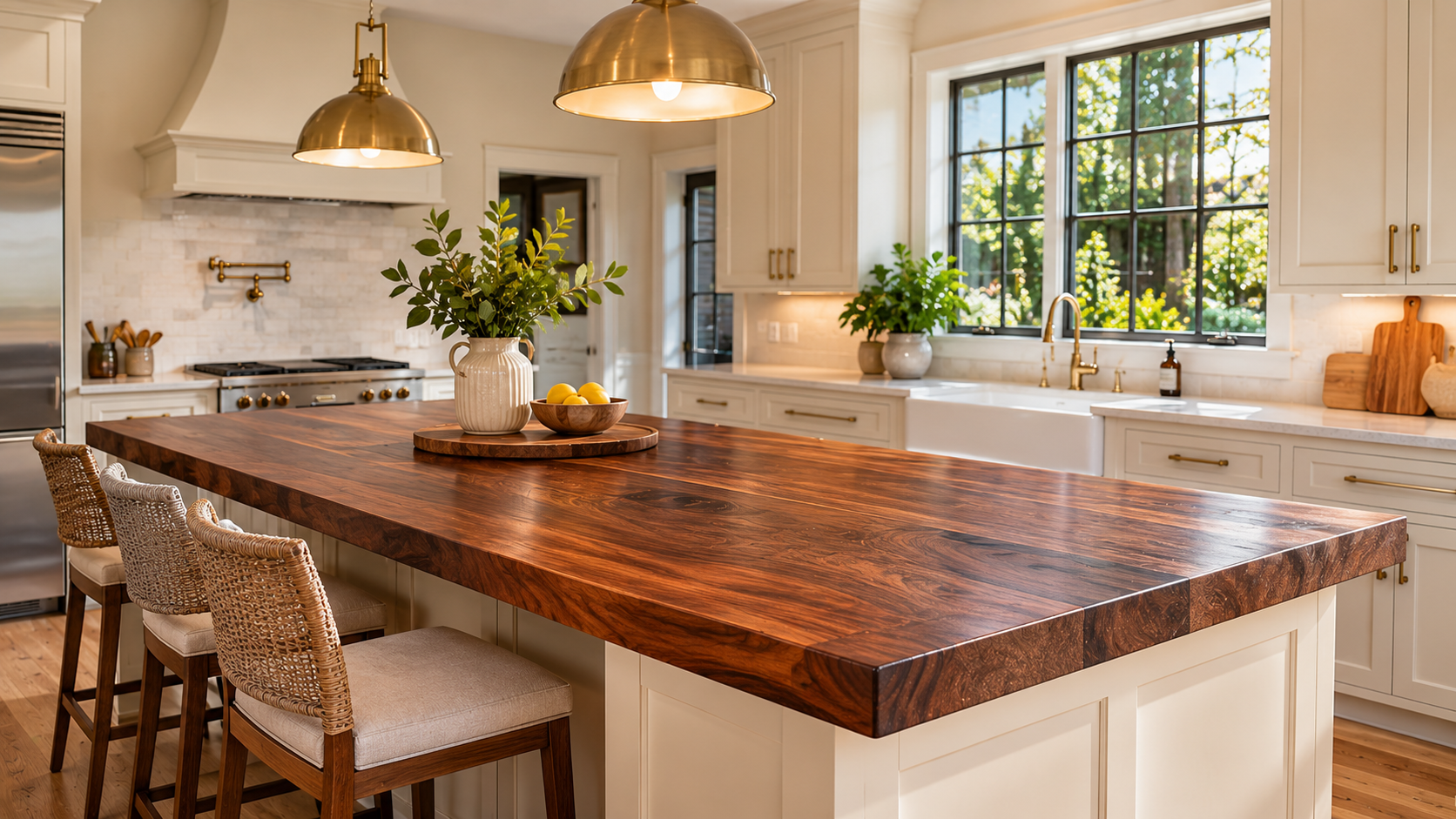
A timber countertop brings natural grain, warmth, and a tactile finish to a kitchen that stone or laminate cannot replicate exactly. Yet choosing wood kitchen countertops requires more than selecting a beautiful photograph. Species, grain construction, finish, moisture exposure, installation, and maintenance all influence whether the surface works for everyday cooking. An island used for serving and conversation needs different consideration from a counter surrounding a sink or a dedicated chopping station.
This guide explains the important decisions for homeowners, renovators, and designers shopping in the United States. It also examines Hardtwood’s made-to-order collection without treating a retailer’s marketing claims as independently tested performance. With a clear plan and the right questions, you can select a top that suits both your kitchen’s appearance and the work you expect it to handle.
Why Homeowners Choose Real Hardwood
Solid wood offers visible grain variation and a surface that can sometimes be sanded and refinished rather than removed after cosmetic damage. Wood kitchen countertops are particularly appealing in kitchens with painted cabinets, simple tile, and other materials that benefit from natural contrast.
Wood also brings responsibilities. It responds to humidity, may develop scratches, and needs prompt cleanup around water. A well-specified countertop can be practical, but it is not maintenance-free. Buyers should decide whether the character that develops through use is welcome or whether they would prefer a surface that changes less visibly.
Solid Hardwood Versus Wood-Look Surfaces
Solid hardwood is wood through its thickness. Veneered panels have a thinner decorative layer over another material, while laminate can reproduce a grain pattern without containing a solid hardwood working surface. These constructions differ in repairability, cost, weight, and moisture response. Hardtwood describes its countertops as solid hardwood rather than veneer over particleboard. That is a company specification worth confirming on the exact product order. Hardtwood
Where Wood Makes the Most Sense
Wood kitchen countertops can work across perimeter runs, islands, breakfast bars, and designated preparation areas. The ideal location depends on your household habits. A frequently splashed sink area demands careful detailing and diligent drying, while an island away from plumbing may be easier to maintain. Consider sunlight, heat sources, and how often the surface will be used for direct food preparation.
Comparing Popular Wood Species
Species affect color, grain appearance, hardness, and price. No species eliminates the need for a suitable finish or proper installation. When selecting wood kitchen countertops, view physical samples in your own lighting if possible.
Maple for a Bright, Clean Look
Maple typically has a pale, relatively fine-grained appearance. It suits modern kitchens and traditional butcher-block styling. Hardtwood lists maple among its countertop options and describes it as a durable domestic hardwood. Its lighter color may reveal some staining or discoloration more readily than a darker timber, depending on finish and use.
Walnut for Rich Contrast
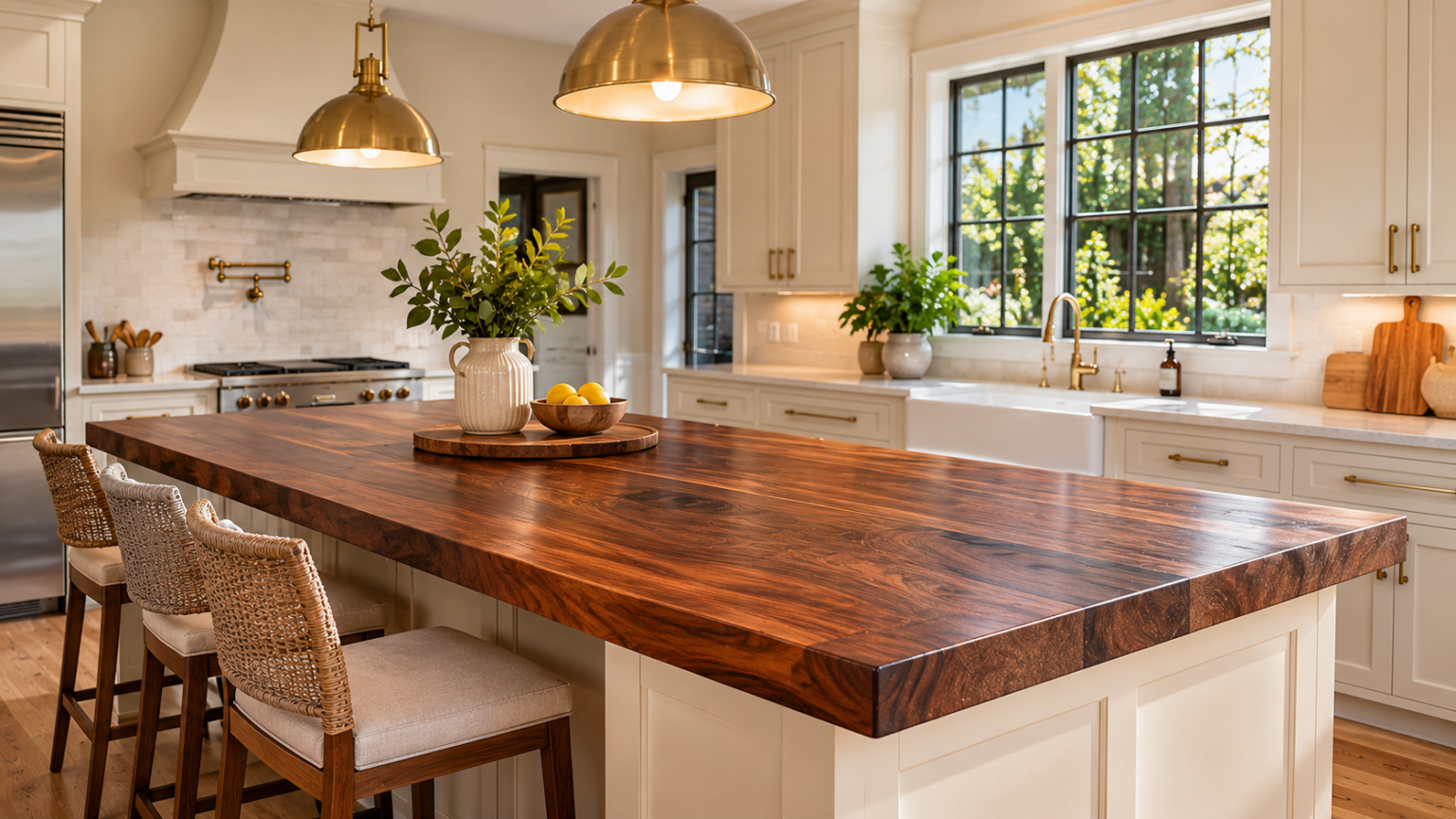
Walnut provides deeper brown tones and distinctive natural variation. Wood kitchen countertops made from walnut can create a striking island against white or cream cabinetry. Color differences between boards are normal, so ask whether the maker offers sample approval or guidance on expected variation. Walnut’s visual appeal should not be confused with an assurance of superior resistance to every dent or scratch.
White Oak and Red Oak
White oak offers pronounced grain and a relatively neutral palette, while red oak often has warmer pinkish or reddish undertones. Both can fit classic and contemporary spaces depending on the stain and edge detail. Hardtwood’s species guide lists white oak at 1,360 and red oak at 1,290 on the Janka hardness scale; these values describe indentation resistance under a particular test, not overall countertop performance. Hardtwood
Cherry and Other Options
Cherry is appreciated for its warm color, which can deepen with age and light exposure. Ash, mahogany, alder, and more visually dramatic imported species offer additional design possibilities. For wood kitchen countertops, check lead times, sample availability, the sourcing information provided, and whether a desired species suits the planned width and construction.
Understanding Face, Edge, and End Grain
How the boards are arranged changes both appearance and intended use. Hardtwood’s current countertop builder describes face grain, edge grain, and end grain as configuration options. These terms should be clarified before requesting a quote because they are not interchangeable. Hardtwood
Face Grain for Broad Natural Patterns
Face-grain construction exposes the wider face of the boards, emphasizing flowing patterns and large areas of visible figure. It is often chosen for decorative kitchen runs and statement islands. Wood kitchen countertops with face grain can look calm or dramatic depending on the species and board selection. Ask how long spans are supported and how expansion will be accommodated.
Edge Grain for Linear Design
Edge-grain construction places narrower strips on edge, producing parallel lines along the surface. It is familiar from many butcher-block designs and can suit practical, understated kitchens. It should still be installed and maintained according to the maker’s instructions; an edge-grain label does not make a counter impervious to standing water.
End Grain for Dedicated Chopping Areas
End grain displays the ends of many joined blocks, often creating a checkerboard pattern. Traditional chopping blocks use this orientation, and Hardtwood positions it as an option for direct cutting. Nevertheless, a food-contact finish, cleaning method, and any restrictions on chopping should be confirmed with the manufacturer. Wood kitchen countertops used as a food preparation surface require more deliberate hygiene habits than purely decorative islands.
Keep Knife Work and Food Safety Separate
Using a designated cutting board is often the simpler way to protect the main finish and manage raw-food preparation. Wash and dry food-contact equipment appropriately, prevent cross-contamination, and replace or refinish badly damaged surfaces when needed. Never infer that every sealed decorative counter is approved for direct chopping just because the underlying material is wood.
Choosing Finishes and Edge Details
The finish controls much of the countertop’s daily feel and maintenance routine. Hardtwood advertises a zero-VOC hardwax-oil finish it describes as food-contact safe, alongside an unfinished option. Those are seller claims about its specified finish, not permission to use every wood treatment around food. Always request the exact finish name, care guidance, and any applicable documentation. Hardtwood
Oil-Based and Film-Forming Approaches
Some finishes penetrate or combine with the wood surface and can be renewed locally; others form a more continuous protective film. Each has tradeoffs in appearance, water resistance, repair method, and approved cleaning products. For wood kitchen countertops near sinks, confirm how to maintain exposed cutouts, seams, and edges rather than concentrating only on the large flat top.
Edge Profiles and Live Edge Designs
A simple eased edge gives a clean appearance and can be comfortable during everyday use. More detailed profiles change the visual weight of a counter, while live edges preserve a natural irregular outline. Hardtwood advertises multiple edge profiles and live-edge designs.
Measuring and Ordering a Custom Top
Accurate dimensions are essential. Measure the existing cabinetry and account for wall irregularities, desired overhangs, appliance spacing, and any backsplashes. A final template completed by a qualified installer is especially useful where walls are not straight or sink openings require precision. Wood kitchen countertops can be made to order, but a custom top is only as accurate as the approved measurements.
Sinks, Cooktops, and Cutouts
Hardtwood says it can provide CNC-cut sink and cooktop openings based on supplied requirements. Before ordering, confirm the appliance model, cutout template, mounting style, required clearances, sealing instructions, and who assumes responsibility for measurement errors. Water exposure at a sink edge deserves particular attention. Follow appliance manufacturers’ heat and clearance requirements around cooktops.
Allowing for Wood Movement
Solid wood expands and contracts as indoor humidity changes. Fasteners and supporting cabinetry must accommodate that movement rather than restrain the top rigidly. For large wood kitchen countertops, ask the fabricator about expansion allowances, support across openings, seams, and any reinforcement. Improper mounting can contribute to distortion or splitting, even when the wood itself is well prepared.
Freight and Delivery Checks
Hardtwood describes made-to-order production in Farmingdale, New York, with crated freight delivery and a published lead-time estimate of four to six weeks. Policies and production schedules can change, so verify timing, shipping coverage, unloading requirements, and damage reporting before payment. Inspect packaging promptly and document damage according to the seller’s instructions. Instant Price
Budgeting Beyond the Listed Starting Price
The total cost of wood kitchen countertops includes more than the starting figure displayed in a collection. Species, thickness, dimensions, grain construction, edge profile, cutouts, delivery, professional fitting, and any finishing work can affect your budget. Hardtwood now promotes a configuration-based online builder that displays a price for selected options. A historic collection page may show different figures, so use a live written quote for the actual configuration.
Compare quotations using the same dimensions and scope. Find out whether tax, installation, disposal of the old top, sink reconnection, and sealing around openings are included. A lower material price is not necessarily the lowest completed-project cost.
Everyday Cleaning and Long-Term Maintenance
Keeping wood kitchen countertops in good condition usually begins with simple habits: wipe spills promptly, use trivets for hot cookware, and avoid leaving wet cloths or pooling water on the surface. For a finished top, follow the specific manufacturer’s cleaning and reapplication instructions rather than assuming all wood treatments tolerate the same products.
Cleaning Without Damaging the Finish
A soft cloth and mild cleaner approved for the finish may be appropriate for routine wiping. Do not use abrasive pads, harsh solvents, or large amounts of water without confirming compatibility. Dry the area after cleaning, especially around sinks, joints, and cutouts.
Repairing Marks and Wear
One attraction of solid wood kitchen countertops is that minor damage may be repairable. The correct response depends on finish type and damage depth. Light surface wear might need a maintenance coat, whereas deep burns, water damage, or separation call for professional assessment. Sanding indiscriminately can alter the finish and create uneven color.
Making a Sensible Final Choice
Before purchasing wood kitchen countertops, decide whether aesthetics or direct preparation use is your higher priority. Choose species and grain construction accordingly, inspect finish documentation, and confirm installation responsibilities in writing. Ask for samples, assess your family’s cleaning habits, and leave a reasonable budget for ongoing care.
Hardtwood’s selection provides examples of different hardwoods and build types, but your exact order should determine the final specification, price, and suitability.
Frequently Asked Questions
Are Hardwood Counters Practical in Busy Kitchens?
Yes, wood kitchen countertops can be practical with a suitable finish, careful installation, and consistent maintenance. They are not immune to scratches, heat, or prolonged moisture. Consider using cutting boards and protecting frequently wet areas.
Which Species Is Best for a Light Kitchen?
Maple and some oak finishes suit bright interiors, although there is no single best choice. Compare real samples with your cabinets, flooring, and lighting before deciding.
Can I Place a Sink in a Wood Counter?
It is possible when the fabricator supports the design and exposed edges are properly detailed and protected. For wood kitchen countertops around sinks, confirm sealing, ventilation, plumbing access, and ongoing care expectations.
Can I Cut Food Directly on the Surface?
Not every finished surface is intended for direct cutting. A dedicated end-grain work area may be designed for that purpose, but confirm manufacturer instructions and maintain proper food hygiene. A separate cutting board is often the easier option.
Do Custom Tops Require Professional Installation?
Professional fitting is advisable when the project involves difficult templates, large spans, sinks, cooktops, or unusual support requirements. The installer must accommodate natural wood movement and follow the supplier’s specifications.
How Can I Estimate the Total Price?
Enter dimensions and options into a current configurator or request a detailed written quote. Include shipping, taxes, installation, cutouts, and any additional finishing rather than comparing material prices alone.
Conclusion
Wood kitchen countertops combine natural character with options for customization and future refinishing, but they reward thoughtful planning. Select the species and grain construction for your actual uses, check the finish and installation details, and understand the care routine before ordering. If you are considering Hardtwood, use its current builder and written specifications instead of relying on older collection prices. The right top should look at home in your kitchen while fitting the way you cook, clean, and live.

Written by Twastia Editorial Team
Twastia Editorial Team shares practical insights about website design, SEO services, Google Ads, content marketing, social media, conversion rate optimization, and digital marketing strategy.
Last updated: Nov 12, 2026
Related posts from Twastia
Explore more useful articles from twastia.com about digital marketing, SEO, websites, ads, content, and growth strategy.