5 Advantages of Elderly Transportation Services: Best Benefits
Getting around the community is an essential part of everyday life. Whether someone needs to attend a medical appointment, buy […]
Getting around the community is an essential part of everyday life. Whether someone needs to attend a medical appointment, buy groceries, visit relatives, or participate in social activities, having reliable transportation makes these activities easier and more accessible.
However, transportation can become more challenging with age. Changes in eyesight, mobility, physical strength, or medical conditions may make driving difficult for some older adults. Other individuals may stop driving voluntarily, no longer own a vehicle, or live in communities with limited public transportation.
Losing access to convenient transportation can affect more than mobility. It may also influence independence, healthcare access, social relationships, and overall quality of life.
Understanding the 5 Advantages of Elderly Transportation Services can help older adults and their families explore practical ways to maintain an active lifestyle without relying entirely on personal vehicles.
Specialized transportation services may offer scheduled rides, accessible vehicles, assistance entering and leaving the vehicle, and travel to important destinations.
According to the National Institute on Aging, transportation options for older adults can include community programs, volunteer drivers, public transit, private services, and accessible vehicles for people who use mobility aids. National Institute on Aging
The 5 Advantages of Elderly Transportation Services extend beyond reaching a destination. The right service can help older adults preserve personal choice, maintain social connections, and participate in everyday activities with greater confidence.
This guide explores five important benefits, explains the available transportation options, and offers practical advice for selecting a suitable provider in the United States.
1. Safer and More Comfortable Travel
Safety is one of the most important considerations when arranging transportation for older adults.
Many seniors continue driving safely for years. However, some eventually experience physical or medical changes that can affect their ability to drive comfortably and confidently.
Limited neck mobility, changes in vision, difficulty entering vehicles, and certain medication effects may influence driving decisions.
The first benefit among the 5 Advantages of Elderly Transportation Services is access to transportation options designed around an individual’s mobility needs.
Assistance With Entering and Exiting Vehicles
Some older adults have difficulty stepping into high vehicles, standing for extended periods, or maintaining balance while entering and leaving a car.
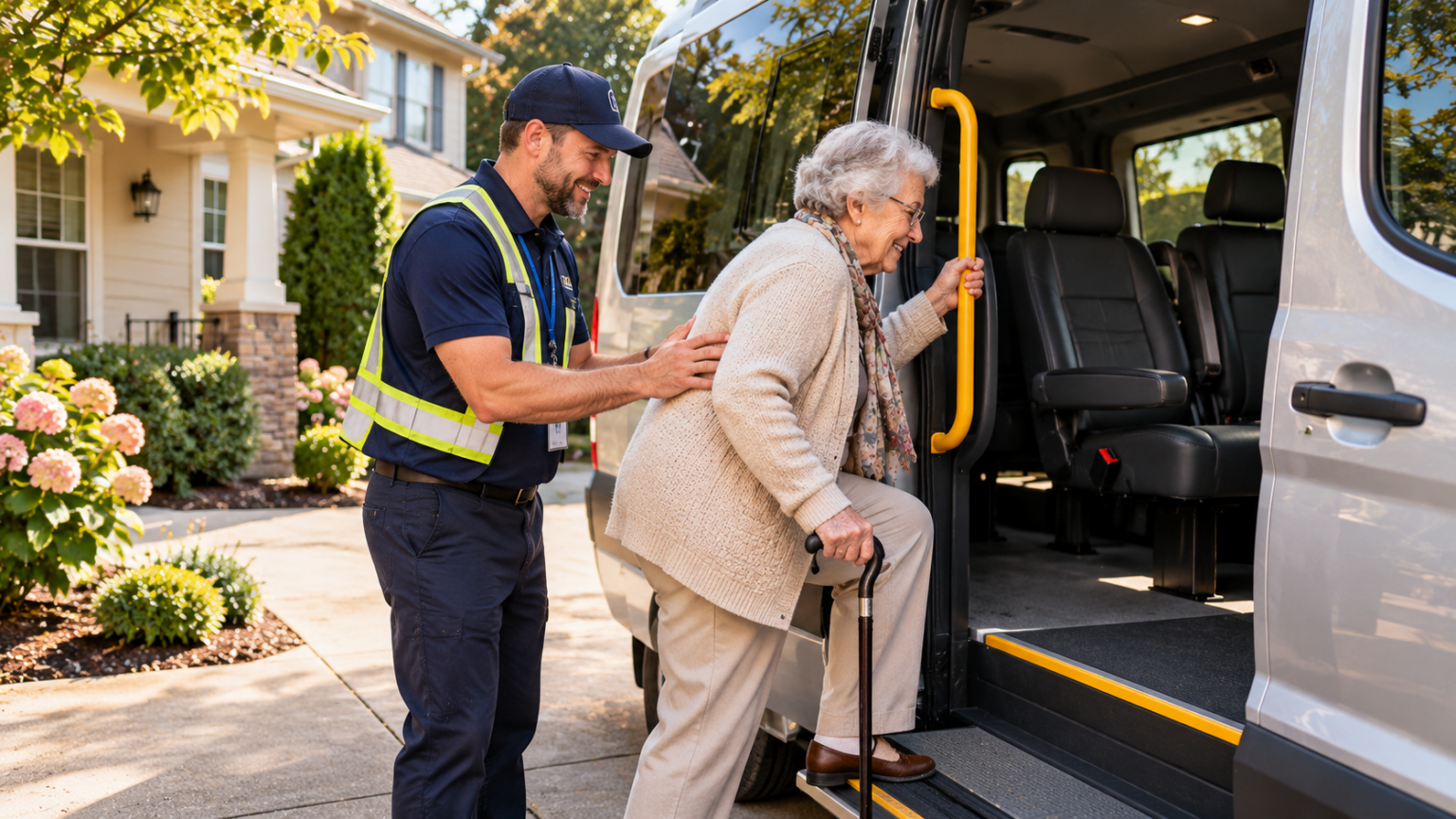
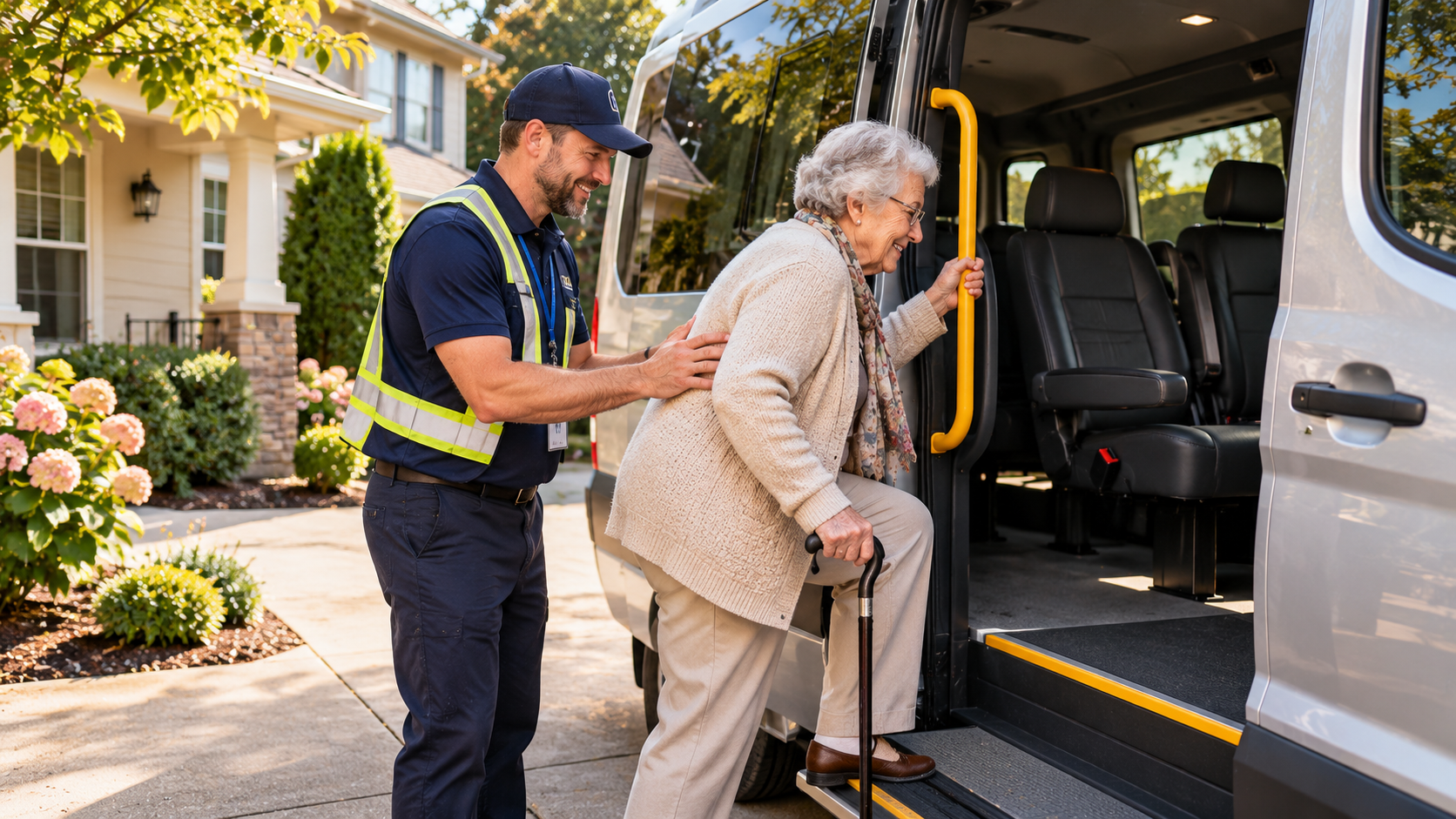
Depending on the provider, specialized transportation may include lower vehicle steps, grab handles, wheelchair lifts, or direct assistance from trained staff.
A driver who understands the passenger’s mobility needs can help make boarding and exiting less stressful.
However, not every senior transportation service offers physical assistance. Families should confirm the level of support before booking.
Access to Suitable Vehicles
Transportation providers may offer standard passenger vehicles, accessible vans, or vehicles designed to accommodate wheelchairs and other mobility equipment.
For wheelchair users, suitable equipment and properly trained staff are especially important.
The National Aging and Disability Transportation Center emphasizes reliable, accessible transportation and individualized assistance for older adults and people with disabilities. NADTC
Reduced Pressure to Drive
An older adult who no longer feels comfortable driving may still want to remain active in the community.
Choosing appropriate transportation can provide an alternative without forcing the person to give up important activities.
An essential consideration within the 5 Advantages of Elderly Transportation Services is matching the transportation arrangement to the passenger’s actual abilities and preferences.
Safety Features Worth Checking
When evaluating a service, ask about driver screening and training, vehicle maintenance, working seat belts, mobility-device securement, insurance, and emergency procedures.
Transportation providers should also explain what happens if a passenger needs assistance during a journey.
2. Easier Access to Healthcare and Medical Appointments
Medical appointments often become more frequent as people get older.
Routine checkups, specialist consultations, rehabilitation sessions, dental appointments, and outpatient treatments may require dependable travel arrangements.
Missing a necessary appointment because transportation is unavailable can delay care or create additional scheduling difficulties.
One of the most practical 5 Advantages of Elderly Transportation Services is helping older adults reach healthcare facilities when they need to.
Reliable Rides to Scheduled Appointments
Some senior transportation providers allow passengers to schedule rides in advance.
This can be particularly helpful for individuals who attend recurring physical therapy sessions, dialysis appointments, or other ongoing treatments.
A predictable transportation arrangement can make it easier to organize medical visits and reduce last-minute travel problems.
Door-to-Door and Assisted Transportation
Transportation assistance can mean different things depending on the provider.
Curb-to-curb service usually involves picking up and dropping off a passenger at the curb.
Door-to-door service may involve assistance between the vehicle and building entrance.
Door-through-door service may include more extensive help entering a building or reaching an agreed-upon location.
The NADTC identifies these different levels of assistance as options that can support older adults with varying transportation needs. NADTC
Support for Family Caregivers
Family members may work full-time, care for children, or live far away.
Arranging reliable transportation can help ensure an older relative has a ride when family members are unavailable.
This healthcare benefit of the 5 Advantages of Elderly Transportation Services can make appointment planning more manageable for the entire household.
Know the Difference Between Medical Transport and Emergency Care
Ordinary senior transportation is not an emergency ambulance service.
Some passengers require non-emergency medical transportation with specific equipment or supervision, while others need only a regular accessible ride.
If an individual needs urgent medical treatment, call emergency services rather than scheduling a routine transportation provider.
3. Greater Independence and Personal Freedom
Independence means more than living alone or completing household tasks without assistance.
It also involves having opportunities to make personal decisions, maintain routines, and participate in activities that bring meaning to everyday life.
For older adults who no longer drive, relying entirely on relatives for transportation can sometimes limit flexibility.
Another important benefit in the 5 Advantages of Elderly Transportation Services is the opportunity to maintain greater control over daily activities.
Make Plans Without Depending on Family Availability
A senior who has access to scheduled transportation may be able to arrange grocery shopping, attend community events, or visit friends without asking a relative to provide every ride.
That flexibility can make a meaningful difference, especially when family members have demanding schedules.
It also allows older adults to continue participating in activities they have enjoyed for years.
Continue Everyday Errands
Regular errands are an important part of independent living.
Transportation services may help older adults travel to grocery stores, pharmacies, banks, community centers, and other local destinations.
Some programs offer specific shopping routes, while private services may provide more flexible pickup arrangements.
The independence component of the 5 Advantages of Elderly Transportation Services involves giving individuals practical transportation choices rather than assuming that aging should limit their activities.
Preserve Dignity and Personal Choice
Older adults should be included in decisions about their transportation whenever possible.
Some people prefer an individual ride, while others enjoy community shuttles or shared transportation programs.
A service that accommodates personal preferences can help the passenger feel more comfortable and respected.
AARP’s June 2026 caregiver guidance highlights how access to transportation can support older adults who wish to remain involved in their communities and continue living independently. AARP
Encourage Confidence Through Familiar Routines
Using the same reliable service for regular appointments or errands may help someone become more comfortable with the process.
For example, an older adult might schedule a weekly shopping trip every Tuesday or attend a community activity at the same time each week.
Such routines can make transportation easier to plan and reduce uncertainty.
For many families, this is one of the most meaningful aspects of the 5 Advantages of Elderly Transportation Services.
4. Better Social Connections and Community Participation
Social relationships are important throughout life.
Spending time with friends, attending community events, visiting relatives, and participating in hobbies can contribute to a sense of belonging.
However, transportation barriers may make it difficult for some older adults to stay connected with their communities.
The fourth benefit among the 5 Advantages of Elderly Transportation Services is the ability to maintain regular social activities.
Reduce Transportation Barriers to Social Activities
Without reliable transportation, an older adult may miss opportunities to visit a friend, attend a religious service, or participate in an exercise class.
Senior transportation can help make these activities more accessible.
Many community transportation programs provide rides to senior centers, recreational activities, and social gatherings.
For example, New York City’s Department for the Aging supports transportation programs for qualifying older residents traveling to essential appointments and certain community activities. NYC Aging
Support Emotional Well-Being
The Centers for Disease Control and Prevention identifies limited transportation as one possible contributor to social isolation.
It also notes that older adults may face increased risks of isolation because of mobility limitations, living circumstances, or reduced social opportunities. CDC
Transportation is not a treatment for loneliness or mental health conditions. Nevertheless, removing a transportation barrier can make it easier for someone to participate in meaningful social experiences.
Encourage Participation in Hobbies
Older adults may enjoy gardening groups, book clubs, community exercise classes, volunteering, cultural events, or educational programs.
Accessible transportation can help them continue these interests even if driving is no longer practical.
An important point within the 5 Advantages of Elderly Transportation Services is that transportation supports activities chosen by the older adult, not merely essential appointments.
Community Rides Can Create New Opportunities
Some local programs organize group rides to community centers, shopping destinations, and recreational locations.
Shared transportation may be particularly useful for people who enjoy social interaction during community outings.
However, passengers who need a quieter journey or additional personal assistance may prefer an individual service.
The social value of the 5 Advantages of Elderly Transportation Services comes from making participation easier and more consistent.
5. Greater Convenience and Peace of Mind for Families
Family caregivers often help older relatives with grocery shopping, medical appointments, household responsibilities, and transportation.
Providing regular rides can require significant time, especially when appointments are frequent or family members live in different areas.
The final benefit among the 5 Advantages of Elderly Transportation Services is the convenience that dependable transportation can offer both older adults and their families.
Reduce Scheduling Conflicts
Families may need to coordinate transportation around work meetings, school schedules, and other commitments.
A transportation provider with dependable booking procedures can help reduce some of these conflicts.
For example, a family caregiver might arrange recurring transportation for an older parent who attends weekly therapy sessions.
The caregiver can then focus on other support needs while knowing that a transportation arrangement has been organized.
Provide More Predictable Travel Arrangements
Reliable providers should clearly communicate pickup times, destinations, booking procedures, and cancellation policies.
Some services may offer ride confirmations, dispatch support, or updates about arrival times.
These features can make travel easier to coordinate, although their availability varies.
The convenience benefit of the 5 Advantages of Elderly Transportation Services depends heavily on the provider’s reliability and communication.
Support Families Living Far Apart
Transportation can be especially challenging when relatives live in another city or state.
Local senior transportation options may provide practical assistance for routine errands and medical appointments that do not require a family member to be physically present.
However, transportation services do not automatically provide caregiving, medical monitoring, or supervision inside a destination.
Families should clarify whether the passenger requires an escort or additional care.
Make a Backup Plan
Even reliable transportation providers can experience delays or cancellations.
For important appointments, establish a backup contact and ask how the provider handles unexpected service interruptions.
An organized transportation plan can make everyday responsibilities more manageable.
This combination of convenience, predictability, and appropriate support completes the 5 Advantages of Elderly Transportation Services.
Comparing the Five Main Benefits
| Advantage | How it helps older adults | How it helps families |
|---|---|---|
| Safer, more comfortable travel | Transportation suited to mobility needs | Greater confidence in travel arrangements |
| Easier healthcare access | Helps reach scheduled medical visits | Reduces appointment coordination problems |
| Greater independence | Supports personal errands and routines | Less dependence on relatives for every trip |
| Social connections | Makes community activities more accessible | Encourages continued participation |
| Convenience and peace of mind | Provides predictable transportation choices | Helps manage busy caregiving schedules |
The actual benefits depend on service quality, accessibility, price, availability, and the passenger’s individual circumstances.
Types of Transportation Available for Older Adults
Senior transportation is not one single type of service.
In the United States, options include nonprofit programs, public transportation, private car services, volunteer transportation, and specialized accessible vehicles.
Public Transit and Paratransit
Some communities offer discounted public transit fares for older adults.
Eligible people with disabilities may also qualify for ADA complementary paratransit where the program is available.
Eligibility and geographic coverage are determined by applicable transit rules, not simply by age.
Community and Volunteer Driver Programs
Local agencies, nonprofit organizations, and community groups may provide low-cost or free transportation.
These programs sometimes focus on medical appointments, shopping, or essential errands.
Private Senior Transportation
Private companies may provide individual rides, scheduled appointments, and different levels of assistance.
Charges vary by provider, location, trip length, vehicle requirements, and additional services.
Non-Emergency Medical Transportation
Non-emergency medical transportation, or NEMT, is intended for eligible non-emergency healthcare travel.
Some services provide accessible vehicles, while others involve more specialized arrangements.
The National Institute on Aging explains that certain transportation assistance may be available through Medicaid, while Medicare transportation coverage is generally much more limited and subject to specific conditions. National Institute on Aging
How to Choose the Right Senior Transportation Service
Understanding the 5 Advantages of Elderly Transportation Services is useful, but selecting an appropriate provider requires evaluating the passenger’s needs.
Before booking, consider the person’s mobility, health-related travel requirements, preferred schedule, budget, and comfort with shared or individual transportation.
Ask whether the service offers wheelchair-accessible vehicles, physical assistance, recurring rides, and reliable return-trip arrangements.
Also verify the driver’s qualifications, insurance, service area, cancellation policy, and emergency procedures.
Questions to Ask Before Booking
- Does the provider offer curb-to-curb, door-to-door, or door-through-door assistance?
- Are vehicles accessible for walkers or wheelchairs when needed?
- Is the driver trained to assist passengers with mobility limitations?
- How far in advance must rides be scheduled?
- Does the price include waiting time, assistance, and return transportation?
- What happens if an appointment takes longer than expected?
- Is an escort or caregiver permitted to accompany the passenger?
- What procedures are followed if the passenger becomes unwell?
The right service should be selected based on documented capabilities rather than advertising claims alone.
How Much Do Senior Transportation Services Cost?
Costs vary widely.
Some community-based transportation programs are free or accept voluntary donations. Others charge fixed fares, mileage-based fees, hourly rates, or additional amounts for specialized assistance.
Private transportation generally costs more than subsidized community programs, but it may offer greater scheduling flexibility.
Medicaid may cover eligible non-emergency medical transportation under applicable state requirements. Original Medicare generally does not cover routine non-emergency car rides, although certain medically necessary ambulance services may qualify.
For accurate pricing, contact providers directly and ask for the total cost of a typical round trip.
Frequently Asked Questions
What are elderly transportation services?
Elderly transportation services help older adults travel to appointments, shops, community activities, and other destinations. Depending on the provider, they may include accessible vehicles, scheduled rides, and boarding assistance.
Are senior transportation services only for medical appointments?
No. Many services provide transportation for shopping, social events, senior centers, religious activities, and other everyday destinations. Availability depends on the program.
Can older adults who use wheelchairs access transportation services?
Yes, certain providers operate wheelchair-accessible vehicles. Confirm vehicle compatibility, wheelchair securement procedures, and staff training before arranging the ride.
Are elderly transportation services free?
Some government-supported, nonprofit, and volunteer programs offer free or low-cost rides. Private transportation companies usually charge fees.
Does Medicare cover transportation for seniors?
Original Medicare generally does not cover routine transportation by car or van. It may cover qualifying ambulance transportation. Some Medicare Advantage plans offer additional transportation benefits, so members should check their specific coverage.
How can families find transportation services near them?
Families can contact their local Area Agency on Aging, public transit authority, or community senior center. The U.S. Eldercare Locator is also available at eldercare.acl.gov or by calling 1-800-677-1116. National Institute on Aging
Conclusion
Reliable transportation can play an important role in helping older adults remain active, connected, and independent.
From attending healthcare appointments to visiting friends and participating in community activities, suitable transportation options can help reduce mobility barriers that affect everyday life.
The 5 Advantages of Elderly Transportation Services include safer and more comfortable travel, easier access to healthcare, greater independence, stronger social connections, and greater convenience for family caregivers.
However, every older adult has different transportation needs. Some people require accessible vehicles and assistance, while others simply need a reliable ride at the right time.
By exploring local programs, comparing providers, and discussing individual preferences, families can find transportation arrangements that support dignity, independence, and quality of life.
Ultimately, the 5 Advantages of Elderly Transportation Services demonstrate why transportation should be considered an important part of planning for healthy, connected aging.

Written by Twastia Editorial Team
Twastia Editorial Team shares practical insights about website design, SEO services, Google Ads, content marketing, social media, conversion rate optimization, and digital marketing strategy.
Last updated: Nov 7, 2026
Related posts from Twastia
Explore more useful articles from twastia.com about digital marketing, SEO, websites, ads, content, and growth strategy.