fire extinguisher: The Best Guide to Home and Business Safety
In modern residential and commercial property management, maintaining robust emergency preparedness systems is fundamental to protecting lives, preserving valuable physical […]

In modern residential and commercial property management, maintaining robust emergency preparedness systems is fundamental to protecting lives, preserving valuable physical assets, and ensuring building code compliance. Among all safety devices available to property owners across the United States, equipping your property with a reliable
fire extinguisher is one of the most effective measures you can take to prevent a small flame from escalating into a catastrophic structural disaster. According to the National Fire Protection Association (NFPA), the vast majority of fires in homes and commercial facilities can be successfully extinguished in their initial stages if proper suppression equipment is readily accessible and operated correctly.
However, simply purchasing a unit and mounting it on a wall is not enough to guarantee safety. Selecting the correct fire extinguisher model requires understanding how different fire suppression agents operate against specific fuel sources, such as electrical wiring, cooking oils, wood, paper, or
flammable liquids. Furthermore, property owners must understand proper installation heights, routine maintenance protocols, hydrostatic testing schedules, and emergency operating techniques. In this ultimate comprehensive guide, we will examine how different fire classes function, analyze popular suppression agents, break down the PASS operation method, outline OSHA compliance rules, and share essential inspection tips to keep your property protected year-round.
Understanding Fire Classes and How Every fire extinguisher Works
To choose and operate safety equipment effectively during an emergency, it is vital to understand the science of fire and how different suppression agents interrupt combustion.
The Five Main Fire Classes (Class A, B, C, D, K)
Fires are categorized into five distinct classes based on the fuel source feeding the flames. Using the wrong suppression agent can be extremely dangerous—for instance, spraying water onto an electrical or grease fire can cause immediate electrocution or an explosive fireball.
- Class A: Involves ordinary solid combustibles such as wood, paper, cardboard, cloth, rubber, and many plastics.
- Class B: Involves flammable liquids and gases, including gasoline, kerosene, oil-based paints, solvents, propane, and butane.
- Class C: Involves energized electrical equipment, such as appliances, wiring, circuit breakers, power tools, and surge protectors.
- Class D: Involves combustible metals, including magnesium, titanium, potassium, sodium, and zirconium, typically found in industrial manufacturing plants.
- Class K: Involves commercial kitchen cooking media, such as high-temperature vegetable oils, animal fats, and deep fryers.
Because understanding how a fire extinguisher combats specific fuel sources is essential, manufacturers place clear letter ratings and pictorial symbols on every unit’s front label to indicate which fire classes it can safely extinguish.
How a fire extinguisher Suppresses Flames
Fire relies on a continuous chemical reaction known as the “fire tetrahedron,” which requires four elements: fuel, oxygen, heat, and an uninhibited chemical chain reaction. Removing any one of these four elements immediately collapses the combustion process.
When you discharge a fire extinguisher, the pressurized chemical agent smothers the fuel to cut off atmospheric oxygen, absorbs heat energy to cool the burning material, or chemically interrupts the free radicals sustaining the flame. The internal cylinder contains the chemical agent alongside a pressurized propellant gas (usually nitrogen or carbon dioxide) that forces the agent out through the discharge nozzle when the operating lever is squeezed.
Common Types of Fire Extinguishers and Their Uses
Different environments require specialized suppression agents to handle specific fire hazards safely and efficiently.
ABC Dry Chemical Units
Multipurpose ABC dry chemical units are the most widely installed safety devices in American homes, schools, and general office buildings. These units contain monoammonium phosphate, a fine yellow powder that coats burning solid materials (Class A), smothers flammable liquid vapors (Class B), and does not conduct electricity (Class C).
ABC units are affordable, highly effective, and available in various sizes, ranging from compact 2.5-pound household models to heavy-duty 10-pound or 20-pound commercial canisters. Their primary drawback is that the discharged chemical powder leaves a fine residue that requires thorough cleanup and can damage sensitive electronic circuit boards.
Carbon Dioxide (CO2) Units
Carbon dioxide units contain pressurized CO2 gas under high pressure. When discharged, the gas expands rapidly, cooling the surrounding air and starving the fire of oxygen.
CO2 units are rated strictly for Class B (flammable liquids) and Class C (electrical equipment) fires. Because carbon dioxide is a clean agent that evaporates completely without leaving any chemical powder residue behind, CO2 units are the preferred choice for server rooms, computer laboratories, delicate electronic manufacturing spaces, and commercial electrical panels. However, CO2 units are ineffective against Class A fires because the lightweight gas dissipates quickly, allowing solid embers to reignite.
Class K Wet Chemical Units for Kitchens
Commercial restaurant kitchens and residential cooking spaces present unique fire hazards due to high-temperature cooking oils and grease fryers. Standard dry chemical agents often fail on deep-fat fryer fires because the oil remains hot enough to reignite even after flames are temporarily knocked down.
Class K wet chemical units contain a specialized potassium acetate or potassium citrate solution. When sprayed onto hot grease, the wet chemical agent undergoes a chemical reaction called saponification, forming a thick, soapy foam layer over the liquid oil. This foam blanket smothers oxygen, cools the hot oil below its ignition point, and prevents dangerous grease splashing.
How to Select the Right fire extinguisher for Your Property
Selecting an appropriate fire extinguisher for your home or commercial building involves matching the unit’s capacity, fire rating, and weight to the specific hazards present in each room.
Residential Safety Needs and Strategic Placement
In residential settings, every home should have at least one multi-purpose unit on every living level, plus dedicated units in high-risk zones.
- Kitchen: Install a Class K or specialized kitchen unit near the room exit, at least 30 feet away from the stove, so it remains accessible if cooking oil ignites.
- Garage and Workshop: Place a 5-pound or 10-pound ABC dry chemical unit near the door to handle paints, solvents, auto fluids, and power tool hazards.
- Bedrooms and Living Areas: Mount a 2.5-pound or 5-pound ABC unit in hallways or near stairwells for easy retrieval during emergency evacuations.
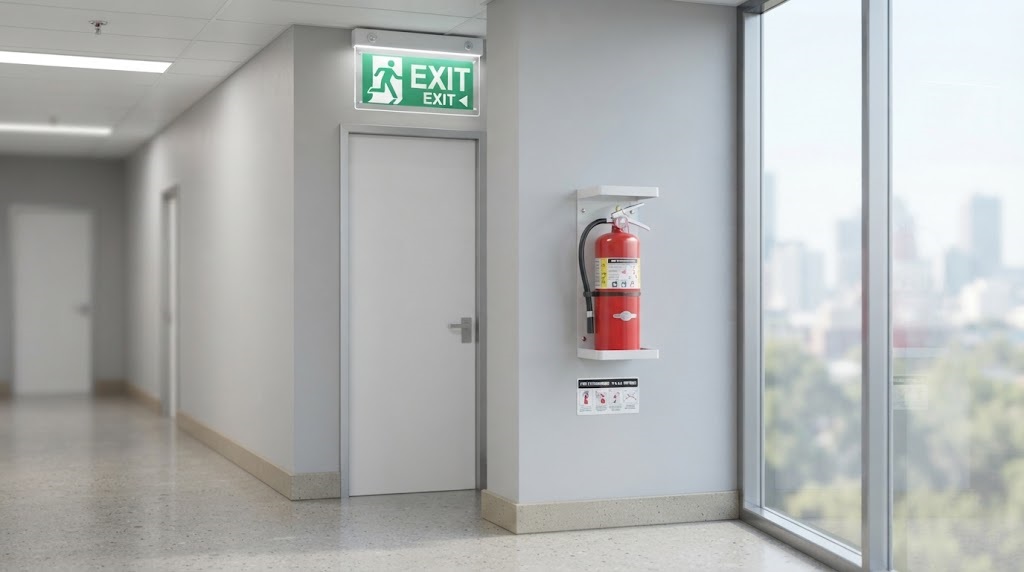
Placing a portable fire extinguisher in key locations like the kitchen, garage, and workshop ensures quick access during critical early seconds. Units should always be mounted on wall brackets 3.5 to 5 feet off the floor near exit doorways so users can fight flames with their back toward an escape route.
Commercial Compliance and OSHA Standards
For commercial building owners, workplace fire safety is strictly regulated by the Occupational Safety and Health Administration (OSHA) under standard 29 CFR 1910.157, alongside local NFPA 10 standards.
Commercial regulations mandate that:
- Travel Distances: Employees must not travel more than 75 feet to reach a Class A unit, or more than 50 feet to reach a Class B unit in high-hazard areas.
- Mounting Heights: Units weighing under 40 pounds must be mounted so the top is no higher than 5 feet off the floor. Units weighing over 40 pounds must be mounted with the top no higher than 3.5 feet off the floor.
- Clear Accessibility: Access paths to units must remain completely unobstructed by boxes, furniture, or inventory at all times.
- Signage: High-visibility wall signs or location markers must indicate unit placement when obscured from direct view.
The PASS Method: How to Use a fire extinguisher Safely
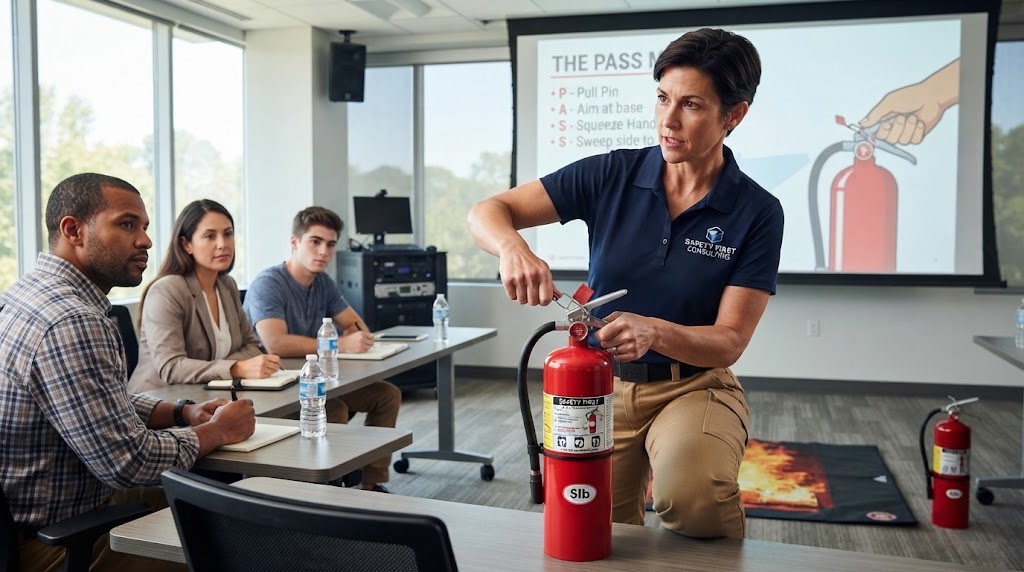
Knowing how to operate a fire extinguisher during an emergency saves lives and prevents panic. Fire safety professionals across North America teach the universal “PASS” acronym to help users remember the proper four-step operating technique.
Step-by-Step Operating Instructions
Before attempting to suppress a fire, always ensure the building fire alarm is activated, emergency services (911) have been called, and you have a clear, unblocked emergency exit path behind you.
- P – Pull the Pin: Hold the unit upright and pull out the safety pin located at the top of the operating handle. Pulling the pin breaks the plastic tamper seal that prevents accidental discharge.
- A – Aim Low: Point the discharge nozzle or hose at the very base of the fire where the fuel source is burning, rather than aiming at the rising flames or smoke.
- S – Squeeze the Lever: Squeeze the top operating lever slowly and evenly to release the pressurized suppression agent. Releasing the lever stops the flow of the agent.
- S – Sweep from Side to Side: Sweep the nozzle in a controlled, side-to-side motion across the base of the fire, moving forward slowly as the flames are knocked down until the fire is completely out.
Aiming a fire extinguisher at the base of the fire rather than the tops of the flames ensures that the chemical agent hits the actual fuel source sustaining combustion.
When to Fight and When to Evacuate
It is critical to recognize when a fire is too large or dangerous to fight with portable equipment. You should attempt to use portable equipment ONLY if:
- The fire is small, contained, and in its early “incipient” stage (such as a small trash can fire or localized pan flair-up).
- The room is not filled with thick, toxic smoke or extreme heat.
- You have an unobstructed, safe escape route directly behind you.
- You are physically capable and familiar with operating the device.
If the fire spreads rapidly, blocks your escape route, or fills the space with dense smoke, immediately evacuate the building, close doors behind you to slow flame spread, and wait for professional firefighters to arrive.
Maintenance, Inspection, and Expiration Standards
A neglected fire extinguisher may fail to discharge when an emergency occurs due to loss of pressure, chemical caking, or nozzle blockages. Establishing a routine maintenance schedule is essential for home and business safety.
Monthly Visual Inspection Checklist
Property owners should perform a simple 30-day visual check on every unit across their facility:
- Accessibility Check: Confirm the unit is mounted in its designated location without obstruction.
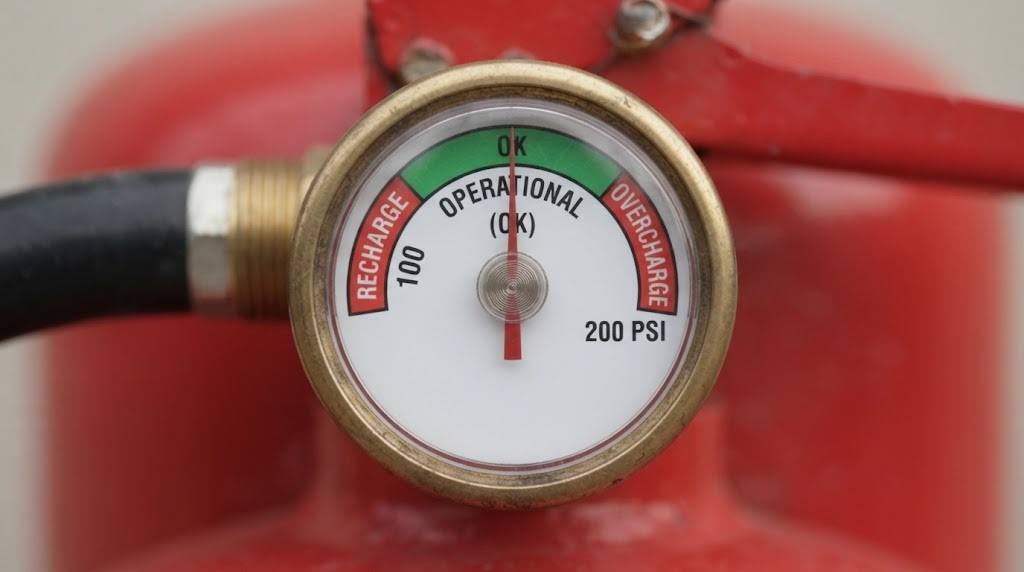
- Pressure Gauge Check: Ensuring that your fire extinguisher pressure gauge indicator rests in the green zone verifies that the cylinder holds adequate operational charge.
- Physical Condition Check: Inspect the cylinder body for rust, dents, cracks, or leakage. Verify the safety pin and plastic tamper seal are intact.
- Nozzle Check: Examine the discharge hose and nozzle to ensure no dust, spiders, or debris block the opening.
- Agitate Dry Powder: Gently invert dry chemical units upside down for a few seconds to loosen settled chemical powder at the bottom of the cylinder.
Professional Recharge and Hydrostatic Testing
In commercial buildings, NFPA 10 mandates annual professional inspections by certified technicians, who sign and date the attached maintenance tag.
Additionally, units require periodic internal maintenance and hydrostatic pressure testing:
- 6-Year Maintenance: Dry chemical units undergo internal inspection and chemical replacement every six years.
- 12-Year Hydrostatic Test: Metal cylinders undergo hydrostatic pressure testing every 12 years to verify structural integrity under pressure.
- Immediate Recharge: Any unit that is discharged—even for just a few seconds during a false alarm—must be recharged immediately by a professional fire equipment dealer or replaced if it is a disposable single-use model.
Frequently Asked Questions
How often should a fire extinguisher be inspected?
A visual inspection should be performed monthly by the property owner to check pressure gauges and accessibility. Commercial buildings require an official annual inspection by a certified technician, along with 6-year internal maintenance and 12-year hydrostatic testing.
What is the lifespan of a fire extinguisher?
Rechargeable commercial units typically last 10 to 12 years or longer if properly maintained and hydrostatically tested. Disposable household units generally have a maximum lifespan of 10 to 12 years from their manufacturing date stamped on the cylinder.
What does ABC mean on a fire extinguisher?
The “ABC” designation indicates that the unit is rated to fight Class A (ordinary combustibles like wood and paper), Class B (flammable liquids like gasoline and oil), and Class C (energized electrical equipment) fires safely.
What is the difference between a rechargeable and disposable fire extinguisher?
Rechargeable units feature heavy-duty metal valves and can be serviced, refilled, and pressurized after discharge. Disposable units feature plastic valves, are designed for single use only, and must be discarded and replaced once discharged or expired.
Can a fire extinguisher freeze in cold weather?
Standard water and wet chemical units will freeze if stored in temperatures below 40°F (4°C), damaging the cylinder. However, specialized dry chemical, CO2, and freeze-protected units are rated for sub-zero outdoor storage in unheated garages or outdoor sheds.
What should I do if the pressure gauge is in the red zone?
If the pressure gauge needle rests in the left red zone (“Recharge”), the cylinder has lost pressure and must be serviced or replaced immediately. If the needle rests in the right red zone (“Overcharged”), the unit presents a safety risk and should be evaluated by a professional.
How do I dispose of an expired fire extinguisher?
Never throw a pressurized unit into household trash. Discharge any remaining pressure outdoors into an empty container if safe to do so, remove the head assembly if required by local waste management, and take the metal cylinder to a local hazardous waste collection site or scrap metal recycler.
Conclusion
Equipping your property with reliable emergency equipment is one of the most vital investments you can make in home and business safety. Having a functional fire extinguisher readily accessible gives property owners complete peace of mind, knowing they can respond rapidly to unexpected incipient fires. By selecting the correct unit for specific room hazards, understanding the five fire classes,
maintaining a monthly inspection schedule, and mastering the universal PASS method, you create a safe environment for your family, employees, and visitors. Do not wait for an emergency to evaluate your safety readiness. Take time today to check pressure gauges, review emergency evacuation routes, and ensure that purchasing the right fire extinguisher, inspecting it monthly, and learning the PASS method remain top priorities for your home or business safety protocol.

Written by Twastia Editorial Team
Twastia Editorial Team shares practical insights about website design, SEO services, Google Ads, content marketing, social media, conversion rate optimization, and digital marketing strategy.
Last updated: Oct 21, 2026
Related posts from Twastia
Explore more useful articles from twastia.com about digital marketing, SEO, websites, ads, content, and growth strategy.