Best Solar Pool Heater: The Ultimate Guide to Extending Your Swim Season
Owning a swimming pool in your backyard is one of the ultimate luxuries of American suburban life, offering a refreshing […]
Owning a swimming pool in your backyard is one of the ultimate luxuries of American suburban life, offering a refreshing sanctuary during scorching summer afternoons and a wonderful focal point for weekend family gatherings. However, depending on where you reside in the
United States, the natural swimming season can be frustratingly short. As soon as autumn breezes arrive or spring evenings dip in temperature, unheated pool water quickly turns uncomfortably cold, rendering your expensive backyard investment unusable for a significant portion of the year.
While traditional gas and electric pool heaters can keep the water warm, they come with a staggering financial penalty, often resulting in monthly utility bills that skyrocket into the hundreds of dollars. To enjoy a warm, comfortable swim without triggering utility shock, homeowners are increasingly turning toward renewable energy. Investing in the Best Solar Pool Heater is the most cost-effective and environmentally friendly way to dramatically extend your swimming season by several months.
Solar pool heating technology has advanced significantly over the past decade. Modern systems harness the infinite, free thermal energy of the sun, circulating your pool water through specially designed collectors where it absorbs heat before returning it to your basin.
Whether you own a massive inground pool in Florida or a compact above-ground setup in the Midwest, selecting the right equipment requires understanding how different thermal collectors operate, evaluating your roof space versus ground placement options, and analyzing your local climate conditions.
In this comprehensive guide, we will explore the core mechanics of eco-friendly pool warming, review the different categories of thermal systems available on the market, outline critical factors to consider during your shopping process, and answer the most frequently asked questions about operating and maintaining your investment.
Why Choose Solar Over Gas and Electric Heaters?

Before diving into specific product categories, it is helpful to understand why switching to renewable thermal energy represents such a monumental financial and environmental upgrade over traditional heating methods.
Eliminating Skyrocketing Monthly Utility Bills
Traditional gas-fired pool heaters consume massive amounts of natural gas or propane, while electric resistance and heat pump systems draw heavy continuous electrical loads from your home grid. Operating a conventional heater can easily add $200 to $500 onto your
monthly utility bills during the peak swim season. In contrast, once you purchase and install the Best Solar Pool Heater for your specific setup, the fuel source is 100% free. The sun does not send a monthly invoice, meaning your long-term operational costs drop to near zero, allowing the system to pay for itself within two to three seasons of use.
Eco-Friendly Sustainability and Reduced Carbon Footprint
Environmental consciousness is a major priority for modern American households. Conventional gas heaters burn fossil fuels, releasing carbon dioxide and other greenhouse gases directly into the atmosphere. By utilizing the sun’s thermal radiation, you drastically reduce your household carbon footprint. Choosing renewable energy aligns your pool maintenance routine with sustainable living practices, ensuring you can enjoy a warm, luxurious swim without guilt or environmental harm.
Types of Systems to Consider
The market offers several distinct designs tailored to different pool configurations, yard layouts, and financial budgets. Identifying your specific requirements is the first step toward finding the Best Solar Pool Heater for your home.
Inground Roof-Mounted Collector Panels
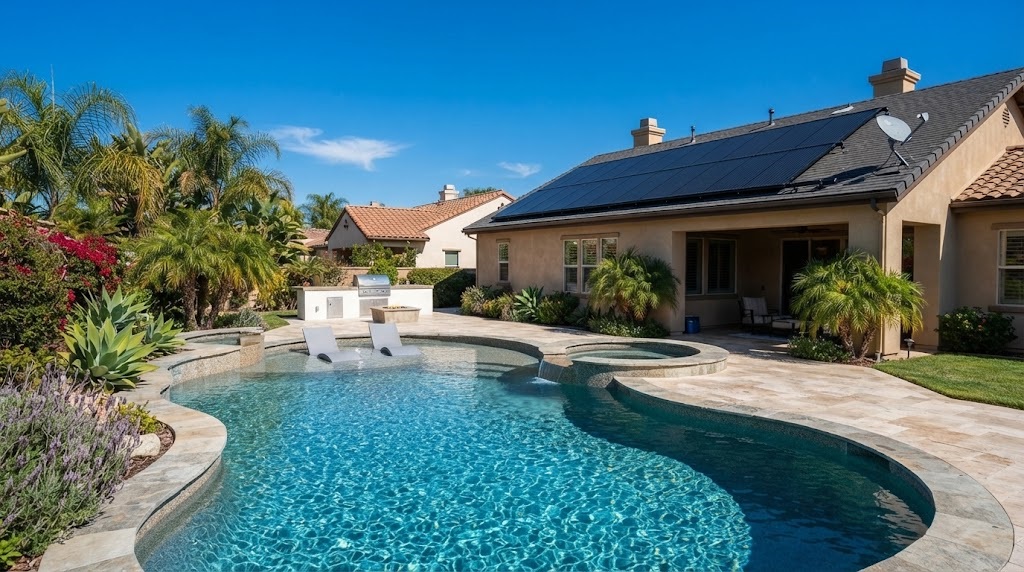
For most inground swimming pools, large unglazed polypropylene collector panels mounted on a south-facing house or garage roof represent the gold standard. These durable black panels absorb maximum solar radiation as water is pumped upward from your filtration system, heated through internal channels, and returned to the pool. Because roof installations utilize otherwise wasted space and keep panels out of the way of daily backyard foot traffic, they are exceptionally efficient and visually unobtrusive.
Above-Ground Solar Domes and Mats
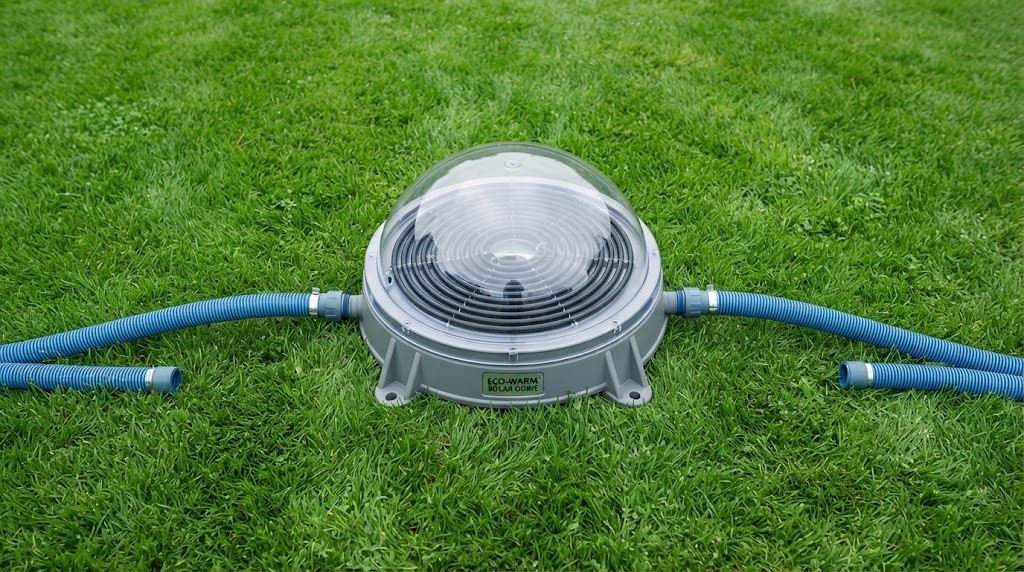
If you own an above-ground pool, installing massive roof panels is often impractical or structurally impossible. Fortunately, manufacturers have designed compact alternatives. Above-ground systems typically utilize low-profile solar mats laid flat on nearby grass or sunny decks, or dome-shaped acrylic enclosures that trap greenhouse heat inside coiled tubing. These compact units can be easily connected in series to your existing filter pump, providing a surprisingly effective temperature boost for smaller backyard pools without requiring professional construction.
Key Features to Look for When Shopping
Evaluating technical specifications ensures you invest in durable equipment capable of withstanding harsh weather and intense ultraviolet radiation for years to come.
UV Resistance and Material Durability
Because solar collectors must sit exposed to direct, unrelenting sunlight all day long, cheap plastic components will quickly crack, fade, and degrade. The Best Solar Pool Heater models are manufactured from heavy-duty, UV-stabilized polypropylene or copolymer blends engineered to withstand freezing winter temperatures, high winds, and intense UV exposure without leaking or warping. Always check manufacturer warranties; top-tier brands frequently offer 5- to 10-year warranties on their collector panels.
Sizing and Flow Rate Compatibility
Getting the sizing right is critical for achieving your desired water temperature. As a general rule of thumb, your solar collector area should equal approximately 50% to 100% of your total pool surface area, depending on your geographic location and local wind exposure. Furthermore, ensure your existing pool filtration pump has sufficient horsepower to push water up to your roof collectors and back down without straining the motor. In some cases, adding a small booster pump may be necessary to maintain optimal water flow.
Step-by-Step Installation and Setup Insights
While some compact above-ground systems are simple DIY weekend projects, large inground roof installations require careful planning and precise execution.
Determining Optimal Placement and Orientation
To maximize thermal absorption, your collector panels must be positioned where they receive maximum direct sunlight—ideally facing south or west in the Northern Hemisphere, tilted at an angle that catches the sun’s rays perpendicularly. Shaded areas under large oak trees or blocked by neighboring structures will drastically reduce heating efficiency.
Professional Installation vs. DIY
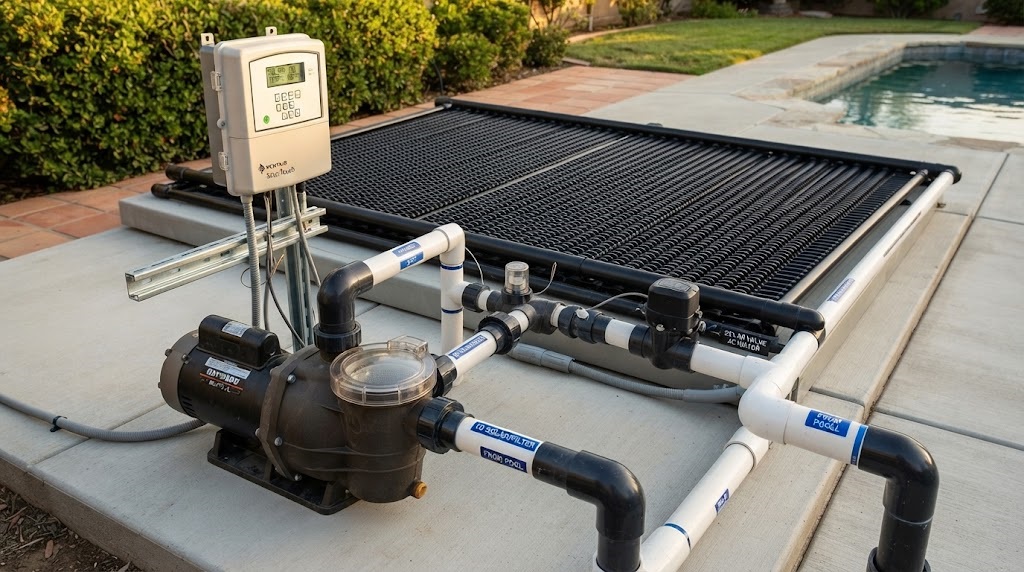
While handy homeowners can easily plumb flexible hoses into above-ground solar domes or floor mats, inground roof-mounted installations involving PVC piping, vacuum breaker valves, and automatic diverter controllers are often best left to licensed professionals.
A professional installer ensures your roof penetrations are properly sealed to prevent water leaks, verifies your pump flow rates, and integrates automated digital thermostats that divert water to the roof only when the sun is actively shining and the panels are hotter than the pool water.
Frequently Asked Questions
How many degrees can a solar heater warm my pool?
A properly sized and installed system typically raises your pool water temperature by 5 to 15 degrees Fahrenheit, depending on ambient air temperatures, wind conditions, and daily sunshine hours.
Do solar pool heaters work on cloudy days?
While they are designed to capture direct sunlight, modern unglazed collectors can still absorb some ambient heat on hazy or partly cloudy days, though their heating efficiency will noticeably drop compared to bright, sunny afternoons.
Can I run my solar pool heater at night?
No. If you circulate water through your roof panels at night when the ambient air is cold, the system will act like a radiator and actually cool down your pool water. Automatic digital controllers prevent this by shutting off valves at night.
Do I need to drain my solar panels for winter?
If you live in a region that experiences freezing winter temperatures, yes. Trapped water inside collector panels will freeze, expand, and crack the plastic. You must drain the panels and blow out the lines before the first hard freeze, or use a system with automatic drain-down valves.
How much do solar pool heating systems cost?
Compact above-ground dome kits generally cost between $150 and $400. Comprehensive inground roof panel kits range from $2,000 to $4,000 including professional installation, though zero ongoing fuel costs mean the system pays for itself rapidly.
Will a solar heater work with an existing variable-speed pool pump?
Yes, perfectly. Variable-speed pumps are actually ideal because you can program them to run at lower RPMs during solar heating cycles, maintaining optimal water flow through the collectors while using minimal electricity.
Do solar pool heaters require a lot of maintenance?
Virtually none. Because they have no moving mechanical parts within the collectors themselves, routine maintenance simply involves checking your filter baskets, inspecting pipe connections annually, and winterizing the system in colder climates.
Conclusion
Extending your swimming season no longer requires draining your bank account on exorbitant monthly gas and electric utility bills. By harnessing the infinite, clean power of the sun, you can enjoy warm, comfortable pool water from early spring straight through late autumn.
Taking the time to evaluate your backyard layout, selecting durable UV-resistant materials, and choosing the right configuration ensures your investment delivers decades of reliable performance. Equip your backyard with the Best Solar Pool Heater suited to your lifestyle, and transform your swimming pool into a warm, inviting oasis all season long.

Written by Twastia Editorial Team
Twastia Editorial Team shares practical insights about website design, SEO services, Google Ads, content marketing, social media, conversion rate optimization, and digital marketing strategy.
Last updated: Oct 23, 2026
Related posts from Twastia
Explore more useful articles from twastia.com about digital marketing, SEO, websites, ads, content, and growth strategy.