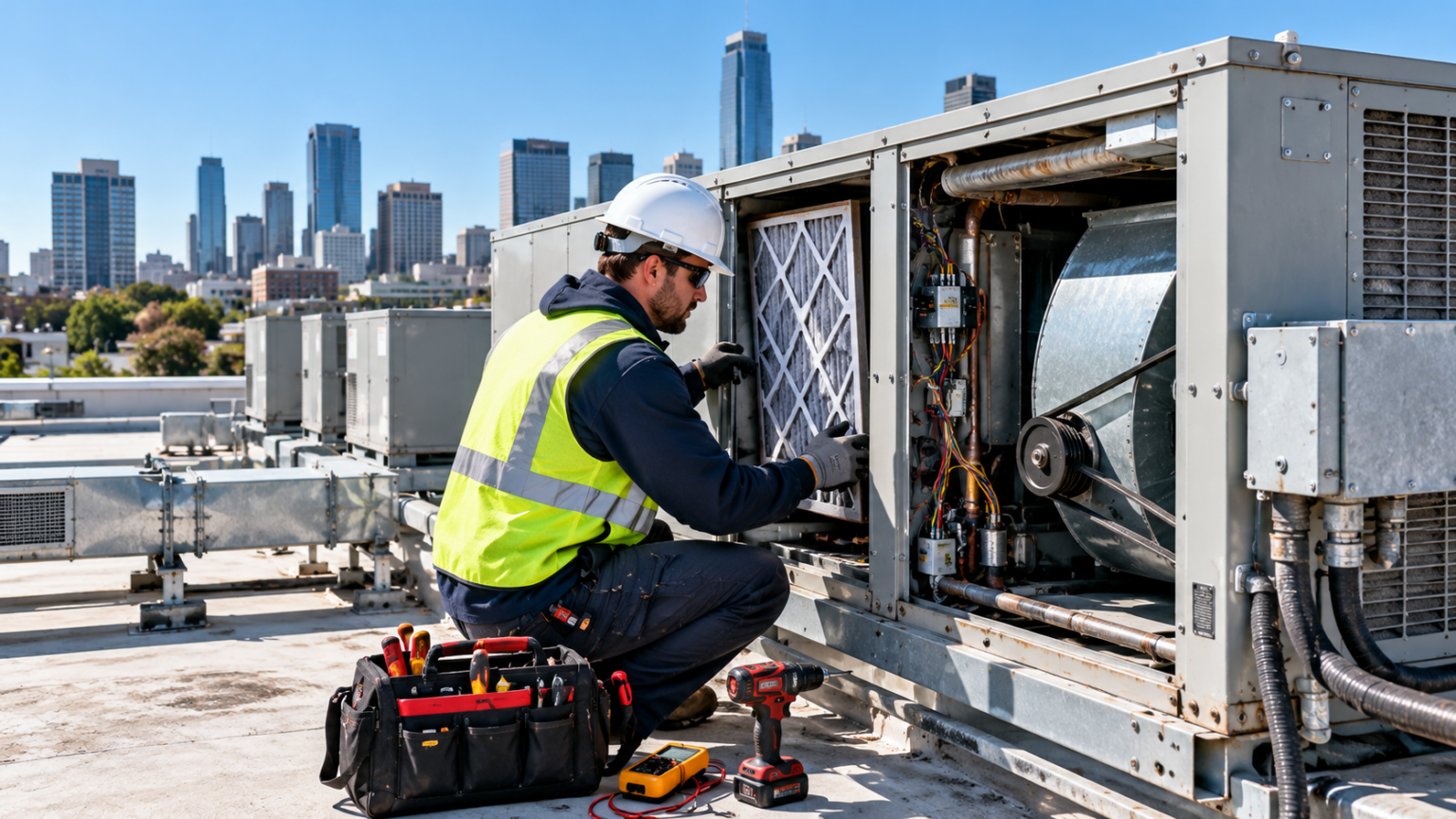
Provide Sufficient Airflow: Best HVAC Maintenance Tips for Healthy, Comfortable Workplaces
A comfortable workplace depends on more than setting the thermostat to the right temperature. Heating, ventilation, and air conditioning systems […]
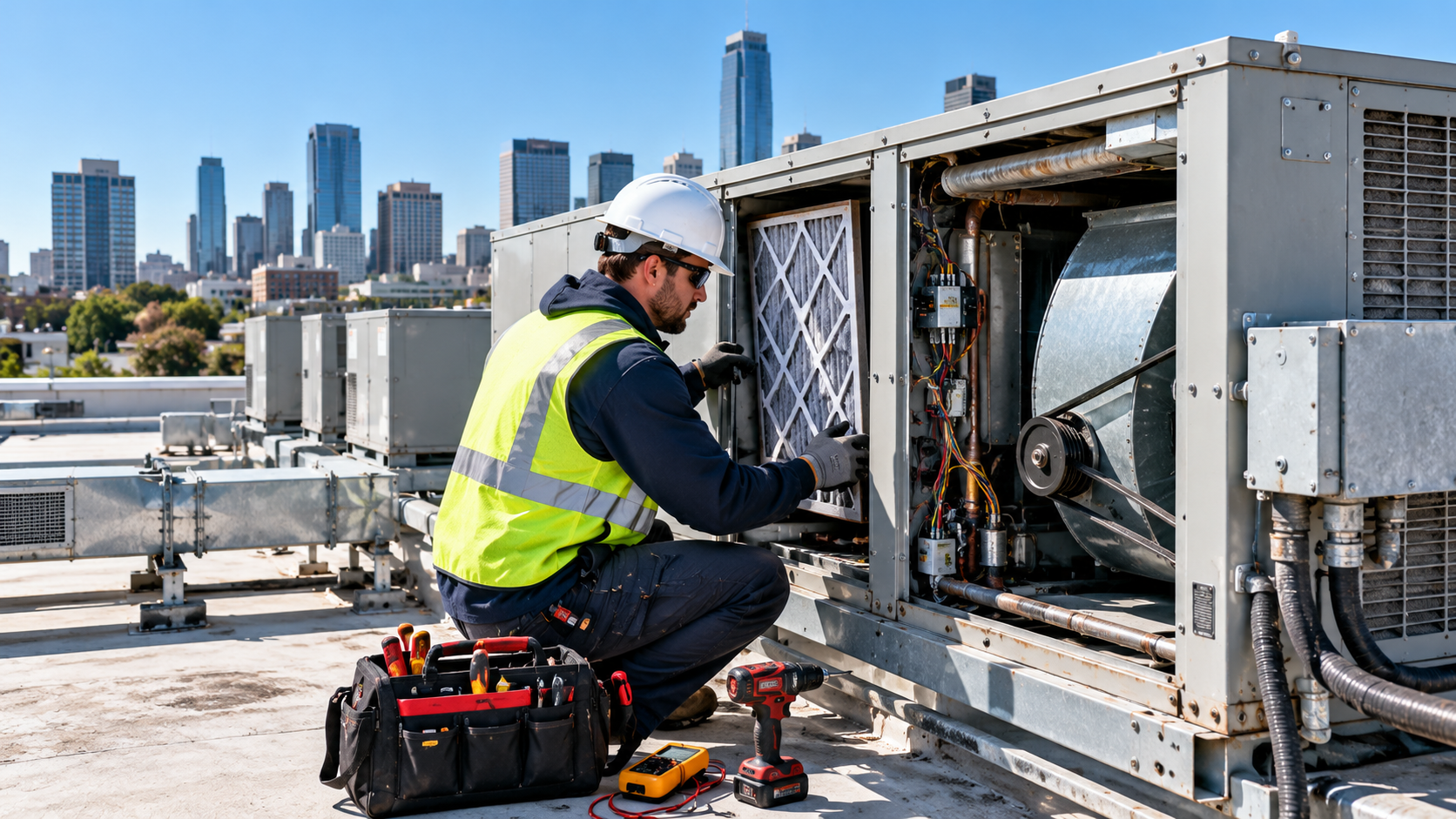
A comfortable workplace depends on more than setting the thermostat to the right temperature. Heating, ventilation, and air conditioning systems must distribute conditioned air effectively, introduce appropriate outdoor air, and support a healthy indoor environment.
When an office feels stuffy, certain rooms remain unusually cold, or employees experience weak airflow from ceiling vents, the problem may involve the building’s HVAC system.
Learning how to provide sufficient airflow can help business owners and facility managers address these concerns before they lead to ongoing discomfort or equipment problems.
Poor airflow can result from dirty filters, blocked vents, damaged ductwork, malfunctioning fans, incorrectly adjusted dampers, or poorly balanced air distribution.
These problems can occur in offices, retail stores, restaurants, warehouses, and other commercial properties.
According to the U.S. Environmental Protection Agency, indoor air quality influences building occupants’ health, comfort, and ability to work effectively. The agency recommends proper ventilation, pollutant source control, and HVAC maintenance as important elements of building management.
US EPA
However, increasing fan speed or opening windows is not always the correct solution. Effective ventilation requires a properly designed and maintained system suited to the building’s size, occupancy, and activities.
This guide explains how commercial HVAC airflow works, common causes of restricted circulation, practical maintenance solutions, and when to call a qualified technician.
What Does It Mean to Provide Sufficient Airflow?
Sufficient airflow means delivering and circulating an appropriate quantity of air throughout a building to support heating, cooling, ventilation, and occupant comfort.
Commercial HVAC systems typically use fans, filters, ductwork, air handlers, supply outlets, and return-air pathways.
These components work together to move air through occupied spaces.
The required airflow differs between buildings because occupancy, equipment, room sizes, and ventilation requirements vary.
Supply Air vs. Return Air
Supply air is delivered to rooms through vents or diffusers.
Return air travels back toward the HVAC equipment for conditioning, filtration, or redistribution.
Restricted supply or return pathways can disturb system performance.
Airflow vs. Ventilation
These concepts are related but not identical.
Airflow describes air movement, while ventilation involves supplying outdoor air and managing indoor contaminants.
A room can have noticeable airflow without receiving sufficient outdoor air.
The EPA emphasizes that proper indoor air quality requires both air distribution and appropriate outdoor-air ventilation.
US EPA
Why Proper Airflow Matters in Commercial Buildings
Good air distribution contributes to workplace comfort and effective HVAC operation.
More Consistent Indoor Temperatures
Appropriate airflow helps distribute heated or cooled air between occupied areas.
Poor balance can create hot and cold spots even when the central thermostat shows a comfortable setting.
Better Indoor Air Management
Ventilation helps dilute certain indoor pollutants, while compatible filters remove some airborne particles.
Neither method eliminates every indoor air contaminant.
Reduced Equipment Strain
Restricted airflow can contribute to inefficient equipment operation and mechanical stress.
For example, dirty filters may increase fan workload and affect system performance.
Improved Employee Comfort
Employees working in overly hot, cold, drafty, or stuffy spaces may experience discomfort and distraction.
Maintaining suitable thermal conditions helps create a more functional working environment.
8 Common Causes of Poor HVAC Airflow
Identifying the underlying problem is more effective than repeatedly changing thermostat settings.

1. Dirty or Clogged Air Filters
Accumulated dust restricts air passing through a filter. This can reduce equipment performance and increase system operating demands.

2. Blocked Supply or Return Vents
Furniture, boxes, shelving, and office partitions can obstruct air movement. Even a correctly sized system may perform poorly when vents are blocked.

3. Damaged or Disconnected Ductwork
Leaks, loose joints, crushed flexible ducts, or disconnected sections can prevent conditioned air from reaching intended rooms.

4. Blower Fan Problems
Malfunctioning fans, motors, or drive components can affect the amount of air moving through a system.

5. Incorrect Air Balancing
Poorly adjusted dampers or improper system balancing can deliver too much air to one zone and insufficient air to another.

6. Thermostat and Sensor Issues
Incorrect settings, poorly located sensors, or control malfunctions may cause unusual heating and cooling behavior.

7. Restricted Outdoor Air Intakes
Blocked intake openings or malfunctioning outdoor-air dampers can reduce fresh-air ventilation even when indoor fans continue operating.

8. Heating or Cooling Equipment Faults
Coil problems, control failures, and other mechanical faults may affect system performance. Professional diagnosis is necessary to identify the actual cause.
The U.S. Department of Energy explains that clogged filters can significantly restrict airflow, increase equipment run time, and raise energy consumption.
How to Improve Airflow in an Office: Step-by-Step
A systematic approach helps facility managers identify problems without making unsafe adjustments.
Step 1: Check Accessible Vents
Walk through occupied rooms and inspect visible supply and return grilles.
Move furniture, storage boxes, and other objects that obstruct air movement.
The EPA specifically recommends keeping office vents and grilles clear to avoid disrupting airflow and neighboring workspaces.
US EPA
Step 2: Review Air Filter Condition
Check maintenance records to determine when filters were last inspected or replaced.
Use filters approved for the system’s design and airflow capabilities.

Air Filter Inspection
Clean, correctly fitted filters support air movement and particle removal. Higher-efficiency filtration should be selected with attention to equipment compatibility.
Step 3: Compare Different Areas
Document which offices, meeting rooms, or floors have weak airflow or uncomfortable temperatures.
Record when symptoms occur and whether they change with occupancy or operating schedules.
Step 4: Schedule Professional Airflow Testing
A qualified HVAC technician can measure air delivery, evaluate fan performance, check ductwork, and assess air balancing.
Step 5: Correct the Underlying Fault
Solutions may include replacing filters, repairing ductwork, adjusting dampers, fixing controls, or addressing mechanical problems.
Avoid unnecessary modifications before obtaining a reliable diagnosis.
Commercial HVAC Maintenance Checklist
Preventive maintenance helps maintain consistent system performance and identify developing faults.
| Maintenance task | Main purpose |
|---|---|
| Inspect air filters | Identify clogging and unsuitable filtration |
| Check supply and return vents | Find blocked air pathways |
| Inspect fans and motors | Identify mechanical or control problems |
| Review ductwork | Locate damaged sections and leakage |
| Check outdoor-air dampers | Support appropriate ventilation |
| Inspect heating equipment | Identify operational and safety concerns |
| Test thermostats and sensors | Support accurate system control |
| Review building complaints | Identify recurring comfort patterns |
Inspection frequency should follow the equipment manufacturer’s instructions, applicable standards, operating conditions, and the building’s maintenance plan.
The Department of Energy’s September 2025 Ventilation Assessment and Action Guide highlights ventilation evaluation, equipment upkeep, and corrective improvements for commercial facilities.
Department of Energy
How Air Balancing Improves Workplace Comfort
Air balancing involves measuring and adjusting airflow to help distribute air according to the building’s design.
A technician may use airflow measurement instruments to evaluate individual diffusers and ventilation zones.

Professional Air Balancing
Measuring supply and return airflow helps technicians identify areas receiving inadequate or excessive air and determine whether system adjustments are needed.
Air balancing is particularly relevant when offices are remodeled or their occupancy changes.
For example, converting a storage area into a busy conference room can increase ventilation demands.
A professional assessment should consider both airflow and outdoor-air requirements, not simply temperature preferences.
Heating Problems That Can Affect Air Distribution
Commercial heating systems may experience faults unrelated to a blocked vent.
Ignition problems, tripped electrical breakers, malfunctioning thermostats, and mechanical failures can interrupt normal operation.
The article Heating Unit Problems We Can Prevent/Fix to Keep Your Employees Comfortable by Total Comfort Group discusses these issues alongside clogged filters, improper air balancing, and heating-unit maintenance.
The article, published March 15, 2021, emphasizes professional inspections, early identification of worn components, and prompt repairs as ways to help maintain employee comfort.
TOTAL COMFORT GROUP
Its recommendations provide a useful starting point, although older market forecasts mentioned in the original article should not be treated as current statistics.
When Should You Call an HVAC Professional?
Seek qualified assistance when several rooms experience persistent airflow problems, the heating system repeatedly shuts down, or unusual operating noises appear.
Electrical, fuel-burning, and refrigerant-related repairs should not be attempted by untrained employees.
If a gas leak or carbon monoxide hazard is suspected, follow emergency procedures and leave the affected area when necessary.
Ventilation and Indoor Air Quality: Understanding the Difference
Air movement alone cannot ensure healthy indoor air.
A fan may circulate existing air without introducing the outdoor air required to dilute contaminants.
Effective indoor air quality management involves controlling pollution sources, providing suitable ventilation, and using appropriate filtration.

Ventilation in Occupied Workspaces
Properly designed systems distribute air through occupied zones while supporting appropriate outdoor-air supply and filtration.
The EPA also advises facility managers to consider pollutant sources such as cleaning products, renovation materials, vehicle exhaust, and moisture problems.
US EPA
Can Better HVAC Airflow Reduce Energy Costs?
Correcting restricted airflow can help improve operating efficiency when the underlying issue causes unnecessary fan or heating and cooling demand.
For example, a dirty filter may increase system resistance and contribute to inefficient operation.
However, there is no universal percentage of energy savings from improving airflow.
Actual results depend on equipment type, control settings, climate, occupancy, and existing problems.
Facility managers can compare utility bills and operating data before and after professional repairs to understand whether performance has improved.
Common Mistakes That Make Airflow Problems Worse
One mistake is closing multiple vents in an attempt to direct more air into selected rooms.
That approach can disturb system balance and may increase duct pressure.
Another is installing a filter that the equipment cannot accommodate without evaluating airflow resistance.
Managers may also overlook ventilation requirements after changing office layouts.
Finally, treating every comfort complaint as a thermostat problem can delay identification of ductwork, airflow, or occupancy issues.
Accurate measurements and professional assessments are more reliable than repeated guesswork.
Frequently Asked Questions About Sufficient Airflow
What does it mean to provide sufficient airflow?
It means delivering appropriate quantities of air to occupied spaces so heating, cooling, and ventilation systems can perform as intended. Requirements depend on building design, occupancy, and applicable standards.
What causes poor airflow in commercial buildings?
Common causes include clogged filters, blocked vents, damaged ductwork, faulty blower fans, improperly adjusted dampers, and inadequate ventilation design.
How can I improve airflow in my office?
Keep vents unobstructed, maintain compatible filters, document comfort problems, and arrange professional inspection when airflow remains inadequate.
Can dirty HVAC filters reduce airflow?
Yes. Accumulated particles can increase resistance and restrict the movement of air through the system, potentially affecting efficiency and equipment operation.
Does better airflow improve indoor air quality?
Appropriate airflow can support indoor air quality, but effective ventilation, filtration, and pollutant source control are also necessary.
How often should commercial HVAC systems be serviced?
Maintenance frequency depends on the equipment, usage, building conditions, manufacturer instructions, and relevant professional standards. A qualified contractor can recommend a suitable schedule.
Why are some office rooms colder than others?
Possible reasons include unbalanced air distribution, thermostat placement, solar heat gains, ductwork problems, insulation differences, and varying room occupancy.
Should an HVAC technician perform air balancing?
Air balancing involves specialized measurements and system adjustments. Qualified HVAC professionals are generally better equipped to assess and correct distribution problems accurately.
Conclusion
Learning how to provide sufficient airflow is an important part of managing a comfortable and functional workplace.
Commercial HVAC systems depend on clean filters, unobstructed vents, suitable ductwork, properly operating fans, and accurate controls.
When one of these components fails, employees may experience uneven temperatures, stuffiness, or reduced comfort.
Regular preventive maintenance can help identify emerging problems, while professional airflow measurements can reveal issues that simple visual inspections cannot detect.
However, airflow should always be considered alongside outdoor-air ventilation, filtration, and pollutant source control.
Whether managing a small office or a large commercial facility, a documented maintenance plan and timely professional repairs can help support indoor comfort, equipment performance, and responsible building operations.

Written by Twastia Editorial Team
Twastia Editorial Team shares practical insights about website design, SEO services, Google Ads, content marketing, social media, conversion rate optimization, and digital marketing strategy.
Last updated: Oct 26, 2026
Related posts from Twastia
Explore more useful articles from twastia.com about digital marketing, SEO, websites, ads, content, and growth strategy.