The Best Place to Put Your Barbecue: Best Backyard Placement Tips
A backyard barbecue can make an ordinary weekend feel like a celebration. The aroma of grilled food, conversation around the […]
A backyard barbecue can make an ordinary weekend feel like a celebration. The aroma of grilled food, conversation around the patio, and a relaxed outdoor setting all contribute to the appeal. Yet the position of the grill has a greater effect on the experience than many homeowners realize. An attractive location is not necessarily a safe one.
The Best Place to Put Your Barbecue is an open-air location on a stable, level, noncombustible surface, well away from your house, fencing, vegetation, and other objects that could catch fire. It should also leave enough room for the cook to work and for children and guests to stay clear of the hot equipment. Always follow the grill manufacturer’s clearance instructions and applicable local rules.
Understanding The Best Place to Put Your Barbecue means balancing everyday convenience with fire prevention, ventilation, weather exposure, and the practical layout of your outdoor space. These considerations are particularly important in small yards, where a grill can easily end up beneath an awning or beside a wooden railing.
1. Keep a Safe Distance From the House
The first decision is how far the cooking equipment should stand from your home. Siding, doors, windows, deck railings, and roof eaves may be exposed to intense heat or flare-ups. A grill set too close to a structure can ignite nearby materials or cause heat damage even if cooking appears controlled.
When evaluating The Best Place to Put Your Barbecue, begin with the grill’s instruction manual. Clearance requirements differ by product. The U.S. Fire Administration advises keeping grills at least three feet from siding, deck rails, and eaves, while Massachusetts fire-safety guidance generally calls for ten feet from the side of a building unless the manufacturer permits closer placement. Choosing more separation when feasible is sensible, but the manufacturer’s requirements and stricter local rules still govern. U.S. Fire Administration+1
Watch the Space Above the Grill
Horizontal distance is only part of the problem. Never use a conventional propane or charcoal grill beneath a roof eave, combustible awning, overhanging branch, or other unsafe overhead structure. Flames and heat rise, and smoke can accumulate under a cover.
A useful way to identify The Best Place to Put Your Barbecue is to look upward as well as outward. The ideal cooking spot has unobstructed open sky and no nearby material that could be heated by flames or blown embers.
Leave Room to Move
Allow enough clearance to open the lid, reach controls, and move safely without backing into furniture or a wall. Keep serving tables and seating at a comfortable distance rather than crowding the cook.
2. Choose a Level, Noncombustible Surface
A freestanding grill needs secure footing. Uneven ground can make wheels shift or create an unstable cooking position. Loose stones, soft soil, and steeply sloped ground can also complicate movement around hot equipment.
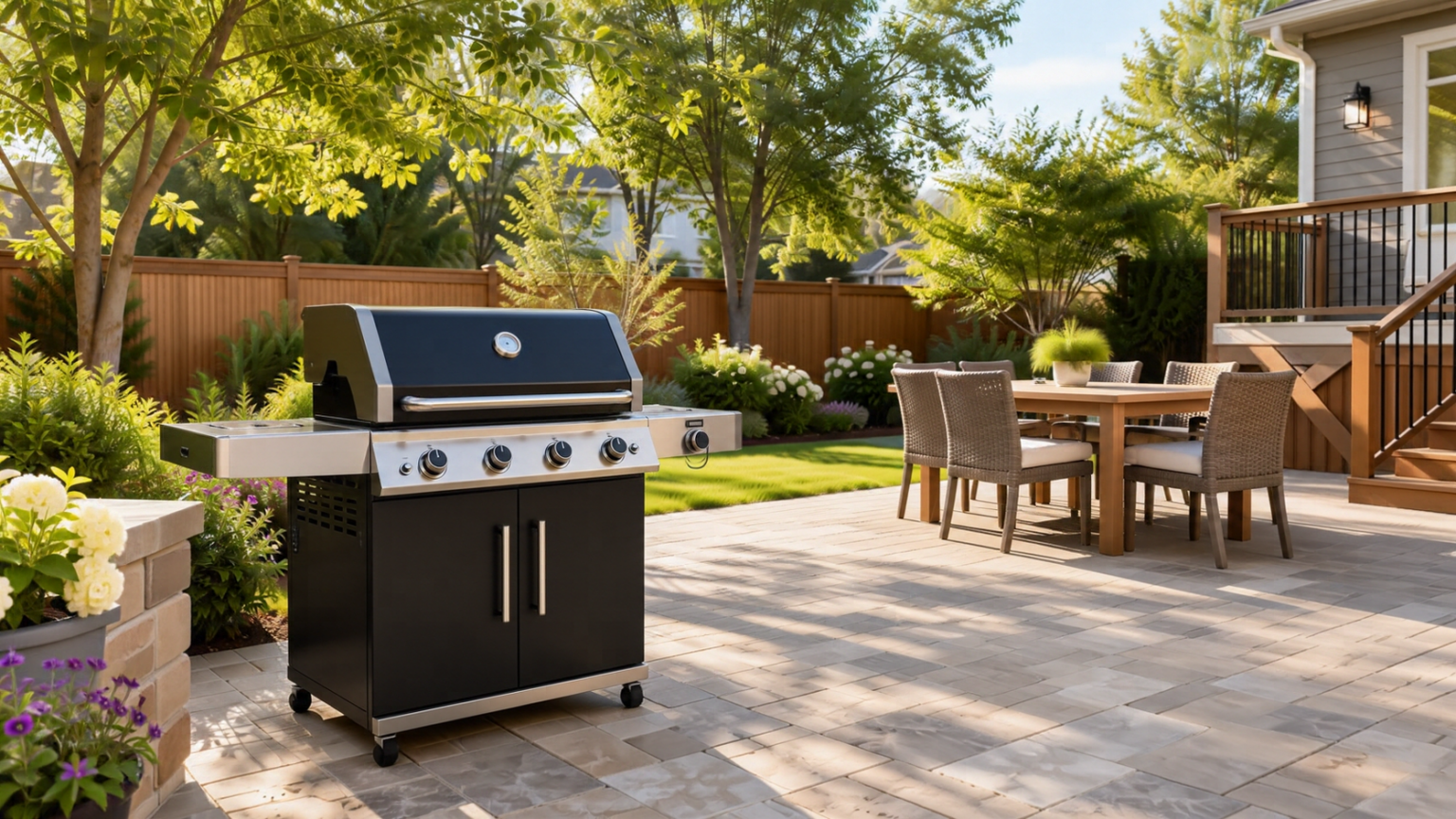
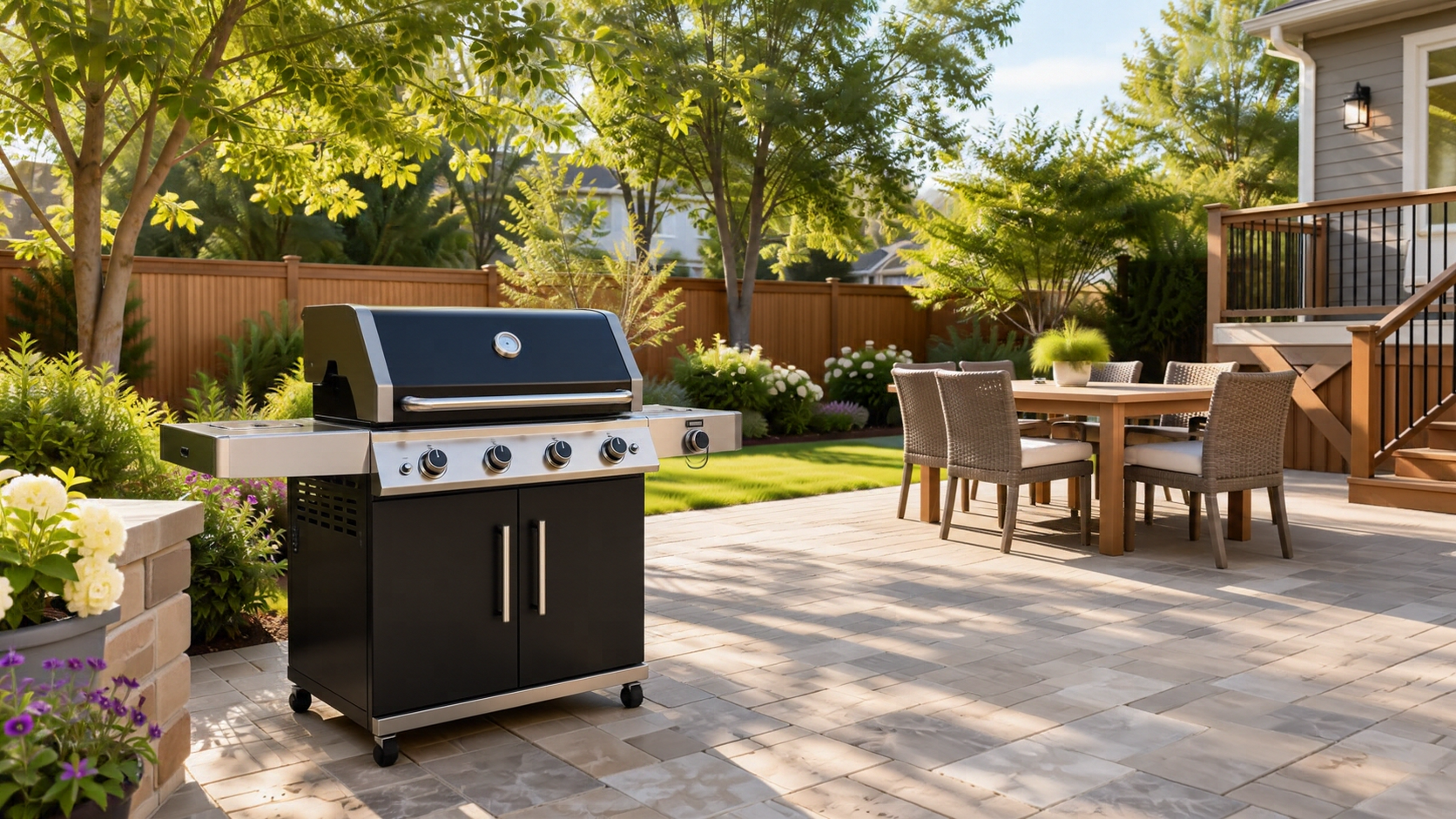
The Best Place to Put Your Barbecue usually includes a level concrete, stone, or suitable paver area with sufficient space around every side. Such surfaces generally tolerate outdoor cooking conditions better than dry grass, loose mulch, or timber, although manufacturer requirements and heat exposure must still be considered.
Consider Drainage and Foot Traffic
A patio that collects rainwater can become slippery, while an uneven walkway invites trips when carrying food. Inspect the route between your house and the grill. It should be free of hoses, electrical cords, toys, and other obstacles.
When planning The Best Place to Put Your Barbecue, consider the entire working zone, not only the four points where the grill touches the ground. There should be a stable place to stand, a safe route to the serving area, and enough room to avoid accidentally bumping into the appliance.
Be Careful With Wooden Decks
A wooden deck may seem convenient, but it places combustible construction close to a heat source. Local rules can restrict grilling on decks, and some authorities advise against it altogether. Do not assume a grill mat makes an otherwise prohibited or unsafe location acceptable. If suitable open ground is available, a separate paved area is often the more straightforward option. Texas A&M Forest Service
3. Prioritize Open-Air Ventilation
Propane, charcoal, and pellet grills are outdoor cooking appliances. Burning fuel can create carbon monoxide, a dangerous gas that cannot be seen or smelled. A partially enclosed space may allow exhaust to accumulate even when a door or window is open.
The Best Place to Put Your Barbecue should never be inside a garage, home, tent, enclosed porch, or similarly hazardous space. The U.S. Consumer Product Safety Commission also warns against grilling in breezeways, carports, and beneath combustible surfaces. A garage with its large door open is not an acceptable substitute for an outdoor grilling area. U.S. Consumer Product Safety Commission
Avoid Enclosed Corners
A tight corner between two walls can trap smoke and direct heat toward surfaces or open windows. Place the grill in an open section of the yard where air can circulate freely without creating hazardous exposure for guests.
Ventilation is one reason The Best Place to Put Your Barbecue may not be the location immediately outside the kitchen door. A short trip carrying ingredients is convenient, but it does not justify placing the grill in a confined or covered passageway.
Check Apartment and Community Rules
Balconies, shared terraces, and common areas may be subject to fire codes, lease conditions, homeowners association rules, and building policies. Some prohibit fuel-burning grills entirely. Check these requirements before purchasing equipment or planning a permanent cooking station.
4. Pay Attention to Wind and Weather
Wind affects flames, smoke, embers, and the comfort of people standing around a grill. A strong gust can make charcoal cooking especially risky near dry vegetation. Even moderate wind can blow smoke toward patio furniture, open windows, or neighbors.
When choosing The Best Place to Put Your Barbecue, observe prevailing wind directions during the hours you normally cook. Favor a location that keeps smoke away from doors and seating while maintaining the ventilation and clearances required for safe use.
Do Not Block Wind With Combustible Materials
Avoid surrounding a hot grill with temporary wooden screens, fabric partitions, or tightly placed furniture. A decorative privacy wall may seem helpful, but nearby structures can interfere with safe separation and airflow.
A sensible approach to The Best Place to Put Your Barbecue is to prioritize an open location and postpone cooking during hazardous weather rather than trying to shield active flames with improvised materials.
Adjust Plans During High Fire Risk
Dry, windy conditions can make cooking with charcoal or wood particularly dangerous. The Texas A&M Forest Service advises monitoring weather and avoiding wood or charcoal grilling on hot, dry, windy days. Follow local burn restrictions and wildfire warnings, which can also affect the permitted use of outdoor cooking equipment. Texas A&M Forest Service
5. Create a Separate Zone for Children and Pets
Guests often move between the kitchen, patio, and grill. Children may run unexpectedly, and pets can approach when food is being prepared. Hot metal surfaces remain a burn hazard even after the flames are extinguished.
A key feature of The Best Place to Put Your Barbecue is a layout that keeps everyday foot traffic away from the cooking area. The National Fire Protection Association recommends maintaining a three-foot safety zone around a grill for children and pets. Active adult supervision remains essential. content.nfpa.org
Place Dining Furniture Beyond the Cooking Space
Position the dining table where guests can talk comfortably without standing beside the burner, hot lid, or charcoal. Arrange chairs so people do not need to squeeze behind the cook to move around the patio.
For families, The Best Place to Put Your Barbecue also allows an adult to watch the cooking area without creating a bottleneck near doors, steps, or play equipment.
Make the Safety Boundary Obvious
Use the layout itself to establish boundaries. A separate paved grill station, for example, is easier to recognize than a barbecue wedged between lounge chairs. Never leave an operating grill unattended, even if guests are gathered nearby.
6. Position the Grill for Practical Food Preparation
Once safety is addressed, convenience matters. A grill that is difficult to reach may be used less often, especially when the cook must cross uneven ground carrying trays and utensils. A nearby preparation surface can improve organization and reduce unnecessary trips.
The Best Place to Put Your Barbecue should provide a clear, practical route from the indoor kitchen without sacrificing required separation from buildings. Keep raw-food preparation, clean serving utensils, and ready-to-eat food organized to reduce cross-contamination.
Consider Lighting and Storage
If you cook after sunset, use suitable outdoor lighting to illuminate the cooking surface and pathways. Lighting fixtures, cords, and accessories should be rated for their intended location and installed away from heat. Keep outdoor utensils in appropriate storage, and never place combustible items against the grill.
The usability benefit of The Best Place to Put Your Barbecue becomes clear during an ordinary dinner: you can cook without tripping over furniture, balancing hot dishes on unstable surfaces, or repeatedly crossing the busiest part of the patio.
Keep a Means of Calling for Help
Have a phone accessible and understand the emergency procedures for a fire or gas leak. A suitable fire extinguisher may help with a very small, contained fire only when a trained adult can use it without risking escape. If fire spreads or threatens people, move away and call 911.
7. Match Placement to Your Grill Type
Not every barbecue has identical operating requirements. A portable charcoal kettle, large propane cabinet grill, and built-in outdoor cooking station may call for different clearances, fuel arrangements, and construction considerations.
As you assess The Best Place to Put Your Barbecue, consult the exact model manual rather than relying on a generic backyard diagram. Built-in grills may require specially designed noncombustible surrounds and ventilation arrangements, while freestanding units must not be enclosed in structures not approved by their manufacturers.
Propane Equipment
Propane grills require sound hoses, properly connected cylinders, and adequate ventilation. The CPSC advises inspecting hoses for cracks and leaks before use. Follow the manufacturer’s instructions for leak testing, never use a flame to check for escaping gas, and open the lid before ignition. U.S. Consumer Product Safety Commission
Charcoal Equipment
Charcoal requires particular care with embers and ash. Never bring a burning or recently used charcoal grill indoors, even after cooking has stopped. Carbon monoxide can continue to be produced while coals remain hot. Dispose of ash only after complete cooling, using a suitable covered metal container according to local fire-safety guidance. U.S. Consumer Product Safety Commission
For charcoal users, The Best Place to Put Your Barbecue includes additional separation from dry grass, shrubs, and other vegetation that windblown embers might ignite.
Electric Grills
Some electric grills may have different placement requirements, but their outdoor suitability depends on the individual product. Use only equipment and electrical connections specifically approved for the setting, observe water and shock precautions, and follow building regulations.
8. Avoid Common Placement Mistakes
Homeowners sometimes choose a grilling location based on appearance alone. A neat corner beside a wooden fence may look attractive in photographs, but tight clearances can create unnecessary fire risk. Similarly, placing a grill near an open window may carry smoke indoors.
The mistake to avoid when selecting The Best Place to Put Your Barbecue is assuming that a small grill produces only a small hazard. Hot grease, fuel fires, and carbon monoxide can cause serious harm regardless of the appliance’s size.
Keep the Area Clean and Clear
Remove dry leaves, cardboard, spare fuel, and excess clutter from the cooking zone. Clean the grill and grease tray regularly to reduce flare-up risk. Check local instructions for where propane cylinders may be stored; indoor storage and enclosed spaces can be unsafe.
Do a Final Safety Check
Before lighting the grill, inspect the surface beneath it, the nearby walls, the space overhead, and the paths people will use. Confirm that the equipment is stable and that children and pets can stay clear.
A final review of The Best Place to Put Your Barbecue should ask three questions: Can anything nearby ignite? Can smoke and exhaust disperse outdoors? Can people move around safely while the equipment is hot?
A Quick Backyard Placement Checklist
| Location | General assessment | Main concern |
|---|---|---|
| Open, level paved area away from structures | Often a suitable choice | Verify clearances and local rules |
| Directly beneath a roof eave or awning | Unsafe for conventional fuel-burning grills | Heat and fire exposure overhead |
| Inside a garage, even with the door open | Never suitable for fuel-burning grills | Carbon monoxide and fire |
| Next to a wooden fence or railing | Avoid | Nearby combustible material |
| On a balcony or covered deck | Often restricted or prohibited | Fire code, overhead surfaces, limited escape space |
| Near dry vegetation in strong wind | Avoid | Ember spread and wildfire risk |
This checklist is a starting point, not a substitute for product-specific instructions. For a small property where no suitable open-air location exists, consider cooking by another method rather than accepting a hazardous setup.
Frequently Asked Questions
How far should a barbecue be from the house?
Follow the grill manufacturer’s stated clearances and any stricter local rules. The U.S. Fire Administration advises at least three feet from siding, rails, and eaves; some jurisdictions recommend or require more, including ten feet in Massachusetts for many installations.
Can I put a barbecue on a wooden deck?
Deck use depends on the grill, local fire rules, property restrictions, and safe clearances. Some authorities discourage or prohibit it. A separate level, noncombustible outdoor surface is preferable when practical.
Is grilling safe under a covered patio?
Do not use conventional gas or charcoal grills beneath combustible overhead structures or in enclosed and poorly ventilated areas. Follow the manufacturer’s instructions and building or fire-code restrictions.
What is the safest surface for a portable barbecue?
A stable, level, noncombustible surface such as suitable concrete or paving is generally a sound choice. Keep the surrounding area clear and ensure the grill is positioned according to its instructions.
Should the barbecue be close to the kitchen?
Convenient access helps food preparation, but proximity must never override fire separation, ventilation, or safe movement. Choose an open-air position with a clear walking route.
Can I barbecue when it is windy?
Strong winds can increase the risk of flare-ups, moving embers, and fire spread. Follow local fire restrictions and postpone charcoal or wood grilling when conditions are hot, dry, or windy.
Conclusion
Good barbecue placement balances safety with an enjoyable outdoor setting. A stable paved surface, open sky, generous clearance from structures and vegetation, and adequate room around the cook usually make a better arrangement than a cramped corner close to the house.
Ultimately, The Best Place to Put Your Barbecue is the location that satisfies the grill manufacturer’s instructions and local requirements while keeping smoke, heat, fuel, and foot traffic under control. Check the site before every cooking session, keep children and pets away, and never use fuel-burning grills indoors or in enclosed spaces. A well-planned setup helps make outdoor cooking more convenient without compromising household safety.

Written by Twastia Editorial Team
Twastia Editorial Team shares practical insights about website design, SEO services, Google Ads, content marketing, social media, conversion rate optimization, and digital marketing strategy.
Last updated: Nov 6, 2026
Related posts from Twastia
Explore more useful articles from twastia.com about digital marketing, SEO, websites, ads, content, and growth strategy.