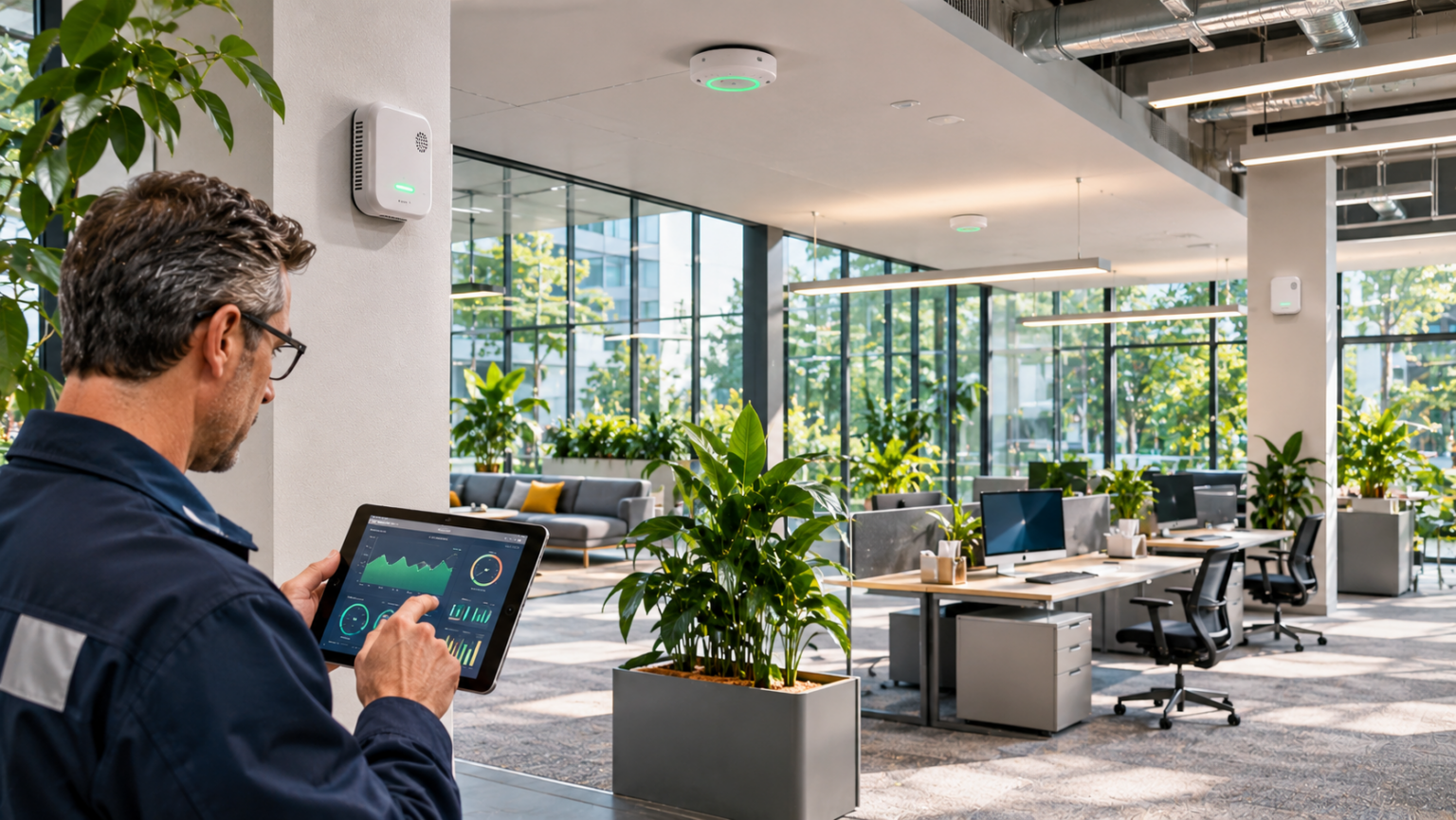
The Importance of Environmental Sensors in Buildings: Best Benefits and Applications
A building can look clean, modern, and comfortable while hiding problems its occupants cannot see. Stale air, excess humidity, overheated […]
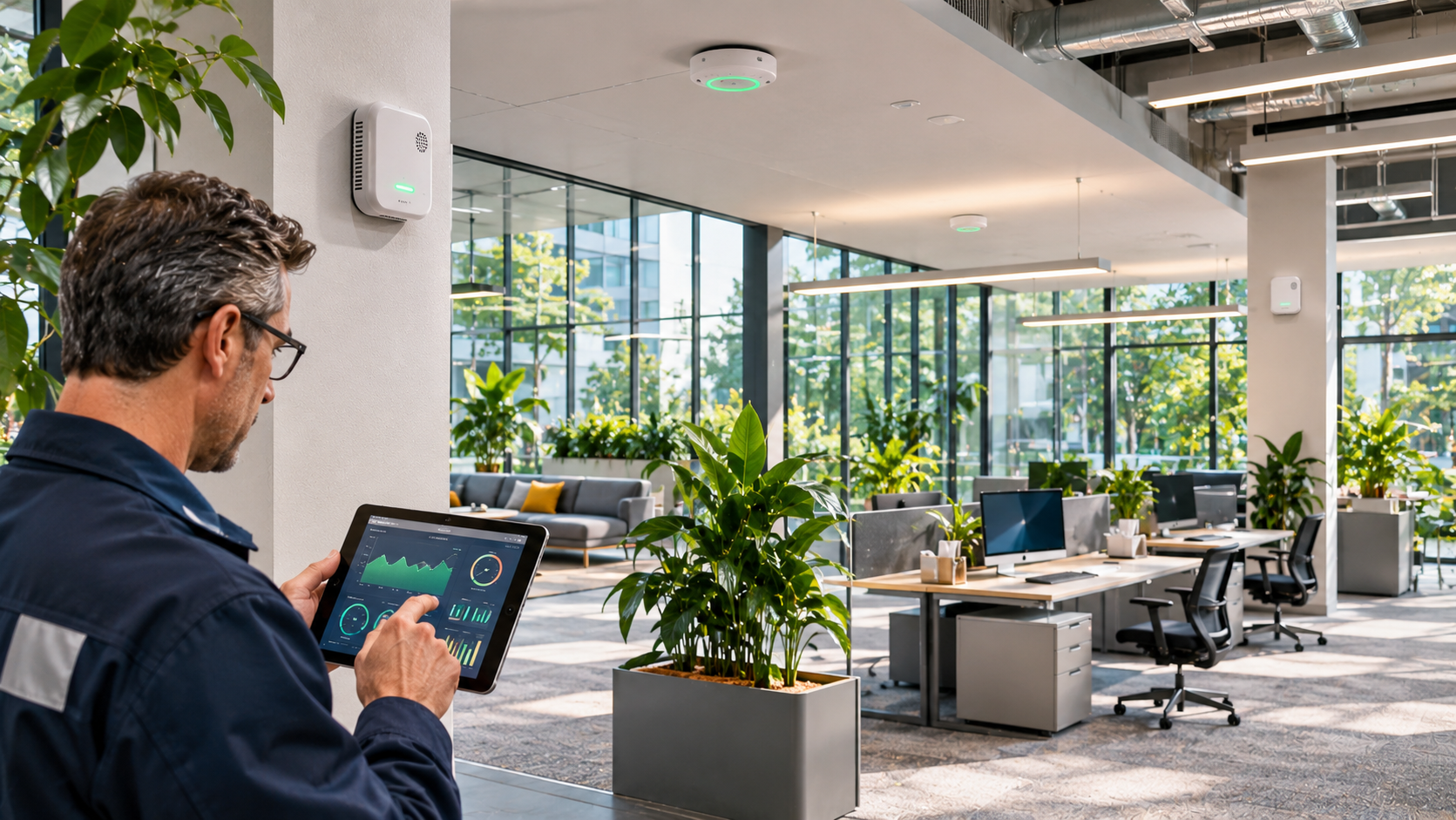
A building can look clean, modern, and comfortable while hiding problems its occupants cannot see. Stale air, excess humidity, overheated rooms, or poorly timed ventilation may persist long before someone reports a complaint. The Importance of Environmental Sensors in Buildings lies in making these conditions measurable, so owners and facility teams can respond with evidence instead of guesswork.
Environmental sensors track specific conditions such as temperature, relative humidity, carbon dioxide (CO2), and airborne particles. Used correctly, they can help improve comfort, guide maintenance, and support efficient building operation. Yet sensors do not automatically make indoor air healthy; their value depends on placement, accuracy, and meaningful follow-up.
What Environmental Sensors Actually Measure
Environmental monitoring devices convert physical or chemical conditions into readings that people or building-control systems can use. Some measure one variable, while multi-sensor monitors combine several measurements in a single housing. Understanding The Importance of Environmental Sensors in Buildings starts with knowing that each reading answers a different question.
Temperature and Relative Humidity
Temperature sensors help identify rooms that are too warm or cold, uneven HVAC performance, and changes across occupied zones. Humidity sensors indicate how much moisture the air holds relative to its capacity at that temperature. Together, they can guide comfort adjustments and highlight conditions that deserve inspection for dampness or condensation.
Humidity readings cannot locate every hidden leak. However, persistent changes in a basement, classroom, or mechanical space may help maintenance teams decide where to investigate. A sensor is an early clue, not a substitute for examining the building.
Carbon Dioxide and Occupancy Indicators
People exhale CO2, making indoor concentrations potentially useful for understanding whether outdoor-air ventilation is keeping pace with occupancy. CO2 is not a universal air-quality score, and a single numerical threshold cannot prove that a room is safe from infectious aerosols. CDC guidance notes that ventilation interpretation depends on occupancy, mixing, sensor placement, and HVAC design. CDC
For facility operators, The Importance of Environmental Sensors in Buildings includes seeing trends: whether CO2 rises during a crowded meeting, drops after ventilation changes, or remains unusually high in a particular classroom. These observations can inform a professional ventilation assessment.
Particles, VOCs, and Specialized Detectors
Particulate matter sensors may track fine airborne particles associated with cooking, outdoor pollution entering indoors, or certain activities. Volatile organic compound sensors can detect some chemical-related changes, but consumer VOC readings are often broad indicators rather than measurements of every individual chemical.
The Importance of Environmental Sensors in Buildings also includes recognizing which hazards require specialized instruments. Not every instrument detects radon, carbon monoxide, or combustion hazards. Purpose-built, properly listed smoke and carbon monoxide alarms remain essential wherever required. Ordinary indoor-air monitors must never replace life-safety devices. US EPA
Why Monitoring Matters for Occupant Well-Being
A comfortable workplace is not simply a matter of choosing a thermostat setting. Temperature, moisture, pollutants, and airflow interact with how people experience a room. The Importance of Environmental Sensors in Buildings is especially apparent when facility teams can connect complaints to time-stamped trends rather than repeatedly adjusting systems at random.
Identify Patterns Before Complaints Escalate
Imagine a conference room that feels stuffy every afternoon. Without measurements, staff may assume the air conditioner is inadequate. A combination of CO2, temperature, and occupancy data might instead suggest that ventilation settings or scheduling deserve review. Sensors narrow the investigation, while HVAC professionals verify the cause.
Support Better Indoor Air Quality Decisions
The EPA emphasizes source control, ventilation, and supplemental filtration or air cleaning as complementary approaches to managing indoor pollutants. A monitor can show whether a measurable condition changes after an intervention, but it cannot detect every pollutant or directly predict individual health outcomes. US EPA
This limitation is central to The Importance of Environmental Sensors in Buildings: measurements are most useful when linked to a practical response. If particle levels rise during a particular activity, the next step may be to inspect the source and evaluate exhaust or filtration rather than merely display a warning on a dashboard.
Improve HVAC Efficiency Without Sacrificing Comfort
Heating, ventilation, and air-conditioning equipment often serves spaces with changing needs throughout the day. Sensors can help operators understand when rooms are occupied, how quickly temperatures shift, and whether equipment follows the intended schedule. The Importance of Environmental Sensors in Buildings therefore extends beyond air monitoring to energy management.
Demand-Controlled Ventilation
In suitable systems, occupancy information or CO2 measurements can help adjust outdoor-air supply as a space’s use changes. This is known as demand-controlled ventilation. Proper design must still maintain applicable minimum ventilation and other indoor-air-quality requirements; turning airflow down simply because one sensor reads low is not an adequate strategy.
ASHRAE Standard 62.1-2025 addresses commercial ventilation and includes updated demand-control sequences and humidity requirements. Relevant building codes and adopted standard editions may differ by jurisdiction. Engineers should determine which requirements apply before changing controls. ashrae.org
Detect Wasteful Operating Patterns
A facility might discover that meeting rooms receive full conditioning long after the last occupants leave, or that different floors operate at conflicting temperatures. Combining sensor histories with equipment schedules can reveal these inefficiencies. Real savings depend on commissioning, controls, local climate, and building usage; a sensor purchase alone does not guarantee a percentage reduction.
For property managers, The Importance of Environmental Sensors in Buildings is the ability to test whether a control change actually improves performance, then reverse it if comfort or ventilation deteriorates.
Protect Building Materials and Valuable Equipment
Moisture problems can affect drywall, finishes, stored goods, and sensitive equipment. Temperature and humidity monitoring is particularly useful in archives, storage rooms, server spaces, and buildings with recurring dampness. Trending readings may flag unusual conditions early enough for someone to inspect a roof leak, failed dehumidifier, or struggling cooling system.
Detect Changes Rather Than Trusting a Single Reading
The Importance of Environmental Sensors in Buildings becomes clear when gradual changes can be distinguished from short-lived fluctuations. A single high-humidity measurement does not prove mold is present. More useful evidence includes sustained moisture, visible damage, musty odors, and conditions verified by inspection. The Importance of Environmental Sensors in Buildings is strongest when staff compare trends with maintenance records and respond promptly to credible signs of a problem.
Support Preventive Maintenance
Alerts can prompt technicians to inspect an air handler, blocked air intake, malfunctioning humidifier, or poorly performing zone. They should be configured to avoid constant false alarms. Predictive maintenance also requires reliable equipment data; environmental readings alone may not identify a failing component.
How Sensors Work With Building Automation
Modern building automation systems can collect readings across floors and display trends in one interface. Some installations use wired networks; others employ wireless sensors that are easier to retrofit. Both options have trade-offs in power, coverage, interference, maintenance, and cybersecurity.
The Importance of Environmental Sensors in Buildings increases when data is tied to clear operating responsibilities. A dashboard should tell technicians what has changed, which room is affected, who receives an alert, and what response is expected.
Choose Useful Integration Over Endless Metrics
Ask whether the monitor can connect to existing controls, export records, and provide documented calibration procedures. A device advertising dozens of measurements may be less useful than a well-validated sensor that reports the three variables a facility needs.
Make Alerts Actionable
Define alert thresholds with appropriate technical guidance, require confirmation for unusual readings, and assign ownership. Record what technicians investigated and whether conditions improved. Automated controls should include safeguards and professional commissioning.
Choose and Place Sensors Carefully
The Importance of Environmental Sensors in Buildings depends on measurements that represent the actual occupied space. Poor placement can turn accurate instruments into misleading building data. A sensor beside an open window, supply vent, or printer may capture a local condition rather than what occupants experience. The EPA recommends considering breathing-zone placement and avoiding drafts and immediately adjacent pollutant sources when monitoring ordinary indoor conditions. US EPA
Budget, maintenance, and accuracy all matter when choosing devices. The Importance of Environmental Sensors in Buildings does not mean buying the most expensive monitor; it means selecting equipment that is fit for purpose and understanding the uncertainty in its readings.
Check Accuracy, Calibration, and Data Access
Look for manufacturer performance documentation, appropriate measurement ranges, calibration intervals, replacement requirements, and straightforward data export. A 2026 systematic review of low-cost air sensors highlighted both useful monitoring applications and continuing accuracy limitations. Treat consumer-grade readings as informative rather than automatically equivalent to laboratory or regulatory measurements. PubMed
Respect Privacy and Security
Occupancy systems can reveal patterns of how people use spaces. Collect only needed information, limit access, document retention periods, and secure connected devices. In offices, schools, and residential buildings, communicate what is measured and why. The Importance of Environmental Sensors in Buildings should be demonstrated without collecting unnecessary personal information. Environmental sensing should not become covert personal surveillance.
A Practical Rollout for Facility Teams
Start with a clearly defined problem: uncomfortable rooms, unexplained moisture, poor visibility into ventilation operation, or rising utility consumption. Select a representative pilot area, establish baseline conditions, and document how changes will be evaluated. Then deploy sensors where readings can inform a genuine operating decision.
When demonstrating The Importance of Environmental Sensors in Buildings to decision-makers, report outcomes rather than counting dashboards. Was an HVAC fault discovered? Did comfort complaints decline? Were unnecessary operating hours corrected without compromising ventilation? These are stronger measures of value than the number of devices installed.
Review readings alongside occupant feedback, maintenance logs, and utility records. Expand only after verifying that the pilot produced usable information. Assign responsibility for cleaning, calibration, replacement, and software updates from the beginning.
Frequently Asked Questions
What are the most useful sensors for an office?
Temperature, relative humidity, CO2, and occupancy measurements are common starting points. Particle monitoring can help where specific pollution concerns exist. The Importance of Environmental Sensors in Buildings depends on the questions the facility needs to answer, not a universal checklist.
Can CO2 readings tell me if a room is safe?
No. CO2 can provide context about occupancy and ventilation but cannot measure all pollutants or infectious particles. Interpret it together with the ventilation system, activity patterns, and other evidence.
Do sensors automatically reduce energy bills?
No. They supply information that can support better controls and maintenance. Savings require appropriate system design, operating adjustments, and verification; incorrect automation can waste energy or harm comfort.
Are inexpensive air-quality monitors reliable?
Performance varies. Some provide useful trend information, while others have significant accuracy or calibration limitations. Check independent testing where available and avoid assuming a consumer monitor detects every health-relevant pollutant.
Can environmental sensors prevent mold?
They can help identify moisture-related conditions, but they cannot guarantee prevention or locate every hidden leak. Inspection, leak repairs, moisture control, and appropriate building maintenance remain necessary.
Are these devices useful in older buildings?
Yes. Wireless devices may offer practical monitoring without major rewiring, although thick walls, network coverage, and outdated HVAC equipment can complicate integration. The Importance of Environmental Sensors in Buildings can be substantial in older facilities when monitoring leads to realistic maintenance improvements.
Conclusion
Buildings operate better when owners understand what is happening inside them. Environmental sensors can reveal changing temperatures, occupancy-related ventilation patterns, excessive humidity, and pollutant trends that might otherwise go unnoticed. But effective monitoring requires suitable equipment, careful placement, reliable maintenance, and people prepared to act on the information.
Ultimately, The Importance of Environmental Sensors in Buildings is not the technology itself. It is the ability to make more informed choices about occupant comfort, indoor air quality, building protection, and energy use while acknowledging what individual sensors cannot measure.

Written by Twastia Editorial Team
Twastia Editorial Team shares practical insights about website design, SEO services, Google Ads, content marketing, social media, conversion rate optimization, and digital marketing strategy.
Last updated: Nov 10, 2026
Related posts from Twastia
Explore more useful articles from twastia.com about digital marketing, SEO, websites, ads, content, and growth strategy.