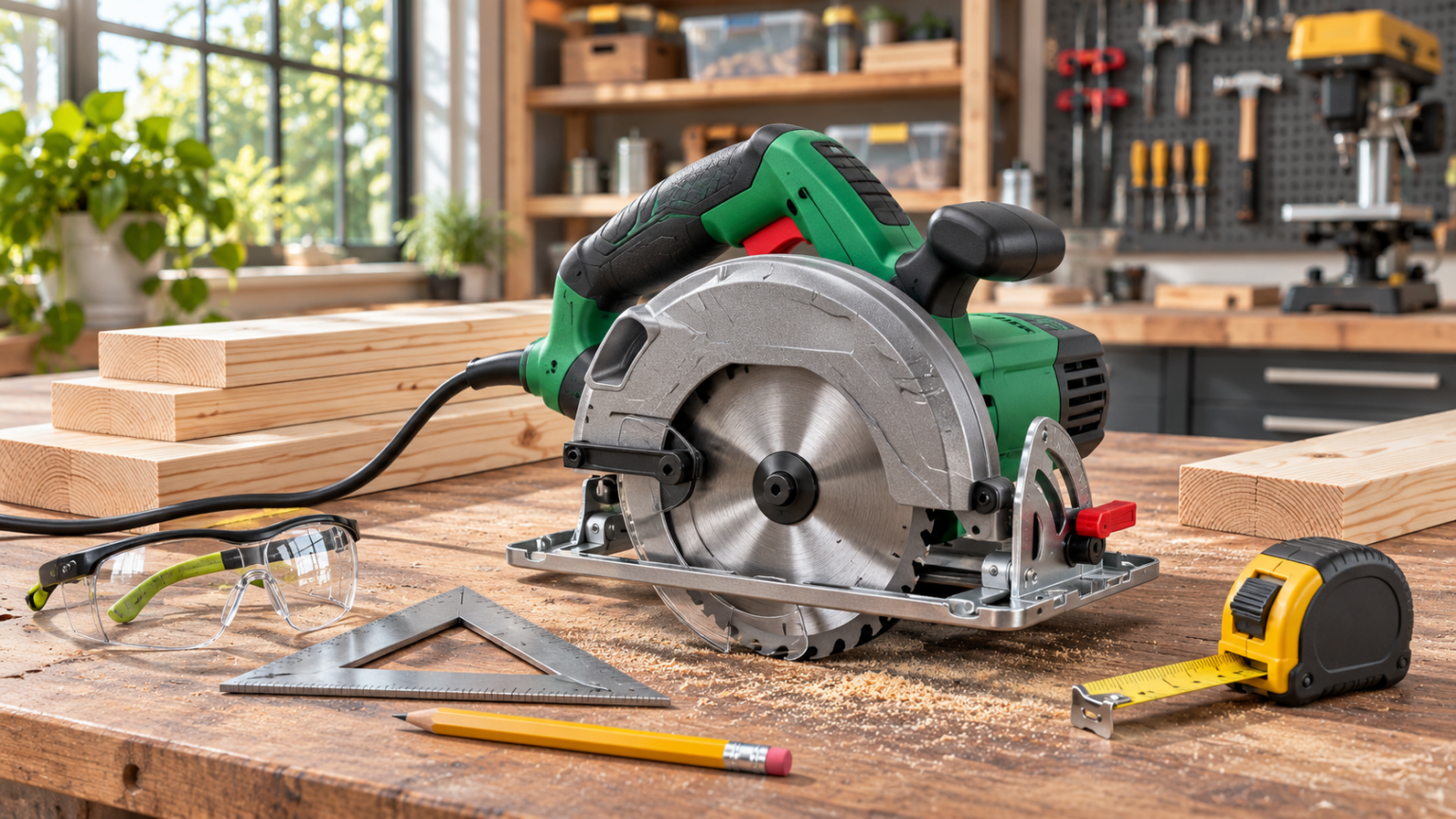
HYCHIKA Circular Saws: Best Features, Models, and Buying Guide
A circular saw can turn an intimidating home improvement task into a manageable project. Whether you are trimming plywood, cutting […]
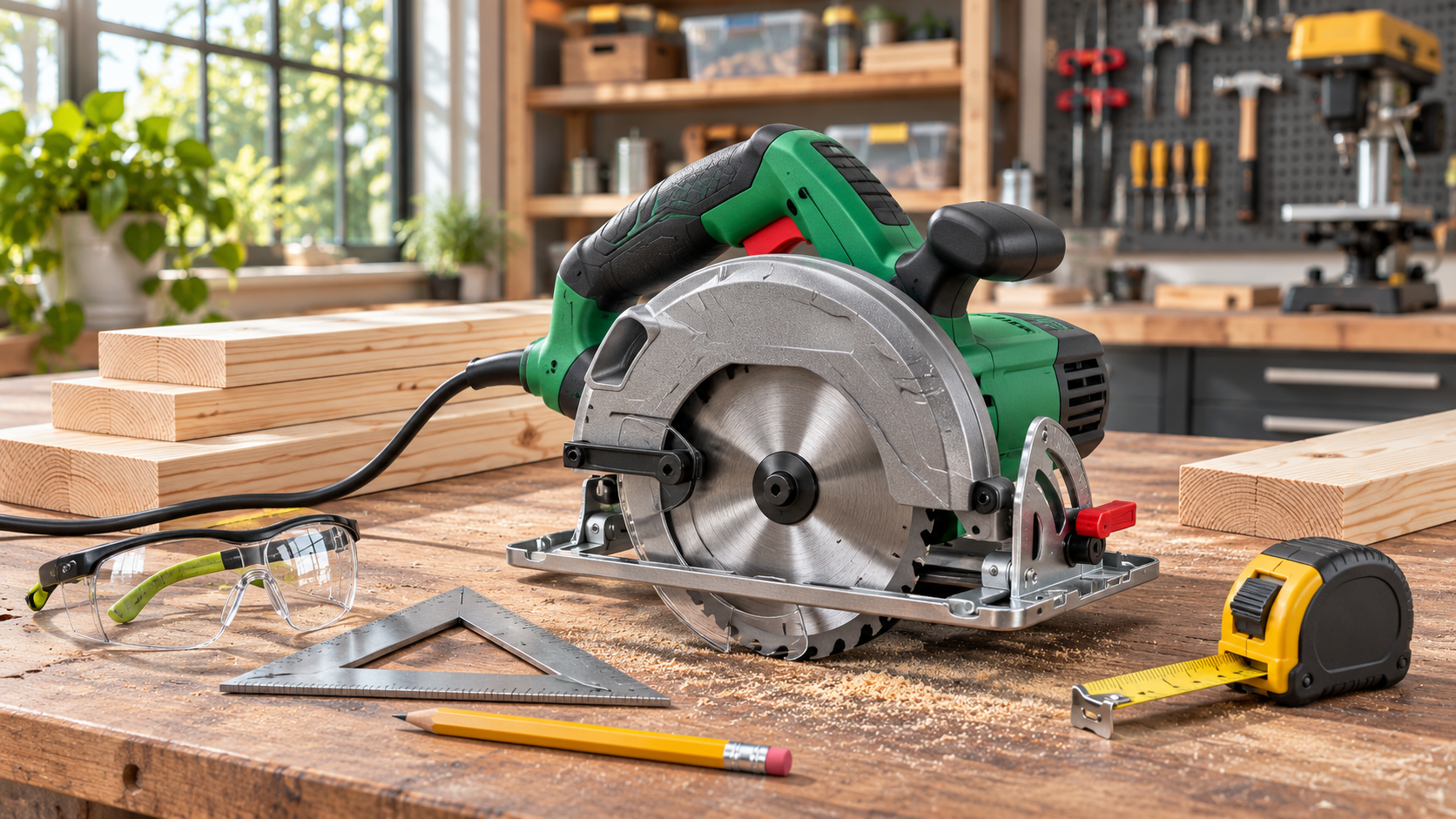
A circular saw can turn an intimidating home improvement task into a manageable project. Whether you are trimming plywood, cutting shelving, or preparing boards for a repair, the right tool needs enough cutting capacity, a compatible blade, and controls you can operate confidently. HYCHIKA circular saws attract attention because the brand offers compact corded designs aimed at DIY users who want a portable cutting tool.
That does not mean every model can handle every job. A mini saw has different limits from a conventional full-size machine, and the blade supplied in a kit may not suit the material you intend to cut. This guide explains the specifications worth checking, the models documented in product listings, safe operating habits, and ways to decide whether a HYCHIKA saw fits your workshop.
What Makes These Saws Different?
HYCHIKA sells several categories of power tools, including compact circular saws. Unlike a stationary table saw, a handheld circular saw travels across a securely supported workpiece. The rotating blade makes straight cuts, while an adjustable base may allow angled cuts. HYCHIKA circular saws are especially relevant to users who need a tool they can store in a modest workshop and bring to occasional projects.
The main appeal of HYCHIKA circular saws is portability rather than a promise of professional performance. Compact size is useful for maneuverability, but it does not automatically mean better accuracy or safety. Stable material support, blade selection, depth adjustment, and operator technique remain essential. For frequent construction work on thick lumber, a full-size saw may be more appropriate.
Models and Specifications Worth Knowing
The 750W Mini Saw
HYCHIKA’s official product page identifies a corded 750W, 6.2-amp mini circular saw, part number M1Y-AC1802-115. The listed no-load speed is 3,500 RPM, with a maximum cutting depth of 48 mm at 90 degrees and 32 mm at 45 degrees. It advertises bevel adjustment from 0 to 45 degrees and accommodates specified 115 mm and 125 mm blade sizes. These are manufacturer specifications, not results from independent performance testing. HYCHIKA
This is one of the better-documented HYCHIKA circular saws for someone comparing compact equipment. The official package description includes a wood-cutting TCT blade, an HSS blade for specified softer materials, a diamond blade for suitable tile applications, a scale ruler, vacuum adapters, a blade-change wrench, and a manual. Contents can change by seller or bundle, so verify the exact listing before ordering.
The Smaller 500W Option
The brand’s current saw collection also lists a 500W mini circular saw marketed for several materials and featuring a laser guide. However, the collection summary does not establish every technical detail a buyer might need, such as the exact depth capacity of every regional version. Consult its individual model page and label instead of transferring specifications from the 750W tool. HYCHIKA TOOL
When comparing HYCHIKA circular saws, remember that wattage alone does not tell you whether a blade will cut your board cleanly. Cutting depth, blade geometry, material suitability, and how the tool handles under load are equally relevant.
Earlier Full-Size Models
A retailer listing documents the HYCHIKA CS-185C, a 12.5-amp circular saw with a 7-1/4-inch blade, a listed maximum speed of 4,700 RPM, and bevel adjustment to 45 degrees. That particular retailer page marks the item as no longer sold there. Treat it as evidence of a previously marketed model, not proof that the same configuration is currently stocked or supported everywhere. Lowe’s
A full-size model can make sense for deeper cuts, but users should confirm the availability of compatible blades, replacement parts, and current documentation. Do not assume older and newer HYCHIKA circular saws accept identical accessories.
Where a Compact Saw Can Be Useful
Shelves, Panels, and Everyday Repairs
A properly matched mini circular saw can help cut thin boards, panel material, or small components for household projects. Some users appreciate the easier storage and relatively compact work area. For shelving, mark the cut carefully and use a securely fixed straightedge guide if the manufacturer permits one.
HYCHIKA circular saws should be selected by the thickness and composition of the actual workpiece. Compare the tool’s maximum cutting depth at the intended angle, allowing for the guidance in the manual. Do not attempt a cut that exceeds the rated capacity.
Sheet Goods and Repetitive Cuts
Plywood and other sheet goods require good support on both sides of the cut. The offcut must not pinch the spinning blade or drop unpredictably. A long guide may improve consistency, but the saw’s base must have clear, stable support throughout the movement.
For large sheets, a larger circular saw or track-saw system may be easier to control. HYCHIKA circular saws in compact formats are not automatically the best choice simply because the sheet material is thin.
Tile and Other Materials
The manufacturer’s 750W listing describes optional blade types for wood, plasterboard, soft metal, tile, and brick. That does not authorize using any blade on any material. Read the instructions for both the exact saw and the blade, including blade speed rating, diameter, arbor fit, material limitations, and dust-control requirements.
Cutting masonry and some engineered materials can produce hazardous respirable dust. Use equipment and controls appropriate to the material and applicable safety guidance; a basic vacuum adapter is not proof of adequate silica-dust control.
How to Choose the Right Blade
A circular saw’s cutting performance depends heavily on its blade. Tooth count and tooth design affect finish and speed, while blade construction determines which materials can be cut. Use only sizes and arbor configurations specifically approved for the model. A blade that physically fits may still be unsafe if its rating or application is wrong.
For HYCHIKA circular saws, inspect the exact package contents and manual. Do not assume that a blade described as suitable for soft metal is appropriate for every metal, or that a diamond blade permits cutting any masonry product without additional dust protection.
When to Replace a Blade
Excessive burning, rough cuts, abnormal vibration, missing teeth, or visible damage can signal a blade problem. Disconnect the saw from power before inspecting or changing it. Never operate with a cracked blade. Follow the blade-change procedure and tightening instructions for your own model.
Safety Comes Before Speed
The major hazards of handheld saws include blade contact, flying particles, and kickback. OSHA’s workplace rules require appropriate upper and automatically returning lower guards on portable circular saws. Never wedge the lower guard open, defeat a safety switch, or use a saw with damaged guarding. Occupational Safety and Health Administration
Working safely with HYCHIKA circular saws means wearing appropriate eye and hearing protection, controlling dust, and securing the workpiece. Keep both hands on the designated grips when the tool is built for two-handed operation. Position your body out of the potential kickback path and avoid reaching beneath the material while the blade can move.
Reduce the Chance of Kickback
Kickback can happen when the blade binds or the workpiece closes around it. Support stock so the kerf can remain open, use a sharp and compatible blade, and set cutting depth according to the manufacturer’s guidance. Do not force or twist the saw during a cut.
Start with the blade clear of the material, allow the motor to reach operating speed, and move steadily along the marked path. Release the trigger if the saw binds, hold the tool securely until the blade stops, then disconnect power before diagnosing the problem. These general practices apply whether you use HYCHIKA circular saws or another brand. SafeWork SA
A Simple Pre-Cut Check
Inspect the cord, plug, guards, blade, and base adjustment. Remove loose objects from the bench. Confirm that the board is securely clamped and the path below it is clear. Check that the power cable cannot enter the cutting line. Read the manual before your first use, especially for unfamiliar adjustments or materials.
Getting Straighter, Cleaner Cuts
For HYCHIKA circular saws, accuracy starts with marking, measuring twice, and understanding which side of the line is waste. Use a square for crosscuts and an approved straightedge guide for longer cuts. Allow for the blade’s kerf, the material removed by cutting, when final dimensions matter.
The laser guide advertised on some HYCHIKA circular saws is a visual aid, not a guarantee of precision. Check its alignment against the actual blade path according to the manual. A stable base, correct blade, and controlled movement matter more than the presence of a laser.
Adjusting Depth and Bevel
Set the depth only as needed for the workpiece and follow the manual’s instructions. Angled cuts reduce the maximum thickness a saw can handle. The 750W model’s official depth figures illustrate this difference: its stated capacity is greater at a square cut than at a 45-degree bevel.
Make adjustments only after disconnecting the saw from its power source. Lock settings firmly before cutting and check a marked test piece where appropriate. Remember that HYCHIKA circular saws may have different adjustment mechanisms across models.
Maintenance and Storage
After use, disconnect the tool and allow the blade to stop completely before setting it down or cleaning it. Remove loose sawdust according to the manufacturer’s instructions, without directing compressed debris toward electrical openings or your face. Check for damaged cords, sticking guards, loose hardware, and unusual vibration.
Store HYCHIKA circular saws in a dry location away from children, with blades protected from accidental contact. Keep the original manual and record the model number. Replacement blades and accessories should be selected by verified compatibility rather than brand name alone.
Are These Saws Worth Buying?
For a homeowner doing occasional compatible cutting tasks, the compact models may offer a convenient combination of features and accessories. The 750W listing provides unusually clear information about its motor, cutting angles, and included blades. However, specifications do not establish independent durability, long-term reliability, or professional-jobsite performance.
Before buying HYCHIKA circular saws, compare the tool’s capacity with your real projects, verify your local voltage and plug requirements, review the seller’s return policy, and confirm support for consumables. A bargain is not useful if the saw cannot safely cut the material you have.
When Another Saw May Be Better
Choose a full-size circular saw for thicker construction lumber within its rated capacity. Consider a track saw for repeated long panel cuts where finish and guidance are priorities. A jigsaw may suit curves and intricate shapes that a circular saw is not designed to follow. Buying the right tool category is more important than choosing a familiar brand.
Frequently Asked Questions
Are HYCHIKA saws suitable for beginners?
They may be suitable for adults who learn the controls, read the exact manual, and use proper material support and protective equipment. Compact dimensions do not remove the risks of a rotating blade. Beginners should start with straightforward, well-supported practice cuts.
What size blade does the 750W mini saw use?
HYCHIKA’s official listing specifies blade sizes of 115 mm and 125 mm for the documented 750W model, with application-specific blades. Confirm the arbor and permitted blade details in the manual rather than assuming all blades of those diameters are interchangeable.
Can these saws cut metal or tile?
Certain HYCHIKA circular saws are marketed for selected soft metal and tile applications using specified blades. Compatibility depends on the exact model, blade, material, and dust precautions. Never substitute an unapproved blade or assume the saw can cut structural steel.
Are compact saws as powerful as full-size models?
Not necessarily. A compact tool often has less cutting depth and a different motor and blade arrangement. Compare actual rated capacity and workload requirements rather than expecting the same performance from every size.
Do I need a laser guide for straight cuts?
No. A properly positioned straightedge, accurate layout marks, and stable cutting technique are more important. A laser may help visibility on some models but should be checked for alignment.
How can I find replacement blades?
Use the full model number, blade diameter, arbor size, speed rating, and approved material application. Contact HYCHIKA support if the manual or replacement listing leaves any compatibility question unanswered.
Conclusion
HYCHIKA circular saws are worth considering for DIY users who need a portable tool and whose projects fit the stated limits of a particular model. The 750W mini saw has documented blade options, adjustable depth, and bevel capability, while older full-size offerings show that the brand has marketed different cutting formats. Compare actual specifications rather than assuming all models perform alike.
The right choice starts with the material, blade compatibility, and safe handling. With secure support, careful setup, and realistic expectations, a circular saw can become a useful workshop tool for home repairs and woodworking projects.

Written by Twastia Editorial Team
Twastia Editorial Team shares practical insights about website design, SEO services, Google Ads, content marketing, social media, conversion rate optimization, and digital marketing strategy.
Last updated: Nov 10, 2026
Related posts from Twastia
Explore more useful articles from twastia.com about digital marketing, SEO, websites, ads, content, and growth strategy.