Forex Trading Basics Every New Trader Should Learn First
Forex trading attracts more new participants every year, and it is easy to see why. The currency market runs around […]
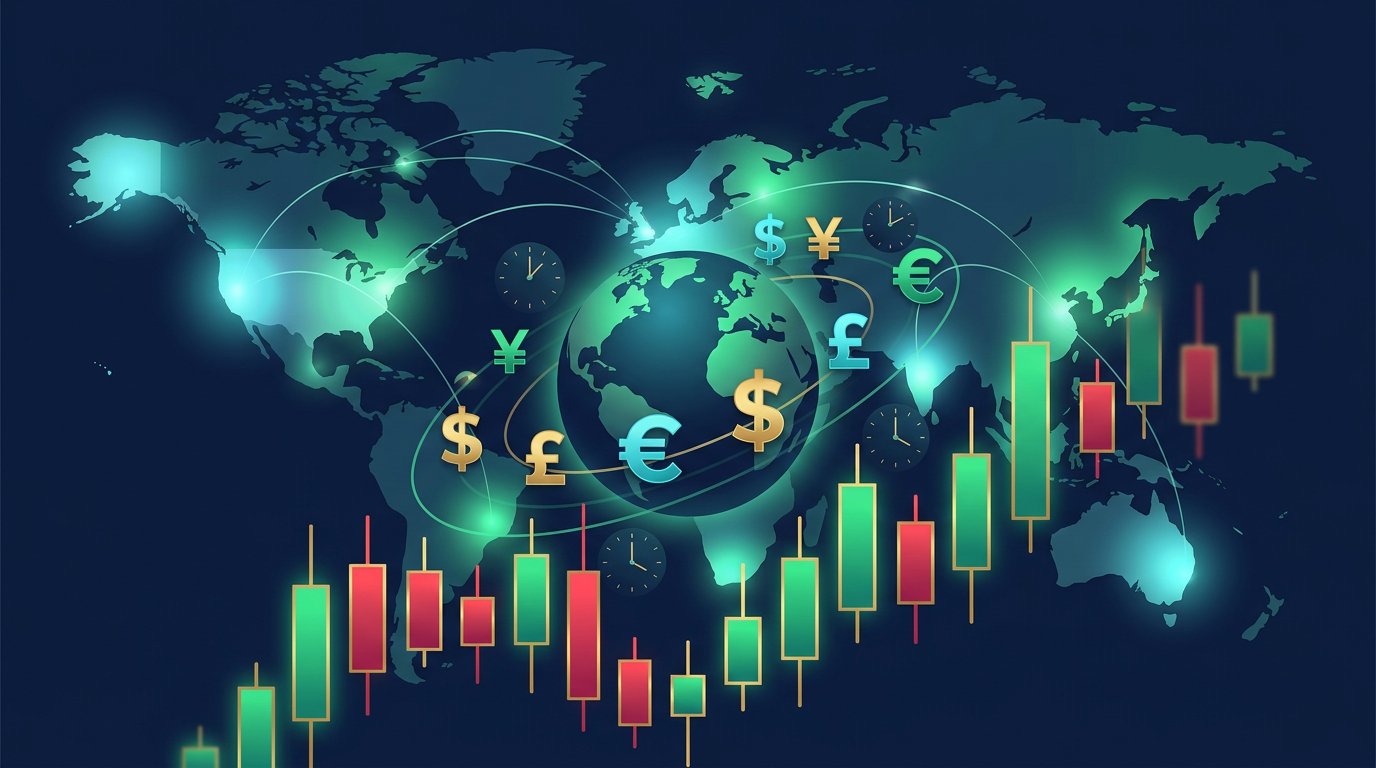
Forex trading attracts more new participants every year, and it is easy to see why. The currency market runs around the clock, five days a week, and it moved an average of $9.6 trillion per day in April 2025. That figure comes from the Bank for International Settlements, and it marks the highest turnover ever recorded.
However, size and accessibility do not guarantee success. Most beginners lose money because they skip the fundamentals. This guide fixes that problem. It explains how currency pairs work, what moves exchange rates, how to place a first trade, and how to protect your capital. Every section builds on verified market data rather than hype.
Key Takeaways
- Forex trading means exchanging one currency for another to profit from price movements between them.
- The market ran $9.6 trillion in daily turnover in April 2026, up 28% from 2022, per the BIS Triennial Survey.
- Major pairs like EUR/USD offer the tightest spreads and the deepest liquidity for beginners.
- Risk management matters more than strategy: never risk more than a small fixed percentage per trade.
- Start with a demo account, verify your broker’s regulation, and trade small before scaling up.
What Is Forex Trading?
Forex trading is the act of buying one currency while simultaneously selling another. Currencies always trade in pairs, so you speculate on the exchange rate between two economies. If you expect the euro to strengthen against the dollar, you buy EUR/USD. If you expect weakness, you sell it.
Unlike stock exchanges, this market has no central building. Instead, trading flows electronically between banks, brokers, funds, and retail platforms worldwide. As a result, the market stays open 24 hours a day from Monday morning in Sydney to Friday night in New York.
The sheer scale is worth repeating. Daily turnover hit $9.6 trillion in April 2026, according to the BIS survey of more than 1,100 banks across 52 countries. For context, that is roughly 40 times the daily volume of global stock markets.
The ecosystem includes far more than individual speculators. Commercial banks handle the largest flows, followed by hedge funds, multinational corporations, and central banks. In fact, retail participants represent only a small slice of total turnover. Nevertheless, technology has narrowed the historical gap between professionals and individuals.
Understanding this hierarchy shapes realistic expectations. You are a small boat on a vast ocean, so trading with the prevailing tide beats fighting it. In other words, align with central bank policy and major institutional flows instead of opposing them.
How the Forex Market Works
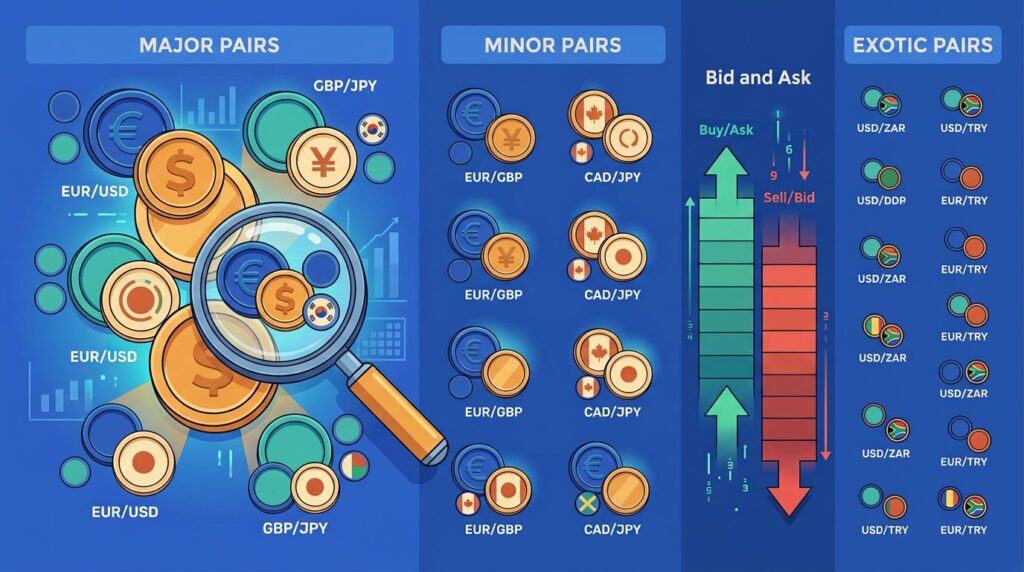
Every forex quote shows two prices: the bid and the ask. The bid is what buyers pay, while the ask is what sellers accept. The gap between them is the spread, and it represents your main transaction cost.
Pairs fall into three categories, and understanding them shapes every decision you make. Beyond spot dealing, the market also trades forwards, swaps, and options. Notably, FX swaps form the largest instrument at nearly $4 trillion daily, while pure spot turnover reached $2.6 trillion in the latest survey. Retail beginners, however, deal almost exclusively with simple spot-style trades through their broker.
| Category | Composition | Examples | Typical behavior |
|---|---|---|---|
| Majors | USD paired with a top currency | EUR/USD, GBP/USD, USD/JPY | Tightest spreads, deepest liquidity |
| Minors | Major currencies without USD | EUR/GBP, AUD/JPY, EUR/CHF | Slightly wider spreads |
| Exotics | Major paired with emerging currency | USD/TRY, EUR/ZAR, USD/SGD | Wide spreads, sharp swings |
The US dollar dominates everything. It sat on one side of 89% of all trades in the 2025 BIS survey. Moreover, China’s yuan climbed to an 8.5% share, up from 7% three years earlier. For beginners, major pairs remain the sensible starting point because their liquidity keeps costs low and slippage rare.
What Moves Currency Prices
Exchange rates respond to forces that are measurable and scheduled. Central bank interest rates sit at the top of the list. When a central bank raises rates, its currency usually attracts more capital and strengthens.
Inflation reports, employment data, and GDP releases follow closely behind. Traders compare actual figures against forecasts, and surprises cause the sharpest moves. Geopolitics adds another layer entirely. Elections, conflicts, and trade policy can shift sentiment within minutes.
April 2026 offered a perfect real-world example. US tariff announcements sparked extraordinary volatility, and global forex trading volumes jumped 28% year over year in that single month. Therefore, every beginner should track an economic calendar before planning trades. Knowing when data drops is as important as knowing what it says.
Interest rate divergence creates longer trends as well. When one central bank hikes while another holds, capital flows toward the higher yield for months. Meanwhile, crisis moments trigger safe-haven demand for the dollar, yen, and Swiss franc. For example, risk currencies often fall together when global uncertainty spikes, regardless of their domestic data.
Forex Trading Sessions and Market Hours
The market never sleeps during the week, yet activity is far from uniform. Four sessions divide the day: Sydney, Tokyo, London, and New York. Each brings distinct volume and character.
London remains the world’s largest hub by a wide margin. It handled 37.8% of global turnover in the latest survey, with the United States at about 19% and Singapore at 11.8%. Consequently, the London-New York overlap delivers the day’s deepest liquidity and fastest price movement.
Meanwhile, the Asian sessions tend to move more slowly on major pairs. That calm suits range strategies, whereas the overlap suits breakout approaches. Matching your strategy to the session is a small edge that compounds over time.
Each window also favors different instruments. Yen crosses stay busiest during Tokyo hours, while pound and euro pairs peak in the London morning. In addition, liquidity thins sharply during holidays and after the New York close. Wider spreads during those quiet gaps can turn a good entry into an expensive one.
How to Start Forex Trading Step by Step
Getting started requires more than downloading an app. Follow these steps in order, and you will avoid the most expensive beginner errors:
- Learn the vocabulary first: pips, lots, spread, margin, and leverage.
- Practice on a demo account until your process feels boring and repeatable.
- Choose a regulated broker and verify the license on the regulator’s public register.
- Compare real costs, including spreads, commissions, and overnight swap rates.
- Fund a small live account only after demo consistency, then trade micro size.
- Journal every trade with entry reasons, so reviews reveal patterns quickly.
Broker selection deserves extra care. Established platforms make the comparison easier. For example, Moneta Markets lists its Forex trading conditions transparently, with 45+ currency pairs, the PRO Trader and MT4 platforms, and 0.01-lot minimums for small accounts. That kind of published detail lets you verify conditions before depositing a single dollar.
Reading Your First Quote and Placing a Trade
Imagine EUR/USD quoted at 1.0850/1.0852. The first price is the bid, and the second is the ask. Buying costs you 1.0852, while selling earns you 1.0850. The two-pip spread is your immediate cost of entry.
A pip is the fourth decimal place for most pairs, 0.0001. On a standard lot of 100,000 units, one pip equals roughly $10. However, a micro lot of 1,000 units shrinks that to about $0.10 per pip. Therefore, beginners can control real risk precisely by shrinking position size.
Here is a complete worked example. You buy 0.10 lots of EUR/USD at 1.0850 with a stop loss at 1.0830. Your risk is 20 pips at about $1 per pip, totaling $20. If your target sits at 1.0890, the potential gain is 40 pips or $40. That two-to-one reward-to-risk ratio forms the backbone of sound forex trading.
Order types give you control over every entry. A market order fills instantly at the current price, while a limit order waits for your chosen level. Similarly, a stop order triggers only after price crosses your threshold. Take-profit instructions close winners automatically at your target. Beginners should attach both protective orders to every position before anything else.
Risk Management Rules That Protect Beginners
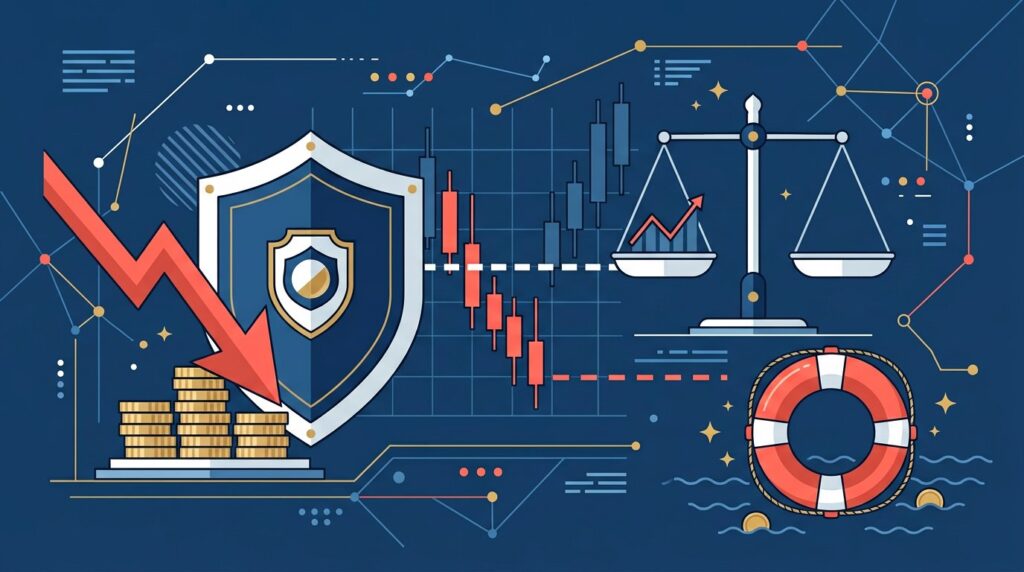
Survival comes before profit in every successful trading career. Regulator-mandated disclosures confirm that a majority of retail accounts lose money on leveraged products. These rules keep you on the right side of that statistic:
- Risk only 1% of your account on any single trade, two at the absolute most.
- Always set a stop loss before entering, and never widen it emotionally.
- Treat leverage as a tool, not a gift, because it magnifies losses exactly like gains.
- Avoid trading through major news releases until you have real experience.
- Withdraw a portion of profits regularly, so gains become real rather than theoretical.
Risk disclosure: leveraged forex and CFD trading carries a high risk of rapid loss. Only trade money you can afford to lose, and consider independent advice if you need it.
Common Forex Trading Mistakes to Avoid
Most failures trace back to a short list of repeated behaviors. Overleveraging tops the ranking, since tiny positions in huge accounts survive almost anything while the reverse collapses fast. Revenge trading follows closely, because chasing losses with bigger sizes compounds damage.
Ignoring the economic calendar is another classic error. A technically perfect setup can be destroyed by a single surprise rate decision. Similarly, strategy-hopping prevents any method from reaching statistical validity. Meanwhile, overtrading drains accounts through spreads and fatigue rather than one dramatic loss. For instance, ten mediocre entries usually cost more than one carefully planned position. Overnight swap charges also erode slow swing trades quietly over weeks. Finally, skipping the journal leaves you blind to your own patterns. Awareness of these traps is genuinely half the defense against them.
Frequently Asked Questions About Forex Trading
What is forex trading in simple terms?
Forex trading is exchanging one currency for another to profit from exchange rate changes. You trade pairs like EUR/USD, buying when you expect the first currency to strengthen against the second. It is the world’s largest financial market, with $9.6 trillion traded daily in April 2025.
How much money do I need to start forex trading?
Technically, some brokers accept deposits as low as $1 to $10. Realistically, $100 to $500 gives micro-lot positions enough breathing room for proper 1% risk sizing. Regardless of the amount, begin on a free demo account before risking real funds.
Is forex trading legal and safe?
Forex trading is legal in most countries when conducted through licensed brokers. Safety depends on your choices: verify regulation on the official register, use segregated accounts, and manage leverage conservatively. Remember that most retail traders lose money with leveraged products.
Which currency pair is best for beginners?
EUR/USD is the classic recommendation. It is the most traded pair globally, so spreads stay minimal and movement stays relatively orderly. GBP/USD and USD/JPY are reasonable alternatives. Avoid exotic pairs until you have consistent experience.
Can I trade forex on my phone?
Yes. Modern brokers provide full-featured mobile apps alongside desktop platforms. You can analyze charts, place orders, and manage positions from anywhere. Nevertheless, complex analysis is usually easier on a larger screen, so many traders use phones mainly for monitoring.
What are the biggest risks in forex trading?
Leverage risk comes first, because amplified positions erase accounts quickly. Market risk follows, since surprise news can gap prices past stop losses. Finally, broker risk exists, which is why regulation and verified withdrawal records matter so much before depositing.
Conclusion
Forex trading rewards preparation and punishes shortcuts. The market’s $9.6 trillion daily scale guarantees opportunity, but only disciplined beginners convert opportunity into results. Master the vocabulary, respect the calendar, start on demo, and size every position defensively.
From there, progress becomes a process rather than a gamble. Verify your broker’s license, trade micro lots, and journal relentlessly. Moreover, revisit your journal monthly and cut the patterns that drain results. If you follow that path, forex trading can evolve from an intimidating acronym into a structured, measurable skill you control. Your first consistent quarter of small gains will teach you more than any single big win ever could.

Written by Twastia Editorial Team
Twastia Editorial Team shares practical insights about website design, SEO services, Google Ads, content marketing, social media, conversion rate optimization, and digital marketing strategy.
Last updated: Aug 3, 2026
Related posts from Twastia
Explore more useful articles from twastia.com about digital marketing, SEO, websites, ads, content, and growth strategy.