Custom-Designed Storage Solutions in Milwaukee: A Practical Guide to Smarter Home Organization
A home can have plenty of square footage and still feel short on storage. The problem is often not the […]
A home can have plenty of square footage and still feel short on storage.
The problem is often not the amount of space available. It is how that space is designed and used.
Deep kitchen cabinets become difficult to reach. Pantry shelves waste vertical space. Bathroom cabinets turn into cluttered collections of bottles and cleaning products. Garages fill with seasonal items, tools, and equipment until parking becomes difficult.
For homeowners considering custom-designed storage solutions in Milwaukee, the goal is usually not simply to add more shelves. The real objective is to make existing space easier to access, better organized, and more useful for everyday life.
Custom storage can be designed around your home’s dimensions, your belongings, and the way your household actually uses each room.
This guide explains where custom storage provides the most value, what solutions are available, how to plan a project, and what Milwaukee homeowners should consider before investing.
What Are Custom-Designed Storage Solutions?
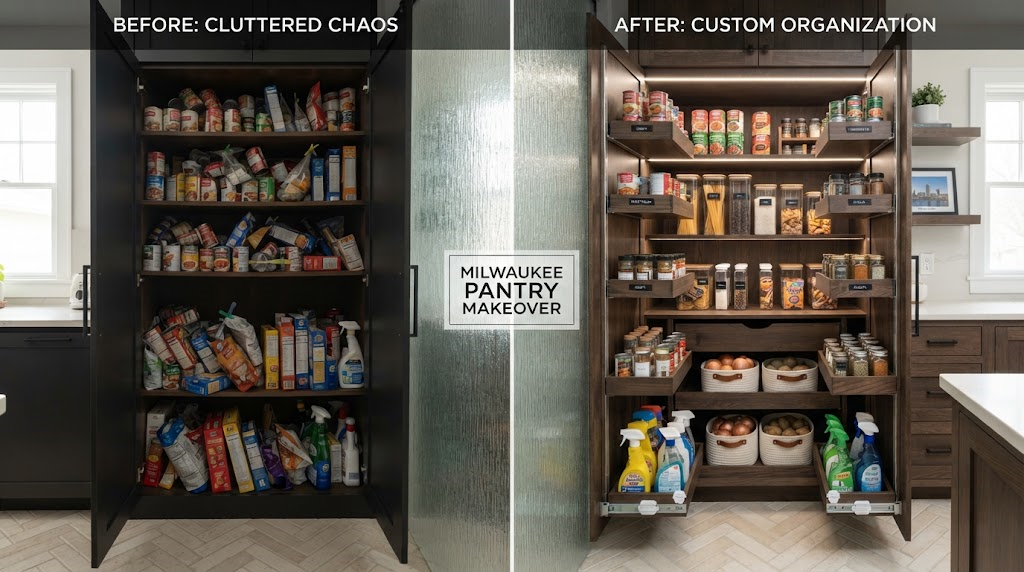
Custom storage systems are designed specifically for a particular space rather than purchased as one-size-fits-all products.
They may include:
- Pull-out shelves
- Custom pantry systems
- Cabinet organizers
- Drawer systems
- Closet shelving
- Garage cabinets
- Vertical dividers
- Corner cabinet solutions
- Spice organizers
- Under-sink storage
- Utility room shelving
The main difference between custom and standard storage is fit.
Standard organizers are manufactured in fixed dimensions.
Custom storage is measured and configured around the exact dimensions of your cabinets, closets, pantry, or other space.
That can reduce wasted areas and make awkward spaces more functional.
Why Storage Design Matters More Than Storage Quantity
Homeowners often assume they need more cabinets.
Sometimes they do.
But in many cases, the bigger problem is poor accessibility.
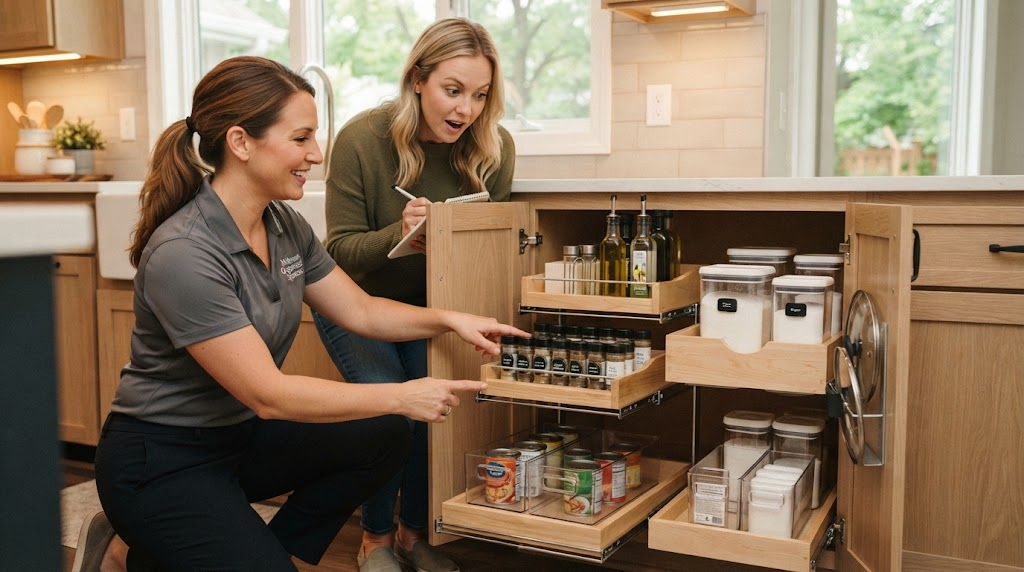
Consider a deep lower kitchen cabinet.
Technically, it may provide a large amount of storage volume.
But if you have to kneel down, remove several items, and reach into the back every time you need a pot, much of that space is inconvenient.
A pull-out shelf can bring the entire contents toward you.
The physical storage capacity may remain almost identical, but usability improves dramatically.
Good storage design is about converting hidden or inconvenient space into accessible space.
Why Milwaukee Homes Can Benefit From Custom Storage
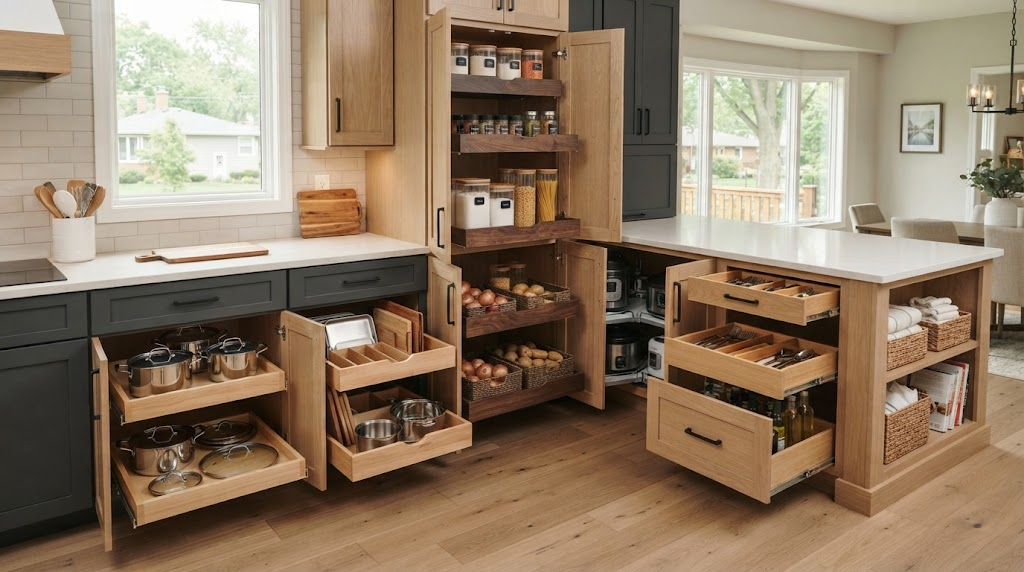
Milwaukee has a diverse housing stock, from historic urban homes and duplexes to mid-century properties and newer suburban construction.
Older houses can be particularly challenging because storage was often designed for households that owned fewer appliances, bulk goods, clothes, and recreational equipment.
Modern lifestyles create different demands.
Homeowners may need space for:
- Small kitchen appliances
- Bulk groceries
- Recycling
- Home-office equipment
- Sports gear
- Winter clothing
- Snow equipment
- Pet supplies
- Cleaning products
- Tools
Milwaukee’s seasonal climate can also increase storage needs.
Winter coats, boots, snow blowers, shovels, summer patio equipment, sports equipment, and holiday decorations all require somewhere to go.
Custom storage can help make seasonal transitions easier.
Kitchen Storage: One of the Highest-Impact Areas
The kitchen is often the first place homeowners consider improving.
It contains many items of different sizes and shapes, and almost everything needs to remain easily accessible.
Pull-Out Cabinet Shelves
Pull-out shelves can convert traditional lower cabinets into drawer-like storage.
Instead of reaching into the back of a cabinet, you pull the shelf toward you.
These can work well for:
- Pots
- Pans
- Mixing bowls
- Food containers
- Small appliances
- Canned goods
They can be especially helpful for people with limited mobility because they reduce bending and reaching.
Vertical Tray Dividers
Baking sheets, cutting boards, serving trays, and muffin pans are often stacked horizontally.
That means removing several items to reach the one at the bottom.
Vertical dividers allow these items to stand upright.
Each one becomes easier to see and remove.
Corner Cabinet Solutions
Corner cabinets can provide a large amount of interior space while remaining frustrating to use.
Solutions may include:
- Pull-out trays
- Rotating shelves
- Blind-corner organizers
- Swing-out systems
The right option depends on cabinet configuration.
Pantry Organization
A well-designed pantry can make grocery management significantly easier.
Adjustable Shelving
Different foods require different shelf heights.
Cereal boxes need more vertical space than canned goods.
Adjustable shelving lets homeowners configure sections based on what they actually store.
Pull-Out Pantry Shelves
Deep pantry shelves often create forgotten zones in the back.
Pull-out systems bring everything forward.
This can reduce expired food and duplicate purchases because items remain visible.
Zoned Storage
A pantry can be divided into categories such as:
- Breakfast foods
- Snacks
- Baking supplies
- Canned foods
- Pasta and grains
- Beverages
- Bulk items
The more predictable the storage location, the easier the pantry is to maintain.
Custom Storage for Small Kitchens
Small kitchens benefit enormously from smart storage because there is little room for wasted space.
Potential solutions include:
Narrow Pull-Out Cabinets
Small gaps between appliances or cabinets may accommodate narrow vertical storage.
These are useful for spices, bottles, or baking supplies.
Toe-Kick Storage
In some custom projects, the area near the cabinet base may provide extra shallow storage.
Door-Mounted Organizers
Cabinet doors can hold lightweight items such as:
- Spices
- Measuring tools
- Cleaning supplies
- Wraps and bags
However, door hardware must be designed to support the additional load.
Bathroom Storage Solutions
Bathrooms often need to store many small items in limited space.
Common items include:
- Towels
- Toiletries
- Cosmetics
- Medicine
- Hair tools
- Cleaning supplies
Under-Sink Organization
Plumbing pipes create awkward spaces beneath sinks.
Custom pull-outs or compartment systems can help work around those obstructions.
Vanity Drawers
Deep vanity cabinets often become cluttered.
Drawer systems divide the space into smaller, more accessible zones.
Vertical Storage
Tall narrow cabinets can make good use of limited floor area.
This works especially well in small bathrooms.
Closet Storage
A standard closet with one shelf and one hanging rod wastes substantial vertical space.
Custom closet systems can create separate areas for different clothing types.
Potential features include:
- Double hanging rods
- Long-hang sections
- Adjustable shelves
- Shoe storage
- Drawers
- Accessory trays
- Belt and tie racks
- Laundry baskets
The design should reflect the owner’s wardrobe.
Someone with many folded clothes needs a different layout from someone with mostly business attire.
Entryway and Mudroom Storage
Milwaukee weather makes entryway organization particularly important.
Winter brings:
- Heavy coats
- Gloves
- Hats
- Scarves
- Snow boots
- Wet footwear
Summer adds sports equipment and outdoor items.
A well-designed mudroom or entryway can include:
- Hooks
- Shoe storage
- Benches
- Upper cabinets
- Individual family zones
- Seasonal bins
Good entry storage prevents outdoor gear from spreading through the rest of the house.
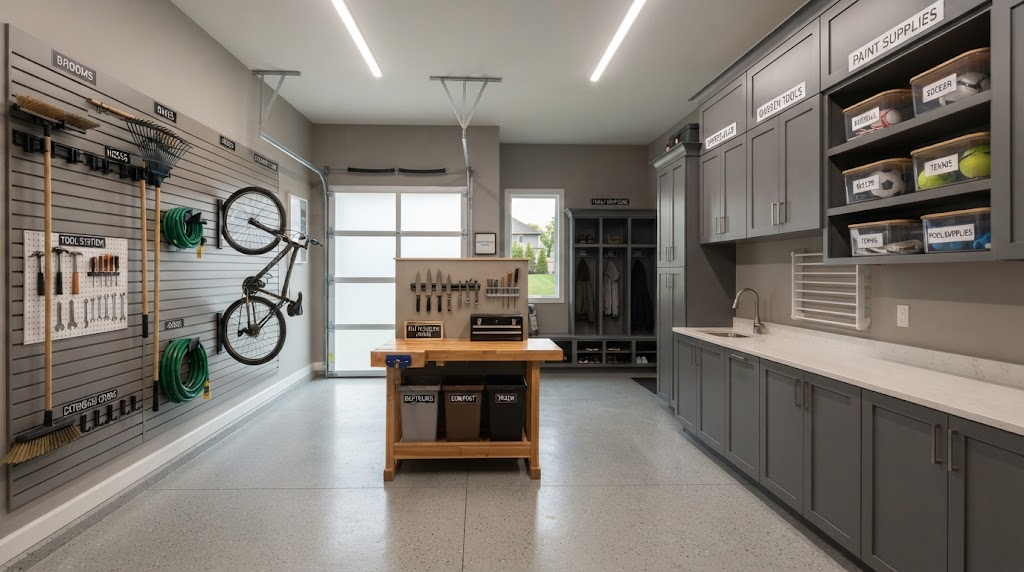
Garage Storage in Milwaukee
Garages often become overflow storage areas.
The result can be a garage filled with boxes, tools, sports equipment, and seasonal gear.
Wall-Mounted Storage
Using walls frees floor space.
Wall storage can hold:
- Bikes
- Garden tools
- Ladders
- Sports gear
- Extension cords
Garage Cabinets
Enclosed cabinets create a cleaner appearance and keep tools or chemicals out of sight.
Lockable cabinets may be useful for hazardous materials.
Overhead Storage
Ceiling racks can store less frequently used items such as:
- Holiday decorations
- Camping equipment
- Seasonal bins
However, overhead systems must be installed correctly and should never obstruct garage doors or create unsafe loads.
Storage for Aging in Place
Custom storage is not only about appearance.
It can improve accessibility.
For people planning to remain in their homes as they age, storage can be designed to reduce:
- Bending
- Reaching
- Climbing
- Heavy lifting
Pull-out shelves are a good example.
Instead of crouching and reaching deep into a cabinet, the contents come toward the user.
Frequently used items can also be positioned between waist and shoulder height.
This type of planning can make a home easier to use long term.
Custom Storage vs. DIY Organizers
Both approaches can work.
The right choice depends on the project.
DIY Storage Products
Advantages may include:
- Lower upfront cost
- Fast installation
- Easy availability
- Flexibility
They can be ideal for basic organization.
Custom Systems
Potential advantages include:
- Better fit
- Higher space efficiency
- Professional installation
- Greater durability
- Better integration with existing cabinetry
The value of customization increases as the space becomes more difficult or specialized.
How the Custom Storage Process Usually Works
Although companies differ, the process generally follows several steps.
Step 1: Consultation
The homeowner discusses problem areas and goals.
Questions may include:
- What is difficult to access?
- Which areas become cluttered?
- What items need storage?
- Who uses the space?
Step 2: Measurement
Precise measurements are taken.
Small differences matter, especially inside existing cabinets.
Step 3: Design
Storage components are selected and configured.
A good design prioritizes daily habits rather than simply filling every available inch.
Step 4: Proposal
The homeowner reviews the recommended solution, pricing, and timeline.
Step 5: Installation
Custom components are installed and tested.
Professional installation is especially important for moving components such as pull-out shelves.
What Makes a Good Storage Design?
A well-designed system should meet several criteria.
Accessibility
Frequently used items should be easy to reach.
Visibility
You should be able to see what you own.
Hidden items are easily forgotten.
Logical Grouping
Similar items should be stored together.
Appropriate Capacity
The system should fit current belongings without becoming immediately overcrowded.
Flexibility
Adjustable components can adapt when storage needs change.
Durability
Moving hardware should be strong enough for expected loads.
How to Prioritize a Storage Project
You do not have to reorganize the entire home at once.
Start with the areas that create the most daily friction.
Ask yourself:
- Which cabinet frustrates me every day?
- Where does clutter accumulate?
- Which items are difficult to reach?
- Where do I repeatedly lose things?
- Which room takes too long to organize?
The answers usually reveal the highest-priority projects.
How Much Do Custom Storage Solutions Cost?
There is no single standard price.
Cost depends on:
- Space size
- Number of components
- Materials
- Hardware quality
- Customization
- Installation complexity
- Existing cabinet condition
A simple cabinet pull-out installation will cost less than redesigning an entire pantry or walk-in closet.
The best approach is to obtain a detailed quote based on the actual space.
Is Custom Storage Worth the Cost?
The value depends on how often you use the space.
Improving a cabinet you open once a month may have limited impact.
Improving a kitchen cabinet you struggle with several times every day can provide far greater practical value.
Custom storage may be worthwhile when it:
- Saves time
- Improves accessibility
- Reduces clutter
- Prevents duplicate purchases
- Makes existing cabinets more useful
- Delays the need for larger renovations
In some cases, better storage can solve problems that homeowners initially believed required a full kitchen remodel.
Custom Storage and Home Resale
Organized storage can make a home more appealing to potential buyers.
Buyers often notice:
- Pantry space
- Closet organization
- Kitchen functionality
- Garage storage
However, storage improvements should primarily be evaluated based on how much value they provide while you live in the home.
Not every dollar spent will necessarily return an equal amount at resale.
Questions to Ask a Storage Professional
Before committing to a project, ask:
- Is the system custom-made for my space?
- What materials are used?
- What weight can the shelves hold?
- What hardware is included?
- Is installation included?
- How long is the warranty?
- Can components be adjusted later?
- Will existing cabinets be modified?
- How long does installation take?
- What happens if measurements are incorrect?
Clear answers help prevent surprises.
Common Storage Planning Mistakes
Organizing Before Decluttering
Custom storage should not become a way to keep things you no longer need.
Declutter first.
Designing for Appearance Only
A beautiful storage system that is inconvenient to use is poorly designed.
Function should come first.
Ignoring Daily Habits
Store items where they are actually used.
Overfilling Every Space
Leave some capacity for future purchases.
Choosing Cheap Moving Hardware
Pull-out shelves and drawers depend heavily on slide quality.
Poor hardware can become frustrating quickly.
How to Prepare Before a Consultation
You can make the design process more effective by preparing beforehand.
Identify Pain Points
Write down the spaces that cause the most frustration.
Photograph Problem Areas
Photos help document how cabinets currently function.
Think About Future Needs
Consider changes such as:
- Growing family
- Aging
- New appliances
- Remote work
- Mobility needs
Set a Budget
Knowing your approximate spending limit helps designers prioritize recommendations.
Frequently Asked Questions
What are custom-designed storage solutions?
They are storage systems measured and configured specifically for an individual space, such as a kitchen cabinet, pantry, closet, bathroom, or garage.
Where can I use custom-designed storage solutions in Milwaukee?
Custom systems can be used in kitchens, pantries, bathrooms, closets, garages, mudrooms, utility rooms, and other areas where storage needs improvement.
Are pull-out shelves worth it?
They can be highly useful in deep lower cabinets because they improve visibility and reduce the need to bend or reach into the back.
Can storage systems be added to existing cabinets?
Yes. Many organization products are designed specifically to retrofit existing cabinetry without requiring a complete kitchen remodel.
How long does custom storage installation take?
The timeline depends on project size, product availability, and complexity. Small projects may be completed relatively quickly, while whole-home systems require more time.
Is custom storage only for large homes?
No. Small homes often benefit the most because efficient storage reduces wasted space.
Can custom storage help seniors?
Yes. Pull-outs, accessible shelving, and strategically positioned storage can reduce bending, reaching, and climbing.
Should I remodel my kitchen or improve the cabinets I already have?
If the cabinets are structurally sound and the main problem is accessibility or organization, storage upgrades may solve the issue at a lower cost than a full remodel.
Can a custom pantry increase usable space?
It can improve how effectively the existing space is used through better shelf spacing, pull-outs, vertical organization, and logical zoning.
What should I organize first?
Start with the area that creates the most frequent inconvenience. Kitchens and pantries often provide the biggest daily improvement.
Conclusion
Good storage is not about filling a home with more cabinets.
It is about making the space you already have work more effectively.
For homeowners considering custom-designed storage solutions in Milwaukee, the most valuable improvements are usually the ones that solve specific daily problems.
A deep cabinet that hides cookware, an overcrowded pantry, a chaotic entryway, or a garage with no clear organization system can all become easier to use with thoughtful design.
Start by identifying where your home creates the most friction.
Then consider whether simple organizers can solve the problem or whether a custom solution would make better use of the available space.
Pay attention to accessibility, hardware quality, durability, and flexibility rather than appearance alone.
The strongest storage systems are almost invisible in daily life because everything simply works.
Items are easier to see, easier to reach, and easier to return to their proper place.
That is the real value of customized home organization: not just creating a cleaner-looking space, but designing a home that requires less effort to live in every day.

Written by Twastia Editorial Team
Twastia Editorial Team shares practical insights about website design, SEO services, Google Ads, content marketing, social media, conversion rate optimization, and digital marketing strategy.
Last updated: Oct 8, 2026
Related posts from Twastia
Explore more useful articles from twastia.com about digital marketing, SEO, websites, ads, content, and growth strategy.