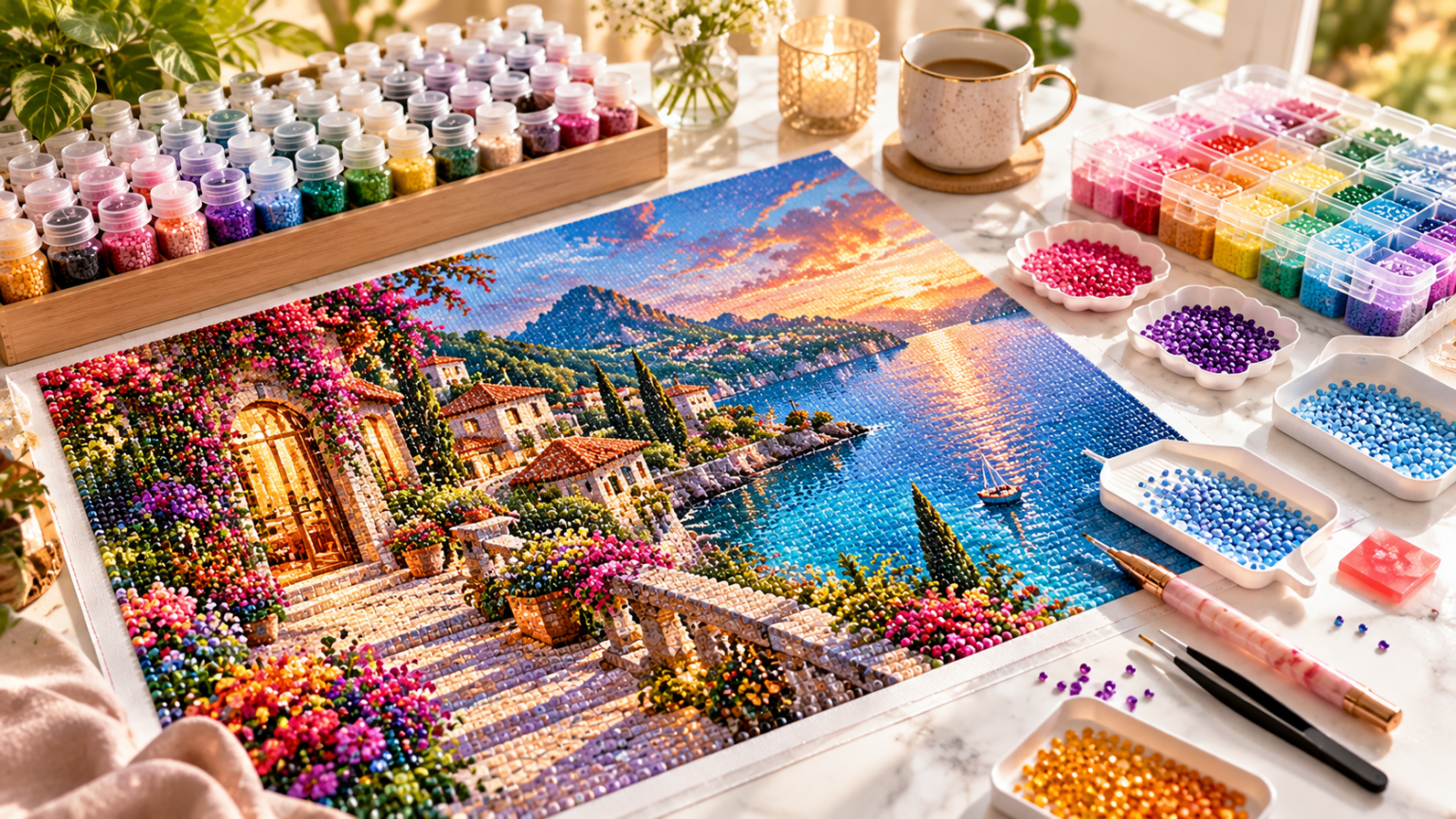
Best Diamond Painting Kits: A Complete Guide for Beginners and Experienced Crafters
Diamond painting has become one of the most popular relaxing craft activities for adults and older children. It combines the […]
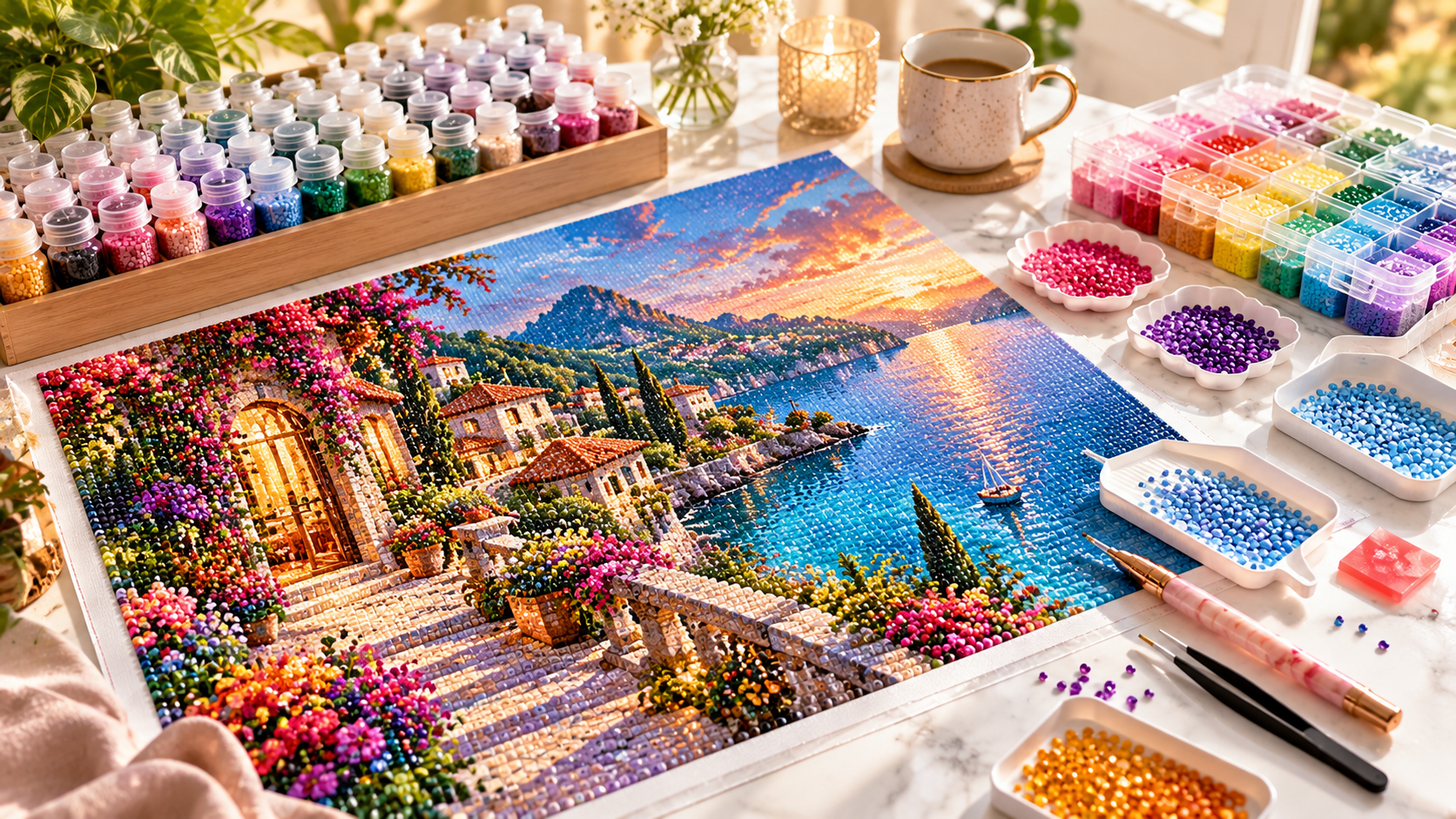
Diamond painting has become one of the most popular relaxing craft activities for adults and older children. It combines the structure of paint-by-numbers with the visual appeal of mosaic art, using small resin pieces called drills that are placed onto a coded adhesive canvas.
The result can be surprisingly impressive.
Depending on the kit, finished diamond art may include landscapes, animals, floral designs, fantasy scenes, portraits, abstract patterns, seasonal artwork, or decorative wall pieces.
But not every kit provides the same experience.
The best diamond painting kits should offer more than an attractive picture on the box. Canvas quality, symbol clarity, adhesive strength, drill consistency, color accuracy, tool quality, and overall design resolution all influence how enjoyable the project is and how polished the finished artwork looks.
For beginners, choosing the wrong kit can make the hobby unnecessarily frustrating.
For experienced crafters, poor drills, blurry symbols, or weak adhesive can turn a large project into hours of avoidable work.
This guide explains how diamond painting works, what separates high-quality kits from low-quality ones, which drill types are available, how to choose the right size, and what to look for before buying.
What Is Diamond Painting?
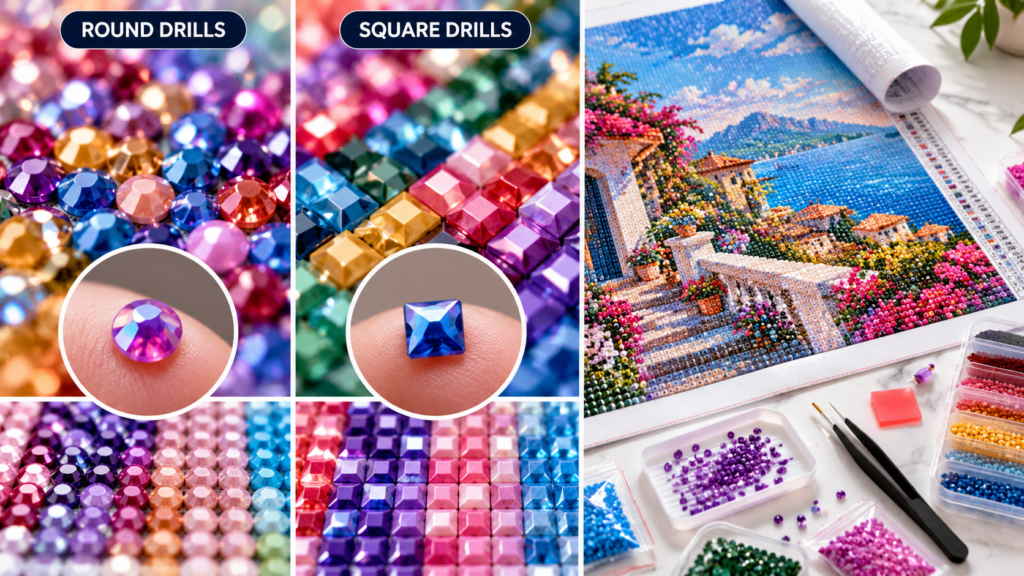
Diamond painting is a craft in which small resin or acrylic drills are placed onto a sticky printed canvas.
The canvas contains symbols that correspond to specific drill colors.
A basic kit usually includes:
- Printed adhesive canvas
- Colored diamond drills
- Applicator pen
- Wax or adhesive pad
- Sorting tray
- Color chart
The process is simple.
You identify a symbol, locate the matching drill color, pick up the drill with the applicator pen, and place it onto the corresponding section of the canvas.
As thousands of drills are added, the image gradually becomes visible.
Why Diamond Painting Has Become So Popular
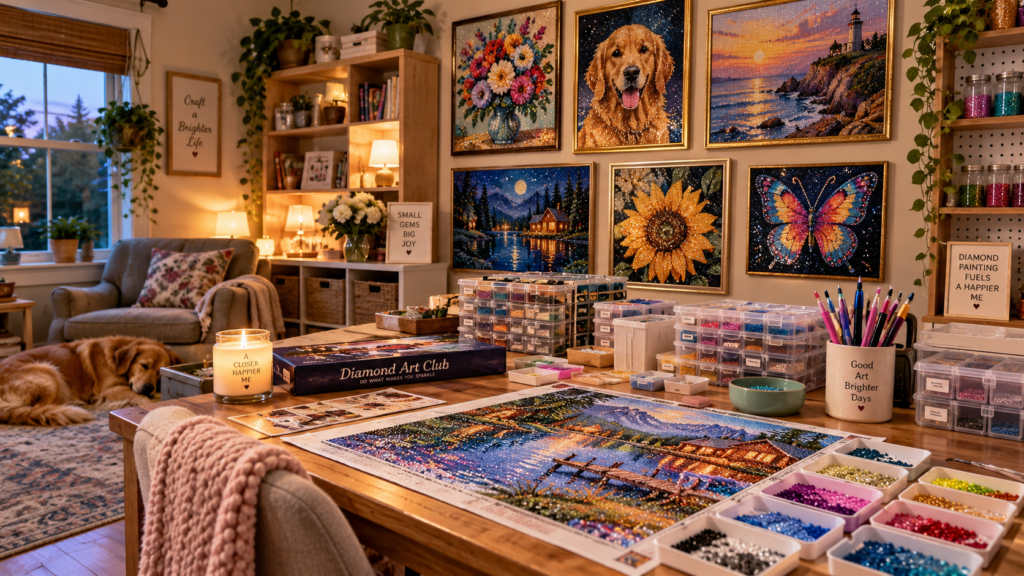
Part of the appeal comes from simplicity.
Unlike painting or drawing, you do not need advanced artistic skill to produce an attractive result.
The project already provides:
- Color placement
- Composition
- Pattern
- Structure
Your job is primarily precision and patience.
It Can Be Relaxing
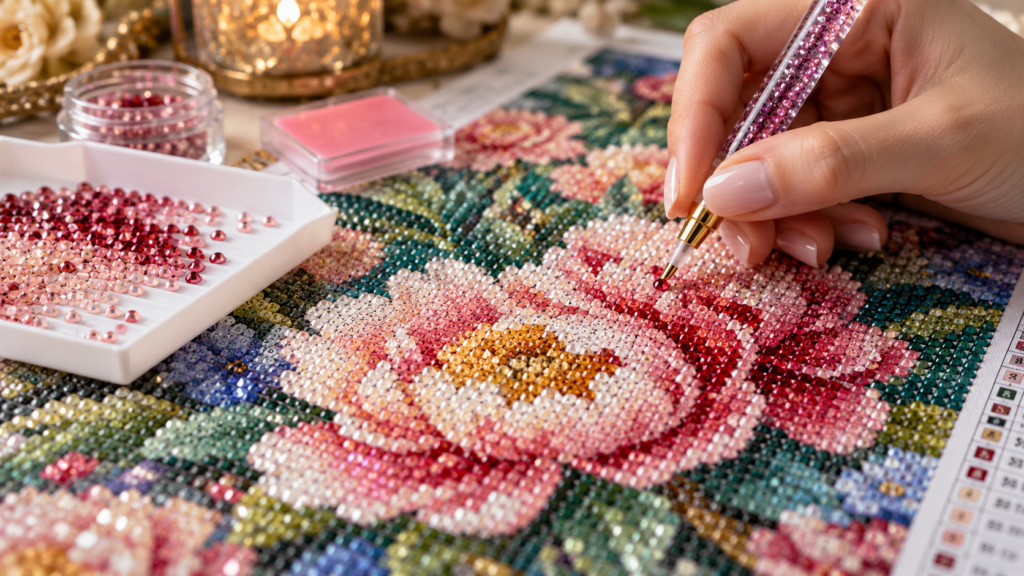
The repetitive placement of drills can feel calming.
Many crafters use diamond painting as a quiet activity after work or during weekends.
Progress Is Easy to See
Large craft projects can sometimes feel endless.
Diamond painting provides visible progress because each completed section immediately adds color and detail.
Finished Pieces Can Be Displayed
Completed canvases can be framed and used as wall decor.
Some crafters also give finished pieces as gifts.
What Makes a Diamond Painting Kit High Quality?
The image design matters, but several technical factors are equally important.
Canvas Quality
The canvas is the foundation of the entire project.
A good canvas should lie relatively flat and resist excessive wrinkling.
It should also be durable enough to support thousands of drills without stretching or tearing.
Printed symbols need to remain clearly visible through the adhesive layer.
Poor canvas printing can create significant problems.
If symbols are blurry, similar characters may become difficult to distinguish.
Adhesive Quality
The drills need to stay attached during and after the project.
Most modern kits use either:
- Poured glue
- Double-sided adhesive
Poured glue is popular because it can provide a smooth and consistent sticky surface.
Weak adhesive may cause drills to shift or fall away.
Overly aggressive adhesive can also make corrections difficult.
The ideal surface holds drills securely while still allowing minor adjustments during placement.
Drill Quality
Drill quality has a major impact on the final appearance.
Good drills should be:
- Consistent in size
- Uniformly shaped
- Cleanly cut
- Free from excessive defects
- Accurately colored
Cheap drills may include:
- Uneven edges
- Air bubbles
- Misshapen pieces
- Excess plastic
- Inconsistent sizes
A few defective drills are normal in large kits, but excessive defects slow down the project.
Symbol Clarity
Clear symbols make diamond painting dramatically easier.
A strong kit uses symbols that are visually distinct from one another.
Poorly designed charts may place similar symbols next to each other, such as:
- O and Q
- 5 and S
- 1 and I
On a large canvas, this becomes tiring.
Good printing reduces eye strain and mistakes.
Round vs. Square Diamond Drills
This is one of the biggest decisions when choosing a kit.
Round Drills
Round drills are circular.
They are generally easier and faster to place.
Advantages
Round drills are:
- Beginner friendly
- Faster to complete
- More forgiving of alignment
- Easy to pick up
Because the pieces do not need to fit tightly together, small placement errors are less noticeable.
Limitations
Tiny gaps remain between the round pieces.
This means the final image may look slightly less dense than a square-drill design.
Square Drills
Square drills fit closely together.
When aligned properly, they create a more complete mosaic surface.
Advantages
Square drills can produce:
- Dense coverage
- Strong detail
- A satisfying tiled appearance
- Less visible background
Limitations
They require greater precision.
If several drills are slightly misaligned, the entire row can become uneven.
Beginners may find them slower.
Which Drill Shape Is Better?
There is no universal winner.
Choose round drills if you want:
- Faster progress
- Easier placement
- A more relaxed first project
Choose square drills if you want:
- Maximum coverage
- Sharper detail
- A more structured finished appearance
Many experienced crafters enjoy both.
Full Drill vs. Partial Drill Kits
Another important distinction is coverage.
Full Drill Diamond Painting
In a full drill kit, the entire printed image area is covered with drills.
This creates a complete sparkling mosaic.
Full drill designs typically require more time but produce a more immersive finished look.
Partial Drill Diamond Painting
Only selected areas contain drills.
The rest of the artwork remains printed.
These kits can be:
- Faster
- Easier
- Less expensive
- Good for beginners
They may also use special-shaped drills for decorative effects.
Choosing the Right Canvas Size
Size matters more than many first-time buyers expect.
A small canvas is easier to complete, but complex artwork may lose detail.
A large canvas provides more space for individual color changes and shapes.
Small Kits
Small canvases are useful for:
- Beginners
- Children
- Quick projects
- Simple designs
Avoid choosing highly detailed portraits in very small sizes.
Faces and fine features need enough space to render correctly.
Medium Kits
Medium canvases often provide a good balance between:
- Detail
- Cost
- Completion time
- Storage
They are suitable for most hobbyists.
Large Kits
Large canvases can produce excellent detail.
They are ideal for:
- Landscapes
- Complex fantasy scenes
- Detailed animals
- Portraits
However, they may require many hours of work.
Make sure you have enough workspace before buying a very large kit.
Design Resolution Matters
The picture shown in promotional images may look extremely detailed.
The actual canvas may not reproduce that same detail if it is too small.
Diamond art is essentially pixel-based.
Every drill acts like a pixel.
More drills mean greater potential detail.
This means size and design complexity must match.
A simple flower may look excellent on a relatively small canvas.
A detailed cityscape may require a much larger format.
Color Count and Image Quality
Some kits use relatively few colors.
Others use dozens.
More colors can create:
- Better shading
- More realistic gradients
- Increased depth
However, more colors also increase sorting and organization work.
A high color count is useful when the artwork needs subtle transitions.
It is less important for bold graphic designs.
Special Drills and Effects
Some premium kits include special drills.
These may include:
- AB drills
- Crystal drills
- Metallic drills
- Iridescent drills
- Larger decorative gems
AB stands for Aurora Borealis.
These drills have a reflective coating that produces additional shine.
Special drills can highlight certain areas such as:
- Eyes
- Stars
- Jewelry
- Flowers
- Water reflections
They can make a finished piece more visually dynamic.
What Should Be Included in a Good Kit?
A complete kit should include everything needed to begin.
At minimum:
- Canvas
- All required drills
- Applicator pen
- Wax
- Tray
Better kits may also include:
- Extra drills
- Multiple pens
- Multiplacer tips
- Tweezers
- Storage bags
- Labels
Check product descriptions carefully.
Why Extra Drills Matter
Small drills are easy to lose.
Some may also be defective.
A good kit usually provides more pieces than the exact number required.
This reduces the risk of running out near the end of a project.
If a company offers replacement drills, that can be another useful advantage.
Beginner Diamond Painting Kits
Beginners should prioritize simplicity.
A good first kit should have:
- Medium-size canvas
- Clear symbols
- Round drills
- Moderate color count
- Simple design
Avoid starting with an enormous portrait containing dozens of similar shades.
Finishing a manageable project first builds confidence.
Diamond Painting Kits for Experienced Crafters
Experienced hobbyists may prefer:
- Large canvases
- Square drills
- Complex designs
- Detailed shading
- Special drills
Advanced projects can take weeks or months.
The process itself becomes part of the appeal.
How to Organize Diamond Painting Supplies
Organization makes the hobby much easier.
Label Your Drills
Each drill packet usually has a code.
Transfer drills into labeled containers.
This makes color switching much faster.
Use Small Storage Containers
Popular options include:
- Bead boxes
- Screw-top jars
- Zip bags
- Craft storage cases
Choose a system that keeps colors separated.
Keep the Canvas Covered
Do not remove the entire protective film at once.
Work in sections.
This prevents dust and pet hair from sticking to exposed adhesive.
Useful Diamond Painting Tools
The basic toolkit works, but accessories can improve comfort.
Multiplacer Tools
These allow several drills to be placed simultaneously.
They are especially useful in large areas of one color.
Light Pads
A light pad placed underneath the canvas makes symbols easier to see.
This is helpful on dark or complex areas.
Roller
A small craft roller can help press finished drills firmly into the adhesive.
Ergonomic Pens
Thicker applicator pens may reduce hand fatigue during long sessions.
Common Diamond Painting Mistakes
Starting With a Project That Is Too Large
Large projects can become overwhelming.
Begin with something manageable.
Removing All Protective Film
This exposes the adhesive to dust and debris.
Work section by section.
Mixing Drill Colors
Keep containers clearly labeled.
Similar shades can be difficult to separate later.
Ignoring Alignment
Small alignment errors accumulate.
Check rows periodically.
Pressing Too Hard
Excessive force is unnecessary and may make repositioning difficult.
How Long Does a Diamond Painting Take?
There is no single answer.
Completion time depends on:
- Canvas size
- Drill shape
- Color count
- Design complexity
- Experience
- Daily crafting time
Small projects may take several hours.
Large canvases can take dozens of hours or more.
The hobby is best approached without rushing.
How to Finish and Protect Diamond Art
Once all drills are placed, inspect the canvas carefully.
Look for:
- Missing drills
- Incorrect colors
- Misaligned rows
- Loose pieces
Press the finished canvas gently with a roller or flat surface.
Some crafters choose to seal their projects.
Others prefer leaving them unsealed to preserve the original sparkle.
Whether sealing is necessary depends on the adhesive quality and how the artwork will be displayed.
Framing Diamond Paintings
A frame can make the finished project look more polished.
Options include:
- Standard frames
- Poster frames
- Custom frames
- Stretched canvas mounting
Measure the actual image area before buying a frame.
The printed canvas may be larger than the finished drill area.
Diamond Painting as a Gift
Diamond painting kits can make good gifts for people who enjoy:
- Crafts
- Puzzles
- Coloring
- DIY projects
- Relaxing hobbies
Choose the design based on the recipient’s interests.
Popular themes include:
- Animals
- Flowers
- Landscapes
- Fantasy
- Seasonal designs
Consider difficulty level before gifting a large project.
How to Compare Diamond Painting Kits Before Buying
Look beyond the artwork itself.
Evaluate:
- Canvas dimensions
- Drill shape
- Full or partial coverage
- Number of colors
- Toolkit
- Customer reviews
- Printing clarity
- Replacement drill policy
Recent customer photos are particularly useful.
They show what the actual finished project looks like.
Cheap vs. Premium Diamond Painting Kits
Budget kits can still be enjoyable.
However, premium kits may provide better:
- Canvas printing
- Drill consistency
- Adhesive quality
- Color accuracy
- Packaging
- Customer support
The cheapest kit is not necessarily the best value.
If poor materials make the project frustrating, even a low price becomes expensive in terms of wasted time.
Frequently Asked Questions
What are the best diamond painting kits for beginners?
Beginners should look for medium-sized kits with round drills, clear symbols, strong adhesive, and relatively simple artwork.
Is round or square diamond painting better?
Round drills are easier and faster, while square drills provide tighter coverage and potentially greater detail.
What does full drill mean in diamond painting?
Full drill means the entire image area is covered with diamond drills rather than only selected sections.
Are large diamond painting kits better?
Large kits can reproduce more detail, but they also take significantly longer to complete. The best size depends on the artwork and your experience.
What are AB diamonds?
AB, or Aurora Borealis, drills have a reflective coating that creates extra sparkle and color effects.
Can beginners do square drill diamond painting?
Yes, but square drills require more careful alignment. Beginners may find round drills easier initially.
How do I keep diamond drills organized?
Use labeled containers, small jars, bead boxes, or resealable bags and keep the drill code visible.
Do diamond paintings need to be sealed?
Not always. High-quality adhesive may hold drills securely without sealing. Some crafters seal finished pieces for additional protection.
How long does diamond painting take?
Small projects may take several hours, while large and detailed designs can require dozens of hours or more.
Can completed diamond paintings be framed?
Yes. They can be placed in standard or custom frames, provided you measure the completed artwork area correctly.
Conclusion
Choosing the best diamond painting kits is less about finding the most impressive promotional image and more about evaluating the actual quality of the project materials.
A strong kit should combine clear printing, reliable adhesive, consistent drills, accurate colors, and a design that matches the canvas size.
Beginners are usually better served by a medium-size project with round drills and clear symbols.
More experienced crafters may prefer large full-drill canvases, square drills, higher color counts, and special effects.
The most important factor is choosing a project you will actually enjoy completing.
Diamond painting is not meant to be rushed.
Its appeal comes from the slow transformation of thousands of individual pieces into one finished image.
A well-chosen kit makes that process relaxing and satisfying rather than frustrating.
Pay attention to canvas quality, drill consistency, size, design complexity, and toolkit contents before buying. Those practical details have far more impact on the experience than packaging or marketing claims.
With the right kit, diamond painting can become more than a one-time craft project. It can become a relaxing creative hobby that produces artwork worth displaying when the final drill is placed.

Written by Twastia Editorial Team
Twastia Editorial Team shares practical insights about website design, SEO services, Google Ads, content marketing, social media, conversion rate optimization, and digital marketing strategy.
Last updated: Oct 8, 2026
Related posts from Twastia
Explore more useful articles from twastia.com about digital marketing, SEO, websites, ads, content, and growth strategy.