Caesarstone’s New Porcelain Collection: 2026 Design Guide
A beautiful countertop does more than complete a kitchen. It influences how the room looks, how easily you clean up […]
A beautiful countertop does more than complete a kitchen. It influences how the room looks, how easily you clean up after meals, and how comfortably the space supports everyday life. For homeowners remodeling in 2026, porcelain slabs have become an appealing option alongside quartz, granite, and marble.
Caesarstone’s new porcelain collection combines stone-inspired patterns, distinctive textures, and practical surface performance. Its Australian 2026 launch introduces designs ranging from softly layered neutrals to dramatic metallic effects. U.S. shoppers can find related Caesarstone porcelain products, although color availability and release dates differ by market.
Whether you are updating a kitchen island, planning an outdoor entertaining area, or selecting a bathroom vanity, understanding the material is essential.
This guide explores the collection’s aesthetics, everyday benefits, limitations, installation requirements, and buying considerations for American homes.
What Is Caesarstone Porcelain?
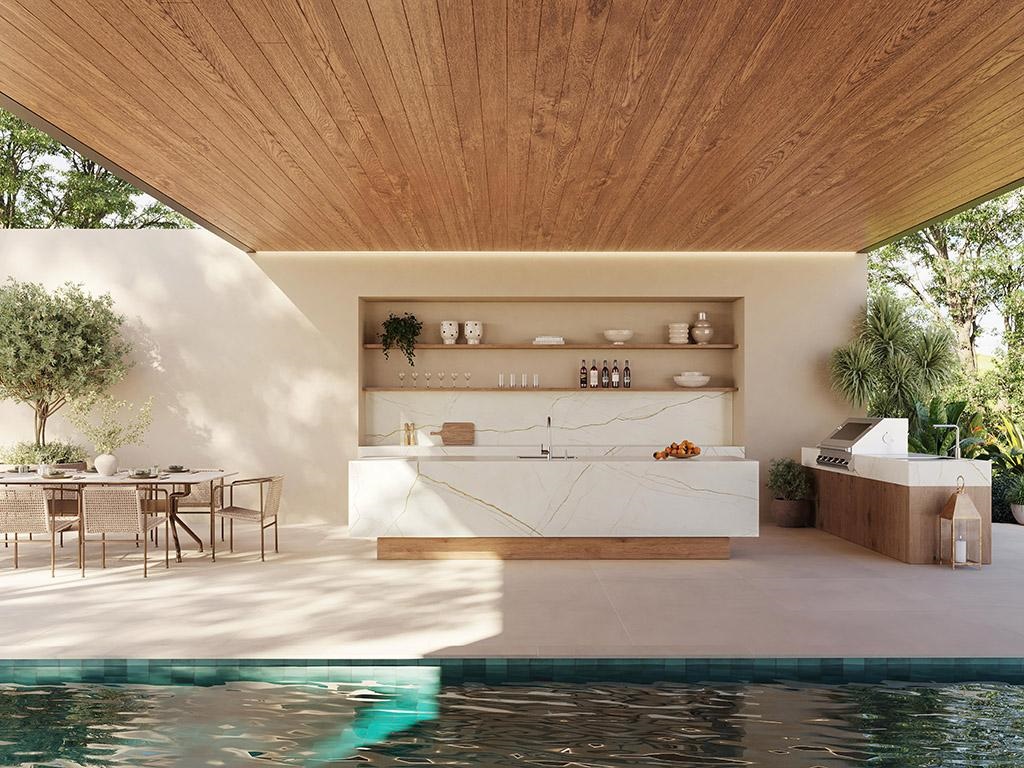
Caesarstone porcelain is a manufactured ceramic surface created using mineral-based ingredients and high-temperature production methods. Large-format slabs can be fabricated into countertops, backsplashes, and certain wall or floor applications when the product is approved for that use.
Porcelain is distinct from Caesarstone’s engineered quartz and ICON mineral collections. It offers a hard, highly nonporous surface with strong resistance to heat, common stains, scratches, and ultraviolet exposure. These qualities can make it useful indoors and outdoors.
However, durability does not mean indestructibility. Sharp impacts can chip exposed edges, and unsuitable fabrication or poor support can lead to damage. Choosing a trained fabricator matters as much as choosing an attractive slab.
What’s New in Caesarstone’s 2026 Collection?
Caesarstone’s new porcelain collection in Australia introduces eight porcelain surface designs:
- Antikella (536)
- Fossillia (545)
- Onyxa (509)
- Travina (551)
- Glacetta (537)
- Crestone (583)
- Opal Taj (584)
- Graphite Metal (311)
The company also introduced two separate ICON mineral designs, which should not be confused with porcelain.
The Australian collection emphasizes natural-looking movement, tactile finishes, and a broader range of applications. It highlights Luster, Sculpted, and Metal effects, along with In-Sync technology on selected designs.
For U.S. homeowners, an important detail is timing: Caesarstone North America announced several overlapping porcelain colors in a November 2025 expansion. Therefore, an Australian 2026 launch is not necessarily a new U.S. release.
Always check the current U.S. color catalog and a local distributor before specifying a particular design.
Eight Designs Worth Exploring
1. Antikella: Expressive Marble-Inspired Veining
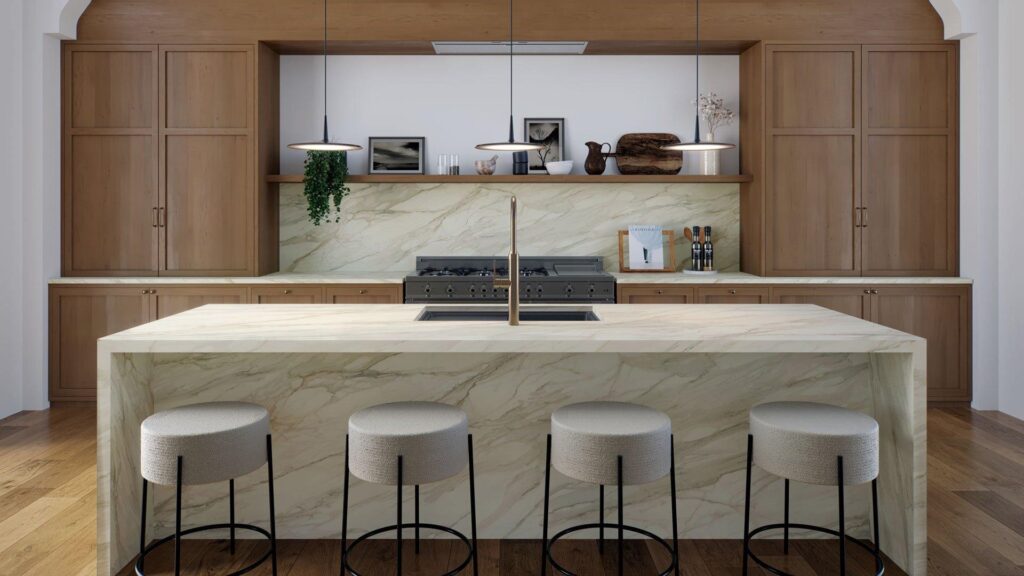
Antikella 536 brings sweeping gray, graphite, and gold-toned veining across a light base.
It suits a statement island or a coordinated countertop-and-backsplash installation.
Pair it with natural oak, cream cabinetry, and understated hardware so the veining remains the visual focus.
2. Fossillia: Soft Geological Character
Fossillia 545 features a muted seafoam background with delicate swirls and textured detailing.
Its Sculpted Effect adds a tactile dimension.
Consider it for a serene kitchen, bathroom, or appropriately designed outdoor project.
3. Onyxa: Warm, Flowing Layers
Onyxa 509 combines translucent-looking beige and white waves with golden accents.
Its Luster Effect adds dimension under changing light.
It works especially well with warm wood cabinets or brass-colored fittings.
4. Travina: Contemporary Travertine Style
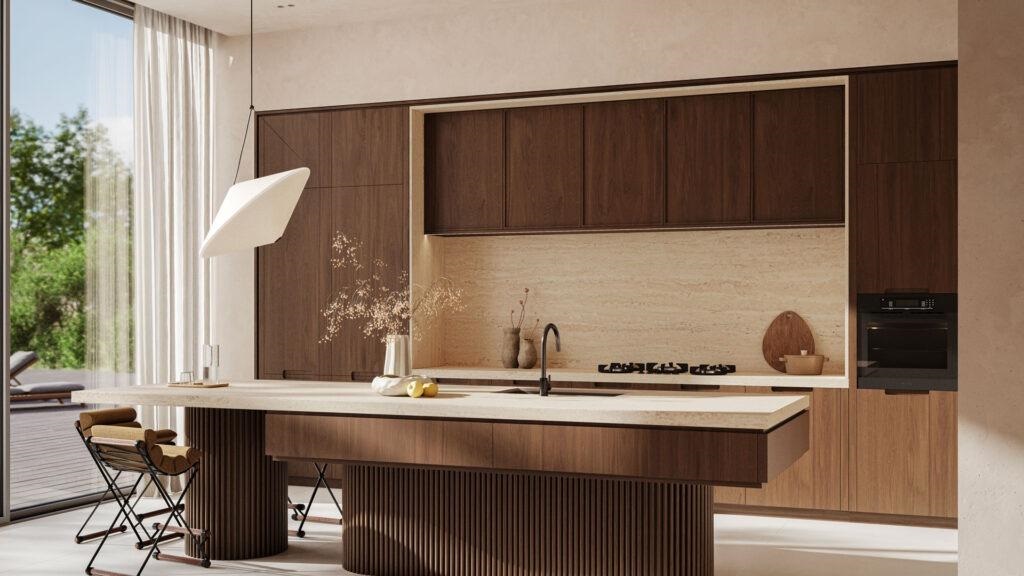
Travina 551 interprets natural travertine with fine horizontal beige bands and subtle ochre accents.
The Sculpted Effect reinforces its layered appearance.
It is a strong candidate for minimalist kitchens with dark wood or muted cabinetry.
5. Glacetta: Subtle Elegance
Glacetta 537 features an off-white base and fine golden-brown lines.
This design can add character without overpowering a room.
Its neutral appearance makes it attractive for homeowners seeking a balanced combination of modern and traditional materials.
6. Crestone: Soft Natural Tones
Crestone 583 uses creamy taupe with soft, cloudlike veining.
Its gentle movement complements contemporary interiors, warm neutral cabinets, and natural wood finishes.
Verify local availability before including it in your final design plan.
7. Opal Taj: Warm, Earthy Beauty
Opal Taj 584 blends earthy beige and taupe tones with delicate cream movement.
It suits relaxed natural interiors and can complement textured cabinetry, warm flooring, and subtle metallic accessories.
8. Graphite Metal: Bold Industrial Style
Graphite Metal 311 takes an industrial direction with a blue-gray, charcoal, oxidized-metal appearance.
It creates contrast in a dramatic kitchen or outdoor bar.
Consider pairing it with lighter cabinetry or natural timber to balance the darker finish.
What Makes Porcelain Countertops Appealing?
Excellent Heat Resistance
Caesarstone porcelain tolerates high temperatures, making it practical near cooking areas.
The manufacturer says cookware can be placed directly on its porcelain surfaces, but recommends insulated mats beneath appliances that emit constant heat for extended periods.
Avoid direct flames and follow appliance installation specifications.
Strong Stain and Moisture Resistance
The highly nonporous surface resists absorption and generally cleans with mild detergent and water.
Spills should still be removed promptly, particularly on textured or dark finishes where residue may be more visible.
This makes porcelain worth considering for busy households.
Scratch Resistance
Porcelain’s hard surface resists everyday abrasion, but knives, heavy cookware, and abrasive cleaning practices can still create damage.
Use a cutting board rather than treating the countertop as a food-preparation cutting surface.
UV and Weather Resistance
Caesarstone identifies porcelain as suitable for certain outdoor applications thanks to its UV stability and resistance to changing weather.
Outdoor kitchens can benefit, especially where direct sunlight makes other surface categories less appropriate.
Proper structural support, drainage, and approved installation details remain essential.
Where Can You Use Caesarstone Porcelain?
Kitchen Countertops and Waterfall Islands
Large-format porcelain can create expansive surfaces with relatively few visual interruptions.
A waterfall island carries the countertop material down a visible end panel, producing a cohesive architectural feature.
Ask the fabricator how seams, pattern alignment, and edge protection will be handled.
Backsplashes and Feature Walls
Using the same pattern on a countertop and backsplash can make a smaller kitchen feel coordinated.
Dramatic veining can also serve as a feature behind shelving or a range, provided installation clearances and applicable product approvals are followed.
Bathrooms and Laundry Rooms
Porcelain works well for appropriate vanity tops and vertical surfaces because it is easy to maintain and resists moisture.
Waterproofing behind shower walls and other wet-area assemblies is still necessary. A decorative slab is not a substitute for a properly designed waterproofing system.
Outdoor Kitchens and Entertaining Areas
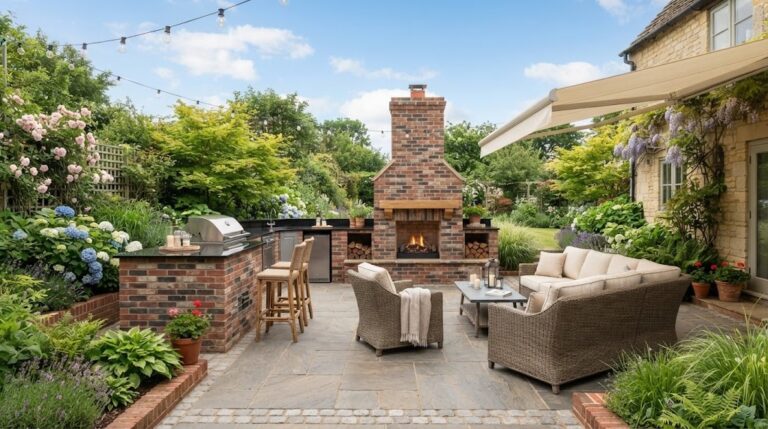
A porcelain counter may complement weather-resistant cabinets, a built-in grill, and covered seating.
For homeowners in Florida, Texas, or California, ask about exposure to salt, rain, heat, and thermal movement.
Approved substrate construction and appliance clearances matter more than appearance alone.
Porcelain vs. Quartz, Granite, and Marble
Porcelain, engineered quartz, granite, and marble have different strengths.
| Feature | Porcelain | Engineered Quartz | Granite | Marble |
|---|---|---|---|---|
| Heat resistance | High | Varies; protection recommended | Generally high | Generally high |
| UV suitability | Often suitable outdoors | Many indoor products are unsuitable | Varies | Varies |
| Scratch resistance | High | Generally high | Generally high | More vulnerable |
| Maintenance | Generally low | Generally low | May need sealing | Often needs more care |
| Appearance | Wide variety of printed designs | Consistent patterns | Natural variation | Distinctive natural veining |
Porcelain generally offers excellent heat and UV resistance, while some conventional quartz surfaces are intended primarily for interiors.
Granite offers natural variation but may need sealing depending on the stone. Marble provides classic veining yet can be vulnerable to acid etching.
No material is perfect for every homeowner.
Porcelain requires careful handling around corners and cutouts, and its surface design may differ from the interior of a slab.
Compare real samples, installed examples, warranties, and maintenance requirements rather than relying on a single performance claim.
Slab Thickness, Edges, and Installation
Caesarstone markets porcelain in 12-millimeter and selected 20-millimeter thicknesses.
Available sizes and thicknesses differ by color and region.
A thicker slab can offer a substantial appearance, but cabinet support, seam planning, and fabrication details must be evaluated by the installer.
Edges, sink openings, and cooktop cutouts deserve particular attention.
The manufacturer warns that forceful impacts on exposed edges can cause chips.
Some product designs offer In-Sync technology for visual continuity through the slab and edge, but do not assume every color uses it.
Choose a fabricator with documented experience installing large-format porcelain.
Ask about approved edge profiles, acceptable overhangs, substrate preparation, and transport procedures.
Improper cutting or unsupported sections can compromise an otherwise durable product.
How Much Does Caesarstone Porcelain Cost?
An installed price depends on your location, selected color, slab thickness, kitchen layout, cutouts, seam complexity, and labor market.
Waterfall ends, intricate edge details, and difficult access typically increase fabrication and installation work.
Instead of relying on unverified national averages, request several itemized quotations from local authorized fabricators.
Ask whether measurements, removal of old countertops, sink installation, backsplash work, tax, and disposal are included.
Check whether a design requires more than one slab, since waste and pattern matching affect the quote.
How to Clean and Maintain Caesarstone Porcelain
For everyday cleaning, Caesarstone recommends warm soapy water, mild detergent, and a clean cloth.
Rinse away cleaner residue and dry the surface to help prevent visible buildup.
Use only approved products for stubborn marks.
Avoid abrasive polishing machinery, direct flame exposure, and repeated hard impacts around sink corners or other vulnerable edges.
Dark finishes may show fingerprints and residue more readily than lighter colors.
Ask for the specific care instructions associated with your chosen finish before installation.
Responsible Fabrication and Safety
Professional countertop fabrication can generate hazardous dust.
OSHA identifies respirable crystalline silica exposure as a concern when cutting or grinding stone, ceramic, and certain other mineral-containing products.
Porcelain should not be assumed silica-free simply because it differs from engineered quartz.
Homeowners should hire qualified fabricators who follow applicable worker-safety rules and dust-control procedures.
Avoid attempting dry cutting or grinding of countertop slabs as a DIY project.
How to Choose the Right Design for Your Home
Start with your cabinets, flooring, lighting, and desired atmosphere.
Warm, organic spaces may suit Travina or Opal Taj, while high-contrast contemporary rooms may complement Antikella or Graphite Metal.
Order physical samples and examine them in morning and evening light.
A small sample may not reveal the scale of a large pattern, so also request full-slab photographs or showroom viewing.
Before placing an order, verify product codes, actual local stock, finish, thickness, fabrication capability, and warranty requirements.
Caesarstone Australia’s lifetime warranty language should not be taken as a substitute for reviewing the warranty terms applicable to a U.S. purchase.
Frequently Asked Questions About Caesarstone’s New Porcelain Collection
Is Caesarstone Porcelain Suitable for Outdoor Countertops?
Yes, Caesarstone markets its porcelain surfaces for indoor and outdoor applications.
A qualified installer should confirm the specific product, supporting structure, weather exposure, and warranty conditions.
Is Caesarstone Porcelain Better Than Quartz?
It depends on the project.
Porcelain offers useful heat and UV resistance, while quartz may appeal for other designs and fabrication preferences.
Compare the actual products and intended locations.
Does Caesarstone Porcelain Need Sealing?
Its highly nonporous surface generally does not require routine sealing.
Follow the manufacturer’s instructions for your particular material and installation.
Can Porcelain Countertops Chip?
Yes. Although the surface is hard and durable, significant impacts can chip vulnerable edges or corners.
Appropriate edge design and careful everyday handling help reduce risk.
Are All Australian 2026 Colors Available in the USA?
Not necessarily.
The regional collections and product launches differ.
Confirm current U.S. availability, finish, and thickness through Caesarstone’s American website and local distributors.
Is the Surface Easy to Clean?
Generally, yes. Mild detergent, warm water, and a soft cloth cover most routine cleaning.
Wipe spills promptly and avoid unapproved abrasive treatments.
Does Porcelain Work for Bathroom Vanities?
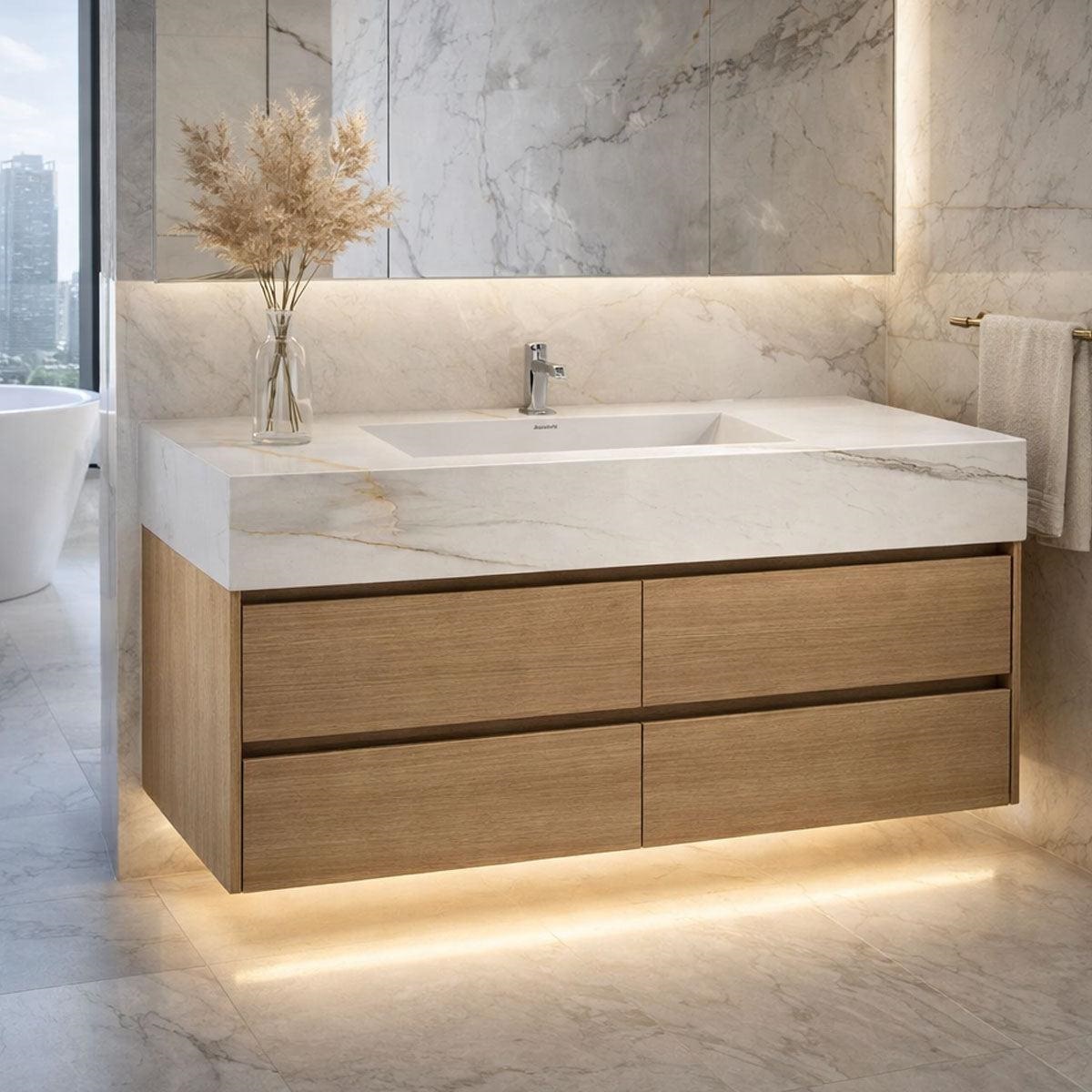
Yes, suitable Caesarstone porcelain slabs can be used for vanity tops and some bathroom wall applications when professionally installed.
Wet areas still need proper waterproofing.
Conclusion: Transform Your Home With Caesarstone Porcelain
Caesarstone’s new porcelain collection brings together textured surfaces, natural-inspired colors, and versatile applications for contemporary homes.
Its Australian 2026 designs offer inspiration for kitchen islands, bathroom vanities, feature walls, and outdoor entertaining spaces.
For U.S. homeowners, the smartest next step is to confirm regional product availability, compare real samples, and work with an experienced porcelain fabricator.
Thoughtful material selection, realistic budgeting, and proper installation can help turn a visually striking surface into a practical long-term investment.

Written by Twastia Editorial Team
Twastia Editorial Team shares practical insights about website design, SEO services, Google Ads, content marketing, social media, conversion rate optimization, and digital marketing strategy.
Last updated: Oct 14, 2026
Related posts from Twastia
Explore more useful articles from twastia.com about digital marketing, SEO, websites, ads, content, and growth strategy.