Dallas Commercial Laundry: 9 Powerful Ways to Avoid Costly Linen Problems
Choosing Dallas Commercial Laundry can help hotels, restaurants, spas, gyms, medical offices, event companies and property managers keep up with large volumes […]
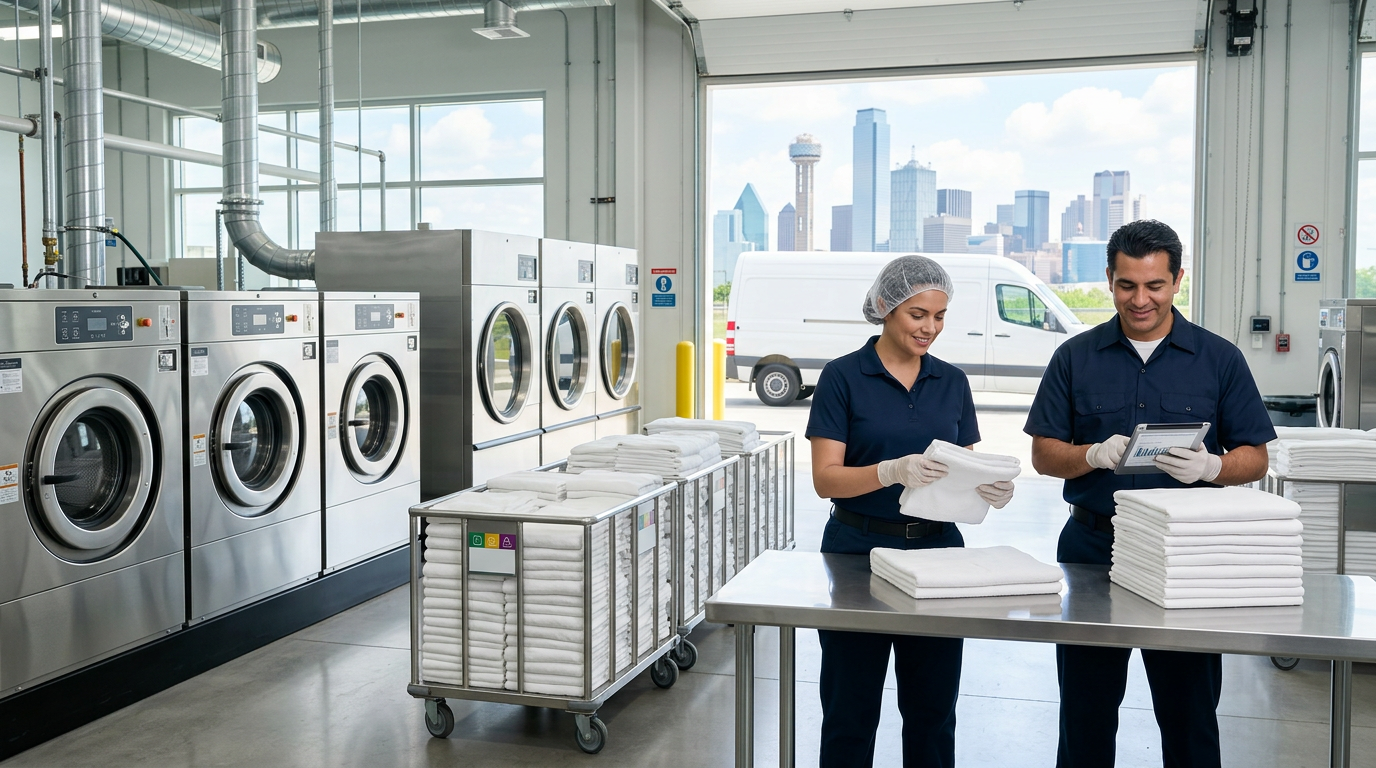
Choosing Dallas Commercial Laundry can help hotels, restaurants, spas, gyms, medical offices, event companies and property managers keep up with large volumes of linens, towels, uniforms and other washable textiles. Outsourcing can reduce pressure on staff, equipment, utilities and storage, but the right programme must still protect fabric quality, hygiene, inventory and delivery schedules. This guide explains how commercial laundry service works, what businesses should include in a service agreement, how industry needs differ and which quality controls help prevent shortages, stains, damage and operational disruption.
What Is Dallas Commercial Laundry?
Dallas Commercial Laundry is a commercial textile-care provider serving businesses across Dallas and the wider DFW area. According to its service information, the company offers pickup and delivery, bulk wash and fold, towel and linen cleaning, event-linen care, restaurant and catering laundry, hotel and short-term-rental linen service, medical and spa laundry, and uniform or workwear cleaning.
Commercial laundry differs from ordinary household washing because business customers need repeatable processing, large-volume capacity, scheduled logistics and documented preferences. A hotel requires consistent sheets and towels for room turnover. A restaurant needs stain removal and reliable napkin inventory. A spa may need careful handling of oils and lotions. Workwear can involve heavy soil and specialised fabric limitations.
Dallas Commercial Laundry should develop a programme around textile type, weekly volume, soil level, turnaround, presentation and compliance obligations rather than applying one wash process to every load.
Why Businesses Outsource Commercial Laundry
In-house laundry requires washers, dryers, hot water, drainage, venting, staff, chemicals, repairs, floor space and inventory management. A machine failure or staffing gap can create an immediate operational problem.
Outsourcing may offer:
- Predictable pickup and delivery
- Access to higher-capacity equipment
- Reduced staff handling
- Less equipment maintenance
- More usable floor space
- Defined processing standards
- Scalable support during busy periods
- Professional folding and packaging
- A backup when on-site equipment fails
However, outsourcing also creates dependence on transportation, turnaround and the provider’s quality system. Dallas Commercial Laundry customers should evaluate total service reliability, not only cost per pound.
The decision should compare current labour, utilities, equipment, rewash, repairs, replacement textiles and management time. A lower quoted rate may not be economical if loss, damage or late delivery remains high.
9 Ways Dallas Commercial Laundry Can Support Business Operations
A successful service relationship combines processing, logistics and inventory control. The following practices help businesses build a dependable programme.
1. Complete a Textile and Volume Assessment
Before quoting, the provider should understand what the business sends and how much it generates. Weekly averages are helpful, but peak days and seasonal surges matter.
Create an inventory by category:
- Bed sheets and pillowcases
- Bath and pool towels
- Tablecloths and napkins
- Kitchen towels
- Robes
- Spa sheets
- Uniforms
- Cleaning cloths
- Chair covers
- Specialty items
Dallas Commercial Laundry should ask about fabric content, colours, soil type, finish expectations and manufacturer care labels. Cotton towels need a different process from polyester table linens, waterproof items or flame-resistant workwear.
Weight estimates should account for wet or heavily soiled goods if pricing or transport is weight-based. The contract should state whether weight is measured before or after processing and how customers can verify it.
2. Create a Reliable Pickup and Delivery Schedule
Clean textiles must arrive before the business runs out of usable stock. Route timing, loading access and Dallas traffic can affect reliability.
The service plan should identify:
- Pickup days and windows
- Delivery days and windows
- Holiday changes
- Loading entrance
- Parking or dock instructions
- On-site contact
- Bag, bin or cart exchange
- Missed-pickup procedure
- Rush-service terms
- Weather and traffic contingencies
Dallas Commercial Laundry customers should keep soiled and clean goods physically separated. Containers need clear labels and should protect textiles from rain, pests, cross-contamination and loss.
A route window is different from a guaranteed minute. Businesses with tightly controlled access should explain security and receiving requirements during onboarding.
3. Define Sorting and Wash Formulas
Sorting by fabric, colour, soil and required process helps protect textiles. Washing everything together can transfer lint, colour, grease or odour.
A commercial wash formula may control:
- Water level
- Temperature
- Detergent
- Alkali
- Bleach or alternative oxidiser
- Sour or neutraliser
- Rinse stages
- Cycle time
- Extraction
- Drying temperature
Dallas Commercial Laundry should match formulas to textile care instructions and customer needs. Hotter is not always better. Excess heat can shrink cotton, weaken elastic, set some stains and damage synthetic fibres.
Customers should disclose special finishes, embroidered logos, waterproof membranes, flame-resistant garments and chemical contamination. Some items require specialist processing or should not enter a general laundry plant.
4. Set Quality-Control Standards
“Clean” should be translated into observable standards. The provider and customer need shared expectations for stains, odour, folding, packaging and damage.
Quality checks may include:
- Visual stain inspection
- Odour review
- Dryness
- Folding consistency
- Correct item count
- Lint and hair removal
- Packaging integrity
- Damage identification
- Segregation by account
- Rewash tracking
Dallas Commercial Laundry should explain how rejected items are reprocessed and when a permanent stain is labelled rather than repeatedly washed. Excessive rewashing shortens textile life and uses additional resources.
Customers should report issues with photographs, category and delivery date. A clear feedback process helps identify whether the problem occurred during use, transport or processing.
5. Protect Textile Inventory and Chain of Custody
Missing linen can erase the savings from outsourced processing. Inventory systems should track what leaves, what returns and what is removed from service.
Tracking methods can include:
- Piece counts
- Weight by category
- Barcode or RFID systems
- Bag and cart IDs
- Packing lists
- Customer-owned markings
- Reject and discard records
Dallas Commercial Laundry should state whether service is customer-owned-goods processing or a rental-linen programme. In customer-owned service, the business owns and replaces the textiles. In rental programmes, the provider generally supplies inventory under separate terms.
Keep damaged pieces for customer review when practical. A discard policy should define who authorises removal and whether replacement credit applies.
6. Control Turnaround and Emergency Capacity
Standard turnaround can be sufficient during normal operations, but businesses need a plan for surges, weather, equipment failure and unexpected occupancy.
Ask about:
- Standard turnaround
- Same-day or rush availability
- Rush cutoff times
- Maximum emergency volume
- Weekend processing
- Holiday service
- Backup equipment
- Alternate plant arrangements
- Communication during delays
Dallas Commercial Laundry may be able to support emergency loads, but availability and premium charges should be documented. A verbal promise made during sales may not reflect operational capacity during a regional surge.
Businesses should keep par inventory—enough clean stock to operate between deliveries plus a contingency. Relying on one day of linen leaves no margin for a missed route or sudden demand.
7. Match Processing to Industry Requirements
Different industries have different soil, hygiene and presentation needs.
Hotels and short-term rentals
Need soft, stain-free bedding and towels with consistent folding and room-turnover timing.
Restaurants and caterers
Require effective food, grease and beverage stain treatment. Napkins and tablecloths may need finishing or pressing.
Spas and salons
Generate oils, lotions, cosmetics and hair products. Residue and odour control are important.
Gyms and fitness studios
Need frequent towel processing, odour control and rapid inventory rotation.
Medical offices
Must identify applicable infection-control, handling and textile requirements. Not every commercial laundry is qualified to process regulated healthcare textiles.
Dallas Commercial Laundry customers should confirm that the provider’s process, facility and documentation suit their specific obligations. Marketing terms such as “hospital grade” should be supported by a defined process and applicable evidence.
8. Compare Total Cost, Not Only Price Per Pound
Laundry pricing may be per pound, per piece, per bag or based on a recurring minimum. Extra charges can change the effective rate.
Review:
- Base processing rate
- Minimum weekly volume
- Pickup and delivery
- Fuel surcharge
- Rush service
- Stain treatment
- Pressing or finishing
- Sorting
- Specialty items
- Rewash
- Lost or damaged goods
- Holiday service
- Contract termination
Dallas Commercial Laundry proposals should define how price changes are communicated. Weighing procedures and invoice categories should be understandable.
Compare the provider’s net value with in-house cost. Include labour, utilities, equipment depreciation, repairs, chemicals, floor space, insurance and management time.
9. Review Performance With Measurable Indicators
A commercial laundry relationship should be managed using data, not only occasional complaints.
Useful indicators include:
- On-time pickup rate
- On-time delivery rate
- Rewash percentage
- Stain-reject rate
- Damage rate
- Missing-item rate
- Weight variance
- Rush-order frequency
- Complaint-resolution time
- Cost per occupied room or service unit
Dallas Commercial Laundry and the customer can review these measures monthly or quarterly. Trends reveal whether problems are isolated or systemic.
Performance reviews should also consider textile life. Lower processing cost is not a success if sheets, towels or uniforms need replacement more often.
Dallas Commercial Laundry for Hotels
Hotels depend on clean linen for every occupied room. Service failures can delay check-in, increase housekeeping pressure and affect guest perception.
A hotel programme should define:
- Sheet and towel categories
- Stain standards
- Folding orientation
- Bag or cart packaging
- Daily volume forecasts
- Peak occupancy
- Emergency inventory
- Pool and spa separation
- Food-and-beverage textiles
- Lost-and-found handling
Dallas Commercial Laundry should coordinate delivery timing with housekeeping operations. Clean items need to arrive early enough for room turnover and be protected from loading-dock contamination.
Hotels should use par levels that account for items in rooms, clean storage, transit, processing and contingency. Underbuying linen places constant pressure on the laundry cycle and accelerates wear through rapid reuse.
Dallas Commercial Laundry for Restaurants and Catering
Restaurant textiles can contain grease, sauces, wine, coffee and carbon-based kitchen soil. Prompt sorting and appropriate pretreatment improve stain removal.
Kitchen towels should be separated from table linens when soil and lint differ. Bar towels, aprons, chef coats, napkins and tablecloths may require separate formulas.
Dallas Commercial Laundry should know whether the customer expects folded, hung, pressed or bundled presentation. Event caterers may need counts packed by event rather than by general category.
Never send textiles contaminated with hazardous chemicals without disclosure. Grease-laden items can also create drying and fire concerns if processed incorrectly. The laundry provider should have clear acceptance and handling policies.
Dallas Commercial Laundry for Spas and Salons
Spa towels, sheets and robes can retain massage oil, lotions, wax and cosmetics. Residue affects odour, absorbency and fabric feel.
The service should avoid overusing softener because coating fibres can reduce towel absorbency. Fragrance preferences should be discussed, particularly where clients have sensitivities.
Dallas Commercial Laundry can sort white and coloured goods, identify oil-heavy loads and use appropriate washing and drying methods. Customers should disclose products that may be difficult or unsafe to process.
Spas need enough inventory to rotate linens without sending damp goods. Damp storage encourages odour and staining. Soiled textiles should be stored safely in breathable or designated containers according to the business’s hygiene procedures.
Dallas Commercial Laundry for Medical Offices
Medical and healthcare textiles require careful evaluation. The type of facility, item and contamination determines applicable handling, infection-control and regulatory obligations.
A clinic should ask:
- Does the provider process healthcare textiles?
- How are soiled and clean goods separated?
- What handling and transport controls are used?
- Which wash parameters are monitored?
- How is process performance documented?
- Are employees trained for the textile category?
- Which items are not accepted?
- How are spills or bag failures managed?
Dallas Commercial Laundry should not process regulated or hazardous material outside its qualified scope. Sharps must never enter laundry bags. Facilities need procedures to prevent instruments and personal items from being wrapped in linen.
“Sanitised” and “sterile” are not interchangeable. Ordinary laundered textiles are not sterile unless subjected to a validated sterilisation process appropriate to the item.
Dallas Commercial Laundry for Gyms and Fitness Studios
Gyms generate steady towel volume and expect rapid return. Sweat, skincare and cleaning products can create persistent odour when goods remain damp.
Operational controls include:
- Separate clean and soiled stations
- Frequent collection
- Ventilated storage
- Defined towel count
- No personal items in bins
- Rapid processing
- Odour inspection
Dallas Commercial Laundry should return towels fully dry and packaged to remain clean. Overdrying can make towels harsh and shorten fibre life, while underdrying creates odour and storage problems.
Studios should track towels per class or member visit. Unexplained shrinkage may result from loss rather than laundry weight.
Dallas Commercial Laundry for Events and Weddings
Event linens often have high appearance expectations and fixed deadlines. Tablecloths, overlays, napkins, chair covers and runners may require stain treatment, pressing and packaging by size or colour.
The event organiser should provide:
- Event date
- Item list
- Fabric details
- Return deadline
- Folding or hanging preference
- Stain concerns
- Rental ownership information
- Packaging labels
Dallas Commercial Laundry should confirm whether wax, glitter, adhesive, floral dye and other event residues are accepted. Some substances can permanently stain or damage equipment.
Allow time for inspection and replacement before the next event. Same-day processing leaves little margin for damaged or missing pieces.
Customer-Owned Goods vs. Linen Rental
In a customer-owned-goods programme, the business purchases and controls the textile inventory. The laundry provider processes and returns those items.
Advantages can include brand control, selected quality and no rental substitution. The customer also bears replacement cost and inventory risk.
A linen rental programme supplies textiles under a service agreement. It can reduce upfront inventory cost and simplify replacement, but choices, fees and contract terms vary.
Dallas Commercial Laundry customers should confirm which model is offered. Never assume a processing quote includes linen ownership.
For customer-owned goods, mark items discreetly and maintain purchase records. Standardising fabrics can simplify wash formulas and replacement.
How Much Does Dallas Commercial Laundry Cost?
Commercial laundry pricing depends on volume, textile type, soil, turnaround, finishing, pickup location and service frequency.
A quote should identify:
- Per-pound or per-piece rate
- Minimum order
- Pickup and delivery
- Fuel or route charges
- Rush processing
- Stain treatment
- Pressing
- Specialty-item fees
- Rewash policy
- Contract term
- Price adjustments
- Damage and loss terms
Businesses should provide representative samples and accurate volume when requesting a quote. A low estimate based on clean, dry weight may change when actual loads are wet, oily or heavily mixed.
Dallas Commercial Laundry pricing should be evaluated against quality and reliability. One late hotel delivery or rejected event-linen batch can cost more than a small difference in processing rate.
Commercial Laundry Service Agreement Checklist
Before signing, confirm:
- Service start date
- Pickup and delivery schedule
- Turnaround
- Accepted textiles
- Excluded contamination
- Sorting requirements
- Processing expectations
- Packaging and folding
- Counts or weights
- Minimum volume
- Pricing and surcharges
- Rush service
- Quality complaints
- Rewash
- Lost or damaged items
- Insurance
- Cancellation
- Confidentiality
- Emergency plans
Dallas Commercial Laundry should provide a named contact or clear escalation route. The customer should identify who can change schedules, approve rush orders and dispute invoices.
Quality Problems and Corrective Action
Common issues include stains, odour, lint, poor folding, shrinkage, colour transfer, missing items and delayed delivery.
A corrective-action process should:
- Identify the delivery and item category.
- Preserve samples or photographs.
- Separate affected goods.
- Determine the likely cause.
- Reprocess or replace where agreed.
- Change sorting or wash controls if needed.
- Verify that the issue does not recur.
Dallas Commercial Laundry and the customer should avoid blame without evidence. Some stains become permanent before pickup, and some textile damage originates from misuse, chemicals or worn inventory.
Recurring issues need process review rather than repeated credits alone.
Inventory Planning and Par Levels
Par level is the quantity needed to support items in use, in storage, in transit and in processing. The correct number depends on turnaround and demand variability.
Hotels commonly need several complete sets per bed, while spas and restaurants calculate inventory by treatment room, table turn or service volume.
To set par:
- Measure daily usage.
- Identify peak demand.
- Add processing and transit time.
- Include emergency reserve.
- Account for loss and discard.
- Review seasonally.
Dallas Commercial Laundry can provide scheduling information, but the business should control its inventory. A provider cannot return more usable items than the customer owns unless a rental programme supplies them.
Sustainability Considerations
Commercial equipment can process large loads efficiently, but environmental performance depends on load optimisation, water heating, chemistry, energy, route planning and textile life.
Ask about:
- Water and energy management
- Detergent dosing
- Heat recovery
- Wastewater practices
- Route efficiency
- Packaging
- Textile-reuse or recycling options
Avoid vague “eco-friendly” claims without specific practices. The most sustainable programme may be the one that cleans effectively at the first pass and extends textile life.
Dallas Commercial Laundry customers can reduce impact by selecting durable linens, preventing unnecessary soil, sorting correctly and maintaining realistic par levels.
Common Commercial Laundry Mistakes
Choosing only by price
Low rates can be offset by late delivery, damage, loss and rewash.
Underestimating volume
An inaccurate forecast leads to insufficient route and processing capacity.
Mixing incompatible textiles
Towels, grease-heavy items and delicate linens need different handling.
Sending damp goods in sealed bags
Moisture can create odour and staining before pickup.
Failing to track inventory
Without counts or weight controls, linen loss is difficult to diagnose.
Assuming rush capacity is unlimited
Emergency service depends on plant, staff and route availability.
Ignoring care labels
Commercial equipment does not make every textile safe for high heat or strong chemistry.
Using vague hygiene language
Healthcare and food-service customers should define required processes and applicable obligations.
Questions to Ask Dallas Commercial Laundry
- Which industries do you routinely serve?
- What textiles are accepted and excluded?
- How are loads sorted and tracked?
- What turnaround is guaranteed?
- Are pickup and delivery included?
- How are weight and counts verified?
- What happens to stained items?
- How are lost or damaged goods handled?
- Is rush service available?
- How are clean and soiled goods separated?
- What quality reports are available?
- How can the contract be changed or cancelled?
Written answers make it easier to compare providers and train staff.
Preparing for Service Onboarding
Before the first pickup:
- Complete an inventory.
- Remove retired or damaged items.
- Confirm care labels.
- Define clean and soiled storage.
- Label bags, carts or bins.
- Train staff on prohibited items.
- Set pickup access.
- Provide contact information.
- Approve folding and packaging samples.
- Confirm invoicing and dispute procedures.
Run a pilot with representative textiles when practical. Review results before moving the entire operation.
Dallas Commercial Laundry should document customer preferences so quality does not depend on one employee remembering verbal instructions.
Conclusion
Dallas Commercial Laundry can help DFW businesses manage bulk linen, towel, uniform and textile processing without operating a full in-house laundry. The best service programmes combine appropriate wash formulas with dependable routes, quality control, inventory tracking and clear communication.
Businesses should begin with an accurate textile and volume assessment, then define turnaround, folding, stain standards, packaging and emergency capacity. Hotels, restaurants, spas, gyms, healthcare offices and event companies each require different handling and documentation.
Before selecting Dallas Commercial Laundry, compare complete pricing, contract terms, loss policies and measurable performance—not only the per-pound rate. A well-managed partnership can reduce staff workload and equipment pressure while keeping clean textiles available when customers, guests and employees need them.
FAQs
1. What services does Dallas Commercial Laundry provide?
The company lists pickup and delivery, bulk wash and fold, linen and towel care, event linens, hospitality, restaurant, spa, medical-office and uniform laundry.
2. Which businesses use commercial laundry service?
Hotels, restaurants, caterers, gyms, spas, salons, medical offices, property managers, event companies and other high-volume textile users commonly outsource laundry.
3. How is commercial laundry usually priced?
Pricing may be per pound, piece, bag or recurring programme. Volume, soil, turnaround, finishing, pickup and specialty requirements affect the rate.
4. How much linen inventory does a business need?
Inventory should cover items in use, clean storage, transit, processing and an emergency reserve. The correct par level depends on demand and turnaround.
5. Can commercial laundry remove every stain?
No. Results depend on stain type, fabric, age and previous treatment. Repeated aggressive processing can damage textiles, so permanent stains may be rejected.
6. What should a commercial laundry contract include?
It should define schedule, turnaround, pricing, accepted items, processing, packaging, quality standards, rush service, loss, damage, rewash and cancellation.

Written by Twastia Editorial Team
Twastia Editorial Team shares practical insights about website design, SEO services, Google Ads, content marketing, social media, conversion rate optimization, and digital marketing strategy.
Last updated: Aug 15, 2026
Related posts from Twastia
Explore more useful articles from twastia.com about digital marketing, SEO, websites, ads, content, and growth strategy.