Portable Coolers: Types, Benefits & Buying Guide for 2026
Keeping your home comfortable during hot summer months can be challenging, especially when temperatures rise and electricity bills increase. Not […]
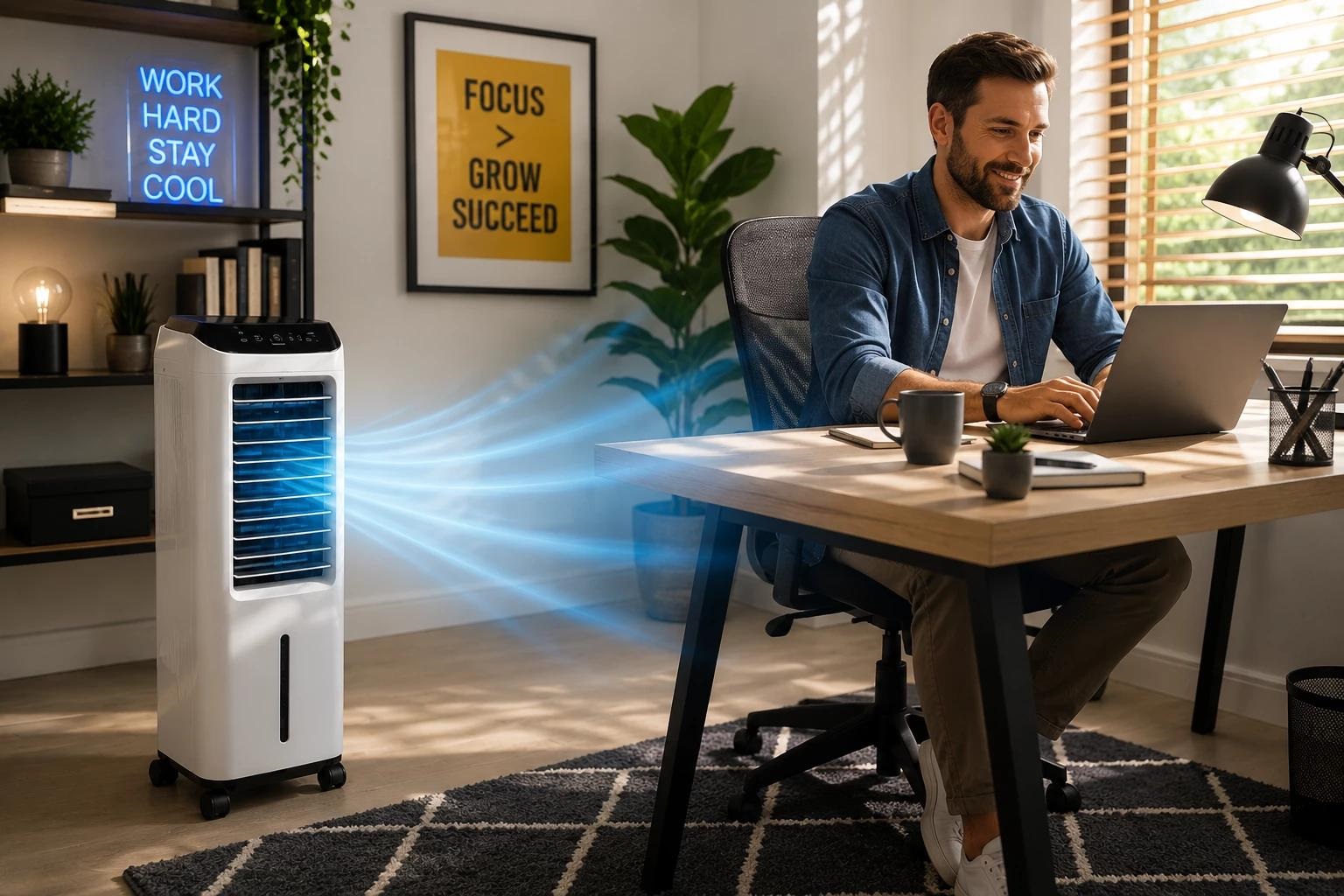
Keeping your home comfortable during hot summer months can be challenging, especially when temperatures rise and electricity bills increase. Not every household needs a permanent air conditioning system, and many homeowners prefer flexible cooling solutions that can be moved between rooms.
This is where portable coolers become useful.
Portable cooling devices offer convenient ways to improve comfort in bedrooms, living rooms, home offices, garages, and other spaces. Depending on the technology, they may circulate air, use water evaporation to cool it, or provide refrigerated air conditioning.
However, choosing the right system requires understanding how different cooling technologies work. A portable evaporative cooler performs differently from a compressor-based portable air conditioner, particularly in humid climates.
For American homeowners and renters, knowing these differences can help prevent unnecessary expenses and disappointing results.
This comprehensive guide explores portable cooling systems, their advantages, limitations, maintenance requirements, operating costs, and important features to consider before buying.
What Are Portable Coolers?
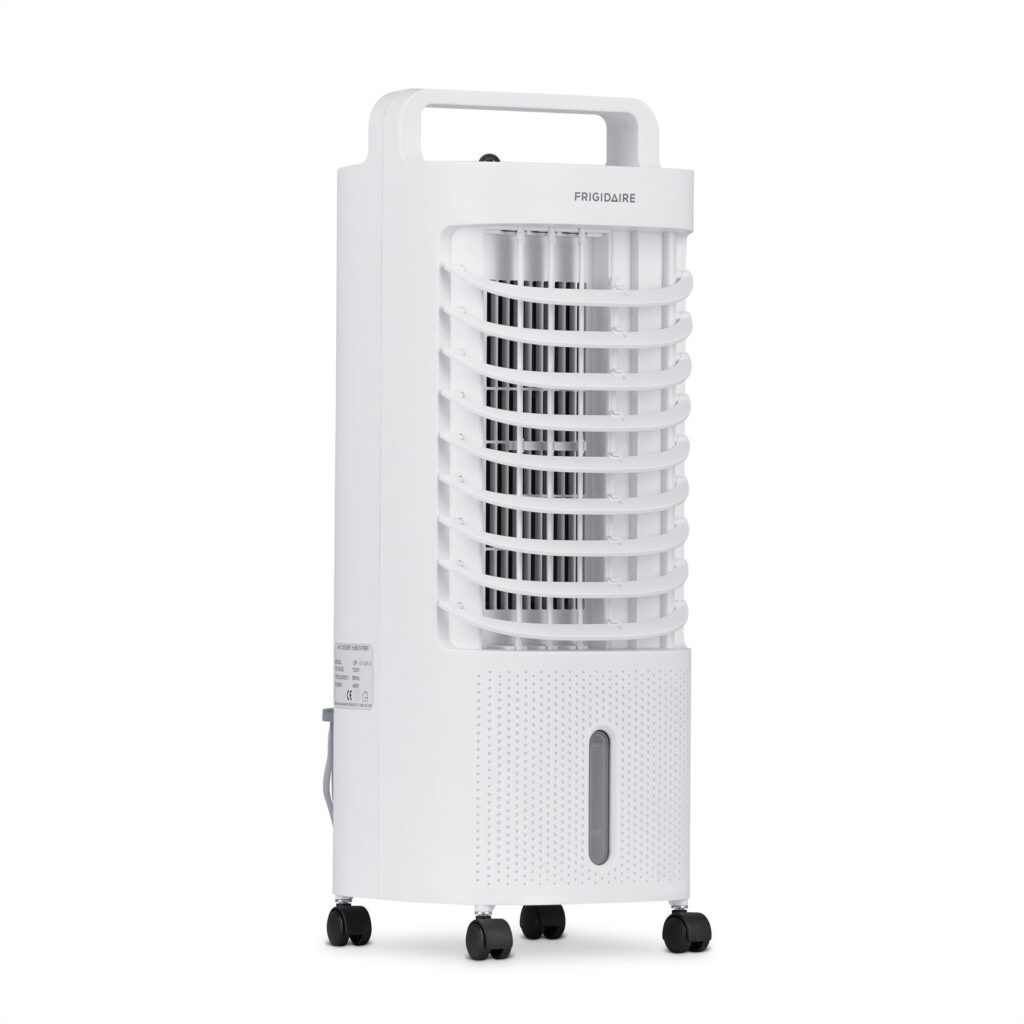
Portable coolers are movable appliances designed to improve comfort in a selected indoor or semi-outdoor space.
Unlike permanent central air conditioning systems, most portable cooling devices require little installation or structural modification.
Many feature wheels, compact cabinets, adjustable fan speeds, and convenient electronic controls.
However, the term portable cooler covers several different technologies.
Some appliances actually lower air temperature, while others mainly improve comfort through airflow.
Understanding this distinction is essential before choosing a product.
Different Types of Portable Coolers
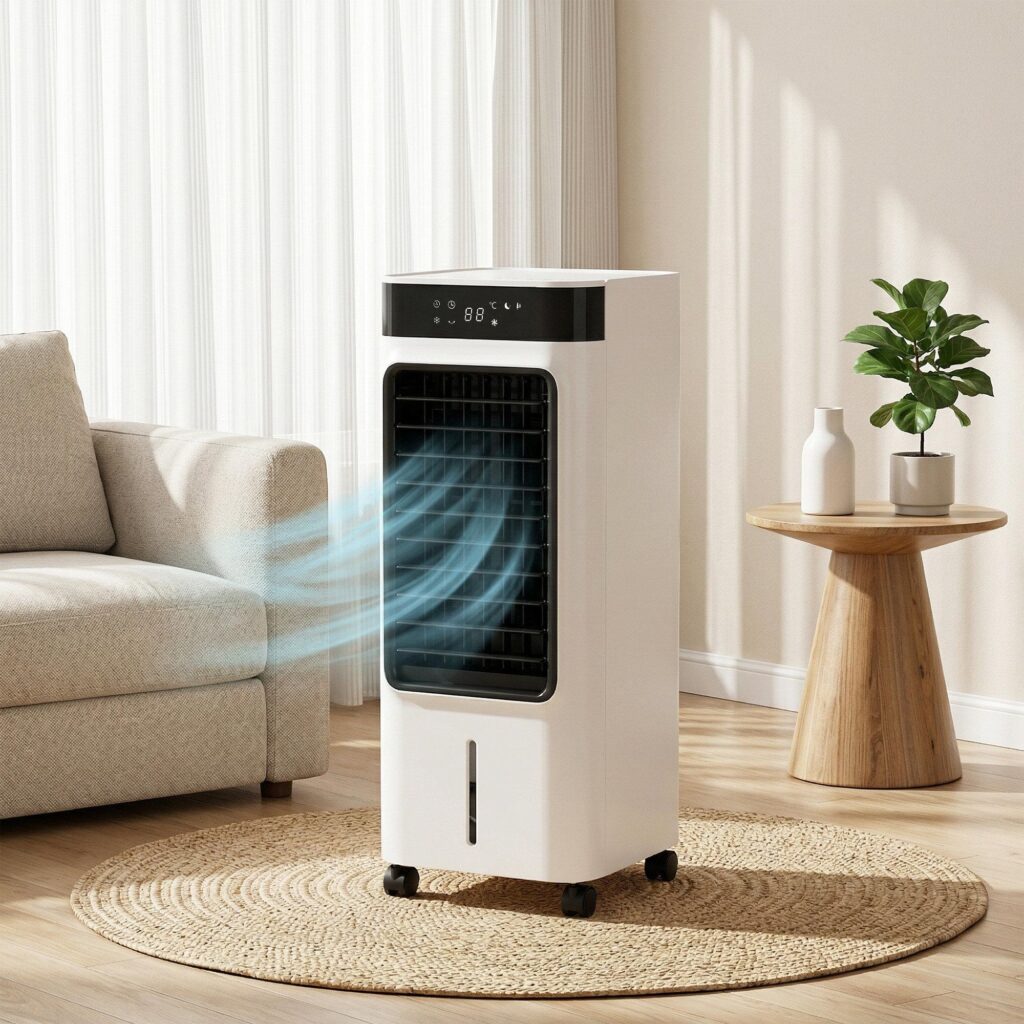
1. Portable Evaporative Coolers
Evaporative coolers, sometimes called swamp coolers, use water evaporation to lower the temperature of incoming air.
A fan draws air through moisture-saturated cooling pads. As some water evaporates, the air becomes cooler before entering the room.
These appliances typically use less electricity than compressor-based air conditioners.
However, they also increase humidity and perform best where the outdoor air is relatively dry.
2. Portable Air Conditioners
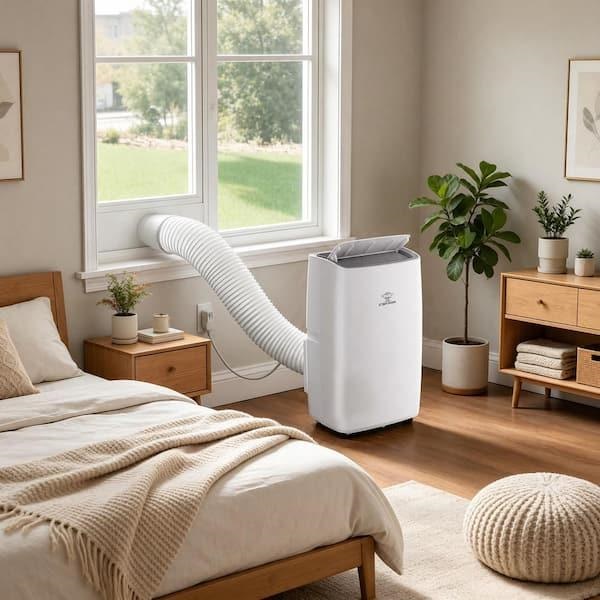
Portable air conditioners use refrigeration technology to remove heat from indoor air.
Most residential models require an exhaust hose connected to an outdoor window opening.
Unlike evaporative coolers, these appliances can provide cooling in humid environments and generally remove some moisture from indoor air.
However, they often consume more electricity and require appropriate exhaust installation.
3. Portable Fans
Portable fans circulate air rather than actively lowering room temperature.
They create airflow that can improve comfort by supporting evaporation from the skin.
Tower fans, pedestal fans, and compact tabletop models are common examples.
Fans are usually inexpensive to operate, but they should not be confused with air conditioning equipment.
How Do Portable Evaporative Coolers Work?
Evaporative cooling relies on the natural process of water changing from liquid to vapor.
As air passes through wet cooling pads, evaporation absorbs heat, lowering the air’s dry-bulb temperature.
A built-in fan then distributes the cooled air.
Why Climate Matters
In dry environments, water evaporates more readily, allowing evaporative coolers to provide noticeable cooling.
In humid environments, the air already contains substantial moisture, limiting further evaporation.
Consequently, an evaporative cooler that works well in Arizona may provide disappointing results in coastal Florida.
These systems also require a supply of fresh air and appropriate ventilation to avoid excessive indoor humidity.
Major Benefits of Portable Coolers
Convenient Room-to-Room Cooling
Many portable units include wheels or carrying handles.
This makes it easier to reposition a cooler between a bedroom, home office, or living room.
However, portable air conditioners still require a suitable exhaust connection whenever they are moved.
Flexible Cooling for Renters
Renters may not be permitted to install permanent HVAC equipment.
Portable appliances provide an alternative that generally requires fewer building modifications.
Before purchasing, check lease restrictions, electrical requirements, and window compatibility.
Targeted Comfort
Cooling only the room you are using may reduce the need to condition unoccupied spaces.
Actual savings depend on the appliance’s electricity use and whether other cooling systems are adjusted.
Different Price Categories
Portable cooling products range from basic fans to advanced refrigerated air conditioners.
This gives households options for different budgets and cooling needs.
Portable Coolers vs. Portable Air Conditioners
Although these products are frequently discussed together, their performance can differ substantially.
| Feature | Evaporative Cooler | Portable Air Conditioner |
|---|---|---|
| Cooling method | Water evaporation | Refrigeration cycle |
| Best climate | Hot and dry | Dry or humid |
| Window exhaust hose | Generally unnecessary | Usually required |
| Adds moisture | Yes | No |
| Removes humidity | No | Generally yes |
| Water tank | Usually required | Condensate handling varies |
| Electricity use | Often lower | Generally higher |
Neither technology is universally better.
The right choice depends on local humidity, room conditions, budget, and personal comfort requirements.
Exploring Portable Coolers From Climatise
For examples of available cooling technologies, shoppers can explore Portable coolers offered by Climatise.
Climatise is an Australian heating and cooling retailer based in Cranbourne, Victoria, serving the Melbourne region.
Its portable cooling collection includes evaporative coolers from Bonaire and refrigerated portable air conditioners from Rinnai.
Bonaire Portable Evaporative Coolers
The company’s listed models include the Bonaire Diet 12i, Bonaire 22i, and Bonaire Winter 56i.
These products offer different capacities and features for various spaces.
For example, the Bonaire 22i product description lists:
- A 22-liter water tank
- Three adjustable fan speeds
- Remote control with an off timer
- Honeycomb cooling pads
- Automatic swinging louvers
- Wheels for portability
Its advertised coverage is up to 42 cubic meters under specified conditions.
This rating should not be treated as a guaranteed cooling result in every room.
Rinnai Portable Air Conditioners
Climatise also lists Rinnai portable air conditioners with nominal cooling capacities of 3.5 kW and 4.1 kW.
Advertised features include adjustable temperature settings, remote controls, and timer functions.
These systems demonstrate the differences between evaporative cooling and refrigerated air conditioning.
Because Climatise operates in Australia, American customers should verify local availability, electrical compatibility, warranties, and suitable U.S. alternatives.
Australian prices should not be interpreted as U.S. retail prices.
Choosing Portable Coolers for Different U.S. Climates
Southwest: Arizona, Nevada, and New Mexico
The Southwest’s generally dry summer conditions can make evaporative cooling an attractive option.
Adequate ventilation is important, and cooling performance can decline during humid monsoon periods.
Southeast: Florida, Georgia, and Louisiana
Hot, humid conditions often favor compressor-based portable air conditioners.
These appliances can remove some indoor moisture while providing cooling.
Adding humidity with an evaporative cooler may worsen indoor comfort.
Midwest and Northeast
States such as Illinois, Ohio, Pennsylvania, and New York experience variable summer conditions.
Portable air conditioning may be useful during hot, humid weather.
Fans or evaporative cooling can sometimes provide adequate comfort during milder, drier periods.
West Coast
Cooling requirements vary significantly between coastal and inland communities.
A household in a mild coastal location may have different needs from one experiencing intense inland summer heat.
Evaluate actual local humidity and temperatures before choosing a system.
How to Select the Right Cooling Capacity
Choosing the correct appliance size is essential.
A cooler that is too small may struggle to improve comfort, while an unnecessarily large air conditioner can increase costs and operate inefficiently.
Measure the Room
Start by measuring the room’s length and width to calculate square footage.
Also consider ceiling height, insulation, sunlight, windows, and the number of occupants.
These factors influence the cooling load.
Understand BTU Ratings
In the United States, portable air conditioners are commonly described using British thermal units per hour, or BTU/h.
When comparing portable AC models, look for the U.S. Department of Energy’s seasonally adjusted cooling capacity, known as SACC.
Do not assume that a larger advertised cooling number automatically means better real-world performance.
For evaporative coolers, review manufacturer airflow and recommended coverage under suitable humidity conditions.
Important Features to Look For
Adjustable Fan Speeds
Multiple speeds allow users to balance airflow, comfort, and noise.
Remote Controls and Timers
Remote operation and programmable timers can make daily use more convenient.
Water Tank Capacity
For evaporative coolers, tank size affects how frequently water must be replenished.
However, a large tank does not necessarily indicate stronger cooling performance.
Noise Levels
Consider noise ratings when purchasing a cooler for sleeping or working.
Compressor-based appliances may produce additional mechanical noise.
Easy Maintenance
Removable filters, accessible tanks, and clear cleaning instructions make routine upkeep easier.
Choose a model with replacement parts and customer support available in your region.
Energy Efficiency and Running Costs
Operating costs depend on electricity consumption, hours of use, and local utility rates.
For example, a hypothetical 1,000-watt portable air conditioner operating for six hours consumes approximately six kilowatt-hours of electricity.
At an illustrative electricity rate of $0.18 per kilowatt-hour, that equals $1.08 for the six-hour period.
An evaporative cooler may use less electricity, but water consumption and ventilation requirements also matter.
Compare actual manufacturer power ratings before estimating costs.
Remember that a low-powered appliance may provide insufficient cooling for your needs.
How to Use Portable Coolers Effectively
Position the Appliance Correctly
Place the cooler on a stable, level surface with sufficient clearance around air openings.
Avoid blocking walkways or placing the appliance near heat sources.
Follow Ventilation Requirements
Portable air conditioners generally need a properly fitted exhaust hose leading outdoors.
Evaporative coolers need adequate fresh-air exchange and should not operate in tightly closed rooms without appropriate ventilation.
Reduce Unnecessary Heat
Close blinds during intense sunlight and limit unnecessary heat-generating activities.
Better shading can reduce the cooling load and improve comfort.
Monitor Indoor Humidity
The U.S. Environmental Protection Agency recommends keeping indoor relative humidity below 60%, ideally between 30% and 50%.
A simple humidity monitor can help determine whether indoor moisture is becoming excessive.
Cleaning and Maintenance Tips
Regular maintenance helps preserve cooling performance and indoor air quality.
For evaporative coolers, empty standing water as directed, clean the tank, and inspect cooling pads.
Replace pads according to manufacturer recommendations.
For portable air conditioners, clean accessible filters and follow instructions for removing condensate.
Inspect exhaust hoses for disconnections or damage.
Never immerse electrical components in water.
Before cleaning any appliance, disconnect it from its power source and follow the manufacturer’s safety instructions.
Common Mistakes to Avoid When Buying Portable Coolers
A frequent mistake is purchasing an evaporative cooler for an extremely humid environment.
Another is choosing a portable air conditioner without checking window compatibility.
Some buyers focus exclusively on purchase price and overlook electricity costs, noise levels, and replacement parts.
Avoid assuming that every portable cooler can replace central air conditioning.
In extreme heat, particularly for vulnerable household members, inadequate cooling can create serious health risks.
Choose equipment capable of maintaining appropriate indoor conditions.
Frequently Asked Questions About Portable Coolers
Are Portable Coolers Worth Buying?
Portable coolers can be useful for targeted cooling, temporary needs, and rooms without permanent air conditioning.
Their value depends on climate, operating requirements, and the type of cooling technology.
Do Portable Coolers Need Water?
Evaporative coolers generally require water.
Refrigerated portable air conditioners do not need a water tank for cooling, although some collect condensate that may require drainage.
Can Portable Coolers Work Without Windows?
Many evaporative coolers do not require a window exhaust hose, but they need ventilation.
Most conventional portable air conditioners require an exhaust route outdoors.
Are Portable Coolers Good for Bedrooms?
Yes, when appropriately sized and used according to manufacturer instructions.
Consider operating noise, temperature control, humidity, and safe electrical placement.
Do Portable Coolers Use a Lot of Electricity?
Consumption varies by technology and model.
Evaporative coolers and fans generally use less electricity than refrigerated portable air conditioners, but they provide different kinds of cooling.
Can I Use an Evaporative Cooler in Florida?
Evaporative cooling is generally less effective in Florida’s humid climate.
A correctly sized refrigerated air conditioner is usually more suitable for reliable indoor cooling and moisture removal.
How Often Should I Clean a Portable Cooler?
Follow the manufacturer’s maintenance schedule.
Water-based coolers may require frequent tank cleaning, while portable AC filters and drainage components need regular attention.
Can Portable Coolers Replace Central Air Conditioning?
Sometimes, a suitable portable air conditioner can cool an individual room adequately.
However, portable appliances are generally not direct substitutes for correctly designed whole-home HVAC systems.
Conclusion: Find the Right Portable Cooling Solution
Choosing the right portable coolers can improve everyday comfort while giving homeowners and renters greater flexibility during hot weather.
Evaporative coolers may provide an economical option in dry climates, while refrigerated portable air conditioners are often better suited to humid conditions.
Before purchasing, compare cooling technology, room size, energy consumption, noise, installation requirements, and maintenance needs.
Retailers such as Climatise provide useful examples of the different portable cooling systems available, although American shoppers should confirm locally compatible products.
With careful selection and proper operation, portable cooling equipment can help create a more comfortable home throughout the summer.

Written by Twastia Editorial Team
Twastia Editorial Team shares practical insights about website design, SEO services, Google Ads, content marketing, social media, conversion rate optimization, and digital marketing strategy.
Last updated: Oct 14, 2026
Related posts from Twastia
Explore more useful articles from twastia.com about digital marketing, SEO, websites, ads, content, and growth strategy.