mid-century modern: The Best Guide to Iconic Home Styling
In the world of interior design and architecture, few aesthetic movements have demonstrated the enduring appeal, cultural staying power, and […]
In the world of interior design and architecture, few aesthetic movements have demonstrated the enduring appeal, cultural staying power, and timeless elegance of the mid-century modern movement. Originating in North America and Europe in the years following World War II, this design philosophy revolutionized residential living by prioritizing clean lines, functional forms, organic shapes, and a seamless connection with nature. Rather than cluttering living spaces with heavy, ornate Victorian furnishings or dark, bulky carved woods, designers from this era introduced lightweight wooden frames, molded plywood, fiberglass, and sweeping glass walls that flooded interiors with natural sunlight.
Today, decades after its mid-20th-century inception, embracing a mid-century modern interior design framework remains one of the most sought-after styling choices for homeowners, architects, and interior decorators across the United States. Whether you live in an authentic 1950s California Eichler post-and-beam home, a sprawling suburban ranch house, or a contemporary downtown city loft, integrating vintage or retro-inspired design elements creates a warm, sophisticated, and uncluttered living environment.
In this ultimate comprehensive guide, we will examine the historical roots of this iconic movement, break down its core architectural and design characteristics, highlight legendary furniture masterpieces, explore authentic color palettes, and share practical styling strategies to bring timeless design aesthetics into your home space.
The History and Evolution of the mid-century modern Movement
To successfully bring this style into a contemporary living space, it is helpful to understand the social, industrial, and architectural forces that birthed the movement.
Post-WWII Innovation and Industrial Materials
The era spanning roughly from the mid-1940s through the late 1960s was characterized by rapid technological innovation, suburban expansion, and economic optimism across North America. Following World War II, industrial manufacturers redirected wartime materials—such as molded plywood, fiberglass, tubular steel, aluminum, and sheet acrylics—toward civilian residential housing and mass-market furniture production.
Innovative designers realized these flexible materials could be sculpted into ergonomic, fluid shapes that followed the natural contours of the human body. By combining mass production techniques with artistic craftsmanship, the mid-century modern movement democratized quality design, making handsome, durable, and functional furniture accessible to middle-class suburban families for the very first time.
Influential Designers Who Defined an Era
Several legendary visionary designers, architects, and artists shaped the visual vocabulary of this design movement:
- Charles and Ray Eames: The visionary husband-and-wife team whose groundbreaking experiments in bent plywood, fiberglass shell seating, and wire mesh created some of the most recognized furniture designs in human history.
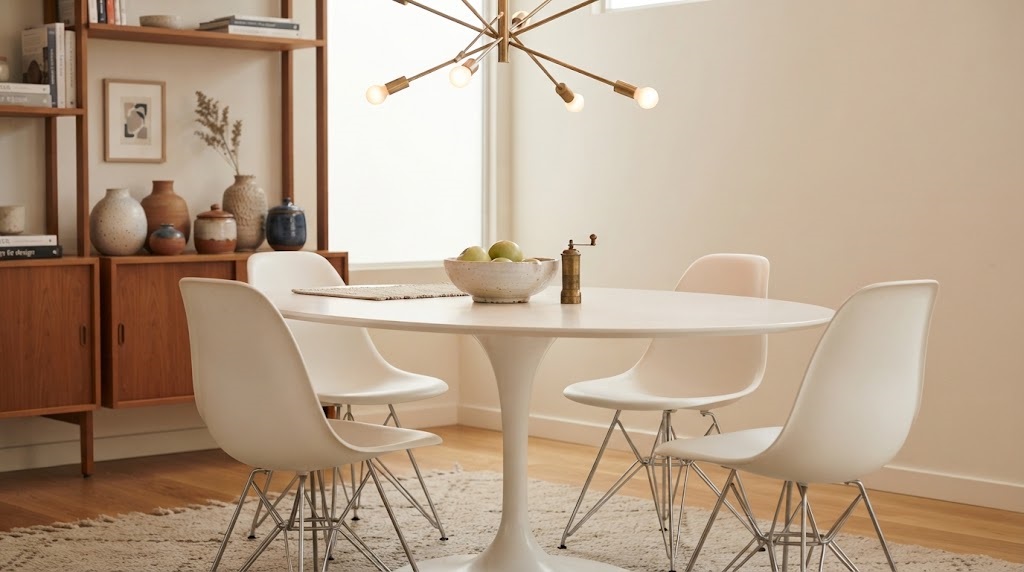
- Eero Saarinen: The Finnish-American architect renowned for his sweeping organic curves, famously designing the Tulip Table and Pedestal Chair collection to eliminate what he called the “cluttered leg forest” beneath standard dining tables.
- George Nelson: A master industrial designer who introduced innovative storage systems, graphic wall clocks (such as the Ball and Ball-Starburst clocks), and whimsical seating like the Marshmallow sofa.
- Hans Wegner and Arne Jacobsen: Scandinavian master craftsmen who introduced refined wood joinery, organic warmth, and sculptural elegance into global interiors through designs like the Wishbone Chair and the Egg Chair.
Recognizing these design pioneers helps homeowners distinguish authentic vintage pieces and high-quality reproductions from generic retro decor.
Core Characteristics of mid-century modern Architecture and Design
While individual interpretations of this aesthetic vary across geographic regions, several foundational principles define authentic spaces.
Clean Lines, Geometric Silhouettes, and Tapered Legs
The visual signature of mid-century modern furniture rests on its minimalist, uncluttered geometry. Case goods—such as credenzas, sideboards, nightstands, and dressers—feature crisp horizontal lines, floating wall mounts, and sleek integrated cabinet pulls.
A defining structural detail found across sofas, armchairs, and tables is the iconic peg leg or “splay leg.” Tapered, angled wooden or metal legs elevate furniture off the floor plane, allowing light to pass freely underneath. This visual weightlessness makes compact living rooms feel significantly larger and airier.
Blending Natural and Synthetic Materials
A key principle of this aesthetic is the harmonious pairing of traditional natural woods with revolutionary synthetic polymers. Warm, rich natural hardwoods—such as Burmese teak, American walnut, rosewood, and oak—serve as the foundational grounding elements in case goods and chair frames.
These natural woods are balanced alongside synthetic accents, including molded fiberglass shells, clear acrylic tables, polished chrome legs, vinyl upholstery, and sculptural ceramic accents. The juxtaposition of cool industrial materials against rich organic wood creates visual tension and tactile richness within living spaces.
Seamless Indoor-Outdoor Architectural Connection
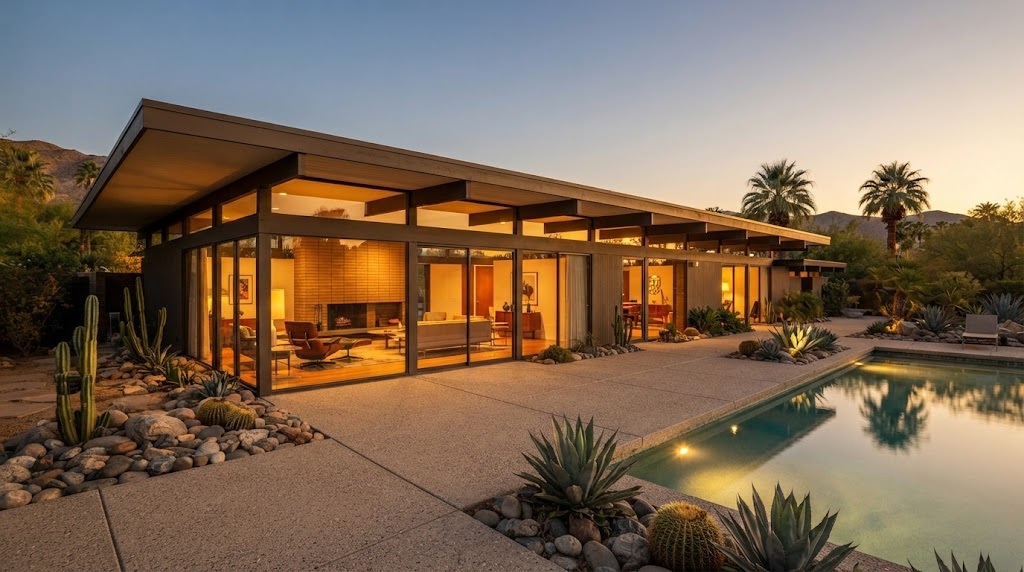
In residential architecture, this movement tore down the rigid walls that historically separated indoor living rooms from outdoor garden yards. Architects integrated floor-to-ceiling glass curtain walls, sliding glass doors, clerestory windows, and continuous concrete floor slabs that extended directly onto outdoor patio decks.
Inside a classic mid-century modern residence, interior floor plans prioritize open-concept layouts anchored by a central masonry fireplace. Natural stone accent walls, exposed wood ceiling beams, and indoor planter beds bring nature inside, reinforcing a calm, grounded atmosphere.
Iconic Furniture Pieces That Define the Era
Incorporating a few carefully selected hero furniture designs into your home acts as an instant visual anchor for your entire interior design concept.
The Eames Lounge Chair and Ottoman
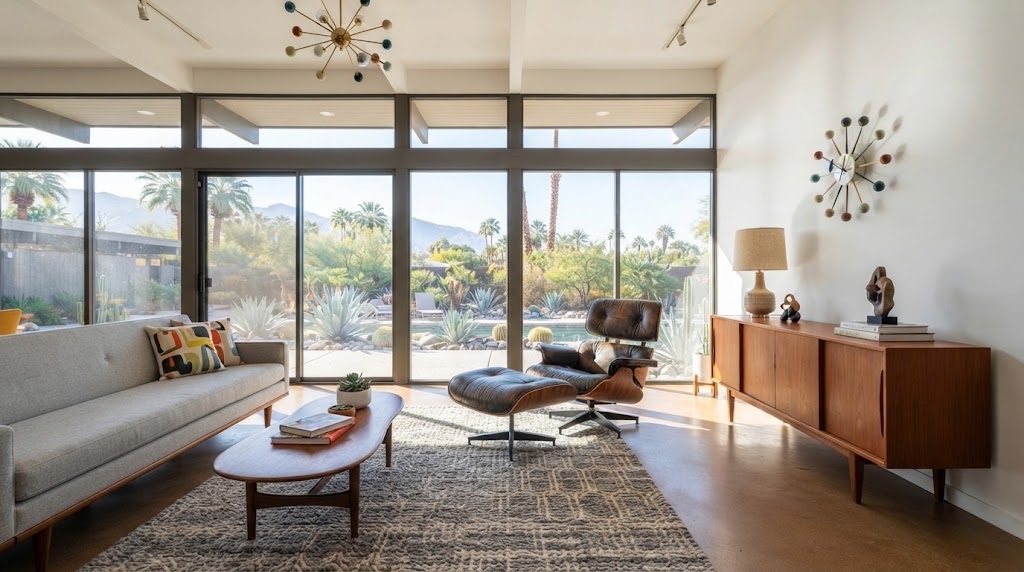
Introduced by Herman Miller in 1956, the Eames Lounge Chair and Ottoman represents the pinnacle of post-war luxury and comfort. Crafted from molded plywood shells veneered in rich walnut or palisander and cushioned in supple tufted black or white leather, this iconic lounge chair remains a symbol of timeless relaxation and mid-century luxury.
Eero Saarinen’s Tulip Table and Pedestal Seating
Designed in 1957 for Knoll, the Pedestal collection replaced traditional four-legged tables with a single, graceful cast-aluminum base that resembles a blooming tulip stem. Topped with heavy Italian Carrara marble, quartz, or smooth white laminate, the Tulip Table remains one of the most versatile dining room choices, blending effortlessly into contemporary, industrial, or traditional dining areas.
The Mid-Century Credenza and Low-Profile Media Console
A low-profile wooden credenza with sliding tambour doors or geometric carved drawer fronts is an essential staple of mid-century modern living room and dining room design. Originally created to store vinyl records, dinnerware, and audio equipment, these teak or walnut sideboards now serve as stylish media consoles, entryway anchors, or dining buffets beneath oversized abstract artwork.
How to Create an Authentic mid-century modern Color Palette
Selecting the right color framework balances historical accuracy with fresh, sophisticated residential styling.
Warm Earthy Foundations Meets Retro Accent Pops
The classic mid-20th-century color spectrum draws heavy inspiration from natural earth tones paired with vibrant, playful accent hues.
- Foundational Neutrals: Warm cream, sandy beige, taupe, olive green, charcoal gray, and rich walnut brown serve as the background Canvas on walls, rugs, and large sectional sofas.
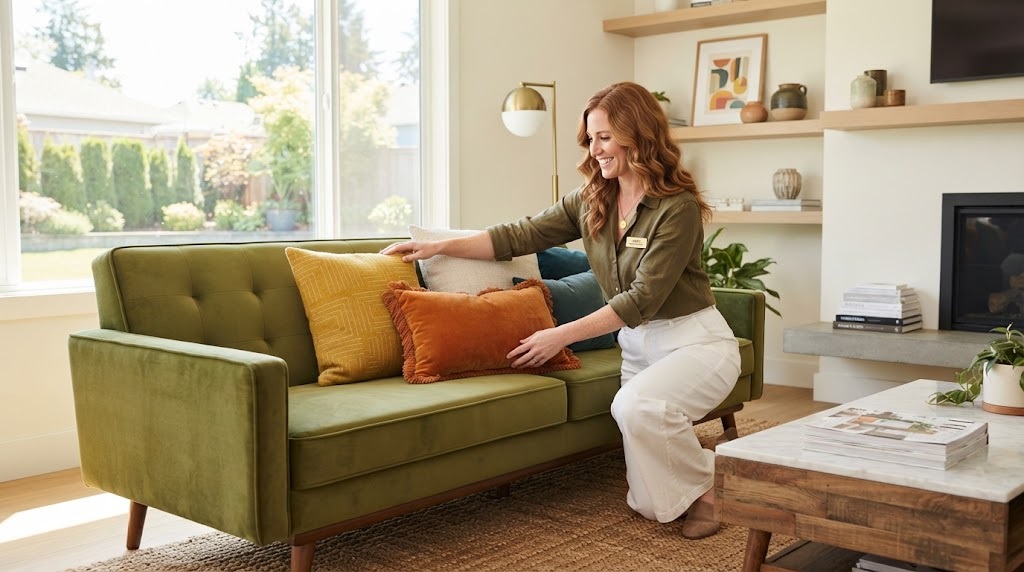
- Vibrant Retro Accent Pops: Infuse energy into the space using retro accent colors like mustard yellow, burnt orange, pumpkin, peacock blue, avocado green, chartreuse, and muted coral on accent pillows, throw blankets, upholstered armchairs, and abstract art prints.
Wood Tones and Natural Finishes
Avoid painting over authentic vintage wooden furniture with heavy opaque paints. The warm, exposed grain of walnut, teak, and oak provides essential visual character. Mixing warm walnut case goods with natural leather upholstery, brushed brass metal lighting fixtures, and neutral wool area rugs builds depth without overwhelming the senses.
Step-by-Step Guide to Styling Your Home
Creating an authentic look in a modern house requires thoughtful balance so your living room feels curated and warm rather than like a dated museum set.
Step 1: Select One or Two Hero Anchor Pieces
Avoid purchasing entire matching rooms from big-box furniture showrooms. Instead, invest in one or two iconic anchor pieces—such as a tufted velvet sofa with tapered wooden legs, a walnut credenza, or a pair of sculptural wooden armchairs. Let these hero items dictate the scale and material balance of the rest of the room.
Step 2: Layer Textures, Area Rugs, and Lighting
Soften geometric furniture silhouettes by layering rich tactile materials:
- Area Rugs: Anchor seating areas with plush shag rugs, geometric wool rugs, or low-pile rugs featuring bold atomic or asymmetrical motifs.
- Lighting Fixtures: Introduce iconic lighting statements like a brass sputnik chandelier, an oversized arc floor lamp, or a ceramic table lamp topped with a tall linen drum shade.
- Upholstery: Mix bouclé fabrics, nubby tweeds, rich velvet, and top-grain leather to create textural contrast across seating arrangements.
Step 3: Decorate with Abstract Art and Vintage Accessories
Complete your space with thoughtful decorative accents. Hang large-scale abstract expressionist oil paintings, geometric color-block canvas prints, or metal wall sculptures above your sofa or fireplace mantel. Adorn open teak bookshelves with vintage studio pottery, blown glass vases, brass objects, and lush green houseplants—such as fiddle-leaf figs, monstera deliciosa, or snake plants—to accentuate the natural, organic lifestyle inherent to this design style.
Frequently Asked Questions
What is the difference between retro and mid-century modern design?
Retro is an umbrella term referring to items, fashions, or styles from the past, often associated with pop culture or kitsch trends from the 1950s through 1980s. This movement specifically refers to an authentic architectural and design era (roughly 1945–1969) characterized by clean lines, organic shapes, innovative materials, and high-functioning minimalism.
Can I mix mid-century modern furniture with other design styles?
Yes! In fact, mixing mid-century pieces with contemporary, Scandinavian, industrial, or bohemian decor prevents your home from looking like a dated period showroom. A walnut mid-century credenza or Tulip dining table blends effortlessly alongside modern art, contemporary sofas, or minimalist light fixtures.
What are the best woods used in mid-century modern furniture?
American walnut, Burmese teak, rosewood, white oak, and birch are the primary hardwoods used in authentic furniture from this era. These woods are prized for their structural stability, tight grain patterns, and warm natural hues.
How can I make a mid-century modern space feel cozy rather than cold?
To add warmth to minimalist geometric furniture, layer soft natural textures throughout the room. Incorporate plush wool shag area rugs, warm velvet or tweed upholstery, natural leather accents, warm-toned lighting (2700K LED bulbs), and abundant indoor houseplants.
How do I identify authentic vintage furniture from modern reproductions?
Look for manufacturer tags or burned-in brand stamps (such as Herman Miller, Knoll, Danish Control, or Heywood-Wakefield) underneath chair frames or inside drawer boxes. Inspect joinery for dovetail joints, check for heavy solid wood or thick real wood veneers, and evaluate hardware weight and construction quality.
Why is mid-century modern design still so popular today?
Its enduring popularity stems from its unmatched blend of practical functionality, sleek proportions, comfort, and timeless aesthetic restraint. The scale of mid-century furniture is compact and flexible, making it perfectly suited for modern apartments, open-concept homes, and contemporary living spaces.
What colors are most associated with a mid-century modern palette?
The signature color palette includes earthy foundational neutrals (olive green, warm cream, taupe, walnut brown) paired with vibrant retro accent colors like mustard yellow, burnt orange, peacock blue, chartreuse, and muted coral.
Conclusion
The enduring legacy of the mid-century modern movement lies in its perfect balance of form, function, innovation, and timeless beauty. By celebrating clean geometric silhouettes, warm natural hardwoods, revolutionary materials, and a deep connection to outdoor nature, this iconic aesthetic transforms ordinary residential houses into sophisticated, welcoming homes. Whether you choose to invest in authentic vintage collector items
from visionary designers or curate affordable modern reproductions, incorporating mid-century principles into your space elevates everyday living. Focus on quality anchor pieces, layer rich textures, select a warm earthy color palette, and let natural sunlight illuminate your space. Embrace this timeless design style to create an uncluttered, functional, and stylish home environment that will inspire you for decades to come.

Written by Twastia Editorial Team
Twastia Editorial Team shares practical insights about website design, SEO services, Google Ads, content marketing, social media, conversion rate optimization, and digital marketing strategy.
Last updated: Oct 22, 2026
Related posts from Twastia
Explore more useful articles from twastia.com about digital marketing, SEO, websites, ads, content, and growth strategy.