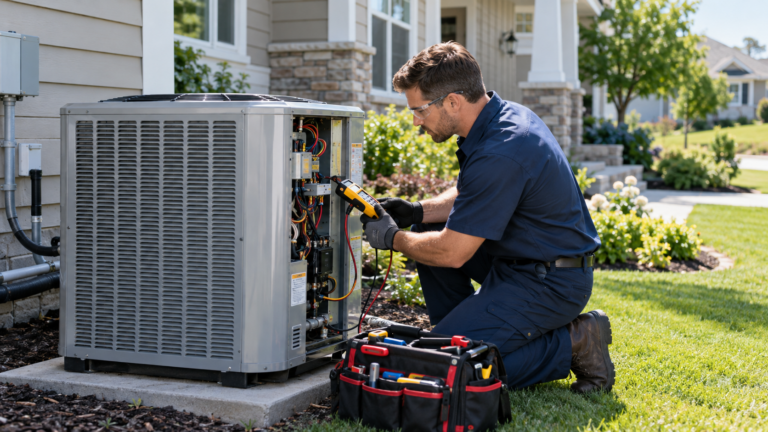
safety of your home: The Best Guide to Residential Protection
A truly robust and reliable protection strategy blends advanced digital surveillance technology, fortified physical structural barriers, and meticulous family emergency […]
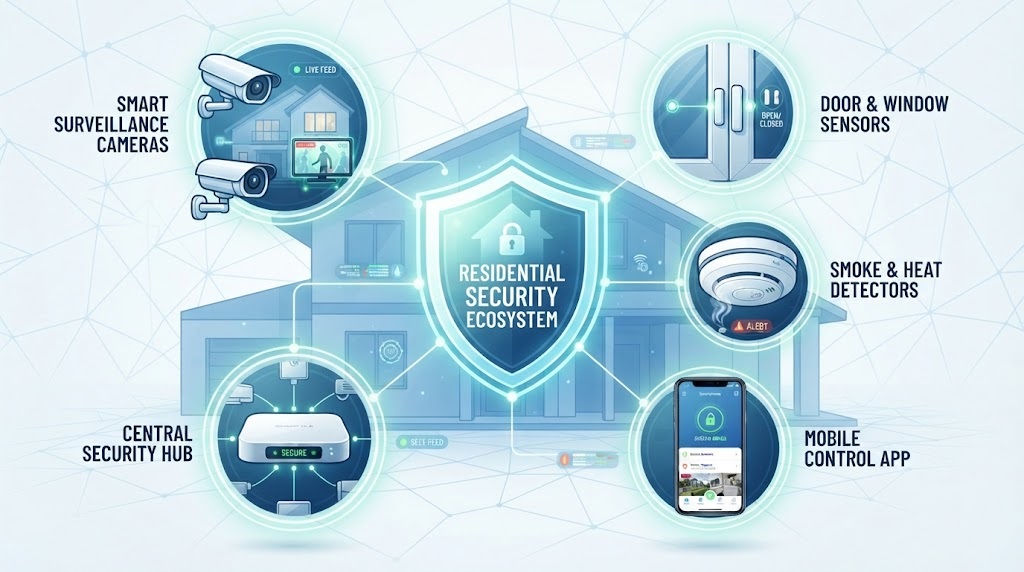
A truly robust and reliable protection strategy blends advanced digital surveillance technology, fortified physical structural barriers, and meticulous family emergency preparation to create an impenetrable, invisible shield around your most valuable assets and your cherished loved ones. Decades ago, homeowners relied exclusively on barking dogs and simple deadbolts to keep trouble at bay, but modern threats require modern, integrated solutions.
By proactively addressing potential vulnerabilities, identifying weak points in your property’s perimeter, and investing in high-grade defensive infrastructure, you can actively ensure the long-term safety of your home and enjoy profound, uninterrupted peace of mind regardless of what is happening in the world outside your front door.
In this extensive, in-depth guide, we will explore the foundational principles of modern residential security. We will break down the essential technological upgrades required for a 21st-century defense system, detail exactly how to physically harden your exterior doors and ground-floor windows, discuss the critical importance of defensive landscaping, and answer the most frequently asked questions about protecting your American dream.
Understanding Residential Vulnerabilities
Before you can effectively deploy advanced electronic alarm systems or reinforce structural entry points with heavy-duty hardware, you must conduct a thorough, objective, and brutally honest assessment of your property’s inherent physical weaknesses.
Many American homeowners operate under a dangerous false sense of security, assuming that residing in a quiet, affluent, well-lit suburban neighborhood automatically guarantees the safety of your home. Unfortunately, federal crime statistics and local law enforcement reports consistently demonstrate that opportunistic, calculating burglars frequently target upscale, gated communities specifically because residents tend to become complacent over time.
Homeowners in these areas often leave ground-floor windows unlatched to catch a breeze, leave garage side doors completely unlocked during the afternoon, or hide spare physical keys under obvious, highly predictable front porch welcome mats. Recognizing and immediately correcting these dangerous, deeply ingrained daily habits is the foundational first step toward establishing a robust, reliable residential defense perimeter that actively repels criminal intent.
Furthermore, property vulnerabilities extend far beyond the immediate threat of property theft or a targeted home invasion. Environmental hazards, such as aggressive internal electrical fires, unseen toxic carbon monoxide leaks from malfunctioning gas appliances, and severe seasonal weather events ranging from coastal hurricanes to devastating dry-season wildfires, pose equally devastating risks to the safety of your home. A truly holistic residential security audit meticulously evaluates both exterior physical
weaknesses created by poor construction and interior environmental threats generated by failing infrastructure. This requires you to walk the entire perimeter of your property during both broad daylight and the pitch-black hours of the night, identifying visual blind spots caused by overgrown vegetation, testing the structural integrity of aging wooden window frames, and ensuring that all environmental monitoring sensors are functioning flawlessly.
Advanced Technological Upgrades
The rapid evolution of smart home automation and consumer-grade surveillance technology over the past decade has completely revolutionized the residential security industry, providing everyday consumers with affordable, enterprise-level surveillance and monitoring capabilities.
Smart Security Cameras and Alarm Systems
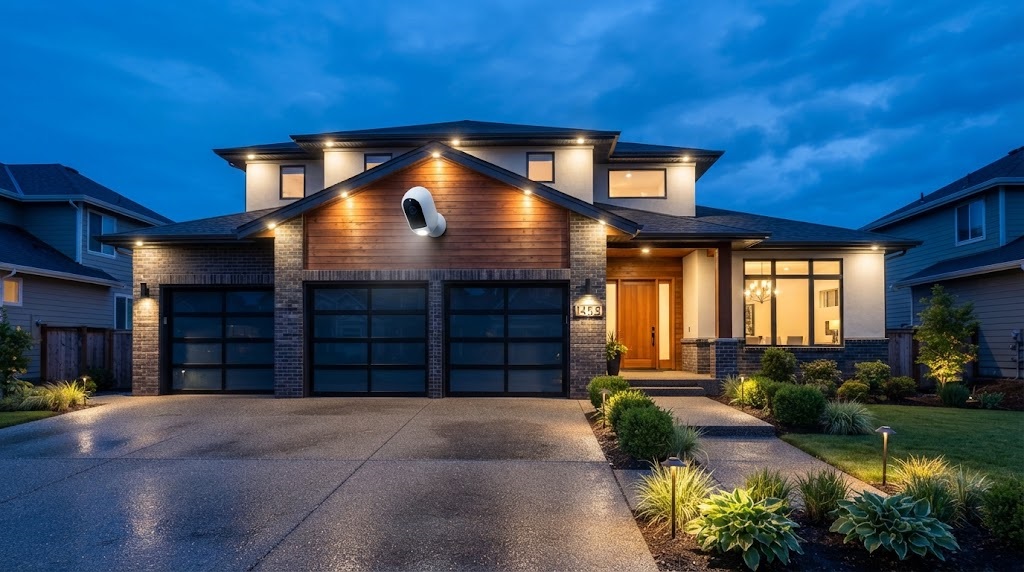
Gone are the days of grainy, low-resolution closed-circuit television cameras that recorded to messy, tangled VHS tapes and only provided blurry, unrecognizable shapes of potential suspects. Today, high-definition smart cameras equipped with advanced artificial intelligence, machine learning algorithms, and facial recognition capabilities are absolute game-changers for the safety of your home.
Modern dual-band Wi-Fi video doorbells and wireless exterior LED floodlight cameras provide crystal-clear 4K live streaming directly to your smartphone, allowing you to visually monitor your front porch, backyard patio, and driveway regardless of your physical location around the globe.
When integrated seamlessly with a comprehensive, professionally monitored digital alarm panel that features cellular backup technology, these advanced digital systems act as a highly visible, incredibly potent deterrent to would-be intruders. Installing prominent exterior cameras actively enhances the safety of your home by signaling to passing criminals that your property is under constant, unblinking digital surveillance, prompting them to abandon their efforts and move on to an easier, unprotected neighborhood target.
Automated Lighting and Smart Locks
Opportunistic criminals universally despise brightly illuminated spaces because sudden, glaring light instantly destroys their primary tactical advantage: the silent, anonymous cover of darkness. Integrating automated smart lighting into your exterior landscaping pathways, garage overhangs, and interior living room hallways is a highly effective, remarkably low-cost defensive strategy.
You can easily program smart LED bulbs to simulate human occupancy by turning on and off in randomized, natural patterns while you are away on a long family vacation, completely fooling onlookers into believing the house is occupied.
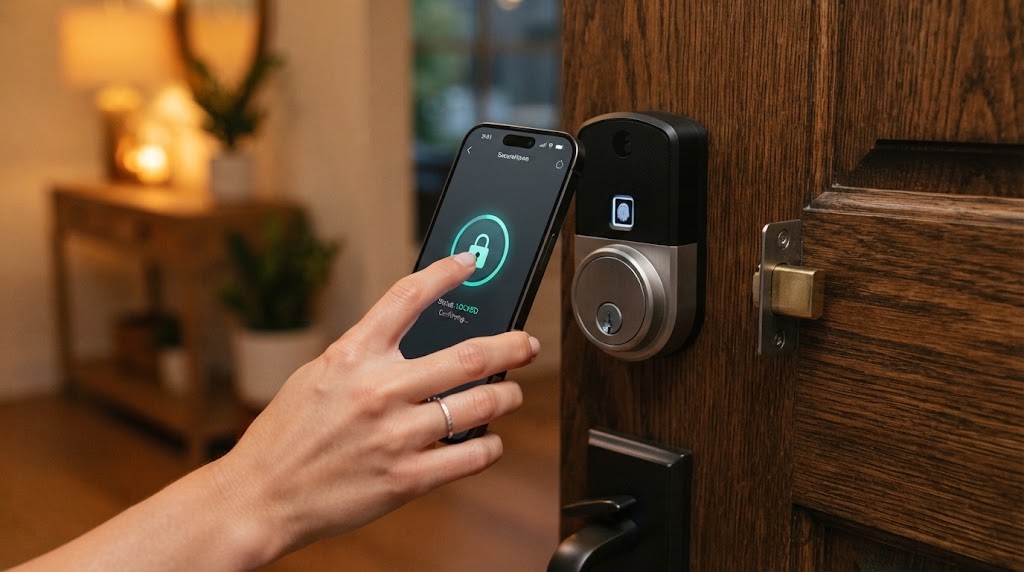
Additionally, upgrading your traditional, easily pickable brass deadbolts to modern biometric fingerprint scanners or keypad-operated smart locks completely eliminates the dangerous, everyday risk of losing physical house keys or having them secretly duplicated by dishonest contractors.
By generating temporary, highly trackable digital access codes for daily dog walkers, weekly housekeepers, or visiting out-of-state relatives, you maintain absolute, centralized digital control over exactly who enters your property at all times, heavily fortifying the safety of your home against unauthorized, undocumented entry.
Physical Hardening and Structural Defense
While high-tech digital cameras are exceptionally effective for remote monitoring and psychological deterrence, they cannot physically stop a determined, aggressive intruder from kicking in a wooden door frame or smashing a glass pane. Therefore, advanced technological upgrades must always be seamlessly paired with robust, unyielding structural reinforcements.
Reinforced Doors and Shatterproof Windows
The front entry door, the back patio sliding door, and the interior door connecting the garage to the living space are statistically the most common points of forced entry in American residential burglaries. Standard builder-grade wooden door frames equipped with short, half-inch metal strike plate screws are shockingly easy to breach with a single, aggressive, well-placed kick.
To drastically improve the safety of your home, you must immediately replace these flimsy, inadequate screws with three-inch hardened steel screws that anchor deeply and securely into the heavy wooden structural wall studs framing the doorway.
Furthermore, installing solid-core exterior doors constructed of fiberglass or heavy-gauge steel, paired with heavy-duty wrap-around metal security strike plates, creates a formidable, unyielding physical barrier that actively resists aggressive blunt force trauma.
Similarly, highly vulnerable ground-floor glass windows should be professionally treated with specialized, clear shatter-resistant security film. This transparent, military-grade adhesive layer prevents the fragile glass pane from shattering inward and falling apart when struck repeatedly by a heavy object, directly preserving the safety of your home by denying criminals quick, easy access through broken, jagged window frames and forcing them to abandon the attempted break-in.
Landscaping and Perimeter Control
Countless well-intentioned American homeowners unknowingly sabotage their own security efforts through incredibly poor, visually restrictive exterior landscaping decisions. Massive, overgrown decorative evergreen shrubs, tall solid wooden privacy fences, and dense weeping willow trees planted directly beneath ground-floor windows provide perfect, shadowy, concealed hiding spots for intruders attempting to pry open a window sash completely undetected by passing street traffic.
By strictly adhering to the established professional security principle known as “Crime Prevention Through Environmental Design” (CPTED), you can dramatically enhance the safety of your home. This highly effective philosophy involves aggressively trimming thorny, defensive bushes (such as bougainvillea, holly, or rose bushes) tightly below window sills, raising
thick tree canopies at least six to eight feet off the grass to open up visual sightlines from the street, and intentionally laying down noisy, crunching crushed pea gravel beneath highly vulnerable access points to ensure that any approaching, stealthy footsteps are loudly broadcasted to the occupants inside the residence.
Developing Family Emergency Protocols
The most advanced, expensive digital surveillance technology and the heaviest reinforced steel security doors on the market are utterly useless if the individuals living inside the residence do not actively know how to react calmly, quickly, and efficiently during a sudden, chaotic crisis.
Fire Safety and Carbon Monoxide Monitoring
Protecting your family from unseen, internal environmental threats is just as incredibly critical as stopping aggressive external intruders. According to the National Fire Protection Association, sudden residential fires claim thousands of lives and destroy billions of dollars in property annually across the United States. Ensuring the safety of your home
requires the strategic installation of interconnected, dual-sensor (photoelectric and ionization) smoke alarms and digital carbon monoxide detectors on every single level of the residence, specifically placing them just outside of all primary sleeping areas and inside utility rooms.
Because carbon monoxide is a highly toxic, completely odorless, colorless, and invisible gas produced by malfunctioning winter heating furnaces and indoor gas stoves, continuous digital monitoring is the absolute only way to detect a lethal, silent buildup before tragedy strikes. Routinely testing these vital, life-saving environmental sensors every single month and changing their internal backup batteries twice a year is a mandatory, non-negotiable responsibility for maintaining the safety of your home.
Communication and Escape Routes
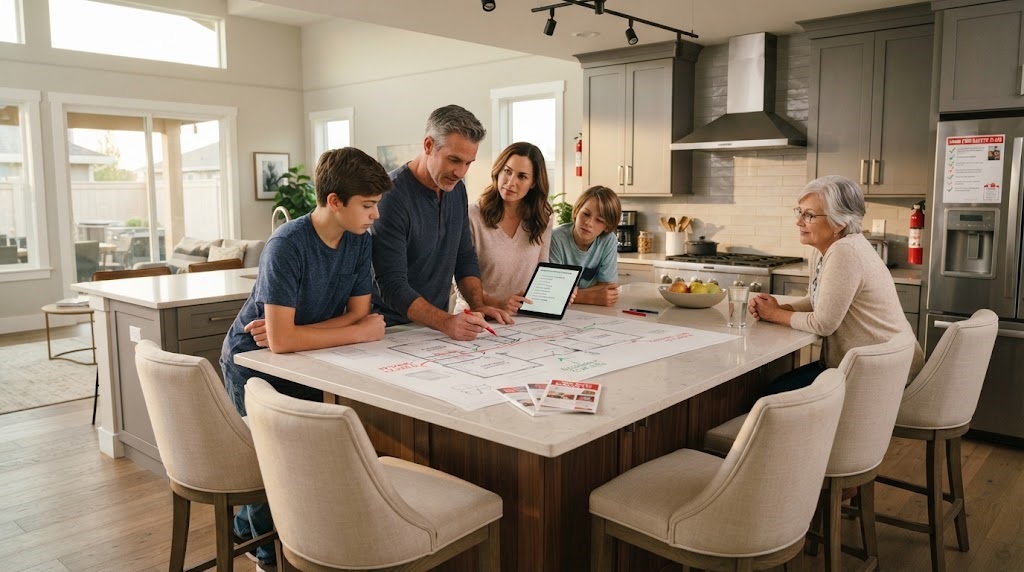
During an intense, adrenaline-fueled, rapidly unfolding emergency, human panic often overrides rational, logical thought and freezes individuals in place. To actively combat this dangerous psychological reaction, families must sit down together around the kitchen table and clearly establish detailed, heavily rehearsed emergency evacuation protocols.
This rigorous planning involves identifying at least two distinct, clear physical escape routes from every single bedroom in the house, designating a safe, highly visible outdoor meeting location (such as a specific neighbor’s driveway across the street or a prominent neighborhood street lamp), and ensuring that small children know exactly how to manually unlock heavy deadbolts or operate second-story emergency egress window ladders.
Practicing these vital emergency fire drills and aggressive home invasion scenarios regularly transforms chaotic, blinding panic into smooth, rehearsed muscle memory, ultimately guaranteeing the safety of your home and ensuring that every single family member knows exactly how to survive and escape a terrifying worst-case scenario.
Frequently Asked Questions
What is the absolute most effective deterrent against residential burglary? Law enforcement experts and veteran security professionals consistently agree that highly visible, professionally monitored exterior surveillance cameras combined with robust, aggressively bright motion-sensor LED floodlighting serve as the absolute most effective psychological deterrents. When criminals see that the safety of your home is heavily guarded by advanced digital technology, they almost always bypass the property entirely to avoid immediate detection and capture.
How often should I physically test my residential smoke and carbon monoxide detectors? You should physically press the plastic test button on every single environmental sensor in your house at least once a month to verify the audible alarm horn is functioning properly and loudly. Additionally, to guarantee the safety of your home, you must replace the internal backup alkaline batteries every six months, typically timing this vital maintenance task when you adjust your wall clocks for Daylight Saving Time in the spring and fall.
Are digital smart locks genuinely secure against remote hacking and cyber threats? Yes, reputable smart locks manufactured by leading, trusted industry brands utilize advanced AES 128-bit or 256-bit digital encryption protocols, which are fundamentally identical to the highly secure encryption standards utilized by major global financial institutions and banks. They are incredibly difficult to hack remotely and offer vastly superior physical security by completely eliminating traditional, easily pickable brass keyholes.
What should I do if I wake up and discover an intruder is already inside my house? If you realize someone has breached your exterior perimeter and is walking around inside your living space, your absolute immediate priority is preserving human life, not protecting material property or fighting over a television. Silently lock your heavy bedroom door, gather your family into a pre-designated safe room, call 911 immediately from a cellular phone, and remain quietly on the line with the emergency police dispatcher until armed law enforcement officers physically arrive on the scene and clear the residence.
Does outdoor landscaping actually impact residential security and crime rates? Absolutely, without a doubt. Overgrown evergreen bushes, tall solid wooden privacy fences, and thick, low-hanging tree canopies create massive visual blind spots that perfectly conceal criminal activity from passing police squad patrols and vigilant, watchful neighbors. Maintaining well-trimmed, highly visible, and neat landscaping is a fundamental, essential component of establishing robust structural security.
Conclusion
Transforming a vulnerable, exposed suburban house into an impenetrable, highly secure residential fortress requires deep dedication, strategic financial investment, and unwavering daily vigilance from every single family member. By systematically deploying advanced smart high-definition cameras, reinforcing vulnerable structural entry points with hardened, heavy-duty steel hardware, and relentlessly rehearsing critical emergency evacuation protocols with your loved ones, you build a comprehensive, multi-layered shield against a highly unpredictable world.
Never view residential security as a simple, one-time weekend project that you can finish and forget about; it is a continuous, lifelong commitment to proactive, intelligent risk management. Ultimately, taking the time and effort to meticulously evaluate and upgrade the safety of your home grants you the ultimate human luxury: the profound, invaluable ability to sleep soundly at night, knowing with absolute certainty that your family, your cherished memories, and your property are completely protected from harm.
Owning a residential property in the United States represents much more than a massive financial investment; it is the ultimate personal sanctuary where you raise your children, build lasting lifelong memories, and retreat from the demanding, stressful pressures of the modern world. However, maintaining the absolute safety of your home requires far more than simply
remembering to lock the front door when you leave for work in the morning or setting a basic alarm before going to bed. In today’s rapidly changing, complex environment, residential security encompasses a multifaceted, comprehensive approach that defends against both calculated human intrusions and unpredictable environmental disasters.
A truly robust and reliable protection strategy blends advanced digital surveillance technology, fortified physical structural barriers, and meticulous family emergency preparation to create an impenetrable, invisible shield around your most valuable assets and your cherished loved ones. Decades ago, homeowners relied exclusively on barking dogs and simple deadbolts to keep trouble at bay, but modern threats require modern, integrated solutions. By proactively addressing potential vulnerabilities, identifying weak points in your property’s perimeter, and investing in high-grade defensive infrastructure, you can actively ensure the long-term safety of your home and enjoy profound, uninterrupted peace of mind regardless of what is happening in the world outside your front door.
In this extensive, in-depth guide, we will explore the foundational principles of modern residential security. We will break down the essential technological upgrades required for a 21st-century defense system, detail exactly how to physically harden your exterior doors and ground-floor windows, discuss the critical importance of defensive landscaping, and answer the most frequently asked questions about protecting your American dream.
Understanding Residential Vulnerabilities
Before you can effectively deploy advanced electronic alarm systems or reinforce structural entry points with heavy-duty hardware, you must conduct a thorough, objective, and brutally honest assessment of your property’s inherent physical weaknesses.
Many American homeowners operate under a dangerous false sense of security, assuming that residing in a quiet, affluent, well-lit suburban neighborhood automatically guarantees the safety of your home. Unfortunately, federal crime statistics and local law enforcement reports consistently demonstrate that opportunistic, calculating burglars frequently target upscale, gated communities specifically because residents tend to become complacent over time.
Homeowners in these areas often leave ground-floor windows unlatched to catch a breeze, leave garage side doors completely unlocked during the afternoon, or hide spare physical keys under obvious, highly predictable front porch welcome mats. Recognizing and immediately correcting these dangerous, deeply ingrained daily habits is the foundational first step toward establishing a robust, reliable residential defense perimeter that actively repels criminal intent.
Furthermore, property vulnerabilities extend far beyond the immediate threat of property theft or a targeted home invasion. Environmental hazards, such as aggressive internal electrical fires, unseen toxic carbon monoxide leaks from malfunctioning gas appliances, and severe seasonal weather events ranging from coastal hurricanes to devastating dry-season wildfires, pose equally devastating risks to the safety of your home. A truly holistic residential security audit
meticulously evaluates both exterior physical weaknesses created by poor construction and interior environmental threats generated by failing infrastructure. This requires you to walk the entire perimeter of your property during both broad daylight and the pitch-black hours of the night, identifying visual blind spots caused by overgrown vegetation, testing the structural integrity of aging wooden window frames, and ensuring that all environmental monitoring sensors are functioning flawlessly.
Advanced Technological Upgrades
The rapid evolution of smart home automation and consumer-grade surveillance technology over the past decade has completely revolutionized the residential security industry, providing everyday consumers with affordable, enterprise-level surveillance and monitoring capabilities.
Smart Security Cameras and Alarm Systems
Gone are the days of grainy, low-resolution closed-circuit television cameras that recorded to messy, tangled VHS tapes and only provided blurry, unrecognizable shapes of potential suspects. Today, high-definition smart cameras equipped with advanced artificial intelligence, machine learning algorithms, and facial recognition capabilities are absolute game-changers for the safety of your home. Modern dual-band Wi-Fi video doorbells and wireless exterior LED floodlight cameras provide crystal-clear 4K live streaming directly to your smartphone, allowing you to visually monitor your front porch, backyard patio, and driveway regardless of your physical location around the globe.
When integrated seamlessly with a comprehensive, professionally monitored digital alarm panel that features cellular backup technology, these advanced digital systems act as a highly visible, incredibly potent deterrent to would-be intruders. Installing prominent exterior cameras actively enhances the safety of your home by signaling to passing criminals that your property is under constant, unblinking digital surveillance, prompting them to abandon their efforts and move on to an easier, unprotected neighborhood target.
Automated Lighting and Smart Locks
Opportunistic criminals universally despise brightly illuminated spaces because sudden, glaring light instantly destroys their primary tactical advantage: the silent, anonymous cover of darkness. Integrating automated smart lighting into your exterior landscaping pathways, garage overhangs, and interior living room hallways is a highly effective, remarkably low-cost defensive strategy. You can easily program smart LED bulbs to simulate human occupancy by turning on and off in randomized, natural patterns while you are away on a long family vacation, completely fooling onlookers into believing the house is occupied.
Additionally, upgrading your traditional, easily pickable brass deadbolts to modern biometric fingerprint scanners or keypad-operated smart locks completely eliminates the dangerous, everyday risk of losing physical house keys or having them secretly duplicated by dishonest contractors. By generating temporary, highly trackable digital access codes for daily dog walkers, weekly housekeepers, or visiting out-of-state relatives, you maintain absolute, centralized digital control over exactly who enters your property at all times, heavily fortifying the safety of your home against unauthorized, undocumented entry.
Physical Hardening and Structural Defense
While high-tech digital cameras are exceptionally effective for remote monitoring and psychological deterrence, they cannot physically stop a determined, aggressive intruder from kicking in a wooden door frame or smashing a glass pane. Therefore, advanced technological upgrades must always be seamlessly paired with robust, unyielding structural reinforcements.
Reinforced Doors and Shatterproof Windows
The front entry door, the back patio sliding door, and the interior door connecting the garage to the living space are statistically the most common points of forced entry in American residential burglaries. Standard builder-grade wooden door frames equipped with short, half-inch metal strike plate screws are shockingly easy to breach with a single, aggressive, well-placed kick. To drastically improve the safety of your home, you must immediately replace these flimsy, inadequate screws with three-inch hardened steel screws that anchor deeply and securely into the heavy wooden structural wall studs framing the doorway.
Furthermore, installing solid-core exterior doors constructed of fiberglass or heavy-gauge steel, paired with heavy-duty wrap-around metal security strike plates, creates a formidable, unyielding physical barrier that actively resists aggressive blunt force trauma. Similarly, highly vulnerable ground-floor glass windows should be professionally treated with specialized, clear shatter-resistant security film. This transparent, military-grade adhesive layer prevents the fragile glass pane from shattering inward and falling apart when struck repeatedly by a heavy object, directly preserving the safety of your home by denying criminals quick, easy access through broken, jagged window frames and forcing them to abandon the attempted break-in.
Landscaping and Perimeter Control
Countless well-intentioned American homeowners unknowingly sabotage their own security efforts through incredibly poor, visually restrictive exterior landscaping decisions. Massive, overgrown decorative evergreen shrubs, tall solid wooden privacy fences, and dense weeping willow trees planted directly beneath ground-floor windows provide perfect, shadowy, concealed hiding spots for intruders attempting to pry open a window sash completely undetected by passing street traffic.
By strictly adhering to the established professional security principle known as “Crime Prevention Through Environmental Design” (CPTED), you can dramatically enhance the safety of your home. This highly effective philosophy involves aggressively trimming thorny, defensive bushes (such as bougainvillea, holly, or rose bushes) tightly below window sills, raising thick tree canopies at least six to eight feet off the grass to open up visual sightlines from the street, and intentionally laying down noisy, crunching crushed pea gravel beneath highly vulnerable access points to ensure that any approaching, stealthy footsteps are loudly broadcasted to the occupants inside the residence.
Developing Family Emergency Protocols
The most advanced, expensive digital surveillance technology and the heaviest reinforced steel security doors on the market are utterly useless if the individuals living inside the residence do not actively know how to react calmly, quickly, and efficiently during a sudden, chaotic crisis.
Fire Safety and Carbon Monoxide Monitoring
Protecting your family from unseen, internal environmental threats is just as incredibly critical as stopping aggressive external intruders. According to the National Fire Protection Association, sudden residential fires claim thousands of lives and destroy billions of dollars in property annually across the United States. Ensuring the safety of your home requires the strategic installation of interconnected, dual-sensor (photoelectric and ionization) smoke alarms and digital carbon monoxide detectors on every single level of the residence, specifically placing them just outside of all primary sleeping areas and inside utility rooms.
Because carbon monoxide is a highly toxic, completely odorless, colorless, and invisible gas produced by malfunctioning winter heating furnaces and indoor gas stoves, continuous digital monitoring is the absolute only way to detect a lethal, silent buildup before tragedy strikes. Routinely testing these vital, life-saving environmental sensors every single month and changing their internal backup batteries twice a year is a mandatory, non-negotiable responsibility for maintaining the safety of your home.
Communication and Escape Routes
During an intense, adrenaline-fueled, rapidly unfolding emergency, human panic often overrides rational, logical thought and freezes individuals in place. To actively combat this dangerous psychological reaction, families must sit down together around the kitchen table and clearly establish detailed, heavily rehearsed emergency evacuation protocols. This rigorous planning involves identifying at least two distinct, clear physical escape routes from every single bedroom in the house, designating a safe, highly visible outdoor meeting location (such as a specific neighbor’s driveway across the street or a prominent neighborhood street lamp), and ensuring that small children know exactly how to manually unlock heavy deadbolts or operate second-story emergency egress window ladders.
Practicing these vital emergency fire drills and aggressive home invasion scenarios regularly transforms chaotic, blinding panic into smooth, rehearsed muscle memory, ultimately guaranteeing the safety of your home and ensuring that every single family member knows exactly how to survive and escape a terrifying worst-case scenario.
Frequently Asked Questions
What is the absolute most effective deterrent against residential burglary? Law enforcement experts and veteran security professionals consistently agree that highly visible, professionally monitored exterior surveillance cameras combined with robust, aggressively bright motion-sensor LED floodlighting serve as the absolute most effective psychological deterrents. When criminals see that the safety of your home is heavily guarded by advanced digital technology, they almost always bypass the property entirely to avoid immediate detection and capture.
How often should I physically test my residential smoke and carbon monoxide detectors? You should physically press the plastic test button on every single environmental sensor in your house at least once a month to verify the audible alarm horn is functioning properly and loudly. Additionally, to guarantee the safety of your home, you must replace the internal backup alkaline batteries every six months, typically timing this vital maintenance task when you adjust your wall clocks for Daylight Saving Time in the spring and fall.
Are digital smart locks genuinely secure against remote hacking and cyber threats? Yes, reputable smart locks manufactured by leading, trusted industry brands utilize advanced AES 128-bit or 256-bit digital encryption protocols, which are fundamentally identical to the highly secure encryption standards utilized by major global financial institutions and banks. They are incredibly difficult to hack remotely and offer vastly superior physical security by completely eliminating traditional, easily pickable brass keyholes.
What should I do if I wake up and discover an intruder is already inside my house? If you realize someone has breached your exterior perimeter and is walking around inside your living space, your absolute immediate priority is preserving human life, not protecting material property or fighting over a television. Silently lock your heavy bedroom door, gather your family into a pre-designated safe room, call 911 immediately from a cellular phone, and remain quietly on the line with the emergency police dispatcher until armed law enforcement officers physically arrive on the scene and clear the residence.
Does outdoor landscaping actually impact residential security and crime rates? Absolutely, without a doubt. Overgrown evergreen bushes, tall solid wooden privacy fences, and thick, low-hanging tree canopies create massive visual blind spots that perfectly conceal criminal activity from passing police squad patrols and vigilant, watchful neighbors. Maintaining well-trimmed, highly visible, and neat landscaping is a fundamental, essential component of establishing robust structural security.
Conclusion
Transforming a vulnerable, exposed suburban house into an impenetrable, highly secure residential fortress requires deep dedication, strategic financial investment, and unwavering daily vigilance from every single family member. By systematically deploying advanced smart high-definition cameras, reinforcing vulnerable structural entry points with hardened, heavy-duty steel hardware, and relentlessly rehearsing critical emergency evacuation protocols with your loved ones, you build a comprehensive, multi-layered shield against a highly unpredictable world.
Never view residential security as a simple, one-time weekend project that you can finish and forget about; it is a continuous, lifelong commitment to proactive, intelligent risk management. Ultimately, taking the time and effort to meticulously evaluate and upgrade the safety of your home grants you the ultimate human luxury: the profound, invaluable ability to sleep soundly at night, knowing with absolute certainty that your family, your cherished memories, and your property are completely protected from harm.

Written by Twastia Editorial Team
Twastia Editorial Team shares practical insights about website design, SEO services, Google Ads, content marketing, social media, conversion rate optimization, and digital marketing strategy.
Last updated: Oct 23, 2026
Related posts from Twastia
Explore more useful articles from twastia.com about digital marketing, SEO, websites, ads, content, and growth strategy.