What Is the Nation’s Average Cost of Window Replacement in the USA?
Replacing windows can improve comfort, appearance, energy performance, and potentially the value of a home. But before homeowners start comparing […]
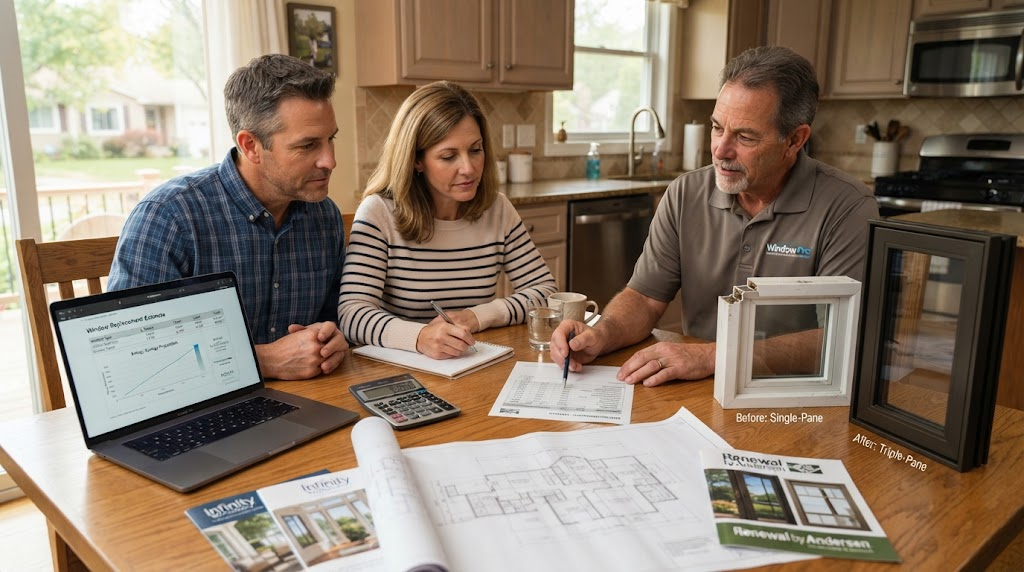
Replacing windows can improve comfort, appearance, energy performance, and potentially the value of a home. But before homeowners start comparing window brands or scheduling estimates, one question usually comes first: How much is window replacement going to cost?
The answer is not as simple as quoting one number.
The nation’s average cost of replacing windows can vary substantially depending on the number of windows, frame material, glass type, installation method, home location, window size, labor requirements, and whether structural repairs are necessary.
A small project replacing two basic windows is very different from replacing every window in a large house with premium fiberglass or wood units.
Understanding these cost drivers helps homeowners build a realistic budget and compare contractor estimates intelligently.
Why Window Replacement Costs Vary So Much
Window replacement is not a standardized product.
Two windows that appear similar can have significantly different prices because of their construction, energy efficiency, dimensions, installation requirements, and manufacturer.
The total project price normally includes two broad categories:
- Window materials
- Installation labor
Additional expenses may include disposal, permits, trim repair, frame repair, custom sizing, or exterior finishing.
This is why national averages are useful as a starting point but should not be treated as a guaranteed quote.
What Determines the Cost of Replacement Windows?
Several variables have a direct impact on the final price.
Window Size
Larger windows require more glass, stronger frames, and often more labor.
A small bathroom window usually costs less than a large picture window or sliding unit.
Oversized or unusually shaped windows may need custom manufacturing, which can raise the price further.
Number of Windows
Replacing one or two windows costs less overall than replacing 15 or 20.
However, the per-window installation cost may sometimes decrease on larger projects because crews can work more efficiently.
When requesting estimates, ask for:
- Total project cost
- Cost per window
- Labor cost
- Optional upgrade pricing
This makes competing quotes easier to compare.
Window Frame Material
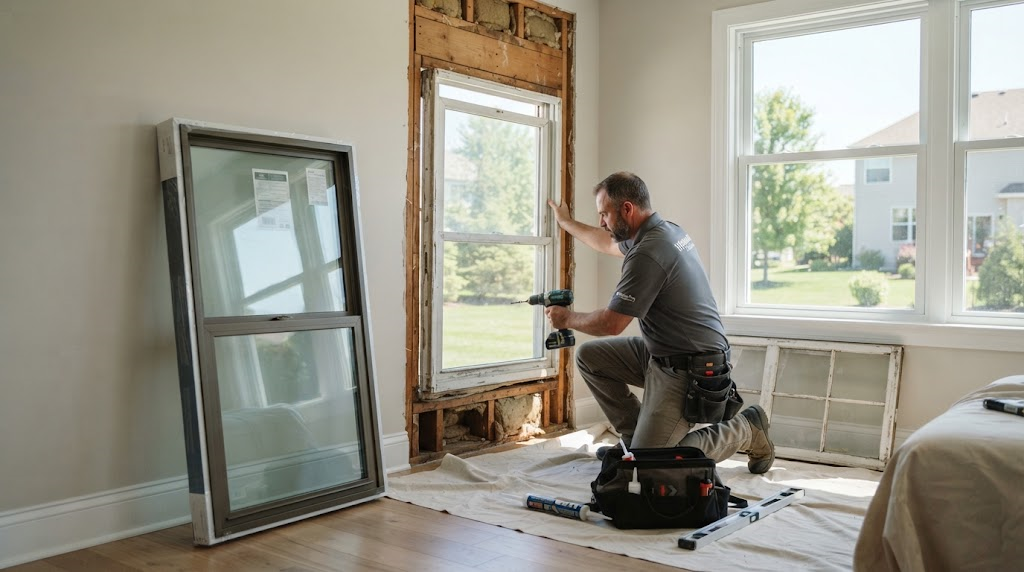
Frame material is one of the biggest cost variables.
Vinyl Windows
Vinyl is widely used because it is relatively affordable, low maintenance, and resistant to moisture.
Vinyl windows can be a practical choice for homeowners looking for a balance between cost and performance.
Quality still varies significantly between manufacturers.
Wood Windows
Wood provides a traditional appearance and is often used in historic, luxury, or architecturally distinctive homes.
It can also be more expensive.
Wood requires additional maintenance because exposure to moisture can lead to deterioration if the frame is not properly protected.
Fiberglass Windows
Fiberglass frames are strong, durable, and dimensionally stable.
They often cost more than entry-level vinyl but may offer excellent longevity.
Aluminum Windows
Aluminum frames are lightweight and strong.
They are frequently used in modern architecture and some commercial applications.
Because metal conducts heat easily, modern aluminum windows may incorporate thermal breaks to improve efficiency.
Composite Windows
Composite frames combine different materials to improve durability, insulation, or appearance.
Pricing depends heavily on the product and manufacturer.
Window Style Also Affects Price
The operating mechanism and design influence manufacturing and installation costs.
Common styles include:
Single-Hung Windows
Only one sash moves.
They tend to be simpler and may cost less than more complex designs.
Double-Hung Windows
Both upper and lower sashes can move.
They are common in American homes and can make ventilation and cleaning easier.
Casement Windows
Casement windows hinge at the side and open outward.
They often provide good ventilation and tight seals when closed.
Sliding Windows
These windows move horizontally along a track.
Their simple design can make them practical for many residential applications.
Picture Windows
Picture windows do not open.
Large versions can be expensive because of glass size, even though they have no operating hardware.
Bay and Bow Windows
Bay and bow windows extend outward from the house.
They can add interior space and architectural interest but are generally more complex and expensive to install.
Full-Frame vs. Insert Window Replacement
The installation method is another major cost factor.
Insert Replacement
An insert window is installed into an existing frame.
This can reduce labor when the original frame is structurally sound and properly sized.
Because less material is removed, the installation may be faster.
Full-Frame Replacement
Full-frame replacement removes the existing window down to the rough opening.
The installer may replace:
- Frame
- Sill
- Trim
- Insulation
- Flashing
This approach costs more but can be necessary when the existing frame is damaged, poorly installed, or deteriorated.
Labor Costs for Window Installation
Labor varies by market.
Contractors in high-cost metropolitan areas may charge more than those in lower-cost regions.
Installation difficulty also matters.
Labor can increase when:
- Windows are on upper stories
- Access is limited
- Exterior materials are difficult to work around
- Existing frames are damaged
- Openings require modification
- Custom trim work is needed
Do not assume the lowest labor quote provides the best value.
Incorrect installation can cause air leaks, water intrusion, and premature window failure.
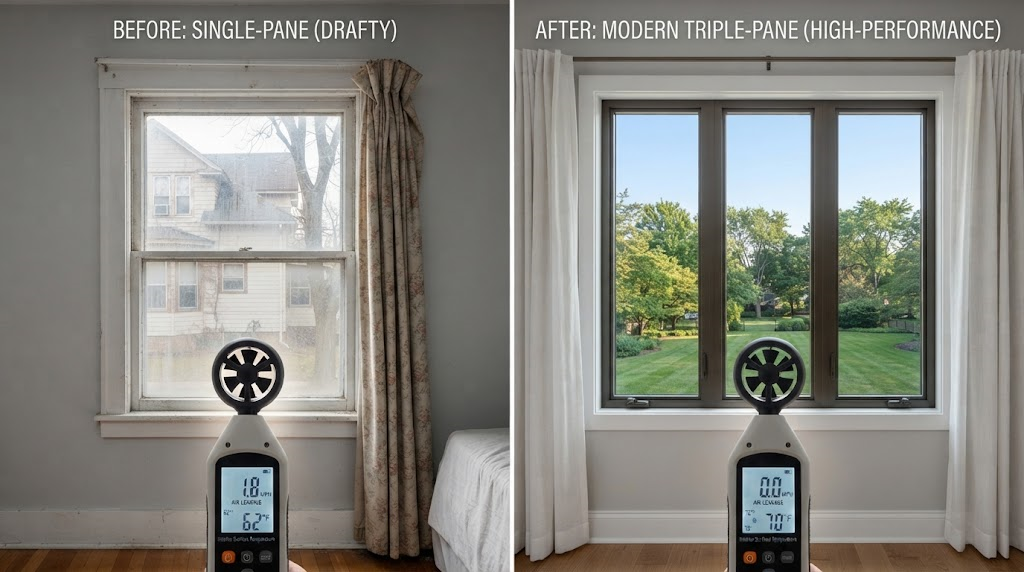
Double-Pane vs. Triple-Pane Glass
Glass configuration affects both cost and performance.
Double-Pane Windows
Two panes of glass are separated by an insulating space.
This is common in modern residential windows.
Triple-Pane Windows
Triple-pane units contain three layers of glass.
They can provide improved thermal and acoustic performance but cost more.
Whether the extra expense is worthwhile depends on:
- Climate
- Energy costs
- Noise exposure
- Home efficiency goals
- Budget
A homeowner in a severe cold climate may evaluate triple-pane windows differently from someone living in a moderate climate.
Energy-Efficient Window Features
Modern windows may include several energy-related features.
These can raise purchase price but may improve performance.
Low-E Glass
Low-emissivity coatings help control heat transfer and solar radiation.
Different coatings are designed for different climates.
Gas Fills
Some insulated glass units contain argon or other gases between panes.
These gases can reduce heat transfer compared with ordinary air.
Warm-Edge Spacers
Spacers separate panes inside insulated glass.
Improved spacer technology can reduce heat transfer around the edge of the glass.
Improved Frame Insulation
Some frame designs contain insulated chambers or thermal breaks.
When comparing products, look at the whole-window performance rather than one marketing feature.
Understanding U-Factor and Solar Heat Gain
Energy performance labels contain several measurements.
Two of the most useful are U-factor and Solar Heat Gain Coefficient.
U-Factor
U-factor measures heat transfer through the window.
Lower values generally indicate better insulating performance.
Solar Heat Gain Coefficient
SHGC measures how much solar heat passes through the window.
A lower or higher value may be desirable depending on climate and window orientation.
Homes in hot climates may benefit from reducing solar heat gain, while some cold-climate homes may strategically benefit from sunlight during winter.
Does Replacing Windows Lower Energy Bills?
Potentially, but the size of the savings depends on the condition of the old windows and the efficiency of the home.
Replacing extremely inefficient or damaged windows may provide a noticeable improvement.
However, homeowners should be cautious about claims that new windows will automatically generate enormous energy savings.
Total home energy use also depends on:
- Insulation
- Air sealing
- HVAC efficiency
- Ductwork
- Climate
- Thermostat settings
- Home size
Window replacement may be one component of a larger efficiency strategy.
Repair or Replace?
Not every window problem requires complete replacement.
Sometimes repairs make more financial sense.
Potentially repairable problems include:
- Damaged hardware
- Worn weatherstripping
- Minor air leaks
- Broken locks
- Small areas of trim damage
Replacement may be more appropriate when:
- Frames are rotting
- Glass seals have repeatedly failed
- Windows no longer operate correctly
- Water intrusion is significant
- Structural damage exists
- Units are extremely inefficient
A qualified contractor can help identify whether the window itself or the surrounding installation is the real problem.
Hidden Costs Homeowners Should Consider
The quoted window price may not represent the complete project cost.
Ask whether the estimate includes additional work.
Disposal Fees
Old windows must be removed from the property.
Some contractors include disposal, while others charge separately.
Interior Trim
Removing windows can damage existing trim.
Replacement or repainting may cost extra.
Exterior Repairs
Siding, stucco, brick, or exterior trim may require modification or repair.
Rotten Framing
Water damage sometimes becomes visible only after the existing window is removed.
Repairing rotted wood can increase the final bill.
Permit Costs
Permit requirements depend on local codes and the scope of the project.
Custom Windows Cost More
Standard window sizes are generally easier to source and install.
Custom windows are manufactured for specific openings.
They may be necessary in:
- Historic homes
- Architect-designed properties
- Older houses with irregular openings
- Luxury renovations
Custom shapes such as arches, circles, and oversized units can significantly increase project costs.
Geographic Location Matters
Window replacement pricing differs across the United States.
Labor costs, climate requirements, building codes, contractor availability, and product demand vary by region.
For example, homes in hurricane-prone areas may require impact-rated windows.
These products can cost considerably more than standard residential windows.
Cold-weather regions may prioritize high-performance insulated units.
Location-specific requirements can move your project above or below national averages.
Impact-Resistant Windows
Homes in areas exposed to hurricanes or severe storms may benefit from impact-resistant windows.
These windows use stronger glass assemblies designed to resist flying debris.
They are more expensive than conventional windows.
However, they can provide benefits such as:
- Storm protection
- Security
- Noise reduction
- Potential insurance advantages in some markets
Homeowners should verify local code requirements before selecting products.
Window Replacement and Home Value
New windows can improve curb appeal and make an older property feel better maintained.
Buyers may appreciate:
- Modern appearance
- Easier operation
- Better insulation
- Reduced drafts
- Improved noise control
However, homeowners should not assume they will recover every dollar spent.
The return depends on housing market conditions, project quality, window type, and the condition of the windows being replaced.
How to Compare Window Replacement Quotes
Do not compare only the final price.
Request detailed written estimates.
Each quote should identify:
- Manufacturer
- Product line
- Frame material
- Glass package
- Number of windows
- Window sizes
- Installation method
- Labor
- Disposal
- Trim work
- Warranty
- Payment schedule
If one quote is dramatically cheaper, determine what is missing.
Installation Quality Can Matter as Much as the Window
A premium window installed incorrectly can perform poorly.
Potential installation problems include:
- Water leaks
- Drafts
- Poor operation
- Condensation
- Frame distortion
- Insulation gaps
Choose installers based on credentials, experience, reputation, and workmanship rather than price alone.
Ask who actually performs the installation.
Some companies use employees, while others use subcontractors.
Both can produce excellent work, but responsibility should be clear.
Window Warranties
Window warranties vary significantly.
They may include separate coverage for:
- Frames
- Glass
- Hardware
- Finish
- Installation labor
A “lifetime warranty” does not necessarily mean everything is covered forever.
Read the actual warranty terms.
Ask whether coverage transfers to a future homeowner.
How to Budget for Window Replacement
Start by identifying which windows genuinely need replacement.
You may not have to replace every window at once.
Prioritize windows with:
- Rot
- Water leakage
- Broken seals
- Severe drafts
- Poor operation
- Significant damage
Then obtain several estimates.
Maintain a contingency budget for hidden damage discovered during removal.
Older homes may be more likely to reveal unexpected framing or moisture problems.
Is It Cheaper to Replace All Windows at Once?
Sometimes.
Larger projects may create efficiencies in:
- Delivery
- Labor
- Setup
- Disposal
Contractors may also offer volume pricing.
However, replacing every window only makes sense if the work is actually needed and fits your budget.
Do not replace functional windows solely to qualify for a package discount.
Best Time of Year to Replace Windows
Windows can be replaced throughout much of the year.
Spring and fall are popular because temperatures are moderate.
However, contractors may be busier during these seasons.
Winter installation may still be possible depending on climate and weather conditions.
Scheduling during a contractor’s slower period may occasionally provide better availability.
Red Flags When Hiring a Window Contractor
Be cautious if a company:
- Uses extreme high-pressure sales tactics
- Refuses to provide written specifications
- Demands full payment upfront
- Cannot provide licensing information where required
- Makes unrealistic energy-saving guarantees
- Avoids discussing installation methods
- Offers unclear warranties
A reputable contractor should be comfortable explaining the product, installation process, costs, and limitations.
Questions to Ask Before Signing
Ask potential contractors:
- What is included in the total price?
- Is this insert or full-frame replacement?
- What exact window model will you install?
- Who performs the installation?
- Are permits included?
- How is water flashing handled?
- What happens if rotten framing is discovered?
- Who handles interior and exterior trim?
- What warranties apply?
- How long will installation take?
- What is the payment schedule?
Detailed answers reduce surprises later.
Frequently Asked Questions
What is the nation’s average cost of window replacement?
National averages provide a general benchmark, but actual prices vary significantly based on frame material, window size, style, glass package, labor, installation method, and geographic location.
How much does it cost to replace one window?
The price can range widely. Standard vinyl replacements may cost substantially less than custom wood, fiberglass, bay, bow, or impact-resistant windows.
Why are replacement windows so expensive?
The total price includes more than glass. It may include engineered frames, insulated glass, hardware, manufacturing, shipping, labor, flashing, trim work, disposal, and warranties.
Are vinyl windows cheaper than wood?
Vinyl windows are generally more affordable than comparable wood windows, although quality and pricing vary by manufacturer.
Is it worth replacing old windows?
Replacement may be worthwhile when windows are severely damaged, inefficient, difficult to operate, leaking, or deteriorating. Functional windows may only require repair.
How long do replacement windows last?
Lifespan varies based on frame material, product quality, installation, climate, exposure, and maintenance.
Should I replace windows before selling my house?
It depends on their condition and the local market. Severely damaged windows may concern buyers, while replacing functional windows shortly before selling may not always provide a full financial return.
Can replacement windows reduce outside noise?
Modern insulated windows can reduce some exterior noise. Specialized laminated glass and other acoustic products can provide greater noise reduction.
Do I need permits to replace windows?
Permit requirements differ by city and state. Ask your contractor or local building authority before beginning work.
How many window estimates should I get?
Comparing several detailed estimates is usually useful because product specifications, installation methods, warranties, and pricing can differ substantially.
Conclusion
The nation’s average cost of window replacement is useful for building an initial budget, but it should never be treated as the exact amount your project will cost.
Window pricing is highly variable.
A basic vinyl insert replacement and a custom full-frame wood window are fundamentally different projects, even if the openings appear similar.
Start by evaluating why your existing windows need attention. Determine whether repair is possible before committing to full replacement.
If replacement is necessary, compare multiple detailed quotes and evaluate frame material, glass performance, installation method, warranties, and contractor experience.
Do not make the decision based on the lowest price alone.
Installation quality plays a major role in how well a window performs. A poorly installed premium window can create more problems than a properly installed mid-range product.
Most importantly, look at window replacement as part of the home’s overall performance.
Insulation, air sealing, HVAC equipment, roof condition, and building envelope quality all influence comfort and energy use.
With realistic expectations and careful contractor selection, replacement windows can improve appearance, comfort, operation, and long-term home performance without turning the project into an unnecessary financial burden.

Written by Twastia Editorial Team
Twastia Editorial Team shares practical insights about website design, SEO services, Google Ads, content marketing, social media, conversion rate optimization, and digital marketing strategy.
Last updated: Oct 8, 2026
Related posts from Twastia
Explore more useful articles from twastia.com about digital marketing, SEO, websites, ads, content, and growth strategy.