Enameled Cast Iron Dutch Oven: Complete Buying & Cooking Guide
A great meal does not always require expensive ingredients or complicated cooking techniques. Sometimes, the right cookware makes the biggest […]
A great meal does not always require expensive ingredients or complicated cooking techniques. Sometimes, the right cookware makes the biggest difference. Whether you are preparing homemade soup, tender pot roast, fresh sourdough bread, or a comforting family dinner, your cooking pot plays an important role in the results.
An Enameled Cast Iron Dutch Oven is one of the most versatile additions to a modern American kitchen. It combines the excellent heat retention of traditional cast iron with a smooth enamel coating that makes everyday cooking and cleaning more convenient.
Unlike some specialized cooking tools, a Dutch oven handles many different recipes. You can brown meat, simmer sauces, slow-cook stews, and bake bread using the same pot.
But what makes enameled cast iron different from other cookware? How do you choose the correct size, and what should you know before purchasing one?
This complete guide explores the benefits, features, cooking methods, cleaning techniques, and common mistakes associated with enameled cast iron Dutch ovens. It also explains how to choose a practical model for your kitchen.
What Is an Enameled Cast Iron Dutch Oven?
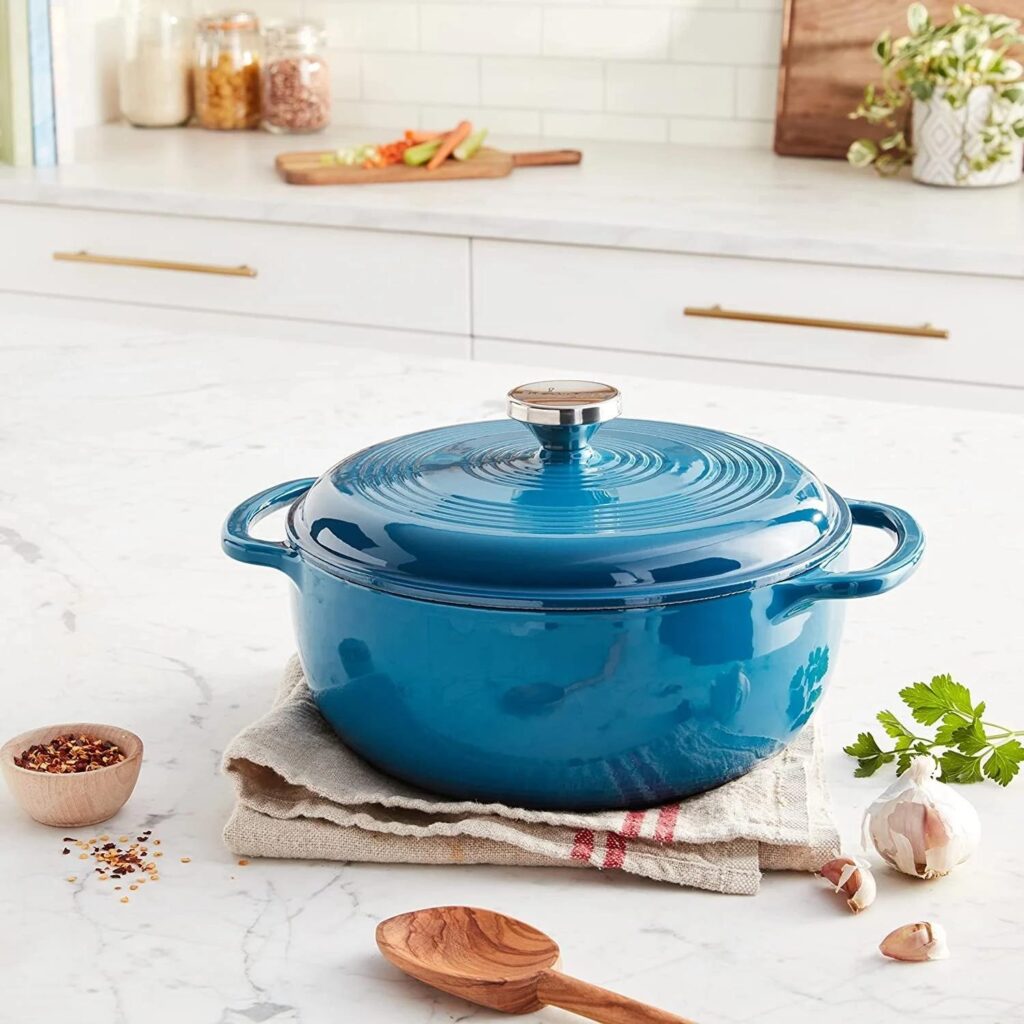
An enameled cast iron Dutch oven is a heavy cooking pot made from cast iron and covered with a protective enamel coating. It usually features thick walls, a substantial base, sturdy handles, and a fitted lid.
The cast iron helps retain heat, while the enamel creates a smooth, relatively non-reactive cooking surface.
Unlike traditional bare cast iron, enameled cast iron does not require routine seasoning of its coated cooking surface.
How Does It Work?
Cast iron absorbs heat and retains it effectively, allowing the pot to maintain relatively steady cooking temperatures.
This makes it especially useful for recipes that require consistent simmering or extended cooking periods.
The lid helps reduce moisture loss, making Dutch ovens excellent for braising meat and preparing slow-cooked meals.
Meanwhile, the enamel surface allows you to cook acidic ingredients such as tomatoes, vinegar, and wine without the same concerns associated with exposed iron.
Why Choose an Enameled Cast Iron Dutch Oven?
The popularity of enameled cast iron cookware comes from its combination of cooking performance, convenience, and attractive design.
1. Excellent Heat Retention
One of the greatest advantages of cast iron is its ability to hold heat after reaching the desired temperature.
This helps maintain a steady simmer when preparing soups, beans, sauces, and braised dishes.
It also makes Dutch ovens useful for cooking meals that move between the stovetop and oven.
Although cast iron retains heat well, it still benefits from gradual preheating and careful temperature control.
2. Versatility for Different Recipes
An oven-safe Dutch oven can replace several specialized cooking pots.
Common applications include:
- Preparing chicken soup and vegetable stew
- Braising beef, lamb, and other meats
- Baking homemade artisan bread
- Simmering chili and tomato-based sauces
- Cooking beans and lentils
- Preparing one-pot pasta dishes
- Roasting vegetables and poultry
This versatility is especially helpful for home cooks who want practical cookware without filling every cabinet.
3. No Traditional Seasoning Required
Bare cast iron cookware relies on a maintained seasoning layer for protection and cooking performance.
Enameled cast iron has a protective coating, so you do not need to season its coated surface before preparing meals.
Simply follow the manufacturer’s first-use cleaning instructions and begin cooking.
4. Attractive Kitchen Design
Enameled Dutch ovens are available in numerous colors and finishes.
They can complement contemporary, farmhouse, traditional, and minimalist kitchen designs.
Many models also look attractive enough to serve meals directly at the dining table.
Always use a suitable trivet because the pot remains hot after cooking.
Enameled Cast Iron vs. Traditional Cast Iron
Both cookware types offer excellent heat retention, but they differ in maintenance and cooking applications.
Enameled Cast Iron
Enameled cast iron features a protective coating that minimizes direct contact between food and the underlying iron.
It is particularly convenient for acidic recipes, long-simmered sauces, and cooks who prefer straightforward cleaning.
However, the enamel can chip or become damaged if cookware is dropped, overheated, or mishandled.
Traditional Cast Iron
Uncoated cast iron offers durability and versatility, particularly for high-temperature cooking when used appropriately.
It generally requires maintaining its seasoning layer and careful drying to prevent rust.
Some acidic recipes may affect the seasoning or develop metallic flavors when cooked in exposed iron for extended periods.
For everyday soups, braises, and tomato-based recipes, enameled cast iron is often the more convenient choice.
How to Choose the Best Enameled Cast Iron Dutch Oven
Choosing the right Dutch oven involves more than selecting an attractive color.
Size, weight, construction, cooking compatibility, and lid design all influence everyday usability.
Consider the Right Capacity
Dutch ovens come in different sizes, from compact pots for smaller meals to larger models designed for family cooking.
A 3-quart Dutch oven may suit smaller households, while a 5-quart model provides useful versatility for many everyday recipes.
Larger models can accommodate bigger roasts and batch cooking but require additional storage space.
Is a 5-Quart Dutch Oven a Good Size?
A 5-quart Dutch oven offers a practical balance between cooking capacity and manageable kitchen storage.
It can accommodate many family-style dishes, including chili, casseroles, soups, and braised meats.
The actual number of servings depends on the recipe, ingredient volume, and required cooking space.
For households preparing regular one-pot meals, this size is often worth considering.
Examine the Lid Design
A well-fitting lid helps retain moisture during cooking.
Some lids have internal raised patterns intended to redirect condensation toward the food.
Other designs use smooth undersides and rely on ordinary condensation.
Both designs can work well, so focus on the overall fit, construction quality, and compatibility with your recipes.
Check Stovetop and Oven Compatibility
Not every enameled Dutch oven has the same maximum oven temperature.
Check the manufacturer’s instructions, especially when baking bread or using high-temperature recipes.
Also verify that the cookware supports your stove, whether gas, electric, ceramic glass, or induction.
Evaluate Weight and Handles
Cast iron cookware is naturally heavy.
Choose a model with handles large enough to grip securely while wearing oven mitts.
Remember that the pot becomes considerably heavier when filled with food or liquid.
A Closer Look at the iMarku 5-Quart Dutch Oven
For buyers researching a practical, visually distinctive cooking pot, the Enameled Cast Iron Dutch Oven from iMarku provides an interesting example.
According to the manufacturer’s product description, this model combines a 5-quart capacity with a square-shaped cooking design.
Distinctive Square Construction
Unlike conventional round Dutch ovens, the iMarku model uses a square silhouette with a comparatively broad cooking base.
The manufacturer describes this design as providing additional space for browning and preparing different ingredients.
This shape may appeal to cooks who frequently prepare one-pot meals, meat dishes, or homemade bread.
Enamel Finish and Color Options
The product features a multi-layer enamel coating and a light-colored interior that makes it easier to observe food while cooking.
The manufacturer lists blue, red, and orange color options.
Its stainless steel lid knob and wide handles complement the pot’s distinctive design.
Cooking Compatibility
According to iMarku, the Dutch oven is compatible with gas, electric, ceramic, and induction stovetops.
The manufacturer also specifies an oven temperature limit of 550°F.
This higher temperature rating can be useful for certain bread-baking recipes, provided all product instructions are followed.
The listed weight is 16.9 pounds, so buyers should consider handling and storage requirements.
As with any cookware purchase, confirm the current specifications, warranty terms, and product availability before ordering.
Best Foods to Cook in an Enameled Cast Iron Dutch Oven
The versatility of Dutch oven cooking allows you to prepare everything from simple weeknight meals to more elaborate weekend dishes.
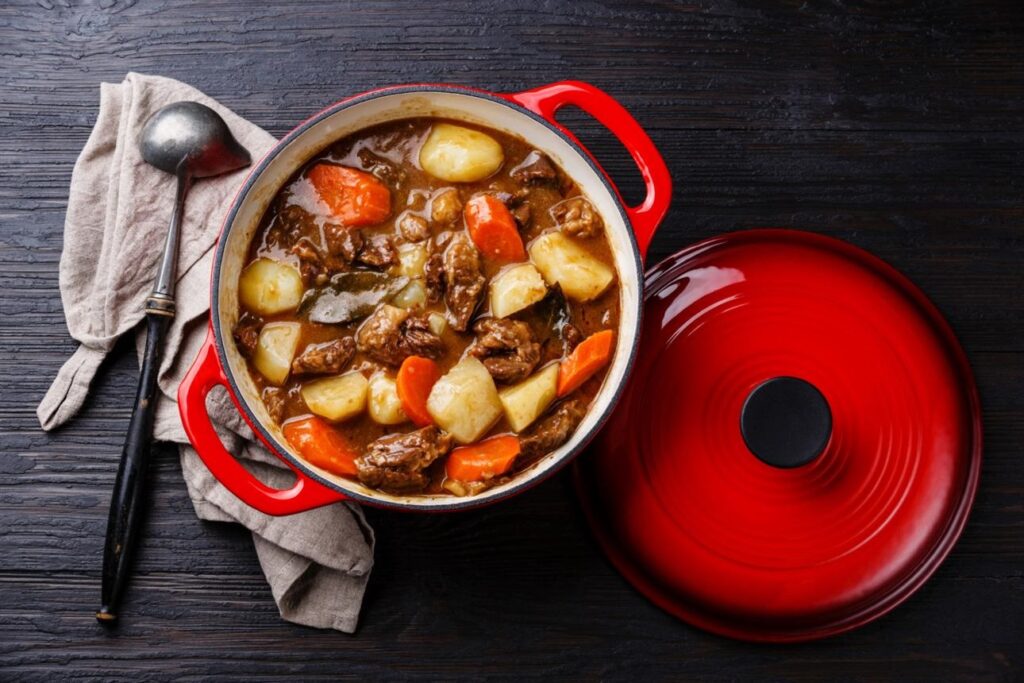
Slow-Cooked Beef Stew
Beef stew is a classic Dutch oven recipe.
Start by browning the meat in small batches, then add vegetables, broth, and seasonings.
Cover the pot and simmer gently until the meat becomes tender.
The heavy construction helps maintain consistent cooking conditions throughout the process.
Homemade Sourdough Bread
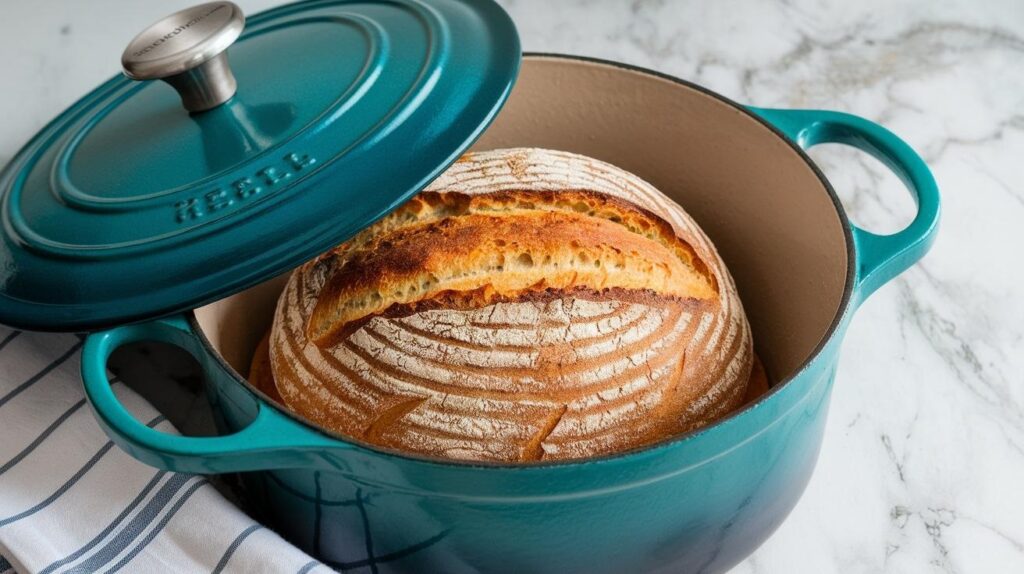
An enameled Dutch oven can create a useful baking environment for artisan bread.
The covered pot traps moisture released by the dough during the early baking stages.
This can help support oven spring and crust development.
However, not every enameled Dutch oven should be preheated empty. Follow the cookware manufacturer’s guidance and use a bread recipe compatible with its temperature limits.
One-Pot Chicken and Rice
Chicken and rice is an excellent choice for family dinners.
Brown seasoned chicken, add rice and suitable cooking liquid, and finish according to a tested recipe.
The lid helps retain moisture while the ingredients cook together.
Homemade Tomato Sauce
The enamel surface makes Dutch ovens suitable for simmering acidic ingredients.
This is useful when preparing marinara sauce, tomato-based chili, or wine-braised dishes.
A gradual simmer encourages flavors to develop without requiring constant high heat.
Cooking Tips for Better Results
Good cooking techniques help you get the most from your enameled cast iron cookware.
Preheat Gradually
Avoid placing an empty Dutch oven over intense heat.
Instead, follow the manufacturer’s instructions and warm the pot gradually, typically using low or medium heat with an appropriate amount of oil or cooking liquid.
Cast iron retains heat effectively, so excessive heat is often unnecessary.
Use Suitable Cooking Utensils
Wooden, silicone, and heat-resistant nylon utensils are generally gentler on enamel surfaces than metal tools.
Avoid cutting food directly inside the pot or scraping the coating with sharp objects.
Protecting the enamel helps maintain its appearance and usability.
Avoid Sudden Temperature Changes
Thermal shock occurs when cookware experiences an abrupt temperature change.
For example, pouring cold water into a very hot Dutch oven may damage the enamel.
Allow the pot to cool naturally before washing, and avoid moving it directly from refrigeration to a hot burner.
Manage Cooking Moisture
Dutch ovens retain moisture effectively, but different recipes require different amounts of liquid.
For braised dishes, the food may need only partial immersion.
For soups and stews, additional liquid may be appropriate.
Follow recipe instructions rather than automatically filling the pot.
How to Clean an Enameled Cast Iron Dutch Oven
Proper cleaning helps preserve the enamel coating and maintain cooking performance.
Fortunately, routine maintenance is relatively straightforward.
Step 1: Allow the Pot to Cool
Never place extremely hot enameled cookware directly into cold water.
Let it cool until it is safe to handle.
This reduces the risk of damage from rapid temperature changes.
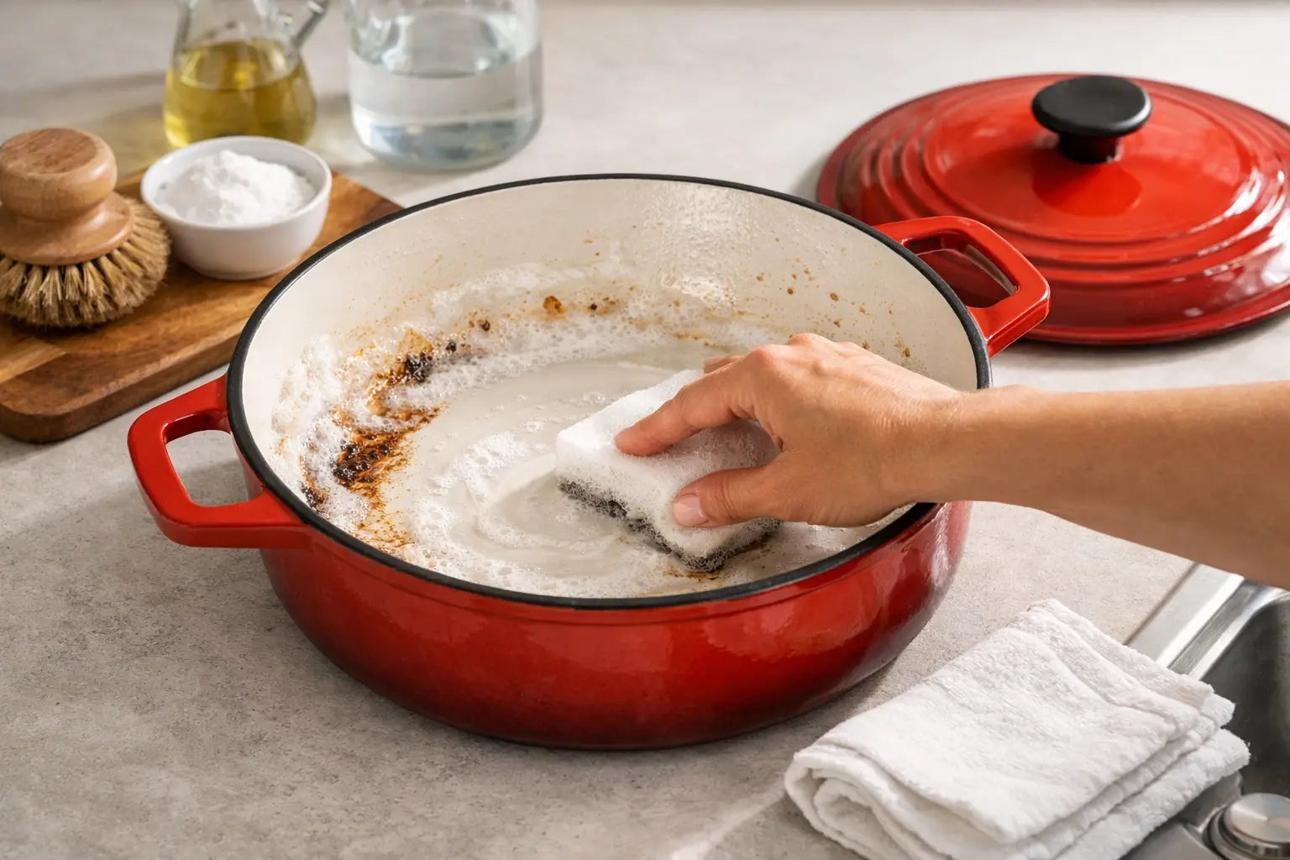
Step 2: Wash With Mild Soap
Use warm water, a soft sponge, and gentle dish soap.
Clean the interior, exterior, lid, and handles carefully.
Avoid harsh abrasive pads or steel wool that could scratch the finish.
Step 3: Remove Stubborn Food Residue
If food sticks to the bottom, fill the cooled pot with warm water and allow it to soak.
For persistent residue, follow the manufacturer’s approved cleaning method.
Avoid aggressive scraping, which can damage the enamel.
Step 4: Dry Before Storage
Dry the cookware thoroughly with a soft towel.
Place it in a clean, dry storage area and protect the enamel from contact with other heavy cookware.
Hand washing is generally a good choice for preserving the finish, even when a particular manufacturer identifies its product as dishwasher-safe.
Common Dutch Oven Mistakes to Avoid
Even high-quality cookware can experience premature damage when used incorrectly.
Using Excessive Heat
High burner temperatures can scorch food, cause sticking, and place unnecessary stress on the enamel.
Start with moderate heat and adjust gradually.
Sliding the Pot Across Glass Cooktops
Heavy cast iron can scratch some cooking surfaces when dragged.
Lift the Dutch oven carefully whenever repositioning it.
Overfilling the Cooking Pot
Overfilling increases the risk of spills and makes stirring difficult.
Leave sufficient room for bubbling, expansion, and safe handling.
Ignoring Chipped Interior Enamel
Inspect the cooking surface periodically.
If enamel chips on a food-contact area, discontinue cooking with the pot and contact the manufacturer for product-specific guidance.
Frequently Asked Questions About Enameled Cast Iron Dutch Ovens
1. What is an enameled cast iron Dutch oven best used for?
It is particularly useful for soups, stews, braised meats, chili, bread baking, and one-pot meals. Its heat retention and fitted lid support recipes requiring steady cooking temperatures.
2. Does an enameled Dutch oven need seasoning?
No. The enamel coating eliminates the traditional seasoning requirement associated with bare cast iron cookware.
3. Can you bake sourdough bread in an enameled Dutch oven?
Yes, when the specific cookware is approved for the required baking temperature and method. Always check its instructions before preheating.
4. Can an enameled cast iron Dutch oven be used on induction?
Many models work on induction cooktops because cast iron is magnetic. Always verify compatibility for the specific product.
5. Is a 5-quart Dutch oven large enough for a family?
A 5-quart model is suitable for many everyday family meals. Actual capacity depends on the recipe, serving size, and ingredients.
6. Can you cook acidic foods in enameled cast iron?
Yes. Intact enamel provides a relatively non-reactive surface suitable for tomato sauces, wine-based dishes, and other acidic recipes.
7. Is enameled cast iron dishwasher-safe?
Dishwasher compatibility varies by manufacturer. Many brands recommend hand washing because repeated dishwasher use can dull the finish.
8. How long does an enameled cast iron Dutch oven last?
A well-made Dutch oven can provide many years of service when used and maintained correctly. Its lifespan depends on construction quality, enamel condition, and handling.
Conclusion
An Enameled Cast Iron Dutch Oven is more than an attractive cooking pot. It is a practical kitchen essential that supports a wide variety of recipes, from everyday soups to slow-braised dinners and fresh homemade bread.
Its combination of heat retention, versatile cooking applications, and an easy-to-maintain enamel surface makes it particularly appealing for American home cooks.
When choosing a Dutch oven, consider capacity, weight, lid design, stovetop compatibility, oven-temperature limits, and ease of cleaning. A 5-quart model can offer a useful balance for many households.
With careful handling, gradual temperature changes, and consistent cleaning, your Dutch oven can remain a valuable part of your kitchen for years.
Whether you are learning new cooking techniques or upgrading your existing cookware, selecting the right enameled cast iron Dutch oven can help make home cooking more enjoyable, flexible, and rewarding.

Written by Twastia Editorial Team
Twastia Editorial Team shares practical insights about website design, SEO services, Google Ads, content marketing, social media, conversion rate optimization, and digital marketing strategy.
Last updated: Oct 26, 2026
Related posts from Twastia
Explore more useful articles from twastia.com about digital marketing, SEO, websites, ads, content, and growth strategy.