Filing a Property Damage Claim After Hurricane Ian: 2026 Guide
Hurricane Ian changed lives across Florida when it struck the state’s southwest coast on September 28, 2022. Its destructive winds, […]

Hurricane Ian changed lives across Florida when it struck the state’s southwest coast on September 28, 2022. Its destructive winds, storm surge, and flooding damaged houses, businesses, roofs, and personal belongings. Years later, some property owners are still dealing with repairs, disputed estimates, or unresolved insurance questions.
Filing a property damage claim after Hurricane Ian requires more than describing what happened. Homeowners must understand which policy covers each loss, what evidence supports their request, and which legal deadlines apply. Those deadlines are particularly important in 2026: the ordinary notice windows for starting Ian-related Florida property insurance claims have generally expired.
If you reported damage on time but disagree with a payment or denial, however, separate options may deserve review. This guide explains the claims process, documentation, flood-versus-wind coverage, common disputes, and how to seek help without assuming that an older claim remains eligible.
How Hurricane Ian Affected Florida Properties

Ian made landfall near Cayo Costa as a Category 4 hurricane, bringing destructive winds and severe coastal flooding. Storm impacts spread well beyond the immediate landfall area, affecting communities across Florida.
For insurance purposes, identifying the cause of each loss matters. A roof torn open by wind raises different coverage questions from water entering a house because of rising floodwaters. Some homes experienced both.
Homeowners may still encounter disagreements over roof replacement, damaged drywall, flooring, electrical systems, mold-related remediation, and personal belongings. An insurance claim must be evaluated against the actual policy, not a general assumption that every hurricane-related loss is covered.
What Types of Damage May Be Covered?
Wind, Roof, and Rain Damage
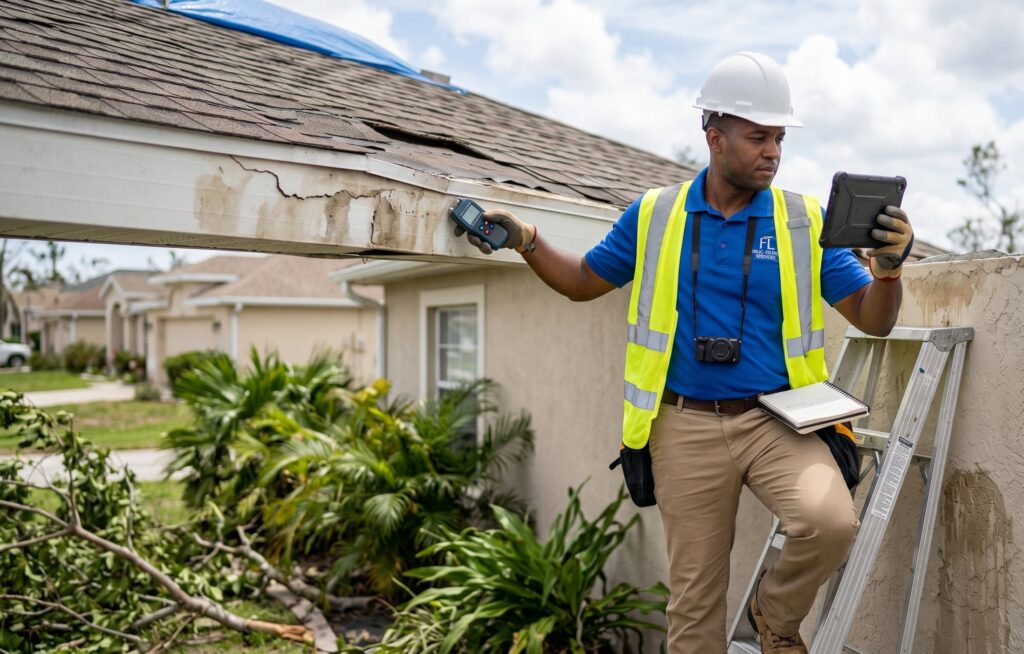
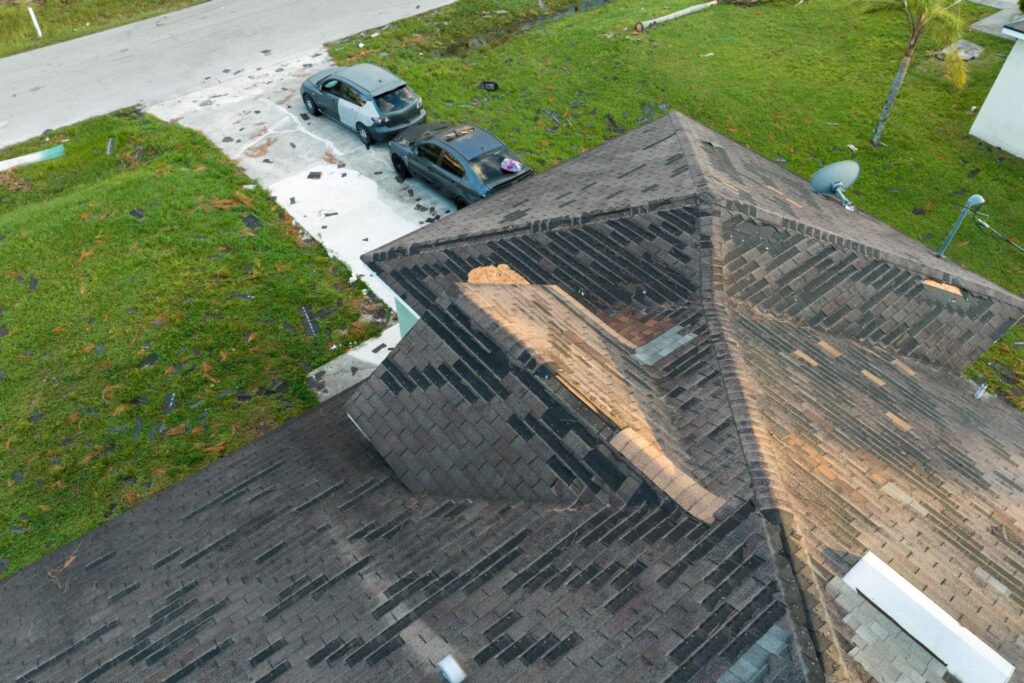
A homeowners policy may cover wind damage to shingles, siding, windows, and other insured structures, subject to exclusions and deductibles. Rain entering through an opening created by a covered wind event may also qualify under applicable policy conditions.
Coverage is not automatic. Insurers may examine maintenance history, prior deterioration, and whether the observed damage resulted from the storm.
Storm Surge and Flooding
Standard homeowners policies generally exclude flood damage from rising water or storm surge. Separate flood coverage, often through the National Flood Insurance Program (NFIP) or a private insurer, addresses qualifying flood losses.
Owners with both policies may need separate claims and adjusters. FEMA distinguishes floodwater entering from ground level from wind-driven rain entering through a storm-damaged roof. Correct documentation helps clarify the cause of loss.
Additional Living Expenses and Personal Property
Some policies cover temporary living expenses when a covered loss makes a home uninhabitable. Limits, eligibility, and documentation requirements vary.
Contents coverage may also apply to damaged furniture, electronics, and other belongings, subject to exclusions, sublimits, and valuation rules. Keep receipts and a detailed inventory rather than assuming the building claim includes every personal item.
Hurricane Ian Claim Deadlines: What Matters in 2026?
This is the most important timing issue for readers researching an older storm.
Original and Supplemental Notice
Florida’s claim-notice law in effect when Ian struck generally provided two years to report an original or reopened property insurance claim and three years to give notice of a supplemental claim. Measured from Ian’s September 28, 2022 Florida landfall, those ordinary windows reached late September 2024 and late September 2025, respectively.
Florida subsequently changed its general notice periods to one year for original or reopened claims and 18 months for supplemental claims. Those newer rules should not simply be applied retroactively to Ian-era policies.
Lawsuit and Other Deadlines
A claim-notice deadline is different from the limitation period for suing an insurer over a timely reported claim. Florida law has provided a five-year limitation period for certain property insurance contract lawsuits, measured from the loss date, but the applicable policy, claim history, statutes, and procedural requirements must be examined individually.
Do not assume an existing dispute can safely wait until 2027 or that every late claim qualifies for an exception. Flood policies have their own proof-of-loss, appeal, and litigation rules. Seek Florida legal advice promptly if an Ian claim remains open, disputed, or unpaid.
Step-by-Step: How the Property Damage Claims Process Works
These steps describe how a timely hurricane claim should be documented and how owners with existing Ian claims can organize their records today.
Step 1: Review the Policy in Force During the Storm
Find the declarations page and full policy applicable to September 2022. Identify your insurer, coverage limits, hurricane deductible, flood policy, endorsements, and exclusions.
If your insurer has changed since then, the relevant company may be the carrier that insured the property at the time of loss.
Step 2: Collect Photos, Videos, and Inventories
Gather photographs of damaged rooms, roofing, exterior walls, and belongings. Older date-stamped images, inspection reports, repair invoices, and correspondence may be particularly valuable for a 2022 loss.
List affected items with descriptions, purchase records where available, and approximate replacement costs. Preserve original digital files when possible.
Step 3: Preserve Your Claim Communication History
Collect the claim number, initial notice confirmation, adjuster reports, emails, letters, payment explanations, and any prior supplemental submissions.
Create a dated timeline showing when you notified the insurer, who inspected the property, what decisions were made, and whether you challenged an estimate. Written records help clarify what has already been submitted.
Step 4: Document Reasonable Emergency Repairs
After a storm, owners are generally expected to take reasonable steps to prevent additional damage when safe. Temporary roof coverings, water removal, or securing openings may be necessary.
Keep receipts, before-and-after photographs, and contractor invoices. Do not undertake hazardous roof work yourself or discard evidence unnecessarily. For a historical claim, gather documentation of repairs already performed.
Step 5: Review the Insurance Adjuster’s Estimate
The insurer’s adjuster assesses damage and prepares an estimate under the policy. Review the described repairs, quantities, pricing, deductibles, depreciation, and exclusions.
Check whether the estimate addresses all documented damage. A missed room or an inaccurate roof measurement can significantly affect the proposed payment.
Step 6: Obtain an Independent Repair Assessment
If you question the scope or cost of repairs, a qualified, appropriately licensed contractor may prepare an itemized estimate. Complex structural or causation questions may call for an engineer or another specialist.
Compare findings objectively. An independent estimate supports discussion but does not by itself prove coverage or require an insurer to pay a particular amount.
Step 7: Request a Written Explanation
If an insurer denies part of a claim or offers less than expected, ask which policy terms and factual findings support its decision.
Respond through a documented channel, attach relevant evidence, and keep copies. Before submitting new information on a 2022 claim, verify whether it constitutes a timely existing submission, an impermissibly late supplemental claim, or another legally distinct request.
Understanding Florida Hurricane Deductibles
A hurricane deductible may differ from the regular deductible used for other losses. Florida policies frequently express it as a percentage of the dwelling’s insured value, rather than a percentage of the amount of damage.
For example, a hypothetical 2% deductible on a home insured for $350,000 equals $7,000. That is an illustration, not a determination of any homeowner’s coverage. Review the declarations page for your actual deductible and any special provisions.
Claims may also involve actual cash value, replacement cost, and recoverable depreciation. These affect when payments are made and what documentation is required to receive additional eligible amounts.
What if an Insurance Claim Was Denied or Underpaid?
A denial does not always mean the insurer acted improperly; coverage may be limited or excluded under the contract. But policyholders can request clarification when findings appear inconsistent with documented damage.
Common disagreements include whether damage came from wind or flood, whether deterioration predated the storm, the scope of roof repairs, and the reasonable cost of replacement materials.
Florida’s Department of Financial Services offers a consumer helpline and a residential property mediation program for eligible disputes. Mediation is generally an informal, nonbinding process; it does not guarantee payment, and NFIP claims are not handled through that state program.
An eligible claim might also involve policy appraisal or litigation, depending on its terms and current procedural status. These routes are not interchangeable, and deadlines remain critical.
When Should You Contact a Hurricane Insurance Claims Lawyer?
Consider speaking with a qualified Florida attorney when a timely filed claim remains unresolved, the insurer disputes the cause of loss, significant damage was excluded, or a proposed settlement is difficult to evaluate.
The Fernandez Firm’s guide to filing a property damage claim after Hurricane Ian describes basic documentation steps and discusses the challenges of insurance disputes for Tampa-area property owners.
That page was originally written before Ian made landfall, so its forecasts and implied timing are historical rather than current. Confirm the firm’s present availability for insurance matters and ask how its attorneys would assess the deadlines and facts of your specific case.
Mistakes That Can Complicate Hurricane Damage Claims
Avoid assuming that a homeowners policy covers storm surge or that submitting photographs automatically satisfies every notice requirement.
Do not throw away important records, accept a settlement without understanding its terms, or sign broad contractor authorizations without reading them. Watch for repair scams and verify contractor licenses where required.
Most importantly, do not confuse discovering additional damage in 2026 with a guaranteed right to reopen a 2022 claim. Ask a qualified professional to review the relevant insurance contract and claim history.
Frequently Asked Questions
Can I File a New Hurricane Ian Claim in 2026?
Ordinary Florida notice periods applicable to Hurricane Ian have generally expired. Limited exceptions or special circumstances may require individual legal review; do not assume late filing is permitted.
Can I Challenge a Claim That Was Reported on Time?
Possibly. A timely reported claim may involve separate dispute, appeal, or litigation rights. The applicable deadlines depend on the insurance contract, insurer decisions, and governing law.
Does Homeowners Insurance Cover Hurricane Flooding?
Usually not. Rising floodwater and storm surge generally require separate flood insurance. Wind-related losses may fall under homeowners coverage, depending on policy terms.
What Is a Supplemental Hurricane Insurance Claim?
It is a request involving additional loss or damage from the same event after the insurer has previously adjusted the claim, or additional repair costs under a previously reported claim. Statutory notice limits apply.
Do I Need an Attorney for an Insurance Dispute?
Not every disagreement requires legal representation. However, an attorney may help interpret deadlines, exclusions, settlement language, and litigation options for a complicated claim.
Where Can Florida Homeowners Get Insurance Help?
The Florida Department of Financial Services provides consumer resources, complaint assistance, and a helpline at 1-877-693-5236. Eligibility for mediation varies by dispute and policy type.
Conclusion: Protect Your Rights With Accurate Records
Filing a property damage claim after Hurricane Ian involved documenting losses, identifying the correct insurance coverage, meeting deadlines, and reviewing the insurer’s determination. For property owners still dealing with Ian-related matters in 2026, the central question is usually not how to start a routine new claim but whether a previously reported claim has any remaining rights or remedies.
Organize your policy documents, preserve correspondence, examine disputed estimates, and obtain prompt advice about applicable deadlines. Careful documentation and informed decisions can help you address unresolved property damage issues without relying on outdated assumptions.

Written by Twastia Editorial Team
Twastia Editorial Team shares practical insights about website design, SEO services, Google Ads, content marketing, social media, conversion rate optimization, and digital marketing strategy.
Last updated: Oct 14, 2026
Related posts from Twastia
Explore more useful articles from twastia.com about digital marketing, SEO, websites, ads, content, and growth strategy.