Master Marble Craftsman: The Art, Skills, and Value of Expert Stonework
Marble has been used for thousands of years to create buildings, monuments, sculptures, flooring, countertops, memorials, and architectural details. Although […]
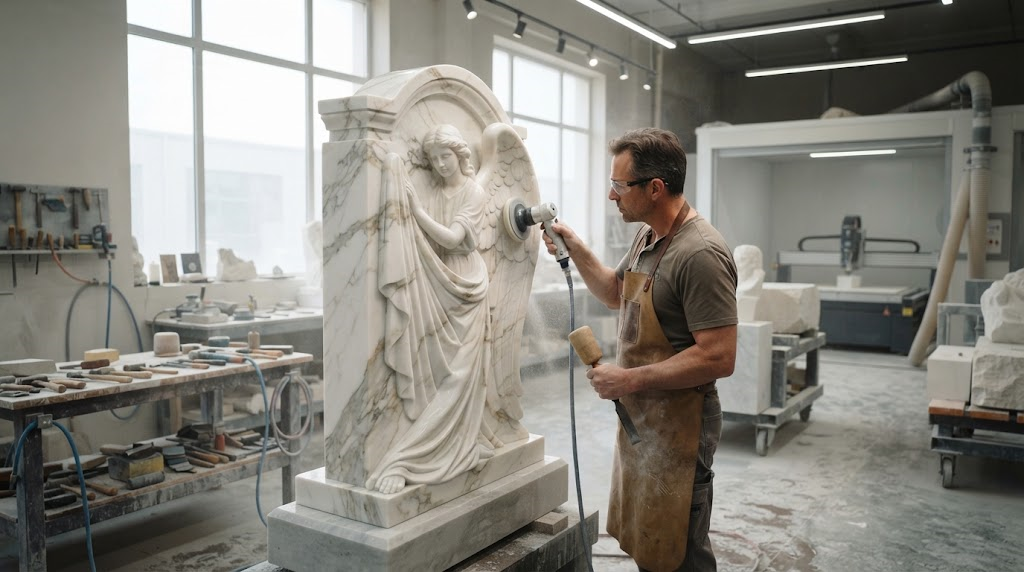
Marble has been used for thousands of years to create buildings, monuments, sculptures, flooring, countertops, memorials, and architectural details. Although modern machinery has made cutting and polishing stone faster, producing exceptional marble work still requires something technology cannot fully replace: skilled craftsmanship.
A master marble craftsman understands not only how to cut and shape natural stone but also how to work with its unique grain, color, strength, imperfections, and structural characteristics.
This expertise can make the difference between ordinary stonework and a finished piece that remains beautiful for generations.
Whether you are considering custom marble for a home, restoration project, monument, architectural feature, or commercial property, understanding the role of a skilled marble artisan can help you make better decisions.
What Is a Master Marble Craftsman?
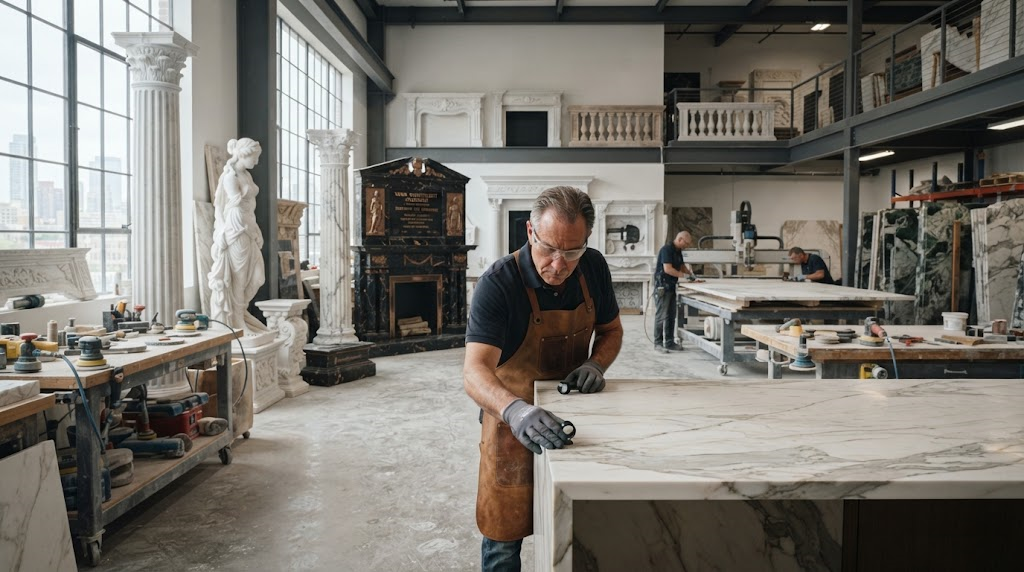
A master marble craftsman is a highly experienced professional who specializes in shaping, fabricating, finishing, installing, repairing, or restoring marble and other natural stones.
The work combines technical knowledge with artistic judgment.
Unlike manufactured materials, no two pieces of natural marble are identical. Every slab contains different veins, patterns, mineral deposits, colors, and structural characteristics.
A skilled craftsman must understand how the stone will react before making a cut.
This requires experience with:
- Stone selection
- Measuring and templating
- Cutting
- Shaping
- Carving
- Edge finishing
- Polishing
- Engraving
- Installation
- Repair
- Restoration
Advanced craftsmen may also create completely custom pieces based on architectural drawings, artistic concepts, photographs, or client specifications.
Why Marble Craftsmanship Still Matters
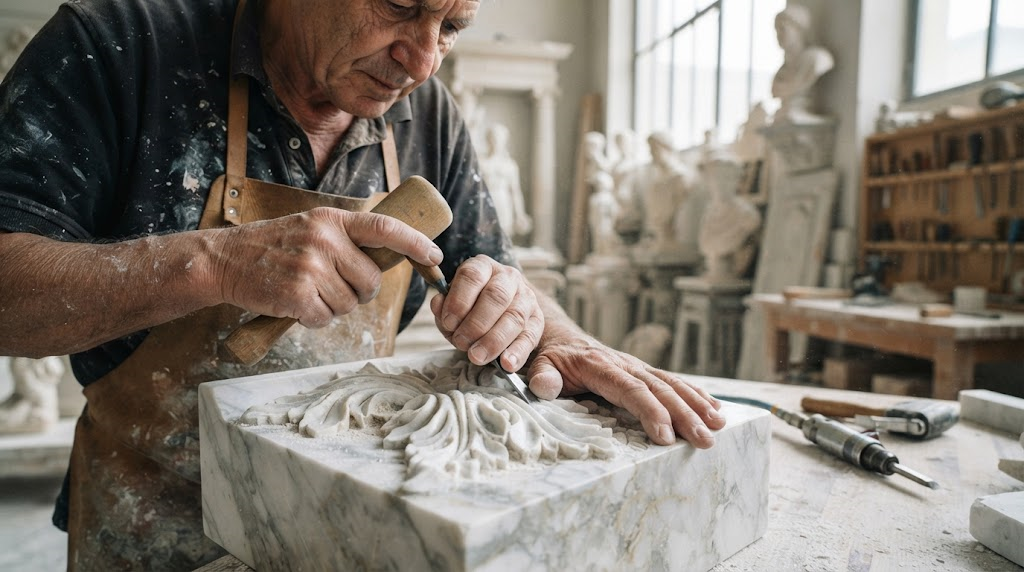
Computer-controlled machinery can cut marble with remarkable accuracy. However, precise machinery does not automatically produce excellent craftsmanship.
Natural stone is unpredictable.
A slab may contain hidden weaknesses, unusual veining, mineral variations, or subtle imperfections that require human judgment.
An experienced stone craftsman understands how to position, cut, join, polish, and install marble while respecting its natural characteristics.
Every Marble Slab Is Different
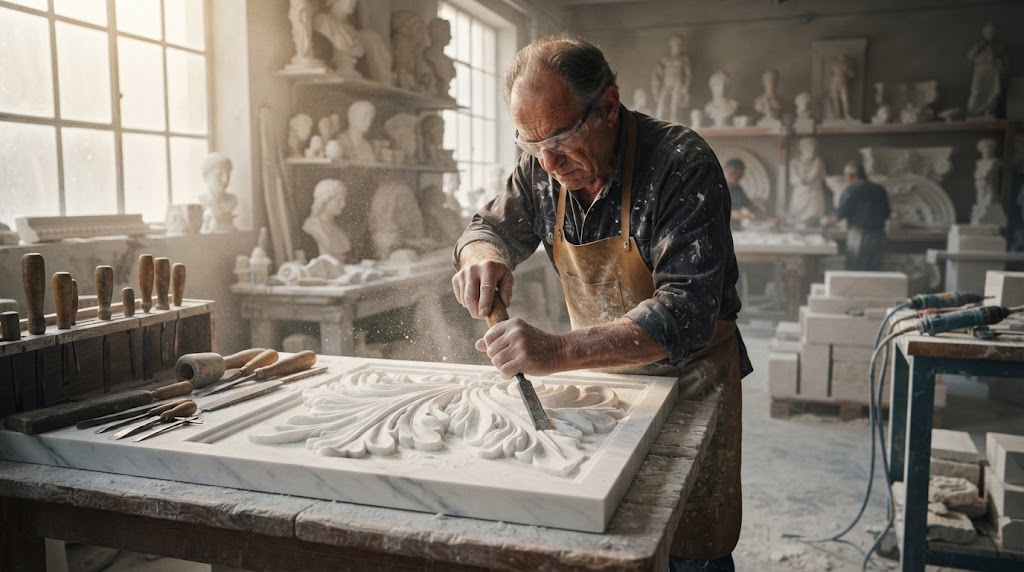
Engineered products are manufactured to be consistent. Marble is not.
A craftsman must decide how the veins should flow across a surface, where cuts should be made, and which areas of a slab should become the most visible parts of the finished project.
For example, when creating a large marble kitchen island, poorly planned cuts can interrupt the natural veining.
Expert planning can create a continuous visual pattern that makes the installation look intentional and luxurious.
Small Details Affect the Final Result
Many details in stonework are difficult to notice individually but become obvious when the project is completed.
These include:
- Joint placement
- Edge consistency
- Surface polishing
- Symmetry
- Vein alignment
- Corner finishing
- Installation accuracy
Master-level craftsmanship focuses heavily on these details.
Skills of an Experienced Marble Craftsman
Becoming highly skilled in marble work requires more than learning how to operate stone-cutting machines.
The profession combines several disciplines.
Understanding Natural Stone
Different varieties of marble behave differently during cutting, carving, polishing, and installation.
A professional marble mason must understand factors such as:
- Density
- Porosity
- Veining
- Mineral composition
- Structural weaknesses
- Surface sensitivity
This knowledge helps prevent unnecessary cracking, chipping, or damage.
Precision Measurement
Stone fabrication often requires extremely precise measurements.
A small measuring error can create major installation problems, especially with countertops, wall panels, staircases, fireplaces, or architectural features.
Experienced craftsmen carefully create templates and verify dimensions before cutting expensive stone.
Hand Finishing
Modern equipment performs much of the heavy cutting, but hand finishing remains important.
Corners, carved details, inscriptions, edges, and complex transitions may require manual tools and experienced hands.
This is particularly important in decorative marble work and restoration projects.
Design Interpretation
Clients and architects may provide sketches, photographs, CAD drawings, or general design ideas.
A skilled craftsman must convert those concepts into something that can actually be produced from stone.
This requires understanding both design and engineering limitations.
Traditional Craftsmanship and Modern Technology
Modern marble workshops are very different from traditional stone yards.
Today, professional fabricators may use advanced equipment such as:
- CNC machines
- Waterjet cutters
- Bridge saws
- Digital templating systems
- Laser measuring tools
- Automated polishing equipment
These technologies increase precision and efficiency.
However, the strongest results usually come from combining technology with skilled human judgment.
Machines can follow measurements accurately, but experienced craftsmen still determine how the stone should be selected, positioned, finished, and installed.
Common Projects Handled by Marble Craftsmen
Professional marble artisans work on a wide range of residential, commercial, decorative, and memorial projects.
Marble Countertops
Kitchen countertops and bathroom vanities are among the most common applications.
Fabrication may involve sink openings, faucet holes, custom edge profiles, backsplashes, seams, and complex layouts.
The craftsman must also consider how natural veining will appear across the finished surface.
Marble Flooring
Large marble floors require accurate cutting and careful installation.
Even minor height differences between tiles can affect appearance and walking comfort.
Luxury flooring installations may also include custom patterns, borders, medallions, or combinations of multiple natural stones.
Fireplaces
A marble fireplace can become a major architectural feature.
Designs range from simple modern surrounds to heavily carved traditional fireplaces.
Custom fabrication allows the stonework to match the architectural style of the room.
Staircases
Marble staircases require precise measurement because each tread and riser must fit correctly.
The installer also needs to consider structural support, slip resistance, edge finishing, and long-term durability.
Marble Bathrooms
Bathrooms may include marble walls, showers, floors, countertops, niches, and decorative details.
Because bathrooms are exposed to moisture and cleaning products, installation quality and proper maintenance become particularly important.
Monuments and Memorials
Stone craftsmanship also plays an important role in memorial work.
A marble monument may include custom shapes, lettering, religious symbols, photographs, decorative carving, or personalized architectural elements.
These projects require both technical skill and careful attention to detail because they are intended to serve as lasting tributes.
Sculptures and Decorative Pieces
Some skilled stone artisans specialize in artistic applications.
These may include:
- Statues
- Columns
- Fountains
- Decorative panels
- Relief carvings
- Custom furniture
- Architectural ornaments
This type of work can require extensive manual carving and finishing.
What Makes Marble Difficult to Work With?
Marble looks strong, but working with it requires care.
One challenge is brittleness.
Although marble can withstand substantial compressive force, thin sections or certain vein structures may crack during fabrication.
Another challenge is surface sensitivity.
Many types of marble contain calcium carbonate, which can react with acidic substances such as vinegar, citrus juice, and some household cleaners.
The material can also scratch or stain if it is not properly maintained.
A professional natural stone specialist understands these limitations and can recommend appropriate fabrication, installation, sealing, and maintenance practices.
Marble Restoration Requires Specialized Skill
Old marble does not always need to be replaced.
Professional marble restoration can often dramatically improve existing stone.
Common restoration services include:
Polishing
Worn marble may lose its original shine.
Professional polishing removes extremely small amounts of material from the surface to restore smoothness and appearance.
Scratch Removal
Light scratches can often be reduced through professional honing and polishing.
Deeper damage may require more extensive work.
Chip Repair
Damaged edges or small chips may sometimes be repaired using specialized materials and finishing techniques.
Stain Treatment
Certain stains can be treated depending on what caused them and how deeply they have penetrated the stone.
Historical Restoration
Historic buildings and monuments require particularly careful treatment.
The objective is often preservation rather than making the stone look completely new.
A skilled craftsman attempts to maintain the original character while repairing deterioration.
Marble Craftsman vs. General Contractor
A general contractor may manage construction projects, but marble fabrication is a specialized trade.
Contractors often coordinate stone professionals rather than performing detailed stone fabrication themselves.
For complex marble work, using a dedicated stone specialist provides access to knowledge about:
- Material selection
- Fabrication
- Finishing
- Stone transportation
- Structural support
- Installation methods
- Surface protection
The more expensive or customized the stone, the more valuable specialized expertise becomes.
How to Choose a Master Marble Craftsman
Selecting the right professional should involve more than comparing prices.
Review Previous Work
Ask to see completed projects similar to yours.
Look closely at:
- Edge quality
- Seams
- Vein alignment
- Polish consistency
- Carving accuracy
- Overall finish
Photographs can reveal a great deal about workmanship.
Ask About Experience
Years in business matter, but relevant experience matters even more.
Someone who primarily installs basic countertops may not be the right choice for an elaborate carved monument or historical restoration.
Ask specifically about projects similar to your own.
Discuss the Stone
A knowledgeable professional should be able to explain the characteristics of the marble you are considering.
They should discuss both benefits and limitations rather than simply trying to make a sale.
Understand the Process
Ask how the project moves from design to installation.
A typical process may include:
- Consultation
- Material selection
- Measurements
- Design approval
- Fabrication
- Finishing
- Transportation
- Installation
- Final inspection
Clear processes usually reduce misunderstandings.
Compare Value, Not Just Price
Marble can be expensive, and poor fabrication may waste valuable material.
Choosing the lowest quote may not always produce the lowest total cost.
Correcting poorly fabricated or installed marble can become significantly more expensive than completing the project properly the first time.
Questions to Ask Before Hiring a Marble Professional
Before committing to a project, consider asking:
- How long have you worked with natural marble?
- Have you completed similar projects?
- Can I see examples?
- Who performs the fabrication?
- Do you provide installation?
- How are seams planned?
- How do you handle unexpected stone defects?
- What finish options are available?
- Does the stone require sealing?
- What maintenance do you recommend?
- What is the estimated project timeline?
- What does the quotation include?
Clear answers can help you compare contractors more intelligently.
Caring for Custom Marble Work
Good craftsmanship helps marble last, but maintenance also matters.
For everyday care, use products specifically designed for natural stone.
Avoid harsh acidic cleaners unless the marble manufacturer or stone professional specifically recommends them.
Clean spills relatively quickly, particularly substances such as:
- Wine
- Coffee
- Lemon juice
- Vinegar
- Tomato sauce
Depending on the marble and application, periodic sealing may also be recommended.
For significant scratching, etching, cracking, or staining, professional restoration is often safer than aggressive DIY treatment.
Is Custom Marble Worth the Investment?
The answer depends on the project.
Marble usually costs more than many manufactured alternatives and requires more maintenance than some engineered materials.
However, it offers characteristics that manufactured surfaces cannot perfectly reproduce.
Every piece is unique.
Natural veining gives marble visual depth and individuality, while skilled fabrication allows it to be adapted to highly customized architectural designs.
For homeowners, architects, designers, and families commissioning memorial work, the value often comes from the combination of natural material and craftsmanship.
Frequently Asked Questions
What does a master marble craftsman do?
A master marble craftsman selects, measures, cuts, shapes, carves, polishes, installs, repairs, and restores marble. Experienced craftsmen may also create completely custom stone pieces.
How long does it take to become a skilled marble craftsman?
There is no universal timeline. Developing advanced skills typically requires years of practical experience working with different stones, tools, fabrication methods, and installation challenges.
Can a marble craftsman repair damaged marble?
Yes. Depending on the damage, professional stone specialists may repair chips, scratches, stains, dull surfaces, damaged joints, or other problems. Severe structural damage may require replacement.
Is marble suitable for kitchen countertops?
Yes, marble is widely used for countertops, but homeowners should understand that it can scratch, stain, and etch more easily than some engineered materials. Proper care is important.
What is the difference between a stonemason and a marble craftsman?
A stonemason may work with many types of natural or manufactured stone, while a marble craftsman specializes heavily in marble fabrication, carving, finishing, and installation. Many professionals perform both roles.
Can marble pieces be custom designed?
Yes. Skilled craftsmen can create custom countertops, monuments, fireplaces, staircases, sculptures, architectural features, and decorative elements based on measurements or design specifications.
How do I know whether marble craftsmanship is high quality?
Look for clean seams, consistent polishing, accurate cuts, well-finished edges, thoughtful vein alignment, precise installation, and attention to small details.
Is handmade marble work better than machine-cut marble?
Not necessarily. Modern machinery provides exceptional precision. The highest-quality projects often combine advanced equipment with experienced human craftsmanship and hand finishing.
Conclusion
Marble craftsmanship sits at the intersection of engineering, design, material science, and traditional artisan skill.
Modern machinery can cut stone faster and more accurately than ever before, but technology does not eliminate the need for experience. Natural marble remains unpredictable, and producing exceptional results requires someone who understands how each piece of stone behaves.
A skilled master marble craftsman knows how to transform raw material into countertops, monuments, fireplaces, floors, staircases, sculptures, and architectural features that are both functional and visually refined.
When choosing a professional, do not evaluate price alone. Examine previous work, relevant experience, fabrication quality, material knowledge, installation methods, and attention to detail.
Quality marble can last for generations. When it is combined with equally strong craftsmanship, it becomes more than simply a building material—it becomes a lasting piece of architecture, design, or personal history.

Written by Twastia Editorial Team
Twastia Editorial Team shares practical insights about website design, SEO services, Google Ads, content marketing, social media, conversion rate optimization, and digital marketing strategy.
Last updated: Oct 8, 2026
Related posts from Twastia
Explore more useful articles from twastia.com about digital marketing, SEO, websites, ads, content, and growth strategy.