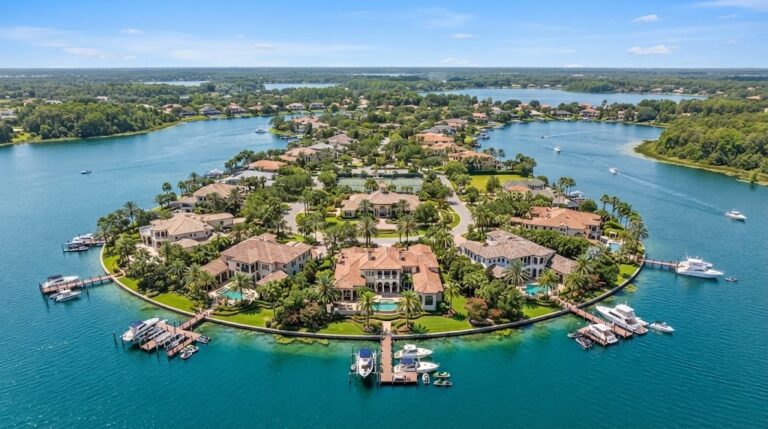
property valuation in Dubai: The Best Guide for Real Estate Investors
The alluring skyline of Dubai, with its soaring architectural landmarks, artificial islands, and tax-free economic environment, has captivated global real […]

The alluring skyline of Dubai, with its soaring architectural landmarks, artificial islands, and tax-free economic environment, has captivated global real estate investors for decades. Among international buyers, American investors have increasingly turned their eyes toward the United Arab Emirates (UAE) to diversify their investment portfolios, capture high rental yields, and secure long-term capital appreciation. However, crossing international borders to purchase residential luxury villas, commercial office spaces, or off-plan apartments requires more than just capital—it demands precise market intelligence. Navigating the Middle Eastern real estate market successfully begins with understanding property valuation in Dubai.
Whether you are evaluating a waterfront penthouse in Dubai Marina, applying for a UAE mortgage through a local bank, assessing your net asset value for financial reporting, or seeking eligibility for the 10-year UAE Golden Visa, obtaining an accurate valuation is fundamental. In a dynamic real estate environment governed by the Dubai Land Department (DLD) and the Real Estate Regulatory Agency (RERA), an objective valuation protects buyers from overpaying, helps sellers benchmark listing prices, and gives financial institutions confidence during loan underwriting. In this comprehensive guide, we will analyze the core factors driving property prices, explore official government and RICS valuation methods, outline step-by-step application procedures, and break down costs to empower American and global investors.
Why Understanding Property Valuation in Dubai Is Critical for US Investors

Investing in overseas real estate introduces unique regulatory, financial, and currency considerations. For US-based buyers accustomed to American MLS platforms and local county tax assessors, the Dubai real estate ecosystem operates on distinct administrative principles. Securing an official property valuation in Dubai serves as a vital safeguard across several investment scenarios.
First, an official valuation prevents overpayment in a fast-moving secondary market. While real estate marketing materials and broker listing prices reflect seller aspirations, an official valuation anchors transaction discussions in hard empirical data. Valuers analyze recent registered transfer records maintained by the DLD, filtering out speculative pricing spikes to determine true fair market value.
Second, if you plan to finance your purchase through a UAE financial institution, mortgage approval hinges directly on a formal valuation. Dubai banks require an independent assessment from an approved valuation panel before authorizing loan-to-value (LTV) limits for non-resident foreign buyers.
Third, an accurate property valuation in Dubai is essential for high-net-worth investors seeking residency through the UAE Golden Visa program. To qualify for a 10-year Golden Visa via real estate investment, an investor must own property with a total value of at least AED 2 million (approximately $545,000 USD). If a property’s market value has appreciated since purchase, an official DLD valuation certificate serves as legal proof of equity to immigration authorities.
Finally, for corporate entities, family offices, and institutional investors, formal valuations support international tax reporting, audited financial disclosures, and fair value accounting under International Financial Reporting Standards (IFRS).
Key Benefits of Official Valuations Over Simple Appraisals

It is crucial to distinguish between an informal real estate agent’s market appraisal and a formal valuation report. A broker appraisal is a non-binding opinion of price intended primarily for marketing and listing strategy. In contrast, an official property valuation in Dubai yields a legally binding document issued directly by the DLD or an accredited firm regulated by the Royal Institution of Chartered Surveyors (RICS) and RERA. Official valuation e-certificates carry QR-code verification, making them legally acceptable to banks, courts, tax authorities, and government agencies worldwide.
Core Factors Influencing Property Valuation in Dubai

Determining the monetary worth of real estate in the UAE involves evaluating both macro-economic market forces and micro-level property specifications. Accredited valuation specialists systematically weigh several core variables when executing a property valuation in Dubai.
Location remains the single most influential driver of real estate prices. Prime master-planned communities—such as Downtown Dubai, Palm Jumeirah, Dubai Marina, and Emirates Hills—command significant price premiums due to their prestige, world-class infrastructure, and proximity to major business districts, international airports, and pristine beaches. Conversely, emerging suburban communities in outer corridors may offer lower per-square-foot entry prices alongside higher potential rental yield percentages. Proximity to Dubai Metro stations, major highways (like Sheikh Zayed Road), top-tier international schools, and retail hubs significantly elevates market desirability.
Property type, architectural layout, and physical condition also weigh heavily in any valuation assessment. A luxury villa with a private garden and sea view in a gated community follows a vastly different valuation curve than a studio apartment in a high-rise tower. Beyond total square footage, valuers inspect internal ceiling heights, natural lighting, layout efficiency, balconies, parking allocations, and high-end interior finishes.
Furthermore, operational income and rental performance play a major role for tenanted investment properties. Valuers evaluate official Ejari tenancy contracts, historical occupancy rates, and gross rental yields. However, recurring operational expenses—specifically RERA-regulated building service charges and maintenance fees paid to owners’ associations—are deducted to establish net operating income. High service charges in poorly managed towers can depress a property’s overall net valuation.
How Service Charges and Ejari Data Impact Valuation
In Dubai, all residential and commercial leases must be registered through the government’s Ejari system. This centralized database provides valuers with transparent, verifiable rental income records rather than verbal estimates. Additionally, RERA enforces standardized service charge indices for every building. Valuers analyze Ejari rental data alongside official service charge fees to calculate net yield capitalizations accurately.
Primary Valuation Methods Used by Accredited Valuers in Dubai
Professional valuers in the UAE employ internationally recognized valuation methodologies governed by RICS Red Book Global Standards and RERA guidelines. Selecting the appropriate methodology depends on the property asset class, occupancy status, and intended valuation purpose.
The Direct Comparison Approach (Comparable Sales Method) is the primary technique utilized for residential apartments, townhouses, and single-family villas. The valuer identifies recently completed sales of similar properties within the same building, complex, or immediate neighborhood using verified DLD transaction registries. Mathematical adjustments are then applied to account for differences in floor level, view quality, unit size, physical wear and tear, and recent interior upgrades.
The Income Capitalization Approach is heavily relied upon when conducting a property valuation in Dubai for income-generating commercial office spaces, retail storefronts, industrial warehouses, and fully tenanted residential apartment blocks. Under this method, the valuer calculates the property’s anticipated Net Operating Income (NOI) by analyzing historical Ejari leases and market rent benchmarks, then applies a market-derived capitalization rate (cap rate) to determine total asset value.
For vacant development land, master-planned plots, or specialized real estate projects, valuers utilize the Residual Land Value or Replacement Cost Method. This approach calculates land value by estimating the final gross development value (GDV) of the completed project and subtracting total construction costs, professional fees, developer profit margins, and financing expenses.
Step-by-Step Process to Request a Property Valuation in Dubai
Requesting a formal property valuation has become streamlined and digitized through government smart services and accredited private firms. American investors can navigate the process remotely or through local representatives by following a structured sequence.
Step 1: Define the Purpose and Scope of Valuation
Clarify why you require the valuation report. Whether the report is intended for bank mortgage underwriting, Golden Visa application, court dispute resolution, or corporate accounting dictates whether you need a direct DLD e-certificate or an in-depth RICS Red Book report from an approved panel valuer.
Step 2: Choose Your Valuation Channel
Property owners can apply directly through the official Dubai Land Department portal using digital platforms like the Dubai REST App or Dubai Now App. Alternatively, applicants can visit an authorized Real Estate Services Trustee Centre in person or hire a RERA-licensed, RICS-regulated independent valuation firm to conduct a comprehensive assessment.
Step 3: Gather Essential Documentation
To avoid processing delays, compile a complete document dossier prior to application. Required records typically include the official Title Deed (or Sales and Purchase Agreement for off-plan properties), owner’s valid passport and Emirates ID copies, updated Municipality or planning maps, floor layout plans, high-resolution photographs, and Ejari contracts for tenanted units.
Step 4: Application Submission and Fee Payment
Submit the completed application form along with supporting documents through your chosen channel and pay the mandatory government and service fees.
Step 5: Physical Property Inspection
Depending on the property type, a certified valuer will schedule an on-site physical inspection. The inspector verifies physical layout dimensions, checks structural integrity, notes cosmetic condition or high-end upgrades, evaluates building amenities, and assesses immediate neighborhood surroundings.
Step 6: Issuance of the Valuation e-Certificate
Once documentation review and field inspections are finalized, the official e-certificate is generated. For standard residential apartments, direct DLD e-certificates may be issued digitally within 1 to 5 business days, complete with a QR code for instant global verification.
Required Documentation Checklist for Dubai Valuations
Having your paperwork fully organized accelerates the valuation timeline significantly. Ensure your document pack contains:
- Official Title Deed copy or Sales and Purchase Agreement (SPA).
- Valid Passport copy and Emirates ID (if resident).
- Updated Municipality Map or Planning Map (valid for one year).
- Recent interior and exterior property photographs.
- Ejari lease registration certificate and service charge statements (for tenanted units).
Cost and Fees for Property Valuation in Dubai
Understanding the full fee schedule helps international buyers budget accurately for real estate transactions. Fees for an official property valuation in Dubai vary depending on property type, size, valuation channel, and operational complexity.
For standard residential apartments and villas requesting a direct DLD valuation certificate through government channels or Trustee Centres, base government fees generally start at approximately AED 4,000 (plus 5% VAT) for properties valued at AED 500,000 or higher. For lower-value properties below AED 500,000, base fees are set around AED 2,000 (plus VAT). Additionally, fixed government Knowledge Fees (AED 10) and Innovation Fees (AED 10) apply, alongside Trustee Centre processing service partner fees ranging from AED 200 to AED 500.
When hiring independent RICS-accredited valuation firms for specialized commercial assets, hotels, or large industrial portfolios, professional fees are typically customized based on the scope of work, starting from AED 3,000 to AED 10,000+ for high-value commercial properties.
Beyond valuation fees, investors budgeting for real estate acquisitions must account for broader DLD transaction costs. The standard DLD land transfer registration fee is 4% of the property’s total purchase price, accompanied by a Title Deed issuance fee of AED 250, a map fee ranging between AED 100 and AED 250, and standard real estate agency commissions (typically 2% plus VAT).
Navigating Off-Plan vs. Secondary Market Valuations
The real estate market in the UAE is famously split between off-plan developments (under construction directly from master developers) and the secondary resale market (existing ready properties). Each asset class requires a tailored approach when determining market value.
When evaluating an off-plan property valuation in Dubai, valuers rely on the developer’s master plan, construction completion milestones, developer reputation, initial Sales and Purchase Agreement (SPA) terms, and official Oqood registration pre-title documents. Because physical structures are incomplete, valuations focus on projected gross development value, historical developer delivery track records, surrounding infrastructure timelines, and comparable off-plan contract resale prices in adjacent developments.
In contrast, secondary resale market valuations center on immediate physical realities. Valuers evaluate ready-to-occupy condition, historical wear and tear, building management standards, actual Ejari rental income, and immediate market liquidity within established communities. For US investors seeking immediate cash flow, secondary ready properties offer transparent historical sales data, making automated and manual valuations highly precise.
Frequently Asked Questions
What is the primary purpose of a property valuation in Dubai?
A formal valuation determines the objective, fair market value of a real estate asset. It is required for bank mortgage approvals, Golden Visa eligibility verification, court settlements, tax reporting, corporate audits, and establishing competitive buy/sell pricing.
Who can legally issue an official property valuation in Dubai?
Official valuation certificates are issued directly by the Dubai Land Department (DLD) or by RERA-registered, RICS-accredited valuation firms and approved bank panel valuers operating within the UAE.
How long does it take to obtain a property valuation in Dubai?
Standard digital valuations for residential apartments and attached villas submitted via the Dubai REST App or Trustee Centres are typically processed within 1 to 5 working days. Complex commercial properties, development plots, or hotel valuations requiring physical inspections may take 5 to 10 business days.
How much does a property valuation in Dubai cost?
Base DLD government valuation fees for standard residential properties valued over AED 500,000 start at AED 4,000 plus 5% VAT, Knowledge/Innovation fees (AED 20), and Trustee service partner fees. Independent RICS firm fees vary based on asset size and complexity.
How long is a Dubai property valuation certificate valid?
An official DLD property valuation certificate is generally valid for six months from the date of issuance, reflecting dynamic real estate market conditions and transaction shifts over time.
Can a foreign US resident request a property valuation in Dubai remotely?
Yes. International property owners and buyers can initiate and complete valuation requests remotely using the official Dubai REST App, Dubai Now portal, or through an authorized power of attorney (POA) or licensed real estate trustee service.
Does a property valuation in Dubai guarantee a bank mortgage approval?
While an accredited valuation provides the required property value baseline for loan underwriting, final mortgage approval also depends on the applicant’s personal financial profile, credit history, income verification, and individual bank LTV limits.
Conclusion
Investing in the dynamic Middle Eastern real estate market presents immense financial opportunities for US and international investors seeking high yields, tax-efficient returns, and portfolio diversification. However, protecting your investment capital requires grounded, empirical market data rather than speculative marketing claims. Obtaining a formal property valuation in Dubai provides the legal clarity, financial accuracy, and risk mitigation needed to navigate property transactions with absolute confidence.
From verifying true fair market value before submitting purchase offers to securing bank mortgages, qualifying for 10-year Golden Visas, and maintaining transparent financial disclosures, professional valuation e-certificates serve as the foundation of successful real estate management. By leveraging official DLD digital portals, partnering with RICS-accredited valuation experts, and organizing your documentation in advance, you can optimize your investment strategy and build lasting wealth in one of the world’s premier global cities. Begin your UAE real estate journey today by securing an official property valuation in Dubai to unlock the true value of your global property portfolio.

Written by Twastia Editorial Team
Twastia Editorial Team shares practical insights about website design, SEO services, Google Ads, content marketing, social media, conversion rate optimization, and digital marketing strategy.
Last updated: Oct 20, 2026
Related posts from Twastia
Explore more useful articles from twastia.com about digital marketing, SEO, websites, ads, content, and growth strategy.