Tree Pruning: Best Techniques, Timing & Care Tips for 2026
Healthy trees bring shade and beauty to American backyards. Yet even a strong-looking tree may develop rubbing branches, storm damage, […]
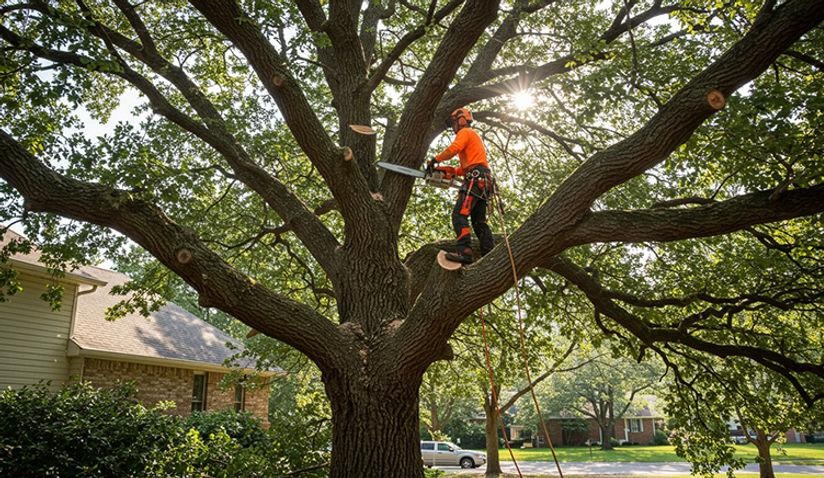
Healthy trees bring shade and beauty to American backyards. Yet even a strong-looking tree may develop rubbing branches, storm damage, or structural problems. Thoughtful tree pruning helps homeowners address these issues while preserving the tree’s natural shape.
Pruning isn’t simply cutting branches until a canopy looks smaller. Every cut changes how a tree grows, and removing too much living foliage can weaken it. The best results come from understanding the tree species, the reason for each cut, and the season when work should be performed.
This guide explains pruning methods, seasonal timing, costs, common mistakes, and when to hire an arborist.
What Is Tree Pruning?
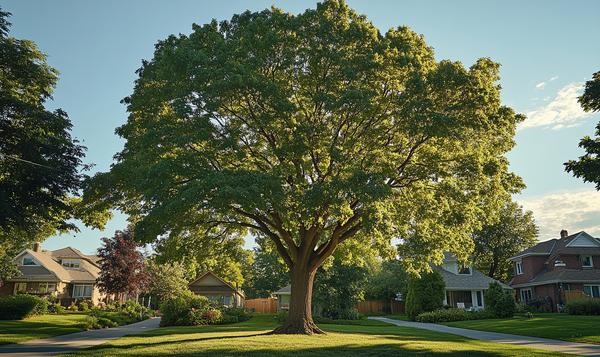
Tree pruning is the selective removal or shortening of branches to achieve a specific objective. That objective might be removing deadwood, improving young-tree structure, creating clearance, or reducing the length of an overextended limb.
Pruning differs from indiscriminate cutting because decisions are guided by tree biology and long-term structure. A well-pruned tree usually retains its recognizable natural form. It should not look stripped, severely shortened, or hollowed out merely for convenience.
The International Society of Arboriculture (ISA) emphasizes that every pruning cut should have a clear reason. For mature trees, less intervention is often better than unnecessary repeated trimming.
Why Proper Tree Pruning Matters
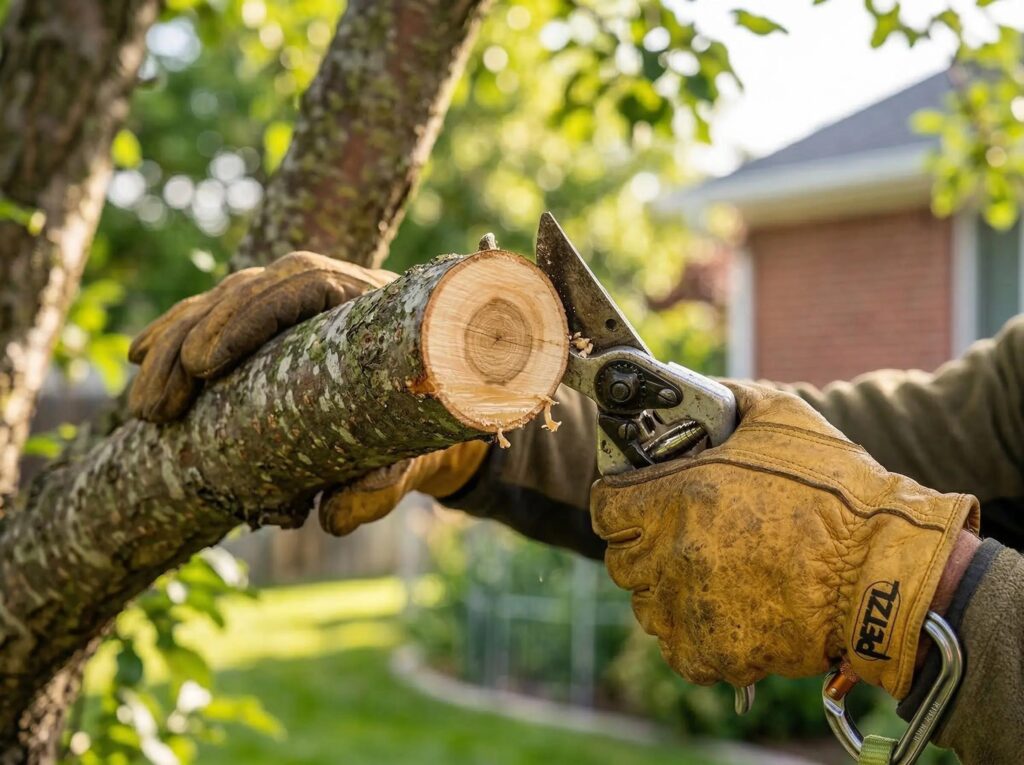
Improve Tree Structure
Young trees can develop competing leaders or poorly placed branches. Corrective pruning during their early years can guide stronger structure as they mature. Addressing defects while branches are small usually creates smaller wounds than postponing work until the tree is large.
Address Potential Hazards
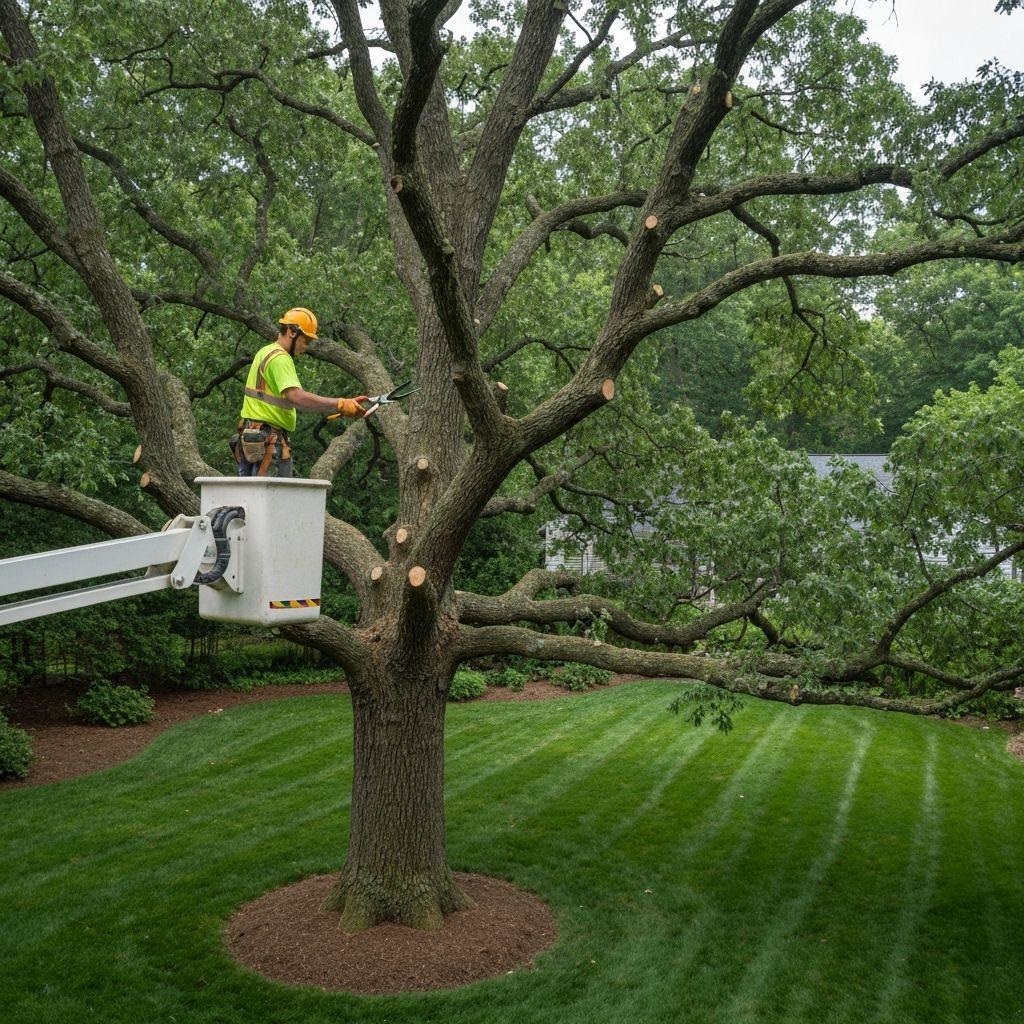
Dead, cracked, or weakly attached branches may deserve assessment, especially above a driveway, patio, or regularly used walkway. Pruning can reduce some risks, but it cannot guarantee a tree will never fail. Significant defects should receive a professional tree risk assessment.
Support Healthy Growth
Removing damaged or diseased wood may be appropriate when supported by the tree’s condition. However, routine thinning does not automatically make every tree healthier. Leaves manufacture energy, so unnecessarily removing healthy foliage can slow growth.
Improve Landscape Function
Selective clearance pruning can allow pedestrian access, protect a building from branches touching it, or make space for vehicles. The goal is practical clearance without destroying the crown’s natural balance.
Common Types of Tree Pruning
Crown Cleaning
Crown cleaning involves removing selected dead, dying, diseased, or weakly attached branches. It is often a sensible objective for mature trees when these branches create a concern.
Crown Raising
Crown raising removes or reduces lower branches to create appropriate clearance over paths, roads, and outdoor living areas. Excessive raising can leave a tree with an unnaturally small crown, so the amount removed should be carefully planned.
Crown Reduction
Reduction shortens selected limbs back to healthy lateral branches capable of taking over growth. It may address an overextended branch or manage a tree’s spread. Proper reduction is different from simply cutting branch ends to stubs.
Selective Density Reduction
An arborist may selectively reduce foliage density for a clearly defined purpose. This is not a routine treatment every tree needs. Excessive interior removal, sometimes called lion-tailing, can produce poor structure and expose remaining branches to greater stress.
Structural Pruning
Structural pruning is particularly useful on developing trees. The arborist evaluates competing stems, branch spacing, attachment angles, and likely future growth to establish a durable framework over time.
When Is the Best Time to Prune Trees?
For many deciduous trees, late winter or early spring before new growth begins is a favorable time. Leafless branches are easier to assess, and trees are approaching an active growing period.
Timing is not universal, however. Spring-flowering trees often produce buds on older growth; pruning before bloom can remove that year’s flowers. Some species require special timing to reduce disease transmission.
For example, local recommendations for oaks in areas affected by oak wilt may restrict pruning during certain warmer months. Fruit trees also follow species-specific training and pruning schedules.
Small dead or broken branches can sometimes be addressed outside the dormant season, but urgent storm damage should be assessed based on safety rather than a seasonal calendar. Avoid elective heavy pruning during severe heat, drought stress, or periods when the tree is already weakened.
For the best schedule, consult your state’s Cooperative Extension service or a qualified local arborist.
Tree Pruning Tips for Different Tree Types
Young Shade Trees
Focus on establishing a strong central structure where appropriate, identifying competing leaders, and maintaining well-spaced branches. Make small, selective cuts rather than removing large portions of the crown at once.
Mature Trees
Prioritize identifiable safety, clearance, or health objectives. ISA guidance generally advises removing no more than 25% of a crown at one time, and often considerably less for mature specimens. This is an upper guideline, not a target.
Fruit Trees
Apples, pears, and other fruit trees may need pruning for structure, light distribution, and manageable harvests. The right technique depends on species, age, and training system. Improper cuts can reduce the crop, so use species-specific Extension instructions.
Evergreens
Many conifers need little pruning. Pines, spruces, and arborvitae respond differently to cuts, and some cannot regenerate from bare older wood. Identify the species before shortening branches.
How to Make Proper Pruning Cuts
Start by identifying why a branch should be removed. For a small, accessible branch, use sharp bypass pruners or an appropriate hand saw. Keep your tools clean and avoid cutting into surrounding bark.
When removing a branch at its origin, locate the branch collar, the slightly swollen area where it joins the parent stem. Cut just outside that collar. Do not cut flush against the trunk or leave a long stub.
For heavier limbs, professionals use a sequence of cuts to prevent the falling branch from stripping bark. Homeowners should not attempt large or elevated limb removals without suitable expertise and equipment.
Avoid painting pruning wounds as a routine practice. ISA guidance generally discourages wound dressings because they do not reliably speed closure or prevent decay. Certain disease-management situations may require specific local guidance.
After pruning, step back to inspect the remaining shape. A good result maintains adequate foliage and a natural branch arrangement.
Tree Topping vs. Professional Pruning
Topping means cutting large branches back to stubs or arbitrarily shortening the top of a tree. Although some homeowners request it to make a tall tree smaller, topping can stimulate weakly attached sprouts, create large wounds, and increase future maintenance needs.
The Arbor Day Foundation advises against topping. Proper crown reduction instead follows branch structure and retains suitable lateral limbs.
Pollarding is a specialized, repeatedly maintained training system started on appropriately selected young trees. It should not be confused with suddenly topping an established, untrained tree.
If a tree has outgrown its location, ask an arborist whether selective reduction, risk mitigation, or replacement is the better long-term solution.
DIY Tree Pruning vs. Hiring an Arborist
Light pruning of small branches reachable from the ground may be manageable for a homeowner with proper hand tools and basic knowledge.
Professional help is appropriate for high branches, large limbs, chainsaw work above ground, damaged trunks, storm-hung branches, or trees that could strike people or buildings.
Never work near overhead power lines. OSHA identifies electrical contact, falls, and falling branches as serious tree-care hazards. If branches approach utility equipment, keep your distance and contact the utility company or an appropriately qualified line-clearance professional.
Do not climb trees with a chainsaw, use an unstable ladder to reach branches, or pull down suspended limbs yourself.
What Happens During Professional Tree Pruning?
A professional visit should begin with identifying the tree species and evaluating its condition. The arborist discusses your goals, assesses visible defects, and recommends work based on those observations.
The written proposal should describe the intended pruning objectives, expected debris cleanup, equipment access, and any restrictions affecting the work. Once approved, trained workers carry out the agreed pruning and remove branches as specified.
The crew may also identify issues that deserve follow-up evaluation, such as decay, poor branch attachments, or pest symptoms. Pruning is not a cure for every structural defect or disease.
Professional Tree Pruning in California’s East Bay
For a regional example, homeowners can explore tree pruning services described by Sexy Tree Service on its official website.
The company advertises tree pruning, trimming, removal, risk assessment, and related services in California’s East Bay, including Walnut Creek, Danville, Concord, Lafayette, and surrounding communities. Its website lists offices in Alamo and Napa and describes work by ISA-certified arborists.
Its pruning page discusses crown reduction and specialized techniques for managing tree size and appearance. As with any provider, homeowners should confirm current service coverage, the specific professional’s ISA credential, insurance, and a detailed estimate before booking.
This is a California service example, not a nationwide tree-pruning provider.
How Much Does Tree Pruning Cost?
There is no dependable single price for every tree. Estimates depend on height, crown spread, branch diameter, condition, site access, and the equipment required.
A small ornamental tree with accessible branches is usually simpler to prune than a large mature tree over a roof. Limited equipment access, complex rigging, storm damage, and debris hauling can increase the scope of work.
Request two or three written estimates that describe comparable objectives. Ask whether wood removal, cleanup, permits, and additional risk assessment are included. Resist choosing a contractor based solely on the lowest price if qualifications and insurance are unclear.
How to Choose a Qualified Tree Pruning Company
Look for a professional who can explain why specific cuts are needed and who will perform the work. The ISA offers tools for finding arborists and verifying credentials.
Ask about liability insurance, workers’ compensation where applicable, references, and adherence to recognized tree-care practices. Confirm that the crew understands local disease concerns and municipal tree ordinances.
Be cautious of anyone who recommends routinely topping healthy trees or promises to eliminate all storm risk. Responsible providers explain limitations and prioritize the tree’s long-term structure.
Common Tree Pruning Mistakes to Avoid
Removing too many live branches can deprive a tree of energy and expose it to stress. Other mistakes include flush cuts that injure the branch collar, leaving long stubs, and repeatedly shearing a naturally spreading canopy.
Pruning at the wrong time may remove flower buds or increase disease exposure. Using dirty or dull tools can produce ragged cuts.
Another mistake is assuming every branch that crosses another needs immediate removal regardless of tree age or condition. Each cut should serve an identifiable purpose.
Do not treat pruning as a substitute for professional investigation of a leaning trunk, significant decay, or a suspected unstable root system.
Frequently Asked Questions About Tree Pruning
How Often Should Trees Be Pruned?
There is no universal annual schedule. Young trees may benefit from periodic structural care, while mature trees often need only targeted corrective pruning. Frequency depends on species, condition, and site risks.
Is Tree Pruning the Same as Tree Trimming?
The terms overlap in everyday use. Pruning usually emphasizes selective cuts for defined structural, health, or clearance objectives; trimming can refer more generally to managing shape or growth.
Can Pruning Help a Damaged Tree?
Sometimes. Removing broken or dead branches can be appropriate, but serious trunk, root, or structural damage requires professional assessment. Pruning cannot restore a failed root system.
Should I Prune Trees in Summer?
Limited pruning may be appropriate, depending on the species and reason. Avoid heavy cuts during heat stress and follow local guidance for diseases such as oak wilt.
Can I Prune a Tree Myself?
Small, accessible branches may be suitable for careful DIY work. Leave elevated, heavy, storm-damaged, or power-line-adjacent branches to properly qualified professionals.
Does Tree Pruning Prevent Storm Damage?
Good structural management can address certain weak branches, but no pruning method makes a tree stormproof. Significant safety concerns deserve a qualified tree risk assessment.
Will Pruning Make a Tree Grow Faster?
Not necessarily. Removing foliage reduces photosynthetic capacity. Appropriate pruning directs growth or improves structure, but excessive cutting can slow overall development.
Conclusion: Protect Your Trees With Thoughtful Pruning
Effective tree pruning combines clear objectives, species knowledge, correct cuts, and suitable timing. It can improve young-tree structure, address selected hazards, and maintain clearance while preserving the natural character of mature trees.
Avoid topping, unnecessary thinning, and risky work above ground. For complicated situations, use an ISA-credentialed arborist who can explain the proposed treatment and its limitations.
With regular observation and informed care, trees can remain attractive, valuable features of your landscape for years to come.

Written by Twastia Editorial Team
Twastia Editorial Team shares practical insights about website design, SEO services, Google Ads, content marketing, social media, conversion rate optimization, and digital marketing strategy.
Last updated: Oct 15, 2026
Related posts from Twastia
Explore more useful articles from twastia.com about digital marketing, SEO, websites, ads, content, and growth strategy.