hire a translator: The Best Guide to Professional Language Services
In an increasingly globalized economy, breaking down language barriers is essential for business growth, legal compliance, healthcare access, and personal […]
In an increasingly globalized economy, breaking down language barriers is essential for business growth, legal compliance, healthcare access, and personal international transactions. Whether expanding a brand into foreign markets, submitting certified documents for immigration, translating complex
legal contracts, or publishing technical manuals, making the decision to hire a translator can make or break your international success. While machine translation tools like Google Translate and DeepL have improved in processing speed, relying on automated tools for high-stakes business or legal content carries immense risk. A single mistranslated clause, medical term, or localized phrase can lead to costly lawsuits, rejected visa applications, or severe brand embarrassment.
Choosing to hire a translator with specialized industry experience guarantees that your messages are translated accurately while preserving cultural nuance, tone, and legal validity. Human translation experts understand context, local idioms, regulatory standards, and subject matter intricacies that algorithms simply cannot grasp. In this ultimate comprehensive guide, we will analyze why working with professional linguists matters, compare certified human translation against machine software, examine specialized translation fields, break down cost factors, and share actionable steps to find and vet the perfect language specialist for your organization.
Why Businesses and Individuals Need to Hire a Translator

Navigating multi-lingual communication requires far more than replacing words in one language with equivalent words in another. Language is deeply rooted in culture, context, and legal frameworks.
The Limits of AI and Machine Translation Software
In recent years, artificial intelligence and neural machine translation (NMT) tools have made rapid strides in processing speed. However, automated algorithms lack cultural empathy, emotional intelligence, and deep contextual comprehension. Machine translation software routinely struggles with homonyms, double meanings, localized humor, regional idioms, and industry-specific jargon.
When you choose to hire a translator who is a native speaker of your target language, you ensure that your text undergoes true localization rather than literal word-for-word swapping. Professional linguists adapt tone, formatting, measurements, and cultural references so that your message resonates naturally with target audiences across different countries.
Protecting Your Legal, Financial, and Medical Interests

For legal agreements, court transcripts, financial audits, and medical records, translation errors carry severe real-world consequences. A misplaced comma or mistranslated contract obligation can invalidate a multi-million-dollar cross-border acquisition or lead to regulatory compliance penalties.
In healthcare environments, inaccurate medical document translation can lead to improper drug dosages, faulty surgical procedures, or compromised patient safety. Choosing to hire a translator holding official certifications—such as American Translators Association (ATA) accreditation—provides legal validity and peace of mind that your critical documents comply with federal and international standards.
Key Specialized Fields Where You Need to Hire a Translator
Language translation is not a one-size-fits-all discipline. Professional linguists specialize in specific industries, possessing deep subject-matter expertise alongside bilingual fluency.
Certified Legal Translation Services
Legal translation requires exhaustive knowledge of legal terminology, court procedures, and statutory frameworks in both the source and target jurisdictions. When you hire a translator for legal matters, they handle crucial documents such as:
- Immigration documents, birth certificates, and marriage licenses required by USCIS.
- Cross-border commercial contracts, non-disclosure agreements (NDAs), and patent filings.
- Courtroom transcripts, witness depositions, and litigation evidence.
- Corporate bylaws, compliance manuals, and international arbitration filings.
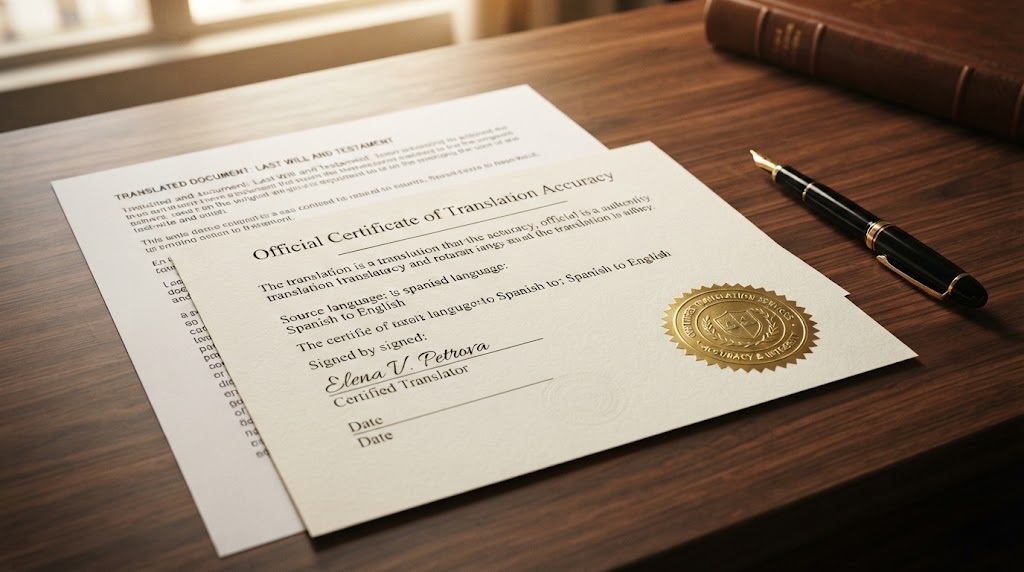
Certified legal translators provide a signed Certificate of Accuracy, attesting that the translated document is a true, complete, and accurate representation of the original text.
Medical and Pharmaceutical Translation
The medical field demands 100% precision. Healthcare institutions, pharmaceutical companies, and medical device manufacturers must hire a translator specializing in life sciences to process clinical trial protocols, patient medical histories, informed consent forms, drug labels, and surgical operation manuals. Medical linguists possess specialized training in medical terminology, anatomy, pharmacology, and international regulatory frameworks such as FDA and EMA compliance.
Technical, Engineering, and Software Localization
Technical translation bridges the gap between complex engineering concepts and end-user clarity. Manufacturing enterprises, software developers, and technology firms hire a translator to adapt user manuals, software user interfaces (UI), engineering schematics, safety data sheets (SDS), and technical white papers. Software localization experts modify date formats, currency symbols, character encoding, and user workflows so digital products feel native to global users.
Marketing, Advertising, and Creative Transcreation
Unlike technical or legal translation, marketing content requires high creative adaptability. Simply translating marketing slogans or ad copy word-for-word often results in embarrassing or nonsensical campaigns. Marketing directors choose to hire a translator skilled in transcreation—the art of adapting a creative message to evoke the exact same emotional response in a target culture while preserving brand identity.
Step-by-Step Framework to Find and Hire a Translator
Selecting the right language professional requires evaluating qualifications, subject-matter expertise, and quality control processes.
Step 1: Define Your Scope, Target Dialect, and Certification Needs
Before searching for language professionals, clarify your project parameters. Determine whether you require a certified translation for government submission or general localization for website copy. Specify exact regional dialects—such as Latin American Spanish vs. Iberian Spanish, or Brazilian Portuguese vs. European Portuguese. Knowing your exact requirements streamlines your search when you begin reaching out to hire a translator.
Step 2: Choose Between Independent Freelancers and Translation Agencies
Depending on project size and complexity, you can hire an independent freelance translator or partner with a full-service language service provider (LSP).
- Independent Freelancers: Ideal for single-language projects, small document volumes, or direct ongoing relationships. Working with a freelance specialist often reduces overhead costs and allows direct communication with the linguist.
- Translation Agencies: Essential for complex, multi-language localization projects, large-volume document batches, or projects requiring integrated graphic typesetting (DTP). Agencies manage project workflows, quality control reviews, and multi-linguist teams automatically.
Step 3: Verify Credentials, ATA Accreditation, and Portfolios
When preparing to hire a translator, verify their professional credentials and past work portfolio. Look for memberships in recognized industry associations, such as the American Translators Association (ATA), the Institute of Translation and Interpreting (ITI), or the International Federation of Translators (FIT). Request professional references and sample translations to evaluate quality and subject-matter fluency.
Step 4: Review Quality Control and Confidentiality Protocols
A professional language workflow should include a multi-tiered quality assurance process: Translation, Editing, and Proofreading (TEP). Confirm that the translator or agency implements strict Non-Disclosure Agreements (NDAs) and encrypted file transfer systems to protect confidential business data, personal medical information, or proprietary code.
Understanding Pricing Models and Cost Factors
Understanding industry pricing models helps organizations budget effectively when planning to hire a translator.
Per-Word Pricing vs. Hourly Rates
Most translation projects are priced on a per-word basis calculated using the source document’s total word count. In the USA, standard professional per-word rates range between $0.12 and $0.30+ per word, depending on language rarity, technical complexity, and turnaround urgency. For small documents—such as birth certificates or diplomas—translators typically charge a flat minimum fee ranging from $30 to $75 per document. Hourly rates ($45 to $100+ per hour) are generally reserved for editing, proofreading, desktop publishing, or linguistic consultation.
Factors That Influence Translation Costs
Several key variables dictate the final price when you hire a translator:
- Language Pair Rarity: Common language pairs (such as English to Spanish or French) carry lower per-word rates due to higher translator availability. Rare language pairs (such as English to Karen, Amharic, or Icelandic) command higher rates.
- Technical Complexity: Specialized legal, medical, or engineering documents require senior domain experts, increasing overall project fees.
- Turnaround Speed: Expedited or rush projects requiring weekend or overnight work incur rush surcharges ranging from 25% to 50%.
- Certification and Notarization Fees: Official certified statements of accuracy and notarization services add small flat administrative fees per document.
Frequently Asked Questions
What is the difference between a translator and an interpreter?
Translators work with written text, converting written documents, websites, and books from one language to another. Interpreters work with spoken language, providing real-time oral translation during court trials, medical appointments, live conferences, or diplomatic meetings.
How do I know if I need to hire a translator who is certified?
You need to hire a translator who provides certified translations when submitting documents to government agencies (such as USCIS for US visa or green card applications), academic institutions, court systems, regulatory authorities, or international corporate bodies.
Can I just use Google Translate or AI instead of hiring a professional?
While free machine tools are helpful for informal personal understanding, they lack contextual nuance, make critical grammar errors, and cannot provide certified accuracy. For official, legal, medical, financial, or public marketing materials, choosing to hire a translator prevents costly errors and legal liabilities.
How long does it take a professional to translate a document?
An experienced professional linguist translates between 1,500 and 2,500 words per business day, maintaining high quality and accuracy. Larger projects can be split across multiple translators coordinated by an agency manager to meet tight deadlines.
How can I ensure my confidential business documents remain secure?
Before sharing sensitive documents, ensure you execute a binding Non-Disclosure Agreement (NDA) with the translator or agency. Professional language service providers utilize secure, encrypted file portals and strictly adhere to data protection regulations like HIPAA and GDPR.
What information should I provide when requesting a quote to hire a translator?
Provide the source document in an editable format (like Word or PDF), specify the exact target language and regional dialect, indicate your desired deadline, state whether certification is required, and share any relevant reference glossaries or style guides.
What is a native-speaking translator, and why is it important?
A native-speaking translator translates content into their mother tongue. Native speakers possess inherent cultural intuition, natural vocabulary flow, and localized grammar mastery, ensuring the translated text sounds authentic to local readers.
Conclusion
In an interconnected global marketplace, clear, accurate, and culturally nuanced communication is a vital business asset. While automated software tools offer quick, surface-level translations, they cannot replace the deep context, legal validity, and industry expertise provided by a human professional. Deciding to hire a translator safeguards your brand reputation, protects your legal interests, ensures medical
compliance, and unlocks new growth opportunities in international markets. By defining your project scope, verifying professional credentials, choosing specialized domain experts, and establishing clear quality assurance protocols, choosing the right expert to hire a translator secures your global communication strategy for long-term success. Invest in professional language services today to connect authentically with audiences around the world.

Written by Twastia Editorial Team
Twastia Editorial Team shares practical insights about website design, SEO services, Google Ads, content marketing, social media, conversion rate optimization, and digital marketing strategy.
Last updated: Oct 21, 2026
Related posts from Twastia
Explore more useful articles from twastia.com about digital marketing, SEO, websites, ads, content, and growth strategy.