Car Shipping: Complete Guide to Moving a Vehicle Across the USA
Moving a vehicle across the country can feel complicated, especially if you have never used an auto transport company before. […]
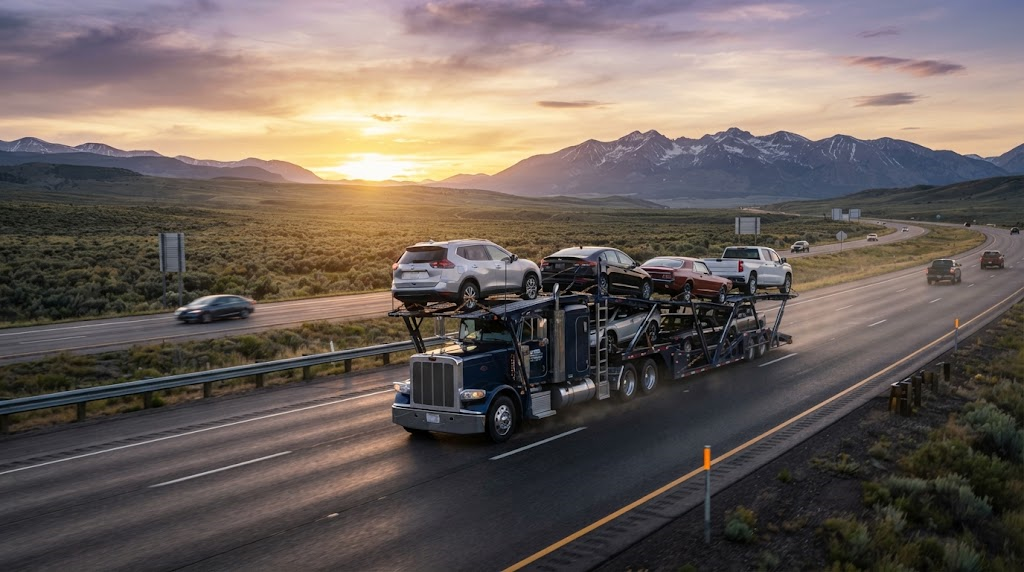
Moving a vehicle across the country can feel complicated, especially if you have never used an auto transport company before.
Maybe you are relocating from California to Florida. You could be buying a vehicle online from another state, sending a college student’s car across the country, moving a classic car to a show, or transporting a second vehicle to a seasonal home.
Driving thousands of miles yourself is not always practical.
That is where car shipping can help.
Professional auto transport allows you to move a car from one location to another without putting unnecessary mileage on the vehicle or spending several days driving.
Monarch Transport Group currently coordinates nationwide vehicle shipping through a network of licensed and insured carriers. Its services include open transport, enclosed transport, classic and exotic vehicle shipping, cross-country transport, inoperable vehicle shipping, and overseas options. (monarchtg.com)
The process itself is relatively straightforward once you understand how the industry works.
The important part is choosing the right transport method, understanding the quote, preparing your car correctly, and verifying the company handling your shipment.
How Does Car Shipping Work?
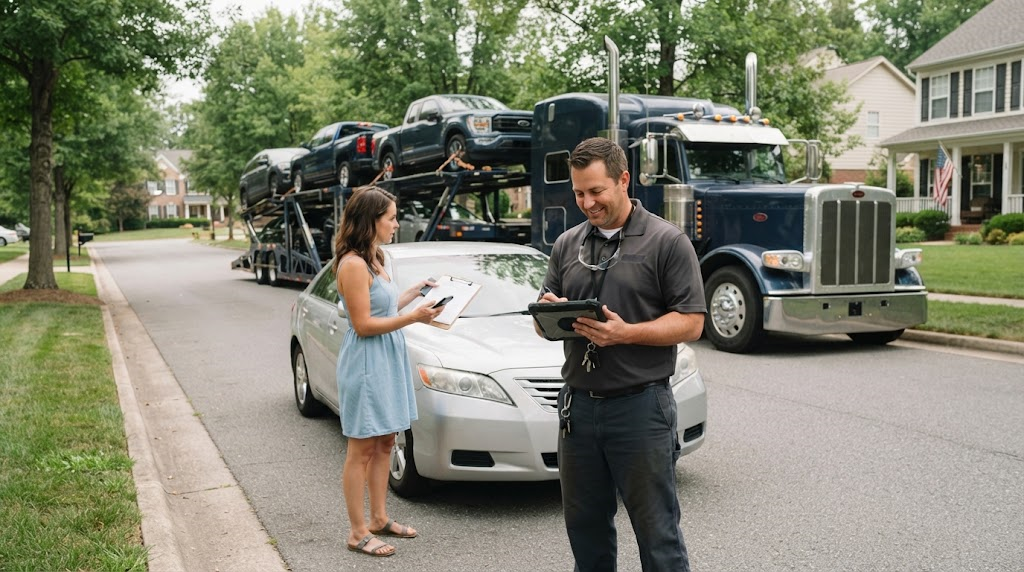
Most vehicle shipments follow three basic stages.
Step 1: Request a Quote
You provide information such as:
- Pickup location
- Delivery location
- Vehicle make and model
- Vehicle condition
- Preferred transport type
- Desired pickup dates
The company uses this information to estimate transportation cost and carrier availability.
Monarch’s current process begins with a personalized quote based on the vehicle and route. Once the customer confirms the booking, the company coordinates the assigned carrier and pickup arrangements. (monarchtg.com)
Step 2: Vehicle Pickup
The assigned truck arrives during the agreed pickup window.
Before loading, you and the driver should inspect the vehicle.
Document its condition with clear photographs.
Pay attention to:
- Scratches
- Dents
- Chips
- Wheels
- Mirrors
- Glass
The vehicle is then loaded and secured for transportation.
Step 3: Delivery and Final Inspection
When the carrier reaches the destination, inspect the vehicle again before completing the delivery process.
Compare the car with the photos taken before pickup.
This simple habit gives you a clear record of the vehicle’s condition before and after transport.
Open vs. Enclosed Car Shipping
One of the first decisions you will make is whether to use open or enclosed transport.
Both methods can be appropriate.
The best option depends on your vehicle and budget.
Open Car Transport
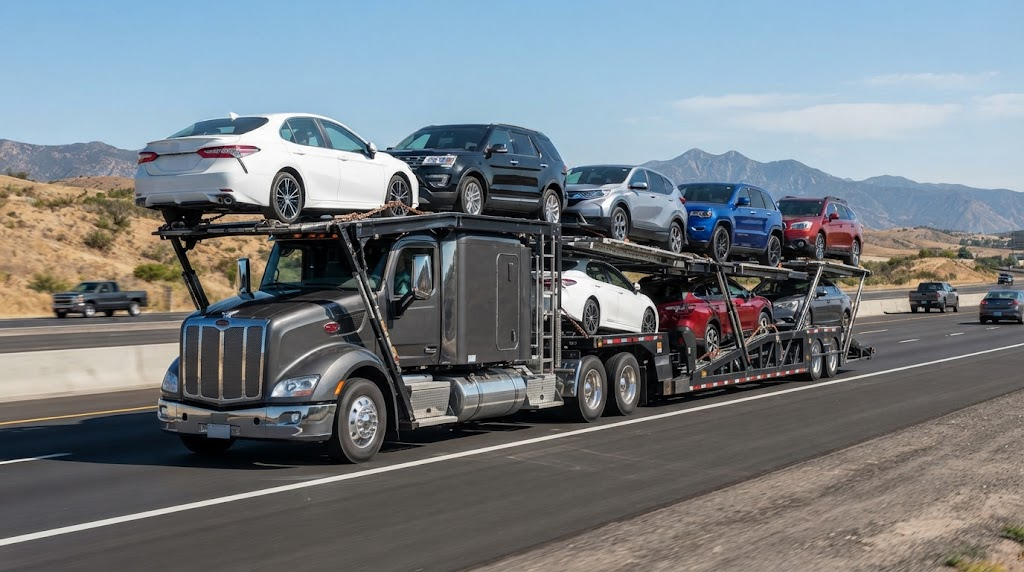
Open carriers are the trucks most people imagine when they think about auto shipping.
Several vehicles are loaded onto an exposed two-level trailer.
Monarch describes open transport as its most common and economical option. Its current service information notes that typical open carriers move around eight to ten vehicles at one time. (monarchtg.com)
Advantages of Open Transport
Open shipping is generally:
- More affordable
- Easier to schedule
- Widely available
- Suitable for daily drivers
It works well for:
- Sedans
- SUVs
- Pickup trucks
- Family vehicles
- Most standard used cars
The main difference is that the vehicle remains exposed to normal road conditions during transportation.
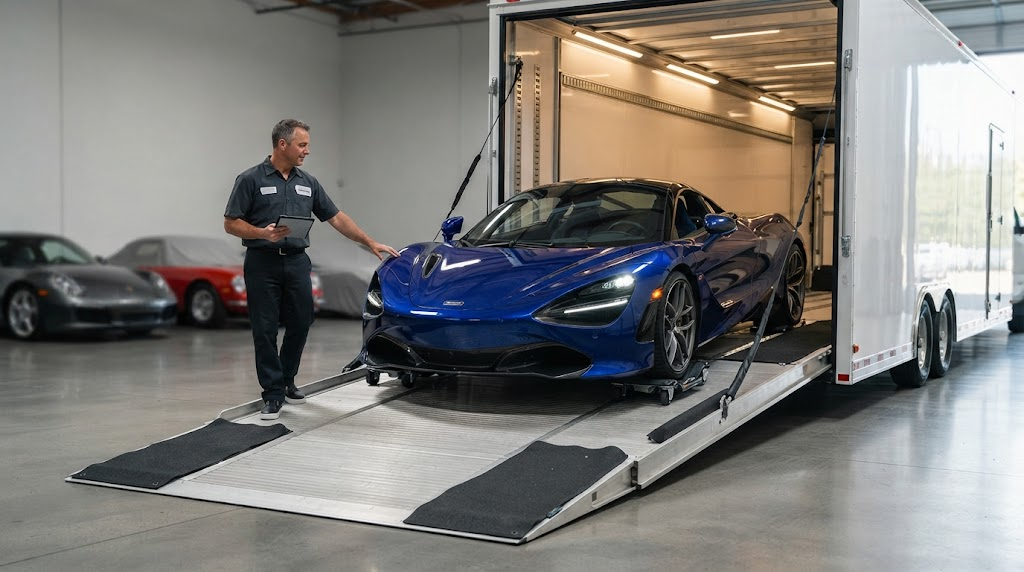
Enclosed Auto Transport
Enclosed transport places the vehicle inside a covered trailer.
This provides additional protection from:
- Road debris
- Dust
- Rain
- Snow
- Weather exposure
It is commonly selected for:
- Classic cars
- Exotic vehicles
- Luxury vehicles
- Collector cars
- High-value vehicles
Monarch currently recommends enclosed shipping for customers who want extra protection for expensive, classic, or exotic vehicles. (monarchtg.com)
Is Enclosed Shipping Worth It?
For a standard commuter vehicle, open transport is often enough.
For a rare collector vehicle or expensive sports car, the additional cost of enclosed transport may make sense.
Think about the value of the car and how concerned you are about environmental exposure.
How Much Does Car Shipping Cost?
There is no universal price.
Several variables influence the quote.
The biggest factors include:
- Distance
- Vehicle size
- Vehicle weight
- Open vs. enclosed transport
- Pickup location
- Delivery location
- Season
- Route demand
- Vehicle condition
Monarch’s current published examples include approximately $700 for New York to Chicago, $1,100 for Chicago to Miami, and $1,800 for Los Angeles to New York. These are example averages rather than guaranteed prices. (monarchtg.com)
Its broader state-to-state pricing guide currently shows estimated open-transport ranges from about $450–$750 for trips under 500 miles to roughly $1,350–$1,950 for routes over 2,000 miles. Enclosed transport is listed higher. (monarchtg.com)
Always request a current quote for your exact route.
Why Distance Is Not the Only Pricing Factor
People often assume a 2,000-mile shipment should cost exactly twice as much as a 1,000-mile shipment.
Car shipping does not work that way.
Carriers consider route efficiency.
Popular routes between major metro areas may have frequent truck traffic and better availability.
Remote pickup locations can require a carrier to travel significantly out of the way.
That may increase the price.
Vehicle Size Also Matters
A large pickup occupies more trailer space than a compact sedan.
Heavier vehicles may also affect trailer weight limits.
Expect SUVs, trucks, and oversized vehicles to cost more than smaller cars in many cases.
How Long Does Car Shipping Take?
Transit time depends primarily on distance and route.
Monarch currently publishes approximate transport windows of:
- 0–799 miles: 1–4 days
- 800–1,499 miles: 4–7 days
- 1,500–2,399 miles: 6–10 days
- 2,400+ miles: 10–15 days
These are estimated windows.
Actual delivery can be affected by:
- Traffic
- Weather
- Road closures
- Truck inspections
- Other customer pickups
- Mechanical issues
- Seasonal demand
If you need the vehicle for an important date, avoid planning around an extremely tight delivery deadline.
Door-to-Door Car Shipping
Door-to-door transport is one of the most convenient options.
The carrier attempts to pick up and deliver the vehicle as close as reasonably possible to your requested addresses.
However, a large car carrier cannot safely enter every residential street.
Restrictions may include:
- Low trees
- Narrow roads
- Tight turns
- Apartment rules
- Weight restrictions
- Low bridges
Monarch explains that if direct access is not safe or legal, the driver will work with the customer to arrange a nearby meeting location. (monarchtg.com)
Large parking lots and commercial areas are common alternatives.
How to Prepare Your Car for Shipping
Preparing properly can help avoid problems.
Clean the Vehicle
A reasonably clean exterior makes existing scratches and dents easier to identify during inspection.
Take Photos
Photograph every side of the car before loading.
Include close-ups of any existing damage.
Remove Personal Belongings
Monarch advises customers not to leave personal items in the vehicle because they may not be covered under carrier insurance. (monarchtg.com)
Remove:
- Electronics
- Documents
- Loose accessories
- Valuable personal items
Leave Only a Small Amount of Fuel
Monarch currently recommends keeping less than a quarter tank of fuel. (monarchtg.com)
Extra gasoline adds unnecessary weight.
Disable the Alarm
An alarm sounding repeatedly during transportation can create problems for the driver.
Remove Loose Exterior Accessories
Secure or remove:
- Antennas
- Loose spoilers
- Removable racks
- Aftermarket accessories
Inform the transporter about modifications that affect height or ground clearance.
Shipping an Inoperable Vehicle
A vehicle does not always need to run.
Cars purchased at auctions, restoration projects, and vehicles with mechanical problems may still be shipped.
However, the transport company needs to know in advance.
An inoperable vehicle may require:
- Winch
- Liftgate
- Forklift
- Specialized trailer
Monarch currently offers transport for non-running vehicles but notes that special equipment may be required. (monarchtg.com)
Never book the car as operational if it cannot start, steer, or brake normally.
Car Shipping Insurance: What Should You Check?
Vehicle transport involves valuable property, so insurance deserves attention.
Monarch says every carrier in its network is required to maintain valid cargo insurance and that coverage is verified before dispatch. Its current site states that standard open carriers commonly carry at least around $100,000 in cargo insurance, while enclosed carriers may have higher limits. (monarchtg.com)
Do not rely only on a general statement that the shipment is “insured.”
Ask:
- What is the carrier’s coverage limit?
- Is there a deductible?
- What damage is excluded?
- Does coverage include loading and unloading?
- Are personal belongings covered?
For an expensive vehicle, request proof of insurance and confirm whether the limit is sufficient.
Verify the Company Before Booking
The Federal Motor Carrier Safety Administration has warned consumers about increased complaints involving automobile transporters and brokers.
FMCSA advises customers to understand whether they are dealing with a carrier or a broker and to verify interstate companies through their registration information. (fmcsa.dot.gov)
What Is a Car Shipping Broker?
A broker arranges transportation by matching customers with carriers.
It may not own the truck that physically moves your vehicle.
An auto carrier, by contrast, operates the transport equipment.
Both can play legitimate roles.
The important thing is knowing who you are hiring.
Monarch Transport Group currently identifies itself as licensed and bonded and lists USDOT #4060376 and MC #1540524 on its website. (monarchtg.com)
FMCSA says customers can use its records to verify operating authority and insurance information. (csa.fmcsa.dot.gov)
Watch Out for Car Shipping Scams
Be cautious when an offer looks dramatically cheaper than every competing quote.
An unrealistically low initial price can sometimes result in difficulty finding a carrier at that rate.
Other red flags include:
- No MC number
- Unclear company identity
- Pressure for immediate payment
- Large wire-transfer requests
- Inconsistent contact information
- Refusal to provide written terms
FMCSA specifically recommends verifying registration details and warns consumers to understand whether the website belongs to an actual transporter or a broker. (fmcsa.dot.gov)
Keep copies of:
- Quote
- Contract
- Carrier information
- Payment receipts
- Vehicle inspection
- Emails
Shipping Classic and Exotic Cars
High-value vehicles often need more careful planning.
Owners may prefer:
- Enclosed trailer
- Lower-capacity carrier
- Liftgate loading
- Higher insurance limits
- More frequent updates
Monarch currently offers dedicated classic, luxury, and exotic car transport options and matches those vehicles with carriers suited to higher-value shipments. (monarchtg.com)
For very low-clearance cars, mention the ride height before booking.
Standard loading ramps may not be suitable.
When Does Car Shipping Make Sense?
Professional transport can be useful when:
- Relocating across the country
- Buying a car online
- Sending a vehicle to college
- Moving seasonally
- Purchasing from an auction
- Transporting a classic vehicle
- Avoiding high mileage
- Managing multiple vehicles
Driving from New York to California may involve fuel, hotels, meals, time away from work, and thousands of additional miles.
Once those factors are considered, professional transport can be more practical than it first appears.
How to Choose a Car Shipping Company
Compare providers using more than price.
Look for:
Licensing
Verify FMCSA registration for interstate transport.
Insurance
Understand the actual cargo coverage.
Clear Pricing
Know what is and is not included.
Communication
You should know how shipment updates will be provided.
Appropriate Transport Options
The company should offer the service your vehicle requires.
Monarch currently provides open, enclosed, classic, exotic, cross-country, overseas, and inoperable vehicle options through its network. (monarchtg.com)
Frequently Asked Questions About Car Shipping
How much does it cost to ship a car?
Cost depends on distance, vehicle size, route, transport method, season, and availability. Cross-country shipments often cost considerably more than shorter regional moves.
Is open car shipping safe?
Open transport is the most common option and is widely used for standard vehicles. Cars remain exposed to weather and normal road conditions, so owners of high-value vehicles may prefer enclosed shipping.
How long does it take to ship a car across the country?
Monarch currently estimates roughly 10–15 days for routes of 2,400 miles or more, although actual timing can vary. (monarchtg.com)
Can I put belongings inside the car?
It is generally better to remove personal belongings. Insurance may not cover items stored inside the vehicle.
Can a non-running car be shipped?
Yes, but special loading equipment may be required and the company must know that the vehicle is inoperable before pickup.
Is my car insured during transport?
The assigned carrier should have applicable cargo coverage. Request the carrier’s insurance information and review the limits and exclusions before shipping.
How much fuel should be in the vehicle?
A small amount is enough. Monarch currently recommends less than one-quarter tank. (monarchtg.com)
Where can I request a car shipping quote?
Customers can review car shipping options through Monarch Transport Group for current quotes, transport choices, estimated transit times, vehicle preparation guidance, and nationwide shipping information. (monarchtg.com)
Conclusion
Car shipping can simplify a long-distance vehicle move, but a successful shipment starts well before the truck arrives.
Choose the transport method that fits the car.
Open shipping is usually the most economical choice for ordinary sedans, SUVs, and pickups.
Enclosed shipping can provide additional protection for collector, exotic, luxury, or high-value vehicles.
Then evaluate the route, schedule, and quote carefully.
Distance is important, but the final cost also depends on vehicle size, seasonal demand, transport type, pickup accessibility, and carrier availability.
Prepare your vehicle before pickup.
Clean it.
Photograph it.
Remove personal belongings.
Leave only a small amount of fuel.
Secure loose accessories.
And make sure the transporter knows in advance if the vehicle cannot run normally.
Most importantly, verify who is handling the shipment.
FMCSA specifically recommends confirming registration for interstate auto transporters and brokers and understanding whether the company you hire will physically transport the vehicle or arrange a carrier to do so. (fmcsa.dot.gov)
Monarch Transport Group currently coordinates nationwide vehicle transportation through licensed and insured carriers and offers options ranging from standard open transport to enclosed, classic, exotic, cross-country, overseas, and inoperable vehicle shipping. (monarchtg.com)
The lowest quote is not always the best choice.
Reliable communication, appropriate insurance, realistic pricing, proper equipment, and a well-documented vehicle inspection can be worth far more than saving a small amount on the initial estimate.
When those pieces are handled correctly, shipping a car across the United States becomes much less intimidating.
You hand over the keys at pickup, let the transporter handle the highway miles, and meet your vehicle again at its destination—without turning the relocation into a cross-country road trip.

Written by Twastia Editorial Team
Twastia Editorial Team shares practical insights about website design, SEO services, Google Ads, content marketing, social media, conversion rate optimization, and digital marketing strategy.
Last updated: Oct 6, 2026
Related posts from Twastia
Explore more useful articles from twastia.com about digital marketing, SEO, websites, ads, content, and growth strategy.